
In the dynamic landscape of commerce, where consumer preferences shift rapidly and competition is fierce, launching a new product, service, or marketing campaign without prior validation can be a costly gamble. This is precisely where the strategic utility of a market test comes into play. A market test, at its core, is a controlled experiment designed to assess the viability and potential success of a product, service, or marketing initiative before a full-scale launch. It provides crucial insights into how a target audience will react, enabling businesses to refine their offerings, optimize their brand messaging, and mitigate risks, thereby laying a robust foundation for market entry and sustained brand growth.

The Strategic Imperative of Market Testing
Market testing is not merely a formality; it is a strategic imperative that underpins successful brand development and market penetration. It serves as a critical bridge between concept and reality, providing data-driven insights that can make the difference between a market triumph and an expensive failure. For brands, understanding the nuances of consumer behavior and market dynamics pre-launch is invaluable.
Minimizing Risk and Maximizing Potential
The primary objective of any market test is to reduce the inherent risks associated with introducing something new to the market. Developing a new product, revamping a service, or launching a substantial marketing campaign involves significant investments in time, capital, and human resources. Without validation, these investments are speculative. A market test allows a brand to:
- Identify potential flaws: Early detection of design defects, usability issues, or service gaps can prevent widespread customer dissatisfaction and costly recalls or revisions post-launch.
- Gauge market acceptance: It provides a realistic indication of whether there is genuine demand for the offering, preventing the rollout of products or services nobody wants.
- Optimize resource allocation: By confirming market interest and refining the offering, brands can allocate their marketing budgets and operational resources more effectively, focusing on what resonates most with consumers.
- Forecast sales more accurately: Data from market tests can inform more precise sales forecasts, which are critical for production planning, inventory management, and financial projections.
By systematically testing assumptions and gathering empirical evidence, brands can make informed decisions, minimizing financial exposure and significantly increasing the likelihood of a successful market entry.
Understanding Customer Reception
Beyond mitigating risk, market tests offer an unparalleled opportunity to deeply understand customer reception. This understanding is foundational for building strong brands and fostering lasting customer relationships. Through market testing, brands can uncover:
- Preference and appeal: Which features are most valued? What aspects generate excitement or indifference?
- Pricing sensitivity: How willing are customers to pay a certain price point? What is the perceived value?
- Messaging effectiveness: Does the brand’s intended message resonate with the target audience? Is it clear, compelling, and differentiated?
- Usage patterns and pain points: How do customers interact with the product or service? What challenges do they encounter?
- Competitive advantages: How does the offering stack up against existing solutions in the minds of consumers?
This granular understanding allows brands to tailor their offerings, fine-tune their messaging, and craft a more compelling value proposition that directly addresses customer needs and desires, ultimately strengthening brand loyalty and market position.
Common Types of Market Tests
The methodology for conducting a market test can vary widely depending on the nature of the product, the stage of development, and the specific insights a brand seeks to gain. However, several common types of market tests are frequently employed by brands across industries.
Concept Testing
This is often the earliest stage of market testing, occurring even before a physical product or service fully exists. Concept testing involves presenting a detailed description, visual representation, or prototype of a new idea to a target audience to gauge their initial reactions, interest, and perceived value. It helps brands answer fundamental questions such as: Is this idea compelling? Does it solve a real problem? Who is the ideal target user? Feedback gathered here is crucial for validating the core idea and guiding initial product development.
Product Testing (Alpha/Beta)
Once a functional prototype or early version of a product or service is available, product testing commences. This phase is divided into:
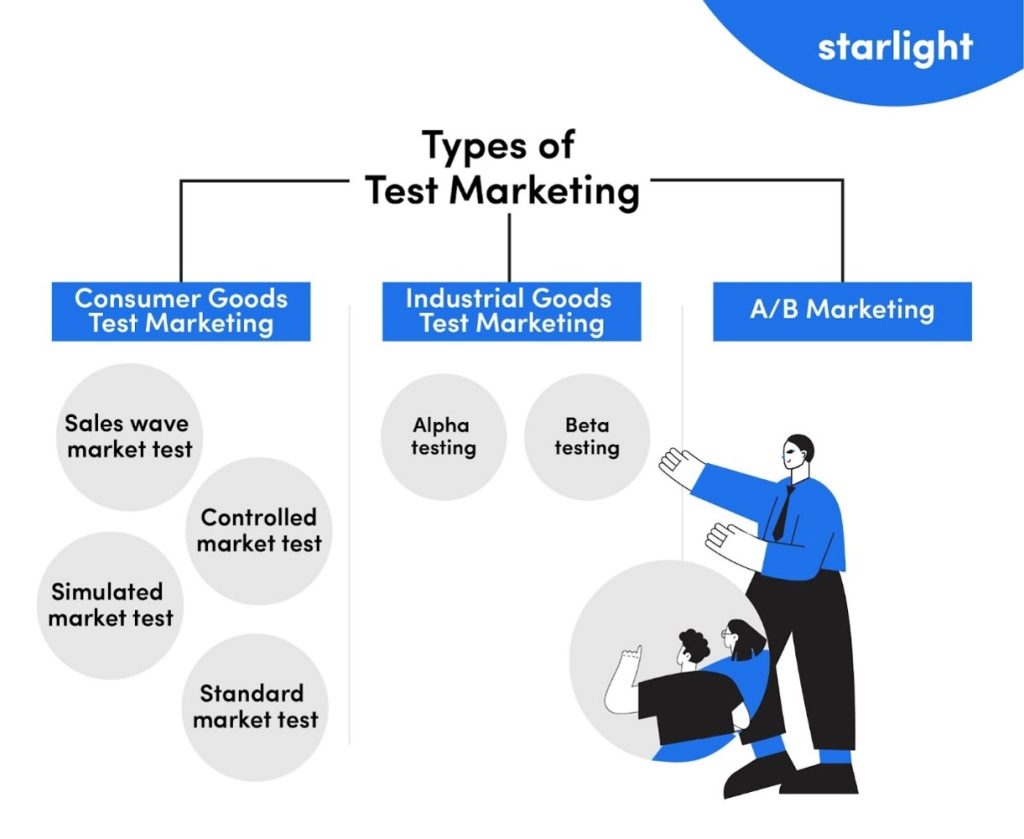
- Alpha Testing: Typically conducted internally by employees or a select group of close stakeholders. The goal is to identify major bugs, usability issues, and performance problems in a controlled environment.
- Beta Testing: Involves releasing a near-final version of the product or service to a larger group of external, real-world users (beta testers) from the target market. Beta testers provide feedback on functionality, user experience, stability, and overall satisfaction. This helps brands polish the offering and fix issues that might arise in real-world usage scenarios before a general release.
Test Marketing (Pilot Programs)
Test marketing involves launching a product or service in a limited, representative geographic area or to a specific segment of the target market before a full-scale national or international rollout. This is a comprehensive test that mimics actual market conditions, allowing brands to evaluate the entire marketing mix – product, price, promotion, and place (distribution). It helps in assessing sales potential, market penetration, promotional effectiveness, and distribution challenges on a smaller, manageable scale. This approach is particularly valuable for consumer packaged goods or services that require significant logistical planning.
A/B Testing
Also known as split testing, A/B testing involves comparing two versions of a marketing element (e.g., website page, email subject line, advertisement, product description) to see which one performs better. One version (A) is the control, and the other (B) has one specific element changed. Traffic or audience is split evenly between the two versions, and metrics such as click-through rates, conversion rates, or engagement are measured to determine the more effective variant. A/B testing is a highly agile method for optimizing specific elements of a brand’s digital marketing and communication strategy.
Simulated Test Markets
In situations where actual test marketing might be too costly, time-consuming, or reveal strategic intentions to competitors, brands may opt for simulated test markets. These involve recreating a realistic shopping experience in a controlled environment (e.g., a lab setting or online simulation) where consumers are exposed to a product and given the opportunity to purchase it. Data on purchase intent, repeat purchase likelihood, and competitive impact are collected without the risks or expenses of a full-scale regional launch.
Key Components of an Effective Market Test
Regardless of the specific type chosen, the success of any market test hinges on a thoughtful and structured approach. Several key components are essential for extracting meaningful insights and making actionable decisions.
Defining Clear Objectives
Before launching any test, brands must precisely define what they aim to learn. Are they validating a price point, testing a new feature, assessing advertising effectiveness, or understanding overall market acceptance? Clear, measurable objectives will guide the entire testing process, from design to data analysis, ensuring that the collected information is relevant and useful for strategic decision-making. Without specific objectives, a market test can yield a wealth of data but little actionable insight.
Identifying the Target Audience
A market test is only as good as the audience it reaches. It is crucial to identify and recruit a representative sample of the actual target market for the product or service. This means carefully considering demographics, psychographics, behaviors, and needs that align with the intended customer base. If the test audience does not accurately reflect the broader market, the insights gained may be skewed and lead to flawed conclusions. Robust sampling methodologies are therefore paramount.
Choosing the Right Metrics
To measure success and gather insights, brands must establish appropriate metrics and key performance indicators (KPIs) before the test begins. These metrics should directly align with the defined objectives. Examples include:
- Purchase intent: How likely are consumers to buy the product?
- Conversion rate: What percentage of users complete a desired action?
- Customer satisfaction: How satisfied are users with the experience?
- Feature usage: Which features are most popular or ignored?
- Brand recall and perception: How well is the brand remembered, and what associations are formed?
- Price elasticity: How sensitive are sales to changes in price?
Careful selection and consistent tracking of these metrics provide the quantitative data necessary for objective evaluation.
Iteration and Adaptability
A market test should not be viewed as a one-off event but rather as an integral part of an iterative development process. The insights gained from a market test should inform adjustments and refinements to the product, service, or marketing strategy. Brands must be prepared to adapt, revise, and potentially re-test based on the feedback received. This agile approach ensures that the final offering is robust, market-ready, and optimized for success, reflecting a brand’s commitment to continuous improvement and customer-centricity.
Integrating Market Tests into Your Brand Strategy
Market tests are not isolated tactical maneuvers; they are strategic tools that deeply influence various facets of a brand’s overall strategy. The insights gleaned from these tests provide the intelligence needed to shape product roadmaps, refine communication, and optimize market positioning.
Informing Product Development
Early market tests, particularly concept and alpha/beta testing, directly inform the product development cycle. Feedback on features, usability, and design can lead to critical adjustments before significant resources are committed to mass production or widespread service deployment. This iterative process ensures that the final product or service is not only technically sound but also genuinely desired and usable by the target audience, strengthening its alignment with the brand’s promise. By validating prototypes and MVPs (Minimum Viable Products), brands can build offerings that truly resonate, minimizing the risk of developing products that fail to meet market needs.
Refining Marketing Messages
The way a brand communicates its value proposition is as critical as the product itself. Market tests, especially A/B testing of ad copy, landing pages, and campaign creatives, provide invaluable data on which messages resonate most powerfully with the target audience. Brands can learn which benefits to highlight, what language to use, and which emotional appeals are most effective. This data-driven approach allows for the refinement of marketing messages to be more persuasive, clear, and differentiated, thereby enhancing brand perception and driving higher engagement and conversion rates. It ensures that the brand’s narrative is not just appealing but also accurate and impactful.
Optimizing Pricing and Distribution
Pricing is a delicate balance between perceived value, production costs, and competitive positioning. Market tests, such as pricing experiments within pilot programs or surveys in simulated markets, can provide critical insights into customer willingness to pay and price sensitivity. This allows brands to determine optimal pricing strategies that maximize revenue and market share while maintaining brand equity. Similarly, distribution channel effectiveness can be assessed during test marketing, helping brands identify the most efficient and impactful ways to get their products or services into the hands of consumers. Understanding which channels perform best—be it online, retail, or direct sales—is crucial for scaling operations and ensuring broad market access, directly impacting brand visibility and availability.
The Future of Market Testing: Agility and Data
As technology advances and consumer behaviors evolve, the practice of market testing is also transforming. The future points towards even greater agility, driven by sophisticated data analytics and the integration of artificial intelligence. Brands are increasingly leveraging big data to identify micro-segments for highly targeted tests, and AI tools are being developed to predict market reactions with greater accuracy based on historical data and consumer trends. The emphasis will continue to be on rapid iteration, constant learning, and making data-informed decisions in real-time. This ensures that brands remain responsive to market shifts, continually optimizing their offerings and strategies to maintain a competitive edge and build enduring relationships with their audience. The goal remains the same: to minimize the unknown and maximize success, but the tools and methodologies are becoming ever more sophisticated.
aViewFromTheCave is a participant in the Amazon Services LLC Associates Program, an affiliate advertising program designed to provide a means for sites to earn advertising fees by advertising and linking to Amazon.com. Amazon, the Amazon logo, AmazonSupply, and the AmazonSupply logo are trademarks of Amazon.com, Inc. or its affiliates. As an Amazon Associate we earn affiliate commissions from qualifying purchases.