
The seemingly simple act of putting on the golf green is, in fact, a complex interplay of player skill, green conditions, and equipment technology. Among the various tools designed to tackle this crucial aspect of the game, the mallet putter stands out as a sophisticated piece of golfing gadgetry, engineered for a specific performance objective. Far from a mere stick with a flat face, modern mallet putters represent a pinnacle of design innovation, leveraging advanced principles of physics, material science, and ergonomics to assist golfers in achieving greater consistency and accuracy on the greens.
The Evolution of Putter Design as a Golf Gadget
The journey of the putter from a rudimentary instrument to a high-tech performance enhancer reflects a continuous quest for optimal precision and control. Understanding the mallet putter requires a brief look at its predecessors and the technological shifts that led to its prominence.
Blade Putters: The Traditional Baseline
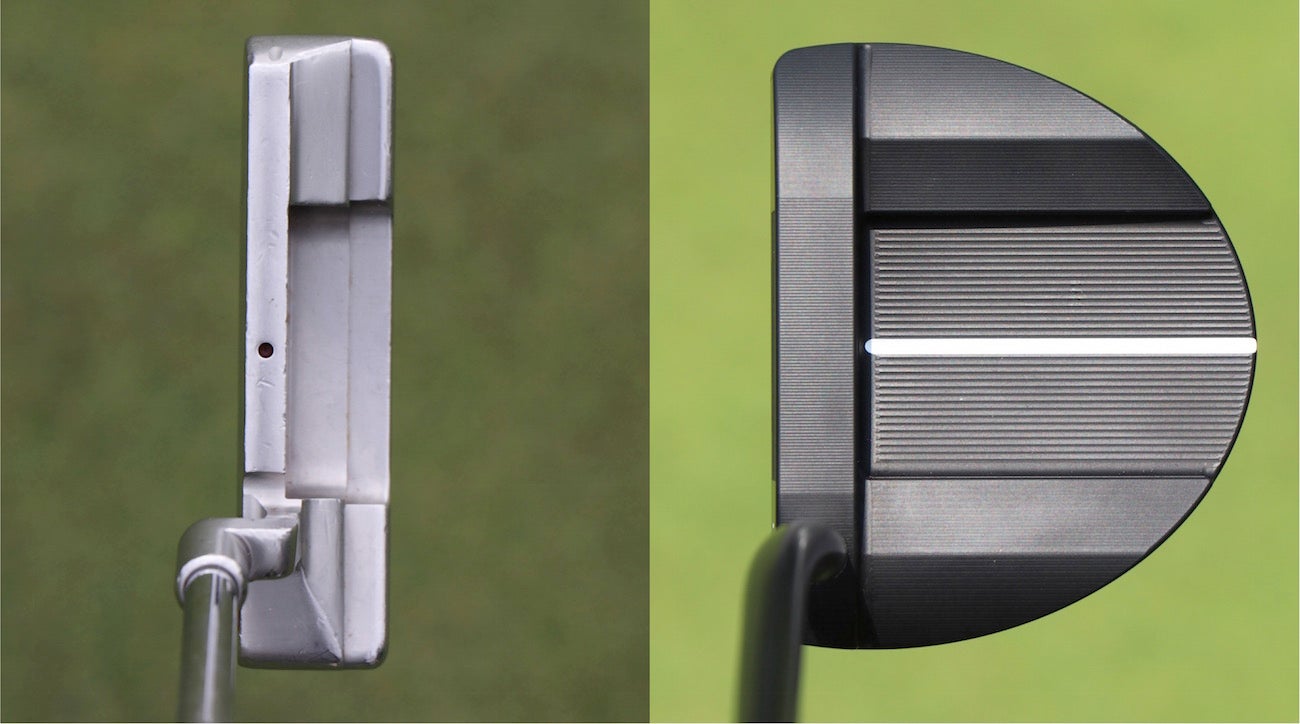
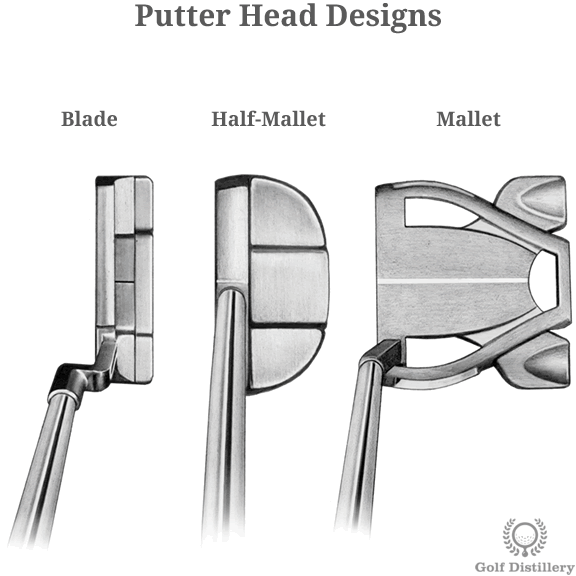
For decades, the blade putter was the standard. Characterized by a compact, thin head, often resembling the face of an iron club, blade putters offered a direct, unassisted feel for the ball. Their design emphasized a direct feedback mechanism, allowing skilled players to feel every nuance of the strike. However, this minimalist design inherently concentrated mass in a small area, making them less forgiving on off-center strikes. The technology was straightforward: a solid piece of metal shaped for impact. Forgiveness, or the club’s ability to maintain directional stability on mishits, was a secondary consideration to feel and control for the most precise players.
The Rise of Mallet Innovation: Performance Gadgetry
As golf equipment engineering advanced, designers began to explore ways to improve the putter’s stability and forgiveness. This drive led to the conceptualization and development of the mallet putter. Unlike the slender blade, mallet putters feature larger, more voluminous head shapes. This expansion wasn’t merely aesthetic; it was a deliberate design choice rooted in the pursuit of enhanced performance through redistributed mass. The objective was to move weight away from the face’s center, increasing the putter’s Moment of Inertia (MOI). A higher MOI translates directly to greater resistance to twisting on off-center hits, effectively broadening the “sweet spot” and making putts struck slightly imperfectly behave more like perfectly centered ones. This marked a significant technological leap, transforming the putter from a simple tool into a sophisticated, performance-optimized gadget.
Unpacking the Technology and Design of a Mallet Putter
The core identity of a mallet putter lies in its intricate engineering and thoughtful design, all geared towards augmenting a golfer’s putting stroke. Each component and design choice serves a specific functional purpose, much like the advanced features of any high-tech device.
Head Shape and Size: A Technological Advantage
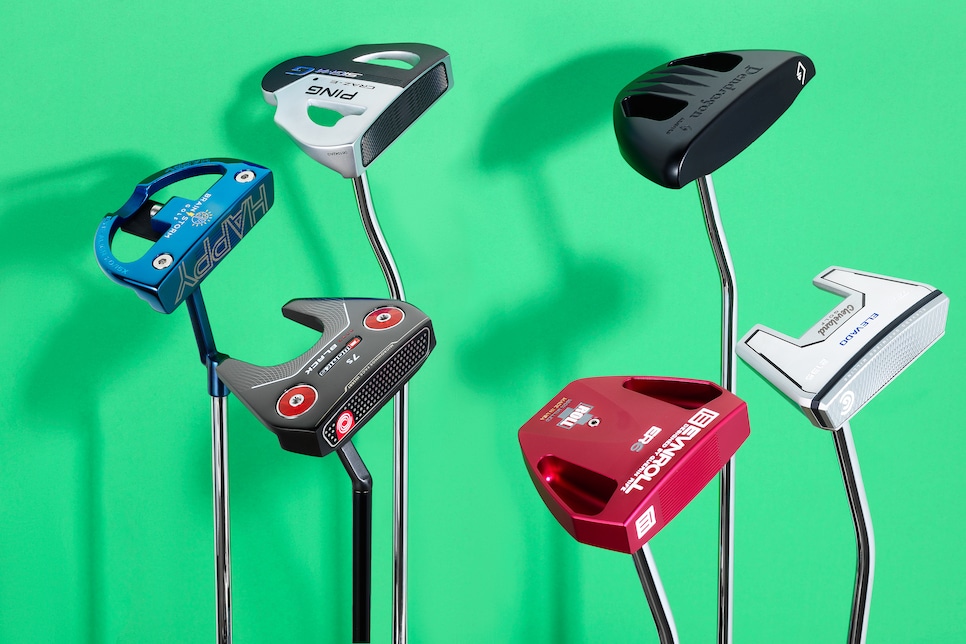
The most distinguishing feature of a mallet putter is its oversized head. These heads come in a vast array of shapes – semi-circles, squares, rectangles, wings, and futuristic geometric forms. This variety isn’t just about aesthetics; each shape is a calculated design decision to optimize weight distribution. By spreading the mass across a larger footprint, engineers can precisely position weight to achieve specific MOI characteristics, influencing how the putter behaves through the stroke and at impact. Larger heads also provide a more stable platform for incorporating complex alignment aids.
Weight Distribution and MOI: Engineering Stability
The technological heart of a mallet putter lies in its weight distribution. Engineers employ sophisticated CAD (Computer-Aided Design) software and material science to strategically place heavy elements (like tungsten weights) in the extremities of the putter head. This pushes the center of gravity deeper and further from the putter face, significantly increasing the MOI. A higher MOI means the putter head is less likely to twist when the ball is struck slightly off-center, leading to straighter putts even on minor mishits. This engineering choice is paramount to the mallet putter’s reputation for forgiveness and stability, effectively minimizing user error.
Alignment Aids: Visual Tech for Precision
Modern mallet putters are often equipped with elaborate alignment features – sight lines, dots, frames, or even multi-colored patterns. These aren’t just decorative; they are crucial visual technologies designed to help golfers correctly align their putter face to the target line. By providing clear visual cues, these aids assist in achieving consistent setup and aim, reducing the variability introduced by human perception. Some designs even incorporate “trueroll” technology or specific sightlines that help golfers visually confirm a straight back-and-through stroke path.
Insert Technology and Face Milling: Feel and Roll Optimization
The putter face, the critical interface between club and ball, is another area of significant technological development. Many mallet putters feature face inserts made from various materials like elastomer, polymer, aluminum, or composite blends. These inserts are engineered to provide a specific feel – from soft to firm – and to influence the initial roll of the ball. Beyond inserts, some putters utilize intricate face milling patterns. These micro-grooves or patterns are designed to reduce skidding and promote an immediate, forward roll, ensuring the ball stays on its intended line more effectively. This fine-tuning of the impact dynamics is a testament to the pursuit of optimal ball launch and consistency.
Shaft Bends and Hosel Designs: Customization of Interface
The connection between the shaft and the putter head, known as the hosel, also comes in various technological configurations. Different hosel designs (e.g., plumber’s neck, flow neck, double bend, center shaft) influence the putter’s toe hang, which is the amount the toe points down when the shaft is balanced on a finger. Toe hang correlates with a golfer’s stroke type – whether it’s more arced or straight back-and-through. This allows for a degree of customization, enabling golfers to select a mallet putter that complements their natural putting stroke mechanics, thereby optimizing the user interface between player and gadget.
Performance Benefits: Why Golfers Adopt this Tech
The advanced engineering of mallet putters translates into tangible performance advantages on the green, making them an attractive option for a wide range of golfers seeking to leverage technology for better scores.
Enhanced Forgiveness: Reducing User Error
The primary benefit of a mallet putter’s high MOI design is its enhanced forgiveness. Golfers rarely strike the ball perfectly in the center of the putter face every time. When a putt is hit slightly towards the heel or toe, a traditional blade putter is more prone to twisting, causing the ball to deviate offline and lose speed. A mallet putter, with its redistributed mass, significantly resists this twisting, leading to a much straighter roll and more consistent distance, even on mishits. This reduces the penalty for minor imperfections in the stroke.
Improved Consistency: Repeatable Performance
By minimizing the effects of off-center strikes and providing stable alignment, mallet putters help golfers achieve a higher degree of consistency in their putting. This consistency isn’t just about straightness but also about repeatable distance control. The stable head through impact allows for more predictable energy transfer to the ball, making it easier for golfers to judge the force needed for varying putt lengths. This reliability builds confidence and reduces variability in performance.
Alignment Assistance: Intuitive Aiming
For many golfers, one of the biggest challenges in putting is consistent aim. The integrated alignment aids on mallet putters act as a visual guide, helping to simplify this complex task. By providing a clear line or shape to align with the target, these features reduce aiming errors, allowing golfers to focus more on stroke mechanics and speed control rather than worrying if they are set up correctly. This intuitive aiming support is a significant benefit for golfers of all skill levels.
Customization Potential: Tailoring the Gadget to the User
The diverse range of mallet putter designs – in terms of head shape, weight configurations, hosel options, and face inserts – offers extensive customization potential. This allows golfers to select a putter that not only matches their personal aesthetic preferences but also precisely fits their stroke type, preferred feel, and specific putting challenges. This ability to tailor the “gadget” to the “user” ensures an optimized experience and better performance outcomes.
Choosing the Right Mallet Putter: A Tech Buyer’s Guide
Selecting a mallet putter isn’t just about picking the one that looks best; it involves understanding how different technological features interact with your personal putting mechanics and preferences. Approaching this choice with a methodical, tech-informed perspective can significantly enhance your performance.
Matching Stroke Type to Design
One of the most crucial considerations is matching the putter’s toe hang to your stroke path. Golfers generally have three stroke types: straight back and straight through, slight arc, or strong arc. Mallet putters with a face-balanced design (minimal toe hang) are typically better suited for straight-back-and-through strokes, as they resist rotation. Mallets with some toe hang (like those with certain flow neck hosels) can benefit golfers with a slight arc. Understanding your stroke dynamics, often through a professional fitting or self-analysis, is key to selecting the most compatible technological setup.
Lie Angle and Loft: Ergonomics and Launch Parameters
Beyond the head, the putter’s lie angle (the angle between the shaft and the ground) and loft (the angle of the putter face relative to vertical) are critical ergonomic and performance parameters. The correct lie angle ensures the putter sole sits flush on the ground at address, promoting a consistent stroke path and preventing unnecessary friction. Loft is engineered to lift the ball slightly out of any minor depression and impart a pure roll without skidding. A professional putter fitting uses digital tools to measure these angles and recommend adjustments based on your height, posture, and setup, optimizing the putter’s interaction with the ball and turf.
Personal Preference: User Interface and Aesthetic
While technical specifications are paramount, the subjective experience of a putter – its feel, balance, and visual appeal – also plays a significant role. A putter is, after all, an extension of the golfer. The sound it makes at impact, the texture of the grip, the confidence inspired by its look at address – these aspects of the “user interface” contribute to overall performance. Many golfers find that the visual stability and larger profile of a mallet instill greater confidence over the ball, which is a powerful psychological advantage.
The Future of Putter Technology
The evolution of the mallet putter is ongoing. Future advancements are likely to push the boundaries of materials science, potentially incorporating even lighter, stronger, or more vibration-dampening composites. We may see more sophisticated adjustable weighting systems, allowing for on-the-fly customization of MOI and feel. The integration of smart technology, such as embedded sensors providing real-time feedback on stroke path, face angle, and speed, could also become standard, transforming putters into data-rich performance analysis tools. As golf technology continues to innovate, the mallet putter will undoubtedly remain at the forefront of engineering efforts to make putting more consistent and enjoyable for golfers worldwide.
aViewFromTheCave is a participant in the Amazon Services LLC Associates Program, an affiliate advertising program designed to provide a means for sites to earn advertising fees by advertising and linking to Amazon.com. Amazon, the Amazon logo, AmazonSupply, and the AmazonSupply logo are trademarks of Amazon.com, Inc. or its affiliates. As an Amazon Associate we earn affiliate commissions from qualifying purchases.