
In the vast ecosystem of modern technology, we often marvel at the clarity of our smartphone displays or the speed of our processors, yet we rarely consider the silent sensors that allow our devices to interact with the physical world. Among these, the magnetometer stands as one of the most critical yet misunderstood components. While the term might sound like something out of a mid-century science fiction novel, the magnetometer is a foundational tool in contemporary engineering, navigation, and scientific research.
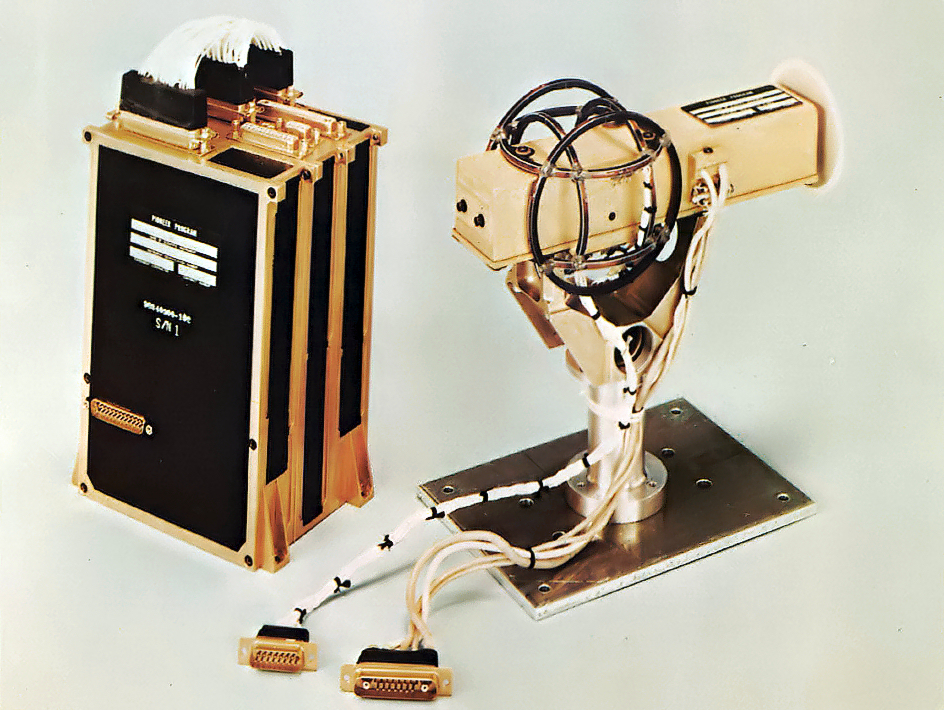
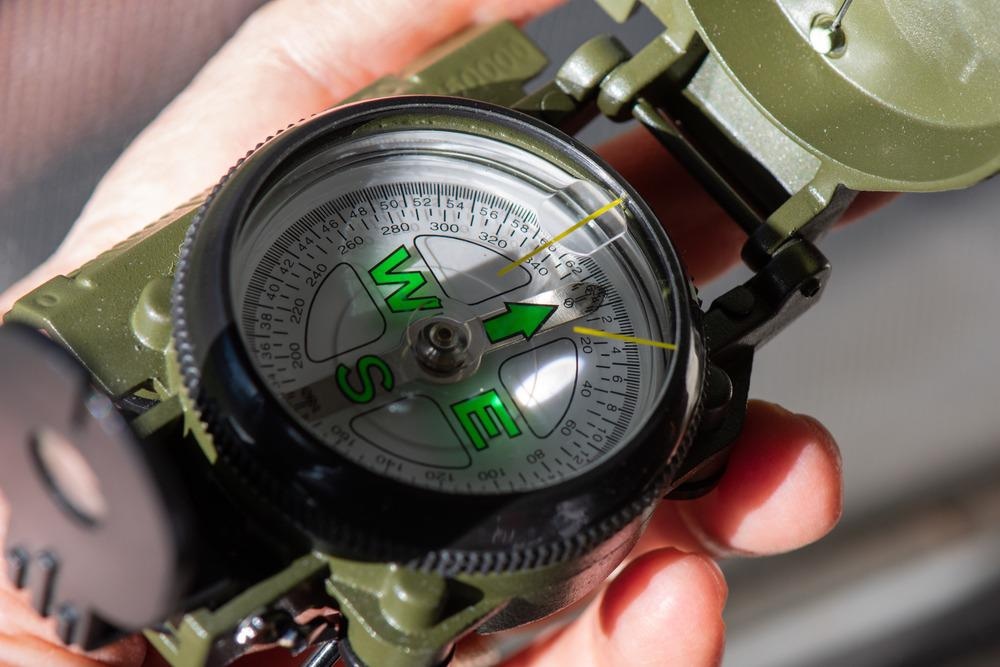
At its core, a magnetometer is a scientific instrument used to measure the strength, direction, or relative change of a magnetic field at a particular location. From the simple needle of a compass to the high-tech sensors in the Perseverance rover on Mars, magnetometers allow us to navigate, explore, and secure our world. In this article, we will delve into the technical mechanics of these devices and explore their diverse applications across the tech landscape.
Understanding the Core Technology: How Magnetometers Function
To understand what a magnetometer is used for, one must first grasp how it perceives a force that is invisible to the human eye. Magnetism is a vector quantity, meaning it has both magnitude and direction. Modern tech utilizes various types of magnetometers to interpret these vectors depending on the required precision.
The Hall Effect and MEMS Technology
Most consumer electronics, such as smartphones and tablets, utilize Micro-Electromechanical Systems (MEMS) magnetometers. These are often based on the “Hall Effect.” When a conductor carrying a current is placed in a magnetic field, a voltage (the Hall voltage) is generated across the conductor, perpendicular to both the current and the field. By measuring this voltage, the sensor can determine the strength of the magnetic field. MEMS technology allows these sensors to be microscopically small, enabling them to fit onto a silicon chip alongside accelerometers and gyroscopes.
Fluxgate Magnetometers
For more demanding technical applications, such as those found in military or geological equipment, fluxgate magnetometers are the standard. These devices use two cores of highly permeable magnetic material wound with coils. By passing an alternating current through these coils, the device can detect how external magnetic fields saturate the cores. Fluxgate sensors are significantly more sensitive than Hall Effect sensors, making them capable of detecting subtle changes in the Earth’s magnetic field or locating buried metallic objects.
SQUIDs: The Pinnacle of Sensitivity
At the extreme end of the tech spectrum are Superconducting Quantum Interference Devices, or SQUIDs. These utilize the principles of quantum mechanics and superconductivity to detect the most minute magnetic fields imaginable—fields as weak as those produced by the human brain’s neural activity. While not found in consumer gadgets, SQUIDs are vital in medical imaging (MEG) and high-level physics research.
Consumer Electronics: The Magnetometer in Your Pocket
The most common answer to “what is a magnetometer used for” can be found right in your pocket. If you have ever used a map app on your smartphone and seen the blue beam indicating which direction you are facing, you have interacted with a magnetometer.
Digital Compasses and Dead Reckoning
While GPS provides your coordinates (latitude and longitude), it doesn’t inherently know which way your body is oriented. The magnetometer acts as a digital compass, sensing the Earth’s magnetic North Pole to orient the digital map correctly. This becomes even more critical in “dead reckoning”—a navigation process where the device calculates position based on a previously determined position. In urban environments where tall buildings might block GPS signals (the “urban canyon” effect), the magnetometer works in tandem with the accelerometer to keep your navigation accurate.
Augmented Reality (AR) and Immersive Gaming
In the realm of emerging tech, magnetometers are essential for Augmented Reality (AR). For an AR application to overlay a digital object onto the physical world convincingly, the device must have a perfect understanding of its orientation in 3D space. The magnetometer provides the “heading” or “yaw” data necessary to ensure that when you move your phone, the digital dragon or furniture model stays anchored to the real-world floor. Without the magnetometer, AR experiences would feel jittery and disconnected.
Peripheral Sensing and Smart Covers
Magnetometers also handle simpler tech tasks. Many tablets use a small magnetometer to detect when a “smart cover” is closed. A tiny magnet embedded in the cover triggers the sensor, telling the software to turn off the screen to save battery. Similarly, magnetometers are used in some modern styluses and peripherals to track position and pressure without physical contact.
Aerospace and Defense: Navigating the Unknown
Beyond the consumer world, magnetometers are high-stakes instruments used in the aerospace and defense sectors. In these environments, precision is not just a feature; it is a safety requirement.
Drone Stability and Heading Control
Unmanned Aerial Vehicles (UAVs), or drones, rely heavily on a suite of sensors known as the Inertial Measurement Unit (IMU). The magnetometer is a core part of this unit. Because drones are susceptible to wind and electronic interference, they need a constant reference to “Magnetic North” to maintain their heading. If a drone’s magnetometer fails or experiences “magnetic interference” (often caused by flying too close to large metal structures), the drone may lose its sense of direction, leading to “toilet bowl” circling or total loss of control.
Space Exploration and Planetary Science
Magnetometers are among the most frequently flown instruments on space missions. NASA and the ESA use them to study the magnetospheres of other planets. For example, magnetometers on the Juno spacecraft have provided unprecedented data about Jupiter’s massive magnetic field. On Earth-orbiting satellites, these sensors help determine the craft’s attitude (orientation) relative to the Earth’s magnetic field lines, allowing for precise adjustments of solar panels and communication antennae.
Magnetic Anomaly Detection (MAD)
In defense tech, magnetometers are used for Magnetic Anomaly Detection. Submarines, being massive metallic objects, distort the Earth’s natural magnetic field as they move through the water. Specialized aircraft equipped with ultra-sensitive magnetometers can detect these “anomalies” from the air, allowing for the tracking of submerged vessels without the use of active sonar, which would give away the hunter’s position.
Industrial and Specialized Applications
The utility of the magnetometer extends deep into the Earth and across the industrial landscape, where it serves as a primary tool for discovery and safety.
Geological Surveys and Resource Exploration
The mining and oil industries are perhaps the largest industrial users of magnetometry. Different types of rocks and mineral deposits have varying magnetic susceptibilities. By flying a magnetometer over a region or towing one behind a ship, geologists can create “magnetic maps” of the subsurface. This helps identify iron ore deposits, volcanic pipes that might contain diamonds, or oil-bearing sedimentary basins. It is a non-invasive way to “see” beneath the Earth’s crust before expensive drilling begins.
Archaeology and Heritage Conservation
Magnetometers allow archaeologists to find buried structures—such as walls, hearths, or kilns—without moving a single grain of dirt. Human activity often leaves a magnetic footprint; for example, fired clay or moved earth has a slightly different magnetic signature than the surrounding undisturbed soil. This tech was famously used to map the full extent of sites like Stonehenge and ancient Roman cities, revealing hidden layouts that had been lost for millennia.
Infrastructure and Security
In the world of digital security and physical infrastructure, magnetometers are used for traffic management and building safety. Inductive-loop sensors at traffic lights are essentially large magnetometers that detect the presence of a car’s metal mass to trigger a light change. In high-security environments, walk-through metal detectors utilize magnetometry to identify concealed weapons, sensing the disruption in the local magnetic field caused by the person passing through.
The Future of Magnetometry in the Age of AI and Quantum Computing
As we look toward the future of technology, the magnetometer is undergoing a revolution driven by quantum physics and artificial intelligence.
Quantum Magnetometers and “GPS-Free” Navigation
One of the most exciting developments in the tech world is the advent of quantum magnetometers, such as those using Nitrogen-Vacancy (NV) centers in diamonds. These sensors are so sensitive they can detect magnetic fields at the atomic level. This precision opens the door to “Magnetic Navigation” (MagNav). By creating a hyper-detailed map of the Earth’s crustal magnetic field, vehicles could navigate with GPS-like accuracy by simply “reading” the magnetic signatures of the ground beneath them. Because this system doesn’t rely on satellites, it is unjammable, providing a massive leap in digital security and military resilience.
Predictive Maintenance and IoT Integration
In the Industrial Internet of Things (IIoT), magnetometers are being integrated into factory machinery to provide “predictive maintenance.” By monitoring the magnetic field emitted by an electric motor, AI algorithms can detect subtle changes that indicate a failing bearing or a short circuit long before the machine actually breaks down. This tech saves billions in downtime by allowing repairs to be scheduled only when truly necessary.
Healthcare and Wearable Tech
We are also seeing the migration of high-end magnetometry into the wearable space. Researchers are developing “magnetic skin”—thin, flexible membranes with integrated magnetometers that can track body movement with extreme precision. This could revolutionize physical therapy and VR gaming, allowing for motion capture that doesn’t require cameras or line-of-sight, but rather relies on the movement of the body through a controlled magnetic field.
In conclusion, the magnetometer is much more than a digital compass. It is a versatile, essential sensor that bridges the gap between digital systems and the physical forces of the universe. Whether it is helping you find your way to a new restaurant, helping a drone deliver a package, or helping scientists unlock the secrets of the solar system, the magnetometer remains a silent powerhouse of the modern technological age. As we move into an era of quantum sensing and AI-driven navigation, its importance will only continue to grow.
aViewFromTheCave is a participant in the Amazon Services LLC Associates Program, an affiliate advertising program designed to provide a means for sites to earn advertising fees by advertising and linking to Amazon.com. Amazon, the Amazon logo, AmazonSupply, and the AmazonSupply logo are trademarks of Amazon.com, Inc. or its affiliates. As an Amazon Associate we earn affiliate commissions from qualifying purchases.