
Long lead training for dogs, while seemingly straightforward, is a powerful and multifaceted tool that significantly enhances a dog’s ability to learn, respond, and thrive in a variety of real-world scenarios. Far beyond simply tethering a dog to a distant point, it’s a deliberate training methodology that fosters independence, strengthens the bond between dog and owner, and ultimately leads to a more confident and well-behaved canine companion. This technique is deeply rooted in the principles of operant conditioning and positive reinforcement, offering a structured yet flexible approach to building reliable obedience and a greater understanding of their environment.
The Foundation: Building a Solid Understanding of Boundaries and Recall
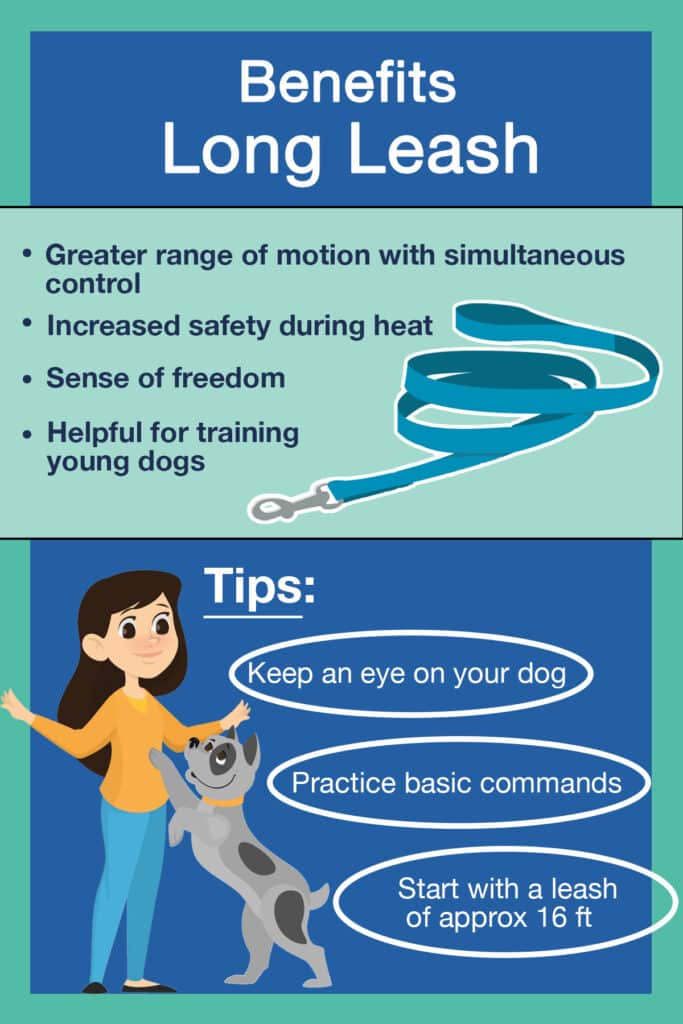
At its core, long lead training is instrumental in establishing a dog’s comprehension of boundaries and perfecting their recall. It provides a controlled environment where the dog can begin to explore their surroundings and test their limits, all while maintaining a safety line connected to their handler. This physical tether acts as a benevolent guardian, preventing potentially dangerous situations while allowing for a degree of freedom that is crucial for learning.
Mastering Recall: The Safety Net for Freedom
The most universally recognized application of long lead training is for honing a dog’s recall. The ability to call your dog back to you, regardless of distractions, is arguably the most critical safety skill a dog can possess. Long lead training allows for gradual exposure to increasing levels of distraction. Initially, the long lead ensures that even if the dog is tempted by a squirrel, another dog, or an enticing scent, they cannot completely disengage from the handler. The handler can use gentle pressure on the lead to guide the dog back, reinforcing the desired behavior with praise and rewards. As the dog’s reliability increases, the handler can gradually increase the distance and complexity of distractions, moving from a quiet backyard to a park, and eventually, to more bustling environments.
This progressive approach is vital. A dog that is only ever called in a controlled, distraction-free environment might perform flawlessly, but that skill rarely translates to the unpredictable outdoors. The long lead provides the safety net that allows the dog to make mistakes in a low-consequence setting, learn from those mistakes, and ultimately generalize their recall to a variety of situations. It teaches them that coming to the handler is always more rewarding than chasing after a fleeting distraction, fostering a strong desire to remain connected.
Establishing Boundaries: Understanding the “Stay” and Controlled Exploration
Beyond recall, long lead training is invaluable for teaching and reinforcing concepts like “stay” and for encouraging controlled exploration. When a dog is on a long lead, they are subtly taught about the invisible boundaries set by the leash. This can be used to prevent them from rushing through doorways, darting out of gates, or entering areas they are not supposed to. The handler can use the lead to physically guide the dog to stop, wait, or move away from a forbidden zone, associating the action with verbal cues and positive reinforcement.
Furthermore, the long lead allows dogs to experience the world with a degree of independence, which is crucial for developing confidence and self-assurance. They can sniff interesting scents, investigate new objects, and engage with their environment without the immediate pressure of being right next to their owner. This exploration, guided by the handler’s presence on the other end of the lead, teaches them to assess situations and make appropriate choices. For instance, a dog learning to walk nicely on a loose lead can practice this skill on a long lead, exploring at their own pace while still being connected, thus reinforcing good leash manners in a more relaxed setting. This controlled freedom is a powerful tool in preventing the development of anxiety or excessive reliance on the handler for reassurance in novel environments.
Enhancing Responsiveness and Building Trust
The core benefit of long lead training lies in its ability to significantly enhance a dog’s responsiveness to cues and, critically, to build a deeper level of trust between dog and owner. By creating scenarios where the dog has the freedom to explore but is still connected to a guiding hand, the training fosters an environment where the dog learns to actively seek out their handler for direction and reward.
Cultivating Independence Within Connection
Long lead training fosters a unique form of independence. The dog is not physically restrained, allowing them to move, investigate, and engage with their surroundings. However, the presence of the lead ensures they remain connected to their handler, a constant reminder of their partnership. This dynamic allows the dog to develop problem-solving skills and learn to make their own decisions within the established framework of the training. For example, a dog might choose to investigate a tempting smell but, remembering the connection to their handler, will naturally pause and look back, offering an opportunity for the handler to reward that attentiveness. This cultivates a dog that is engaged with the world but also attuned to their owner.

This independence is vital for preventing over-reliance or anxiety. Dogs that are constantly tethered or kept in very close proximity might become anxious when left alone or struggle to cope with new situations. Long lead training, by offering controlled freedom, builds a dog’s confidence in their ability to navigate their environment while still knowing their handler is a reliable resource. It teaches them that they can explore and have fun, but ultimately, their handler is their safe harbor and the source of positive experiences.
The Trust Factor: A Partnership Forged Through Reliability
The trust that develops through long lead training is profound. When a dog consistently experiences positive outcomes from responding to their handler’s cues, even when presented with enticing distractions, they learn to trust that their handler will guide them toward good things. The long lead becomes a symbol of this reliability. The dog understands that while they have the freedom to explore, their handler is always there to support them, redirect them if necessary, and reward them for making good choices.
This trust extends beyond obedience commands. It translates into a dog that is more willing to engage in new experiences, more comfortable in unfamiliar environments, and generally more at ease in their daily life. The consistent positive reinforcement paired with the safety of the lead builds a deep-seated belief in the handler’s intentions, creating a stronger, more resilient bond. This is particularly important for dogs with shy or fearful temperaments, as the controlled exposure and consistent positive reinforcement can significantly help them overcome their anxieties.
Expanding the Horizons: Advanced Applications and Real-World Readiness
Once the foundational elements of recall and boundary awareness are established, long lead training opens doors to a wealth of advanced applications. It becomes a crucial tool for preparing dogs for specific activities, enhancing their environmental awareness, and solidifying their reliability in increasingly challenging scenarios.
Preparing for Diverse Environments and Activities
Long lead training is indispensable for preparing dogs for a variety of real-world activities. For instance, dogs intended for fieldwork, hunting, or even advanced dog sports like agility or scent work often benefit from extended periods on a long lead. This allows them to practice specific skills, such as finding and retrieving objects, tracking scents, or maintaining focus amidst distractions, in a controlled yet expansive setting. The long lead enables trainers to simulate more complex scenarios without compromising the dog’s safety, allowing for the gradual introduction of distractions and environmental variables.
Furthermore, for dogs that will be expected to work off-leash in specific capacities (e.g., assistance dogs, search and rescue dogs), the long lead is a vital stepping stone. It allows them to build the necessary self-control and responsiveness in a way that prepares them for the ultimate goal of reliable off-leash work. This progressive approach ensures that the dog develops the confidence and understanding required to function independently while remaining highly attuned to their handler’s subtle cues.
Environmental Acclimation and Distraction Proofing
The true power of long lead training lies in its ability to “proof” a dog against distractions and acclimate them to a wide array of environments. By practicing obedience and recall in increasingly stimulating locations – parks with other dogs, busy streets, or even wooded trails – the dog learns that their handler’s commands take precedence over tempting stimuli. The long lead acts as a bridge, allowing the dog to experience these novelties while still being firmly anchored to their training.
This process of environmental acclimation is not just about obedience; it’s about building a confident, adaptable dog. Dogs that are exposed to a variety of sights, sounds, and smells in a positive and controlled manner are less likely to develop fear-based reactions or anxiety in new situations. They learn to assess their surroundings with curiosity rather than apprehension, knowing that they have the support and guidance of their handler. The long lead is the perfect tool for this, offering just enough freedom to explore and learn, but always maintaining the connection that signifies safety and reassurance.

The Long Lead as a Bridge to Freedom
In conclusion, long lead training is far more than a simple extension of a standard leash. It is a sophisticated training methodology that bridges the gap between controlled environments and the unpredictable realities of the outside world. By fostering independence, building unwavering trust, and progressively preparing dogs for increasing levels of distraction and complexity, long lead training cultivates a canine companion that is not only obedient but also confident, adaptable, and a joy to share life with. The freedom it ultimately grants – both to the dog in their exploration and to the owner in their peace of mind – is a testament to the power of this versatile and invaluable training technique.
aViewFromTheCave is a participant in the Amazon Services LLC Associates Program, an affiliate advertising program designed to provide a means for sites to earn advertising fees by advertising and linking to Amazon.com. Amazon, the Amazon logo, AmazonSupply, and the AmazonSupply logo are trademarks of Amazon.com, Inc. or its affiliates. As an Amazon Associate we earn affiliate commissions from qualifying purchases.