
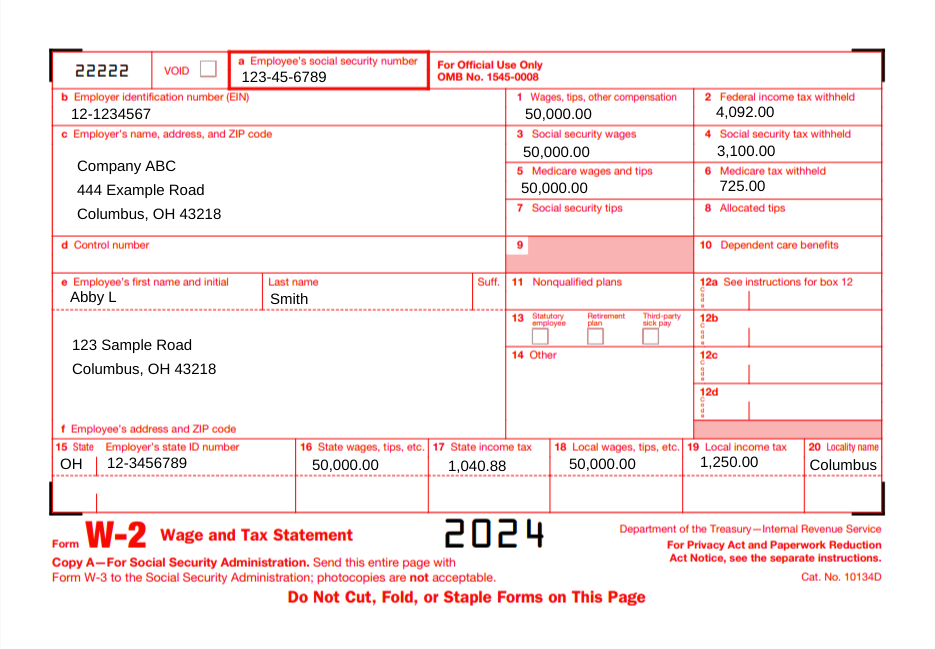
Tax season often brings a mixture of anticipation and confusion, especially when taxpayers begin to scrutinize the various boxes on their Form W-2. While most individuals are familiar with federal and state income tax withholdings, the lower section of the W-2—specifically Boxes 18 through 20—can be a source of perplexity. If you have ever looked at your tax statement and wondered, “What is a locality name on my W-2?” you are looking at a crucial component of local government funding and your personal financial responsibility.
In the realm of personal finance and business accounting, understanding these details is not merely a matter of curiosity; it is a requirement for accurate filing and avoiding potential penalties. This guide delves deep into the significance of the locality name, the financial mechanics of local tax withholding, and how these figures impact your bottom line.

Decoding the W-2: The Role of Boxes 18, 19, and 20
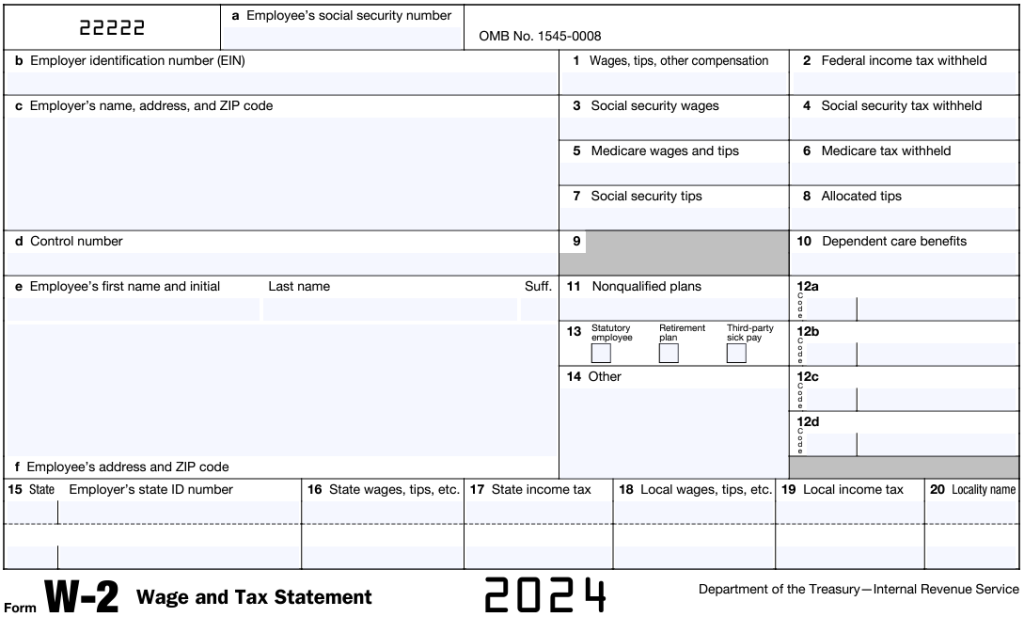
The Form W-2 is a comprehensive snapshot of your annual earnings and the taxes withheld by your employer. While the top half of the form deals with federal obligations (Social Security, Medicare, and Federal Income Tax), the bottom section is reserved for state and local data. To understand the locality name, one must understand the triad of boxes at the bottom of the form.
What is Box 20 (Locality Name)?
Box 20, labeled “Locality name,” identifies the specific municipality, city, township, or school district to which your local taxes were paid. Unlike federal taxes, which apply to everyone in the country, or state taxes, which apply to everyone in a specific state, local taxes are hyper-specific.
The locality name is often abbreviated. For example, if you work in New York City, the box might read “NYC.” If you are in a specific school district in Ohio or a borough in Pennsylvania, you might see a code or a shortened version of the town’s name. This name tells the state tax agency and the local tax collector exactly where your money was sent and which jurisdiction has the right to tax your income.
The Relationship Between Boxes 18 and 19
The locality name in Box 20 does not exist in a vacuum; it is the identifier for the financial data found in Boxes 18 and 19.
- Box 18 (Local wages, tips, etc.): This represents the portion of your earnings that is subject to local tax. In many cases, this amount matches your state wages (Box 16) or federal wages (Box 1), but it can differ depending on local tax laws regarding pre-tax contributions like 401(k) plans or health insurance premiums.
- Box 19 (Local income tax): This is the actual dollar amount that was withheld from your paycheck throughout the year and sent to the locality listed in Box 20.
For a taxpayer, ensuring these three boxes correlate is essential for maintaining accurate financial records. If a locality name is listed but Box 19 is empty, it may indicate a reporting error that could trigger an inquiry from local tax authorities.
Why Local Taxes Matter for Your Personal Finances
From a personal finance perspective, local income taxes—often referred to as “earned income taxes” or “occupational privilege taxes”—represent a significant line item in a household budget. While often smaller than federal or state rates, ranging from 0.5% to nearly 4%, they contribute to the overall tax burden that reduces your take-home pay.
Common Examples of Local Taxing Jurisdictions
Not every state permits local municipalities to levy an income tax. However, in states like Pennsylvania, Ohio, Maryland, Michigan, and New York, local taxes are a primary source of revenue for community services.
- City Taxes: Large metropolitan areas like Philadelphia, Detroit, and New York City have their own income tax requirements for both residents and people who work within city limits.
- School District Taxes: In some regions, particularly in Ohio and Iowa, school districts are authorized to levy income taxes to fund public education. The locality name here would be the name or number of the school district.
- County Taxes: In states like Maryland and Indiana, taxes are often collected at the county level rather than the city level.
Understanding which jurisdiction is taxing you is vital for residents who may live in one locality but work in another. Some jurisdictions offer “reciprocity,” meaning you only pay tax to your place of residence, while others require payment to the place of work.
The Impact of Remote Work on Local Tax Obligations
The rise of the digital economy and remote work has complicated the “locality name” section of the W-2 significantly. Previously, an employee’s locality was simply the location of their office. Today, a worker might live in a suburban township while their employer is headquartered in a major city three states away.
This shift has created a complex web of “nexus” issues. If you are working from home, your “locality” for tax purposes is generally your home address. However, some cities have “convenience of the employer” rules that attempt to tax remote workers if their office is located within the city. For the individual, this means double-checking Box 20 to ensure the employer is withholding for the correct jurisdiction. Failing to update your employer on a change of address can lead to the wrong locality name being listed, resulting in a tax bill from your actual home municipality at the end of the year.
Navigating Payroll Complexity for Business Owners and Employees
For business owners and payroll departments, the locality name represents a high-stakes compliance requirement. Managing local taxes is often cited as one of the most difficult aspects of business finance because there is no centralized database for local tax rates and names across the thousands of jurisdictions in the United States.
Accuracy in Reporting: Avoiding Penalties
From a business finance standpoint, an error in Box 20 is more than just a typo; it is a failure to remit funds to the correct government entity. If an employer incorrectly identifies the locality, they may be liable for back taxes, interest, and penalties.
For employees, an incorrect locality name can delay tax refunds. When you file your local tax return, the local tax collector will look for a W-2 that matches their records. If the locality name on the W-2 is “Springfield Township” but you actually live in “Springfield City,” the automated systems may flag the return for a manual audit. It is a best practice for employees to review their first pay stub of the year to ensure the local withholding matches their current residence and work location.
Troubleshooting Discrepancies in Locality Names
What should you do if the locality name on your W-2 is unfamiliar or seems incorrect?
- Verify the Abbreviation: Sometimes, locality names are coded. “EIT” might stand for “Earned Income Tax” for a specific regional collection agency like Berkheimer or Jordan Tax Service in Pennsylvania.
- Check Local Tax Maps: Many states provide online tools where you can enter your address to find your specific local taxing authority and its official name.
- Request a Corrected W-2 (W-2c): If the employer truly withheld funds for the wrong city or used the wrong name, the business finance department must issue a Form W-2c. This ensures that the money is reallocated correctly and that your personal tax filing is accurate.
Best Practices for Filing Local Income Taxes
Managing the financial implications of local taxes requires proactive planning. Because local taxes are often handled separately from federal and state returns, they are frequently overlooked until the last minute.
Documentation and Record-Keeping
To maintain a healthy financial profile, keep copies of your W-2s for at least seven years. This is particularly important for local taxes because local jurisdictions often have different statutes of limitations than the IRS. If a locality claims you owe money from five years ago, your W-2—and specifically the locality name in Box 20—is your primary evidence of payment.
Furthermore, if you move during the year, ensure you receive two separate entries in the local tax section of your W-2: one for the time spent in the old locality and one for the new one. This ensures you aren’t overpaying one jurisdiction at the expense of another.
Utilizing Financial Tools for Tax Preparation
In the modern era of personal finance, specialized software has become an invaluable tool for navigating the “locality name” maze. High-end tax preparation software can often “read” the locality name or code from a scanned W-2 and automatically link it to the correct local tax form.
However, for business owners, investing in a robust payroll system is the best way to manage these complexities. Modern payroll platforms use “geocoding” to determine the exact tax jurisdiction based on the employee’s and employer’s GPS coordinates. This level of precision minimizes the risk of entering an incorrect locality name and protects the business from the financial strain of local tax audits.
Conclusion: The Bottom Line on Box 20
While the “locality name” on a W-2 might seem like a minor administrative detail, it is a fundamental element of the American tax structure. It represents the financial connection between an individual and their immediate community, funding everything from local police departments and road repairs to public schools and parks.
For the individual investor and earner, Box 20 is a reminder of the importance of geographical location in financial planning. For the business professional, it is a symbol of the precision required in modern payroll and corporate finance. By understanding what a locality name is and how it functions within the broader context of your W-2, you can approach tax season with confidence, ensuring that your contributions to your local community are accurately recorded and your personal financial health is protected.
aViewFromTheCave is a participant in the Amazon Services LLC Associates Program, an affiliate advertising program designed to provide a means for sites to earn advertising fees by advertising and linking to Amazon.com. Amazon, the Amazon logo, AmazonSupply, and the AmazonSupply logo are trademarks of Amazon.com, Inc. or its affiliates. As an Amazon Associate we earn affiliate commissions from qualifying purchases.