
In the contemporary era of hyper-connectivity, we often marvel at the speed of 5G networks, the precision of GPS navigation, and the seamless nature of satellite television. However, the sophisticated hardware that makes these feats possible often remains hidden from the average consumer. At the heart of almost every wireless receiver system lies a critical component known as the Low-Noise Amplifier, or LNA.
While the concept of an amplifier is familiar to most—a device that increases the strength of a signal—the LNA is a specialized breed. Its primary objective is not just to make a signal louder, but to do so while introducing as little electronic “noise” as possible. In a world where signals are often weak and buried under layers of atmospheric and electronic interference, the LNA serves as the gatekeeper of clarity. This article explores the technical intricacies, performance metrics, and vital applications of the LNA within the broader technology landscape.
The Fundamental Mechanics of a Low-Noise Amplifier
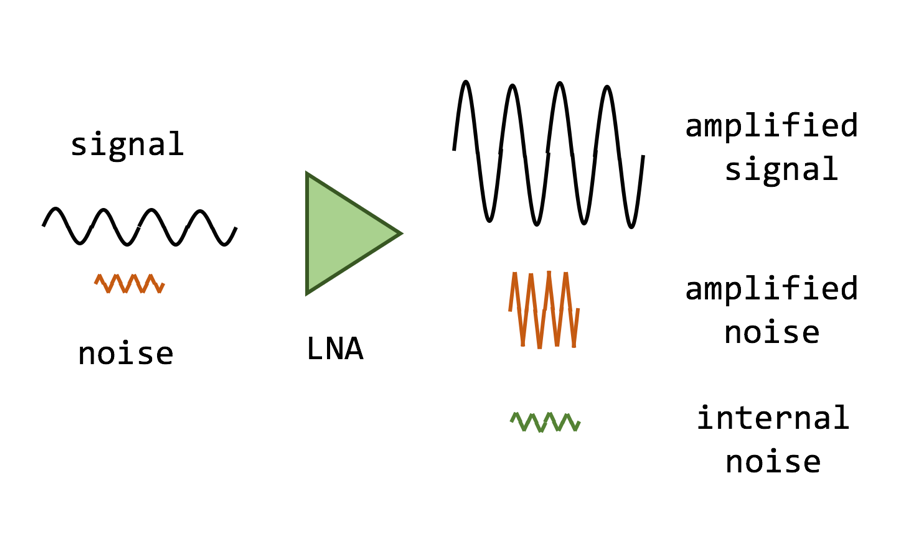
To understand what an LNA is, one must first understand the environment in which it operates. Every electronic device generates a certain amount of thermal noise due to the random movement of electrons. When a smartphone or a satellite dish receives a signal from a distant source, that signal is often incredibly faint—sometimes measured in picowatts. If we were to use a standard power amplifier to boost this signal, the amplifier’s own internal noise would likely drown out the weak signal, resulting in nothing but static.
How an LNA Works
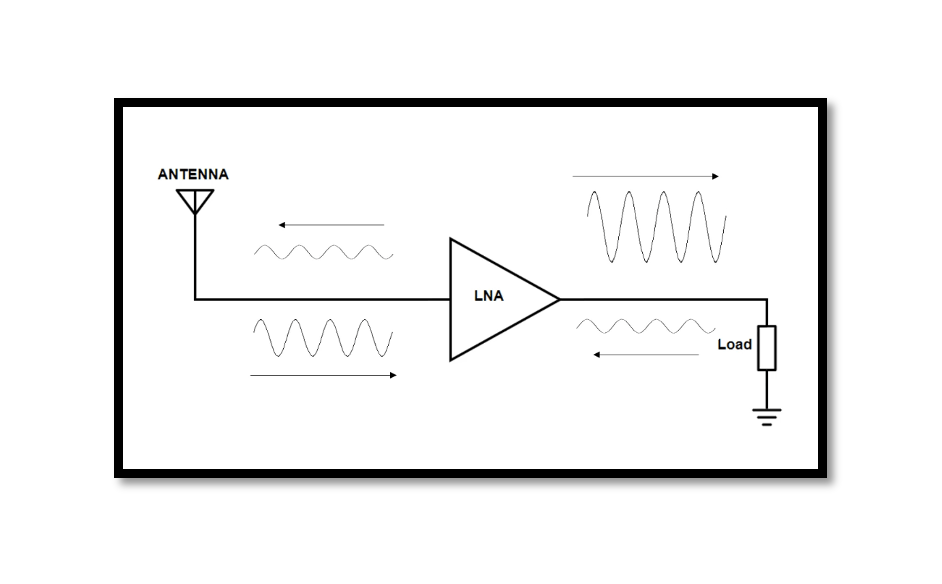
An LNA is specifically designed to be the first component a signal encounters after the antenna. Its engineering priority is to provide a high “gain” (amplification) while maintaining a very low “Noise Figure.” By boosting the signal immediately at the “front end” of the receiver, the LNA ensures that the signal becomes strong enough to be processed by subsequent stages of the radio frequency (RF) chain without being corrupted by the noise those later stages might produce.
The Importance of the First Stage: The Friis Formula
In telecommunications engineering, the importance of the LNA is mathematically anchored in the Friis Formula for noise factor. This principle states that the total noise of a multi-stage system is dominated by the noise of the very first stage. Essentially, if the LNA does a poor job, no amount of high-end processing later in the chain can recover the lost data. This makes the LNA the most critical component in determining the overall sensitivity of a receiver. If the LNA is high-quality, the entire device—be it a radar system or a Wi-Fi router—performs significantly better.
Key Performance Metrics of an LNA
Not all LNAs are created equal. Engineers must balance several competing factors when designing or selecting an LNA for a specific technological application. These metrics define the “cleanliness” and efficiency of the amplification process.
Noise Figure (NF)
The Noise Figure is arguably the most important specification of an LNA. Measured in decibels (dB), it represents the amount of noise the amplifier adds to the signal. An ideal (but impossible) amplifier would have a Noise Figure of 0 dB. In high-performance tech applications, such as satellite communication, engineers strive for LNAs with Noise Figures as low as 0.5 dB to 1.5 dB. The lower the NF, the better the receiver can “hear” distant or weak transmissions.
Gain and Linearity
While low noise is the priority, the LNA must also provide sufficient gain to overcome the noise of subsequent components. However, more gain isn’t always better. If the gain is too high, the amplifier might reach “saturation,” where it can no longer increase the signal linearly, leading to distortion. This relationship is measured through metrics like the Third-Order Intercept Point (IP3) and the 1dB Compression Point (P1dB). A high-quality LNA must remain linear even when it encounters strong interfering signals from nearby electronics.
Power Consumption and Efficiency
For mobile technology and IoT (Internet of Things) devices, power consumption is a vital metric. An LNA must be efficient enough to operate on minimal power to preserve battery life. As we move toward a world of “smart” sensors that must last years on a single charge, the development of ultra-low-power LNAs has become a major focus for semiconductor manufacturers.
Applications Across the Tech Landscape
The LNA is a ubiquitous component, found in everything from the pocket-sized gadgets we use daily to the massive infrastructure that powers global communications.
5G and Mobile Connectivity
The rollout of 5G technology has placed unprecedented demands on LNA design. 5G utilizes higher frequency bands, including millimeter-wave (mmWave) spectrum. At these high frequencies, signals attenuate (weaken) very quickly and are easily blocked by walls or even rain. Consequently, 5G base stations and smartphones require highly advanced LNAs that can operate at 28GHz or 39GHz while maintaining an extremely low noise floor to catch these fragile, high-speed signals.
Satellite and Space Communications
In space exploration and satellite TV, signals travel thousands of miles through the atmosphere. By the time a signal from a GPS satellite reaches your phone, it is significantly weaker than the ambient electronic noise of the Earth. Without an LNA, GPS would be impossible; the receiver would be unable to distinguish the satellite’s timing pulse from the background “hiss” of the universe. Similarly, deep-space probes like the Voyager or the James Webb Space Telescope rely on cryogenic LNAs—amplifiers cooled to near absolute zero—to minimize thermal noise and capture data from the edges of our solar system.
Consumer Gadgets and IoT
Beyond phones, LNAs are essential for Bluetooth headphones, Wi-Fi-enabled smart home devices, and even automotive radar. In self-driving cars, LNAs process the return signals of radar pulses used to detect obstacles. In this context, the speed and clarity provided by the LNA are quite literally a matter of safety, allowing the vehicle’s computer to accurately map its surroundings in real-time.
Choosing and Integrating an LNA in System Design
For hardware developers and electrical engineers, choosing the right LNA involves a trade-off between performance, cost, and physical footprint.
Discrete vs. Integrated LNAs
In the past, LNAs were almost always “discrete” components—separate chips dedicated solely to amplification. Today, many modern systems-on-a-chip (SoC) integrate the LNA directly into a larger RF transceiver. While integrated LNAs save space and reduce costs, discrete LNAs are still preferred for high-end applications where the highest possible sensitivity is required. Designers must decide if the space-saving benefits of integration outweigh the superior noise performance of a standalone chip.
Impedance Matching and Thermal Management
An LNA does not work in isolation. For it to function correctly, it must be “matched” to the antenna’s impedance (usually 50 ohms). If the matching is poor, the signal will reflect back toward the antenna rather than entering the amplifier, a phenomenon known as “return loss.” Additionally, because heat increases thermal noise, high-end LNAs must be designed with thermal management in mind. In industrial or military tech, this might involve heat sinks or specialized semiconductor materials like Gallium Nitride (GaN) or Silicon-Germanium (SiGe) that handle heat more effectively than standard silicon.
The Future of LNA Technology
As we look toward the future of technology, the evolution of the LNA continues to move in two directions: higher frequencies and higher integration.
Gallium Nitride (GaN) and New Materials
For decades, Silicon (Si) and Gallium Arsenide (GaAs) were the standard materials for LNA fabrication. However, the rise of 6G and advanced defense radar is pushing the boundaries of these materials. Gallium Nitride (GaN) is emerging as a game-changer. It allows for LNAs that can handle higher power levels and operate at much higher frequencies without breaking down, making it ideal for the next generation of satellite and terrestrial networks.
AI-Enhanced Signal Processing
A fascinating trend in the tech world is the marriage of analog hardware like the LNA with Artificial Intelligence. Future RF front-ends may use AI to dynamically adjust the LNA’s parameters—such as bias current and gain—in real-time based on the environment. If the device detects a lot of interference, it could automatically shift the LNA into a high-linearity mode. If the signal is clear, it could switch to a low-power mode to save battery. This “cognitive radio” approach represents the next frontier in wireless efficiency.

Conclusion
Though it rarely receives the spotlight, the Low-Noise Amplifier is one of the most vital components of the modern digital age. It is the bridge between the chaotic, noisy physical world of electromagnetic waves and the clean, binary world of digital data. Whether it is enabling the 5G revolution, guiding a ship via satellite, or allowing a drone to be controlled from miles away, the LNA ensures that the messages we send and receive are heard loud and clear. As our world becomes increasingly wireless, the pursuit of the “perfect” LNA remains a cornerstone of technological progress.
aViewFromTheCave is a participant in the Amazon Services LLC Associates Program, an affiliate advertising program designed to provide a means for sites to earn advertising fees by advertising and linking to Amazon.com. Amazon, the Amazon logo, AmazonSupply, and the AmazonSupply logo are trademarks of Amazon.com, Inc. or its affiliates. As an Amazon Associate we earn affiliate commissions from qualifying purchases.