
Navigating the landscape of business structures can be a daunting task for entrepreneurs and small business owners. Among the most common inquiries is the confusion surrounding the term “LLC Corp.” In reality, these two entities are distinct legal structures. An LLC stands for a Limited Liability Company, while a Corp refers to a Corporation. Understanding the fundamental differences, benefits, and financial implications of these two structures is critical for anyone looking to formalize their business, protect personal assets, and optimize their financial strategy.
Defining the Limited Liability Company (LLC)
An LLC is a hybrid business structure that combines the liability protection typically associated with a corporation with the tax flexibility and operational simplicity of a partnership or sole proprietorship. It is a creature of state law, meaning the rules governing an LLC can vary significantly depending on where you choose to register your business.
How an LLC Operates
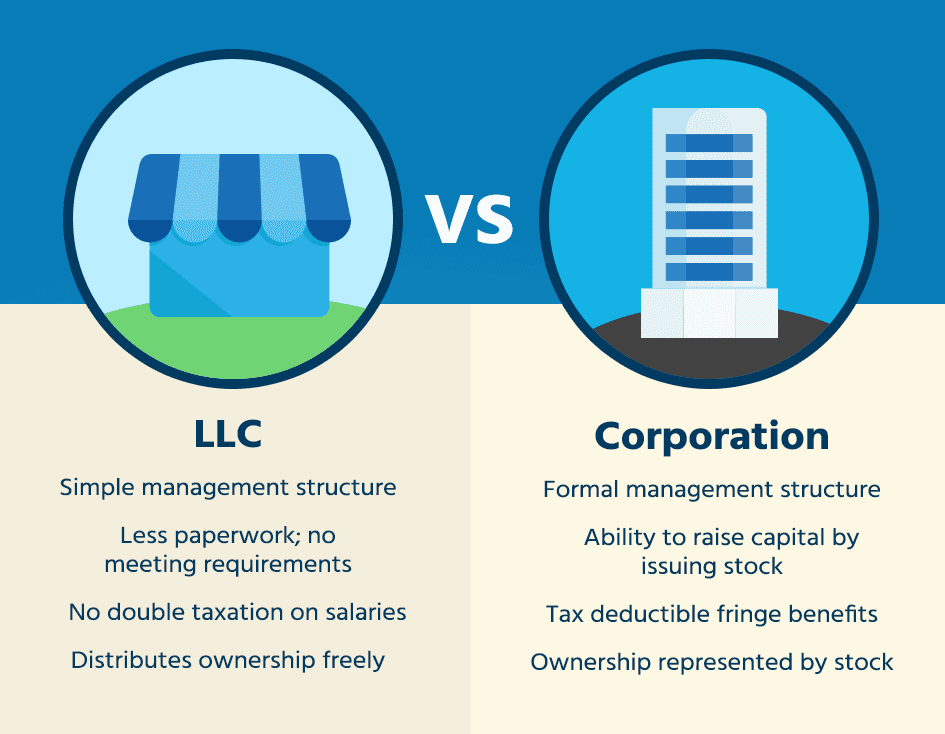
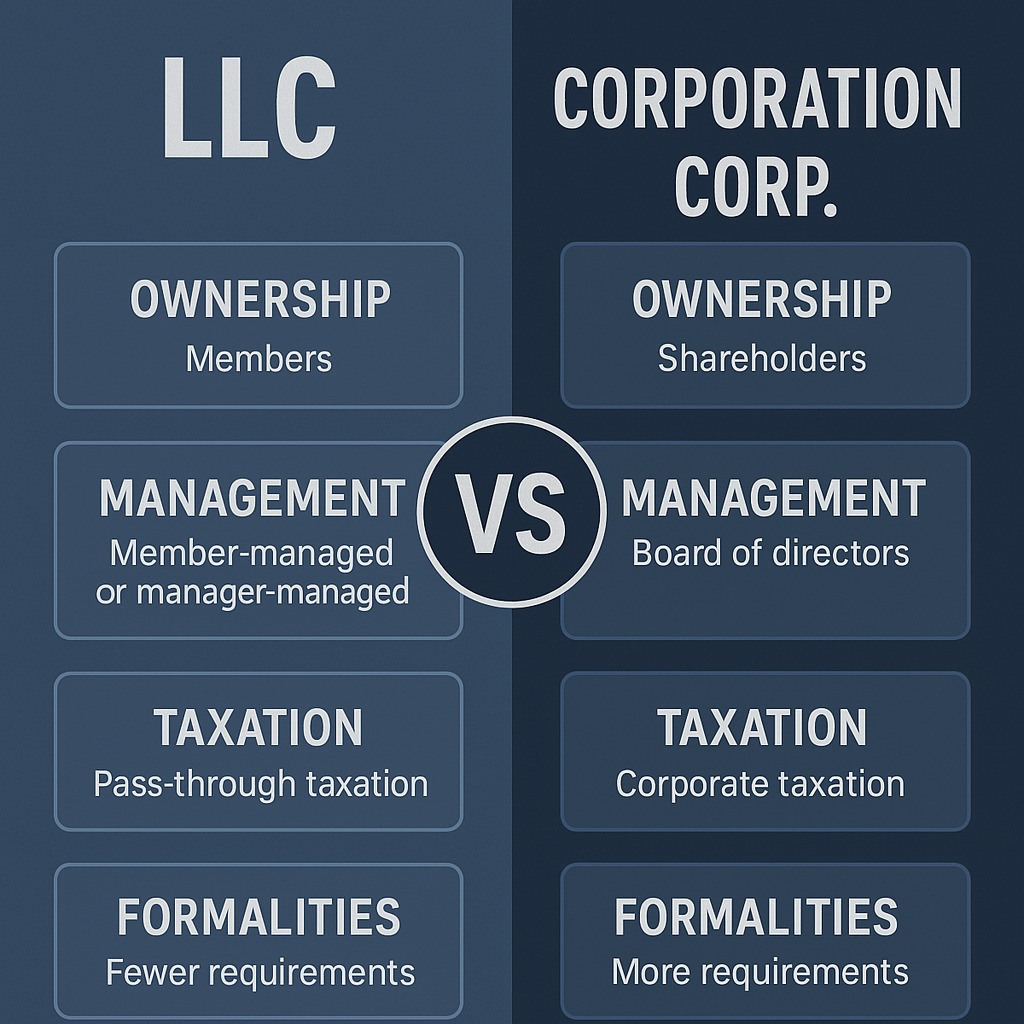
The primary appeal of an LLC lies in its flexible management structure. Unlike corporations, which are mandated by law to have a board of directors and officers, an LLC can be managed directly by its members (the owners) or by a designated manager. This reduces the administrative burden significantly. There are no mandatory annual meetings, no requirement to keep formal minutes, and fewer reporting requirements, making it an attractive option for startups, freelancers, and small business owners who prefer to focus their energy on growth rather than paperwork.
Personal Liability Protection
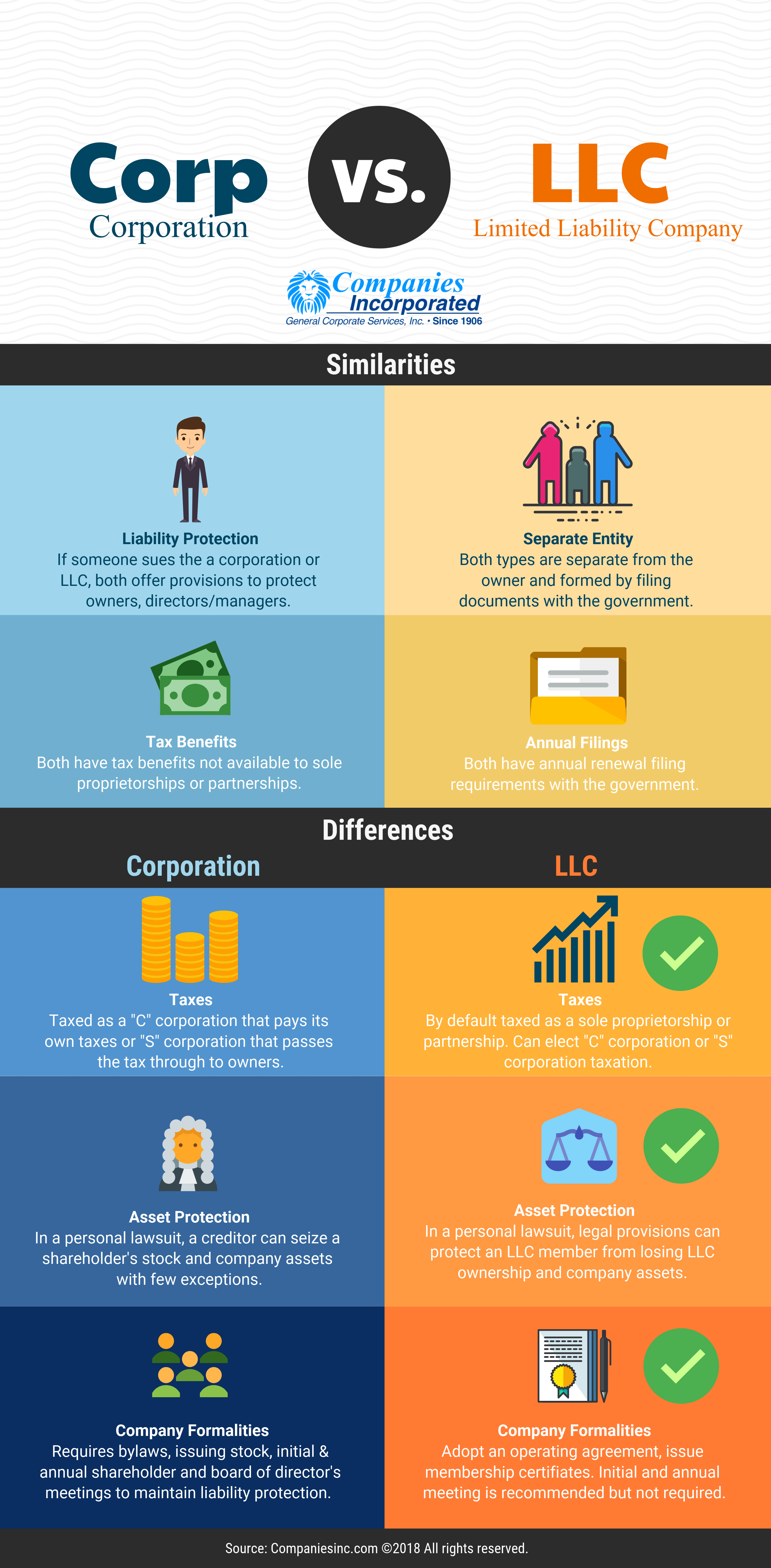
The “Limited Liability” in LLC is the cornerstone of its popularity. When you form an LLC, the business is viewed as a separate legal entity from you as an individual. This creates a “corporate veil” that shields your personal assets—such as your home, personal savings, and personal vehicles—from the debts and legal liabilities of the business. If the business is sued or faces bankruptcy, your personal wealth generally remains protected, provided you have maintained a clear separation between personal and business finances.
Understanding the Corporation (Corp)
A corporation is a legal entity that is entirely separate from its owners, known as shareholders. Corporations are viewed as independent “persons” in the eyes of the law, capable of entering contracts, suing, and being sued. Because of this high level of formality, corporations are generally considered the superior structure for businesses planning to raise significant capital from outside investors or eventually go public.
The Formalities of Corporate Governance
Corporations are governed by strict regulations. They must have a board of directors, which is responsible for high-level decision-making, and corporate officers who handle day-to-day operations. Furthermore, corporations are required to hold annual general meetings, keep detailed minutes of these meetings, and maintain meticulous records of their corporate resolutions. While this creates a more complex operational environment, it also provides a transparent framework that investors find reassuring.
Double Taxation vs. Pass-Through Taxation
One of the most significant differences between an LLC and a corporation is the tax treatment. By default, an LLC is a “pass-through” entity. This means the business itself does not pay federal income tax. Instead, business profits and losses “pass through” to the owners’ personal tax returns, where they are taxed at individual income tax rates.
In contrast, a standard corporation (a C-Corp) is subject to “double taxation.” First, the corporation pays corporate income tax on its profits. Then, when the remaining profits are distributed to shareholders in the form of dividends, the shareholders pay personal income tax on those dividends. While this can seem like a major disadvantage, certain tax deductions and the ability to retain earnings within the company can make the C-Corp structure highly efficient for larger, high-revenue businesses.
Key Differences for Your Financial Strategy
Choosing between an LLC and a corporation is not just a legal decision; it is a fundamental pillar of your long-term business finance strategy. Your choice will dictate how you pay yourself, how you handle tax withholdings, and how you attract external capital.
Accessing Capital and Investors
If your goal is to secure venture capital or angel investment, the C-Corp structure is almost always the industry standard. Institutional investors prefer the C-Corp model because it allows for the issuance of different classes of stock—such as preferred stock and common stock—which is essential for complex equity financing deals. LLCs, while capable of issuing membership units, do not offer the same familiarity or ease for standardized investment rounds.
Flexibility in Taxation
The IRS allows LLC owners a unique level of flexibility. An LLC can choose to be taxed as a sole proprietorship (for single-member LLCs), a partnership (for multi-member LLCs), or it can elect to be taxed as an S-Corp or C-Corp. This “check-the-box” taxation allows you to transition your tax strategy as your business revenue grows. For example, many LLC owners choose to be taxed as an S-Corp once their profits reach a level where they can save on self-employment taxes by splitting their income between a reasonable salary and a distribution.
The Role of Business Expenses
Regardless of whether you choose an LLC or a corporation, the ability to deduct legitimate business expenses is a massive financial advantage. From home office deductions and travel expenses to equipment costs and professional services, both entities allow you to lower your taxable income by deducting the costs of doing business. However, the documentation required to support these deductions is more stringent for corporations. Maintaining a clear divide between your business and personal spending is vital for both, but the administrative trail for a corporation must be bulletproof to satisfy regulatory scrutiny.
Evaluating Your Business Stage
The decision between forming an LLC or a corporation often comes down to your current stage of development.
- The Startup Phase: Most small businesses and side hustles thrive within the LLC structure. It provides the legal protection you need without the overwhelming administrative costs of a corporation. The ability to manage the business simply and report taxes on your personal return allows you to maintain focus on your revenue-generating activities.
- The Growth Phase: As you hire employees, expand into new markets, or start seeking significant capital, you may find that the internal processes of a corporation become more appealing. The structure of a corporation forces a level of discipline that can actually help a scaling business operate more efficiently.
- The Exit Strategy: If your goal is to sell your business or list it on a public exchange, the C-Corp structure is the industry-standard vehicle. It is widely recognized by auditors, regulators, and buyers, and it offers the cleanest structure for a transfer of ownership.
Making the Final Decision
When you ask, “What is a LLC Corp?”, you are actually asking which vehicle is better suited to drive your business goals. There is no one-size-fits-all answer. Your choice should be informed by a combination of your risk tolerance, your desire for operational simplicity, and your long-term financial objectives.
If you are just beginning your journey as an entrepreneur, the LLC remains the gold standard for its balance of protection and simplicity. It allows you to enter the market with legal security while keeping your overhead low. Conversely, if you are building an entity designed to scale rapidly and attract outside funding, the corporation provides the necessary foundation for institutional growth.
Ultimately, both structures exist to provide a framework for professionalizing your operations and protecting your personal wealth. The most successful business owners are those who view these legal entities not as a burden, but as a strategic tool to be used, refined, and transitioned as the business evolves. Take the time to consult with a tax professional or legal advisor before making your selection, as the nuances of state regulations and your personal financial profile can significantly influence the best course of action. Whether you start as an LLC or jump straight into a corporation, the key is to prioritize clear record-keeping and a structured approach to your business finances from day one.
aViewFromTheCave is a participant in the Amazon Services LLC Associates Program, an affiliate advertising program designed to provide a means for sites to earn advertising fees by advertising and linking to Amazon.com. Amazon, the Amazon logo, AmazonSupply, and the AmazonSupply logo are trademarks of Amazon.com, Inc. or its affiliates. As an Amazon Associate we earn affiliate commissions from qualifying purchases.