
The concept of a “living wage” has become a critical point of discussion in the United States, representing more than just a figure on a paycheck. It embodies the fundamental belief that a full-time worker should earn enough to cover their basic needs and afford a decent standard of living, without reliance on public assistance. In a nation where economic prosperity often coexists with stark income inequality, understanding what constitutes a living wage, how it’s calculated, and its profound impact on individuals and the broader economy is essential for robust personal finance and sustainable societal development.

Defining the Living Wage: More Than Just Minimums
At its core, a living wage is an income threshold determined to be the minimum an individual or family needs to meet basic requirements for health and well-being. Unlike the federally mandated minimum wage, which is a statutory floor that employers must pay, a living wage is a functional measurement of what it truly costs to live in a particular area.
The Core Concept of a Living Wage
A true living wage aims to cover essential expenses for a given household without the need for supplementary employment or public aid. These expenses typically include:
- Housing: Rent or mortgage payments, utilities (electricity, gas, water, internet).
- Food: A nutritious diet for all household members.
- Healthcare: Insurance premiums, out-of-pocket medical costs, prescription drugs.
- Childcare: A significant expense for families with young children, often one of the highest.
- Transportation: Car payments, insurance, fuel, public transit fares, or ride-sharing costs.
- Miscellaneous: Clothing, personal care items, household supplies, minimal savings for emergencies or unexpected expenses.
It’s about self-sufficiency and dignity, ensuring that individuals working full-time can participate in their communities, raise families, and maintain a reasonable quality of life without being perpetually on the brink of financial collapse.
Distinguishing from Minimum Wage
The federal minimum wage in the U.S. has been $7.25 per hour since 2009. While many states and cities have enacted higher minimum wages, even these often fall short of what’s considered a living wage in most areas. The minimum wage was originally conceived as a safety net, but its purchasing power has eroded significantly over decades due to inflation and stagnant growth.
The key distinction lies in their purpose:
- Minimum Wage: A legal mandate, often a political compromise, that sets the lowest hourly pay an employer can offer. It doesn’t necessarily account for the actual cost of living.
- Living Wage: A data-driven estimate of the income required for basic subsistence and self-sufficiency in a specific geographic area, reflecting real-world expenses.
The widening gap between the minimum wage and a living wage has given rise to the phenomenon of the “working poor”—individuals who are employed, often full-time, yet still struggle to make ends meet and frequently rely on government assistance programs like SNAP (food stamps) or Medicaid.
The Ethical and Economic Imperative
The push for a living wage is driven by both ethical and economic arguments. Ethically, there’s a strong belief that anyone working full-time should be able to afford the basic necessities of life. Economically, proponents argue that a living wage can reduce poverty, stimulate local economies through increased consumer spending, improve public health outcomes, and decrease reliance on costly social safety nets, ultimately benefiting society as a whole.
Calculating the Living Wage: A Dynamic and Complex Picture
Determining a precise living wage for the entire U.S. is impossible due to vast differences in regional costs. Instead, calculations must be localized and factor in various demographic variables.
Key Components of Living Wage Calculations
Reputable methodologies for calculating a living wage typically aggregate the costs of the basic needs listed above. For instance, housing costs might be estimated using fair market rents for modest apartments, while food costs might be based on USDA low-cost food plans. Healthcare expenses account for average insurance premiums and out-of-pocket costs, often varying by age and health status. Childcare, notoriously expensive in many parts of the U.S., is a major driver of higher living wage requirements for families.
Geographic Variations and Cost of Living
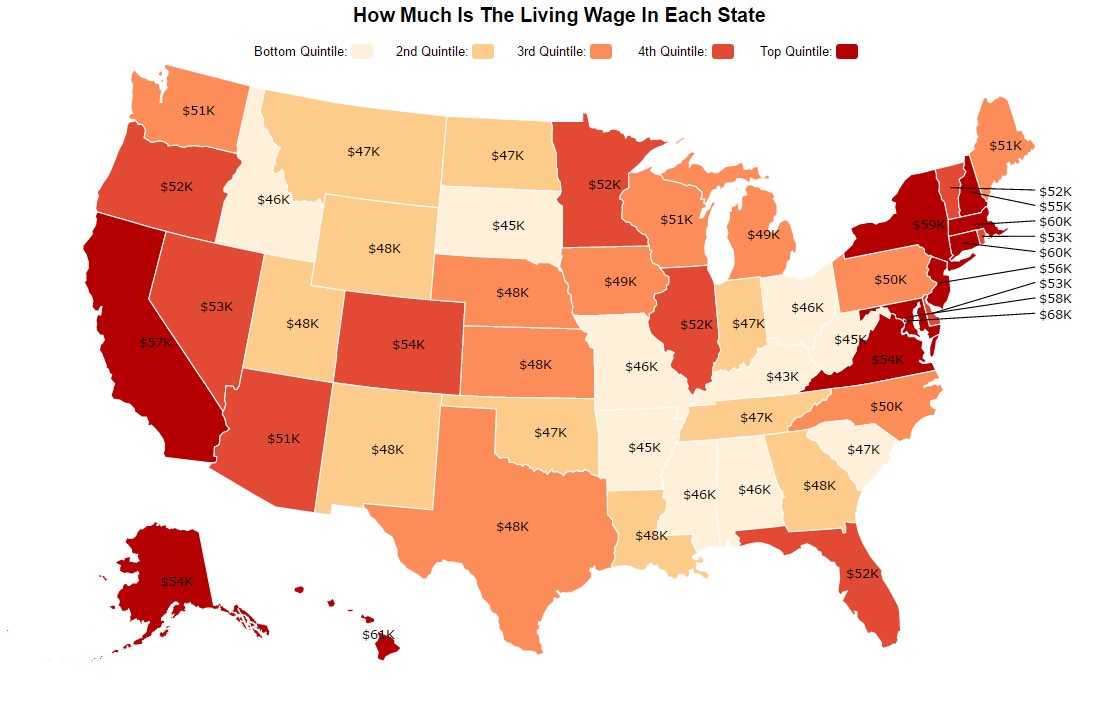
One of the most critical factors influencing a living wage is geography. The cost of living varies dramatically from one city or state to another. For example, the income required to live comfortably in San Francisco or New York City is vastly higher than what’s needed in a rural town in Alabama or Kansas. Housing, in particular, is the most significant variable component, often representing 30-50% of a household’s budget. Therefore, a national “living wage” figure would be misleading; the discussion must always consider specific local economic realities.
Family Size and Composition
The number of adults and children in a household profoundly impacts the living wage calculation. A single adult living alone has significantly lower expenses than a single parent supporting two children, or a two-parent household with multiple dependents. Childcare costs and increased food and healthcare expenses for children are major drivers of these differences, making the “living wage” not a single number, but a spectrum of figures dependent on household structure.
Notable Methodologies and Data Sources
Several organizations provide comprehensive living wage calculators and research:
- MIT Living Wage Calculator: Developed by researchers at MIT, this widely cited tool provides county-by-county, state-by-state estimates of the living wage necessary to cover basic expenses for various family compositions. It meticulously breaks down costs for food, housing, healthcare, transportation, childcare, and other necessities, showcasing the significant differences across the country.
- Economic Policy Institute (EPI) Family Budget Calculator: The EPI offers a similar resource, calculating the income a family needs to afford a modest yet adequate standard of living. Their calculator emphasizes the cost of basic family budgets, providing another robust data point for understanding local economic realities.
These calculators illuminate the harsh truth that in many parts of the U.S., even two full-time minimum wage earners cannot afford the basic necessities for a family.
The Impact and Implications of Sub-Living Wages
When wages fall below the living wage threshold, the consequences ripple through individuals, families, and society, exacerbating financial instability and undermining public health.
Financial Strain and Poverty Cycles
Individuals earning sub-living wages are frequently caught in a cycle of financial strain. They struggle to pay bills, accumulate debt (especially high-interest credit card debt), and are unable to save for emergencies, retirement, or major life events like education or homeownership. This perpetual financial precariousness creates immense stress and often leads to reliance on payday loans or other predatory financial services, further entrenching them in debt. The inability to build assets means they have no buffer against unexpected expenses, perpetuating poverty.
Health and Social Consequences
The stress of financial insecurity takes a heavy toll on physical and mental health. Studies consistently link low income to higher rates of chronic diseases, mental health issues like anxiety and depression, and shorter life expectancies. Families earning sub-living wages often face difficult choices between paying rent, buying nutritious food, or accessing necessary medical care. Children in these households may suffer from food insecurity, lack access to quality education resources, and experience higher levels of stress, impacting their development and future prospects.
Economic Disadvantages
From a broader economic perspective, a widespread lack of living wages can hinder economic growth. Low-wage workers have limited disposable income, reducing consumer demand for goods and services. This can slow down local economies and make businesses less profitable. Furthermore, the reliance of low-wage workers on public assistance programs places a significant burden on state and federal budgets, as taxpayers effectively subsidize employers who pay insufficient wages. This effectively transfers the cost of low wages from businesses to the general public.
The “Working Poor” Phenomenon
The “working poor” are individuals who spend 27 weeks or more in a year in the labor force (working or looking for work) but whose incomes fall below the poverty line. This segment of the population highlights the disconnect between employment and economic security. They are not unemployed; they are actively contributing to the economy but are still unable to escape poverty, underscoring the inadequacy of current wage structures in many sectors.
The Broader Economic and Policy Debate
The living wage debate is complex, with passionate arguments on both sides concerning its economic feasibility and societal impact.
Arguments For a Higher Living Wage
Proponents argue that a higher living wage offers numerous benefits:
- Reduced Poverty and Inequality: Directly lifts working families out of poverty and helps to narrow the income gap.
- Increased Consumer Demand: Workers with more disposable income are likely to spend it, stimulating local businesses and economies.
- Improved Worker Productivity and Morale: Employees earning a fair wage tend to be more motivated, productive, and less stressed, leading to better work quality.
- Reduced Employee Turnover: Companies paying a living wage often experience lower turnover rates, reducing recruitment and training costs.
- Healthier Communities: Better access to food, healthcare, and stable housing leads to improved public health outcomes.
- Reduced Reliance on Public Assistance: Lessens the burden on government social safety nets.
Arguments Against a Higher Living Wage (and Counterarguments)
Critics often raise concerns about:
- Job Losses: Businesses, particularly small ones, might cut jobs or slow hiring to offset increased labor costs. Counterargument: Studies on actual minimum wage increases have often found minimal to no job loss, as businesses absorb costs through efficiency gains or slightly higher prices, which consumers supported by higher wages can absorb.
- Inflation: Increased wages could lead to businesses raising prices, potentially sparking inflation. Counterargument: The impact on inflation is typically modest, as labor costs are only one component of overall business expenses, and increased consumer demand can offset some price increases.
- Burden on Small Businesses: Small businesses may struggle more than large corporations to absorb wage increases. Counterargument: While challenging, many small businesses have adapted, benefiting from reduced turnover and higher-quality applicants. Policy solutions like tax credits for small businesses could also mitigate the impact.
- Competitiveness: Businesses in areas with higher living wages might be at a disadvantage compared to those in areas with lower wage requirements. Counterargument: The benefits of a stable, motivated workforce and increased local consumer spending can often outweigh these concerns, leading to a more vibrant local economy.
Policy Approaches and Local Initiatives
Despite federal inaction, many states and cities have taken the lead in addressing the living wage issue. Numerous municipalities have passed ordinances requiring city contractors or even all private employers within their jurisdiction to pay a specified living wage, often significantly higher than the state or federal minimum. For example, cities like Seattle, San Francisco, and Flagstaff have successfully implemented higher minimum wage policies aimed at bringing wages closer to a living wage. These local initiatives serve as laboratories, providing valuable data and case studies for the broader national discussion.
Moving Towards a Future with Living Wages
Achieving a widespread living wage in the U.S. is not a simple task, but it’s a goal with profound implications for economic justice and stability.
Individual Actions and Advocacy
As individuals, understanding the economic realities of a living wage is the first step. Consumers can support businesses that demonstrate a commitment to paying fair wages to their employees. Advocacy for policy changes at local, state, and federal levels is crucial, whether through voting, contacting elected officials, or participating in grassroots movements. Educating oneself and others about the stark differences between minimum and living wages helps foster a more informed public discourse.
Business Best Practices
Increasingly, businesses are recognizing the long-term benefits of paying a living wage. Beyond compliance, companies that prioritize fair compensation often experience:
- Reduced Turnover and Training Costs: Employees stay longer, reducing the expense and effort associated with constant hiring and training.
- Increased Productivity and Morale: Satisfied, less stressed employees are generally more engaged and productive.
- Improved Brand Reputation: Businesses seen as ethical employers can attract better talent, garner positive public sentiment, and appeal to socially conscious consumers.
- Better Customer Service: Happier employees often lead to better customer interactions.
Some companies voluntarily adopt living wage policies, viewing it as an investment in their workforce and a commitment to their community.

The Role of Financial Literacy and Planning
While a living wage provides the necessary foundation, effective personal finance management remains vital. Even with a living wage, individuals and families benefit immensely from budgeting skills, understanding debt management, building emergency savings, and planning for future financial goals. Financial literacy complements a living wage, empowering individuals to make the most of their income and build long-term financial security. It helps to ensure that the increased income translates into real stability and opportunity.
The debate over what constitutes a fair wage in the U.S. will continue, but the concept of a living wage offers a clear benchmark: the income necessary for a basic, dignified life. As the economic landscape evolves, the quest for a living wage remains a central pillar of financial well-being, driving discussions about economic equity, poverty reduction, and the fundamental value of work in America. It is a critical component for building a robust economy where prosperity is shared, and every worker has the opportunity not just to survive, but to thrive.
aViewFromTheCave is a participant in the Amazon Services LLC Associates Program, an affiliate advertising program designed to provide a means for sites to earn advertising fees by advertising and linking to Amazon.com. Amazon, the Amazon logo, AmazonSupply, and the AmazonSupply logo are trademarks of Amazon.com, Inc. or its affiliates. As an Amazon Associate we earn affiliate commissions from qualifying purchases.