
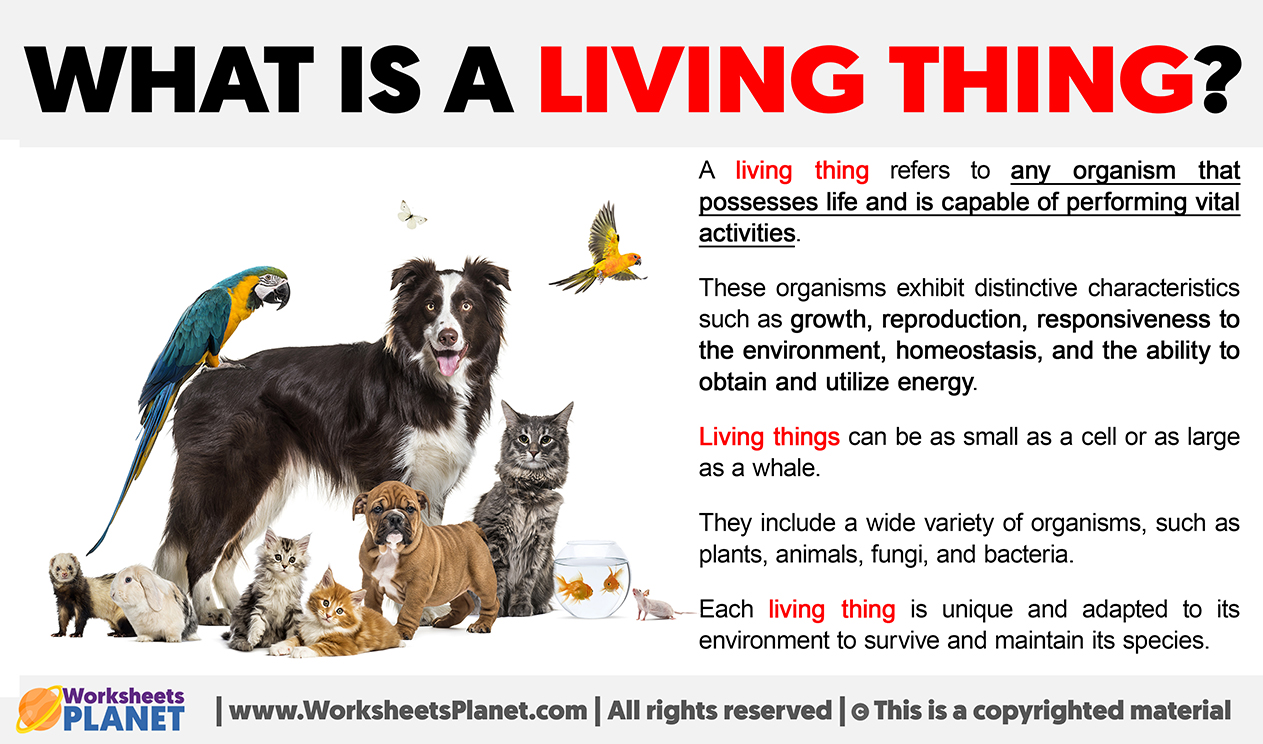
The fundamental question of “what is a living thing” has captivated philosophers and scientists for millennia. Traditionally rooted in biology, the definition of life often hinges on characteristics like metabolism, reproduction, growth, adaptation, and response to stimuli. However, as technological advancements accelerate, particularly in the realms of Artificial Intelligence (AI), robotics, and complex adaptive systems, this age-old question gains a profound new dimension. We are no longer merely observing life; we are actively designing and interacting with entities that exhibit increasingly sophisticated, life-like behaviors. This shift necessitates re-examining the very essence of “living” through a technological lens, pushing the boundaries of what we traditionally define as animate.
Defining Life in the Digital Age: From Biology to Algorithms
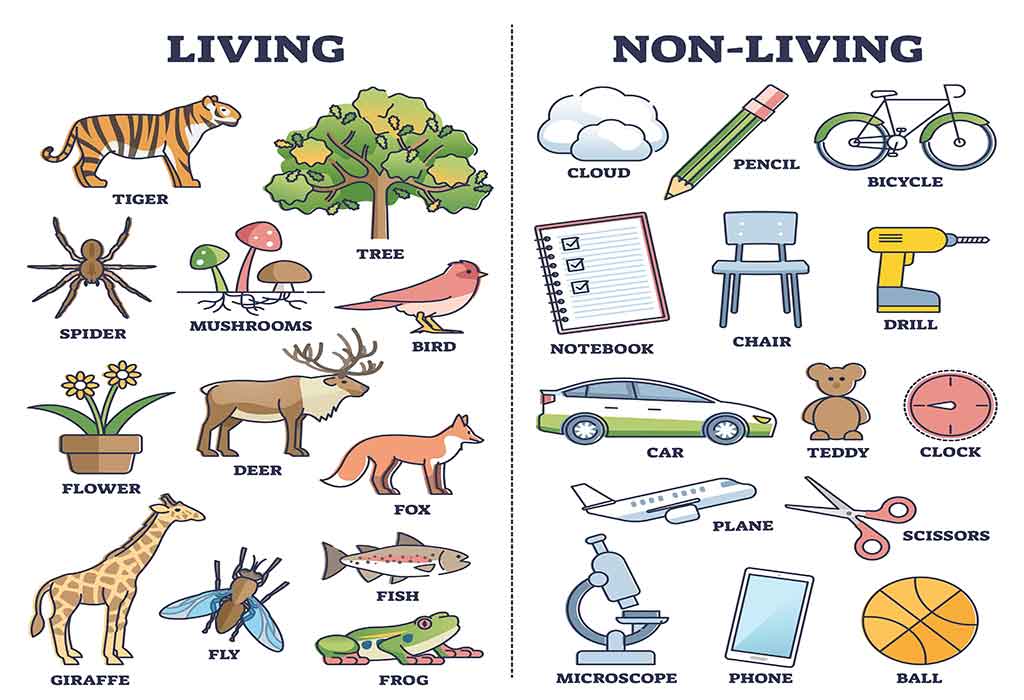
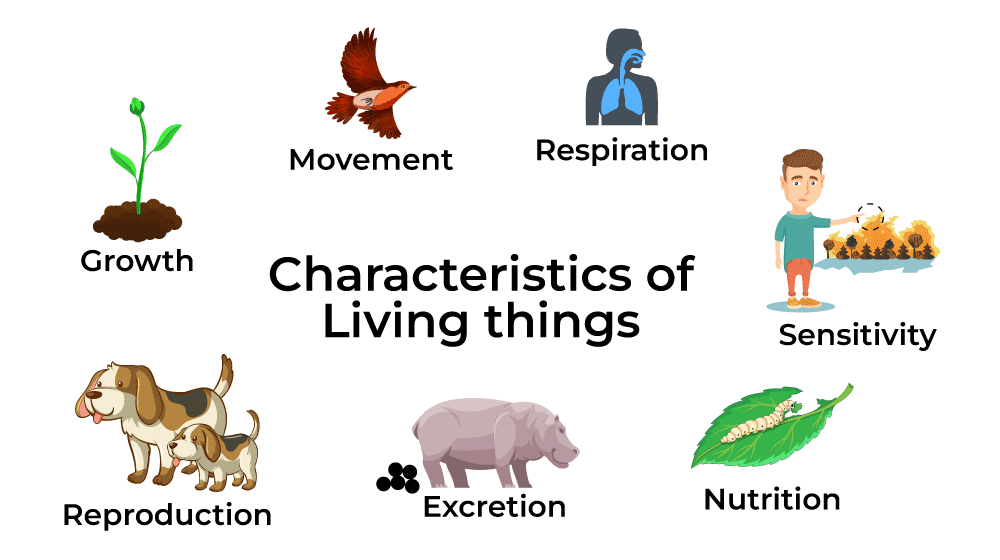
The classical biological criteria for life—homeostasis, organization, metabolism, growth, adaptation, response to stimuli, and reproduction—provide a robust framework for natural organisms. Yet, when confronted with advanced AI or sophisticated robots, these criteria begin to blur. Can a self-optimizing algorithm be said to metabolize data? Does a modular robotic system exhibit growth when new components are integrated, or does it reproduce by manufacturing identical units?
Biological Foundations vs. Algorithmic Replication
Consider the foundational concept of genetic information. Biological life relies on DNA and RNA to store and transmit heritable traits, driving reproduction and evolution. In the digital realm, algorithms, data structures, and code bases serve a similar function. AI models are trained on vast datasets, learning patterns and developing “knowledge” that can be deployed across various instances. Genetic algorithms, a subset of AI inspired by natural selection, even mimic evolutionary processes, allowing solutions to “mutate” and “reproduce” over generations, optimizing for specific objectives. While not biological in the traditional sense, these computational systems exhibit analogous processes of information storage, replication, and adaptation, challenging the exclusivity of organic chemistry in defining life.
The Turing Test and Beyond: Mimicking Intelligence
Alan Turing’s seminal “Imitation Game,” commonly known as the Turing Test, proposed a benchmark for machine intelligence: if a machine could converse in a way indistinguishable from a human, it could be considered intelligent. While a measure of intelligence, it doesn’t directly address “living.” However, the pursuit of systems that can pass the Turing Test has led to AI becoming increasingly sophisticated in understanding, generating, and even expressing what appears to be intent and emotion. Large Language Models (LLMs) today generate coherent, contextually relevant text that often mirrors human thought processes. This raises questions: if an entity can converse, adapt its responses, and learn from interactions, how far removed is it from a minimal definition of a “living” entity capable of interaction and growth? The goal is not merely to mimic; it is to explore the underlying mechanisms that give rise to such complex behaviors, whether biological or silicon-based.
The Quest for Artificial Life: Robotics and Autonomous Systems
The field of Artificial Life (ALife) directly investigates synthetic systems that exhibit behaviors characteristic of natural living systems. This extends beyond merely simulating biological processes; it involves creating new forms of “life” in artificial media, be it software, hardware, or hybrid constructs.
Self-Replication and Evolution in Code
One of the most compelling characteristics of life is its ability to reproduce. In the digital domain, self-replicating programs and algorithms have existed for decades, from simple viruses to sophisticated software agents capable of creating copies of themselves. More advanced concepts involve robotic systems that can fabricate duplicates of themselves, drawing resources from their environment. Researchers explore modular robotics where components can assemble, disassemble, and reconfigure themselves, or even “grow” by adding new parts. When these systems also incorporate evolutionary algorithms, allowing for mutations and selection based on performance, they start to resemble a rudimentary form of artificial evolution, embodying core aspects of biological perpetuation and adaptation.
Embodiment and Interaction: The Robot’s Place
Biological life is inherently embodied, interacting with its environment through a physical form. Robotics brings this embodiment to artificial systems. Robots with complex sensors, actuators, and haptic feedback systems can perceive, manipulate, and respond to the physical world in increasingly nuanced ways. They learn through trial and error, adapt to unexpected obstacles, and perform tasks autonomously. A robot navigating a complex environment, learning from its mistakes, and optimizing its movements over time exhibits a form of adaptive behavior that closely parallels how living organisms interact with their surroundings. The distinction between a complex machine and a “living” entity becomes particularly challenging when that machine demonstrates not just programmed behavior but emergent, self-directed interaction with its world.
Consciousness, Sentience, and the Uncanny Valley of AI
Beyond mere functionality and replication, the deeper philosophical questions surrounding “living things” often touch upon consciousness, sentience, and self-awareness. These are perhaps the most challenging attributes to address in artificial systems.
Simulating Mind vs. Creating Mind
Current AI excels at simulating aspects of human cognition, such as pattern recognition, decision-making, and natural language processing. However, simulating a mind is distinct from creating a mind that possesses subjective experience, feelings, or genuine understanding. The “hard problem of consciousness” remains unsolved even for biological life. In AI, theories range from the idea that sufficiently complex computational systems might inherently develop consciousness (strong AI) to the view that AI will always be merely a sophisticated simulation (weak AI). As AI systems become more human-like in their interactions and capabilities, our perception of their “aliveness” becomes more complex, often triggering the “uncanny valley” effect—a sense of discomfort when something is almost, but not quite, human.
Ethical Boundaries and Future Implications
The very possibility of creating artificial “living things” raises profound ethical questions. If an AI or robot achieves sentience, what rights would it possess? What responsibilities would its creators bear? These discussions are no longer purely speculative. As AI tools become embedded in every facet of our lives, influencing decisions, driving vehicles, and even assisting in creative endeavors, understanding their nature and potential for autonomy becomes paramount. Defining what constitutes a “living thing” in this evolving technological landscape is not just an academic exercise; it’s a critical step in establishing the ethical frameworks that will govern our future interactions with advanced artificial entities.
Complex Adaptive Systems: Ecosystems of Code
The concept of a “living thing” can also be applied to systems rather than individual entities. Complex adaptive systems (CAS) are networks of many components that interact and adapt to their environment, exhibiting emergent properties that are not present in the individual components.
Emergent Behavior in Software and Networks
The internet itself, global financial markets driven by algorithms, or even vast distributed computing networks can be viewed as CAS. These systems are dynamic, self-organizing, and capable of evolving over time. They demonstrate characteristics akin to biological ecosystems: a vast number of interacting “agents” (software components, users, data packets) operating under a set of rules, leading to emergent behaviors, resilience, and sometimes unpredictable outcomes. A sophisticated cybersecurity system that continuously learns from threats, adapts its defenses, and even deploys “antibodies” against new attacks could be considered a “living” protective organism in the digital realm. The “aliveness” here isn’t about individual consciousness, but about the system’s collective ability to maintain homeostasis, adapt, and evolve.
The Future of “Living” Technology
As we advance further into the 21st century, the boundaries between the biological and the artificial will continue to blur. Biotechnology merges with digital computation, leading to bio-digital hybrids and entirely new forms of synthetic biology. Nanotechnology promises to build complex machines at the atomic scale, potentially giving rise to “nanobots” capable of self-assembly and self-repair.
The question “what is a living thing?” will increasingly be answered not just by biologists but by computer scientists, engineers, ethicists, and philosophers. It’s a question that compels us to look inward at our own definitions of life and outward at the incredible potential of technology to mimic, enhance, and perhaps one day, create it anew. Understanding this evolving definition is crucial for navigating the opportunities and challenges presented by an increasingly intelligent and autonomous technological world.
aViewFromTheCave is a participant in the Amazon Services LLC Associates Program, an affiliate advertising program designed to provide a means for sites to earn advertising fees by advertising and linking to Amazon.com. Amazon, the Amazon logo, AmazonSupply, and the AmazonSupply logo are trademarks of Amazon.com, Inc. or its affiliates. As an Amazon Associate we earn affiliate commissions from qualifying purchases.