
In a world increasingly driven by automation, precision, and efficiency, the seemingly simple act of creating linear motion from a rotating motor is a cornerstone of countless technological advancements. At the heart of this transformation lies the linear actuator – a device engineered to convert rotational motion, typically from an electric motor, into linear (straight-line) push or pull motion. Far more than just a motor, a linear actuator is a sophisticated piece of engineering that enables everything from the precise movement of robotic arms to the smooth adjustment of a modern office desk, and even the critical operations within medical equipment. Understanding what a linear actuator is, how it functions, and its myriad applications is to grasp a fundamental building block of contemporary technology and industrial design.
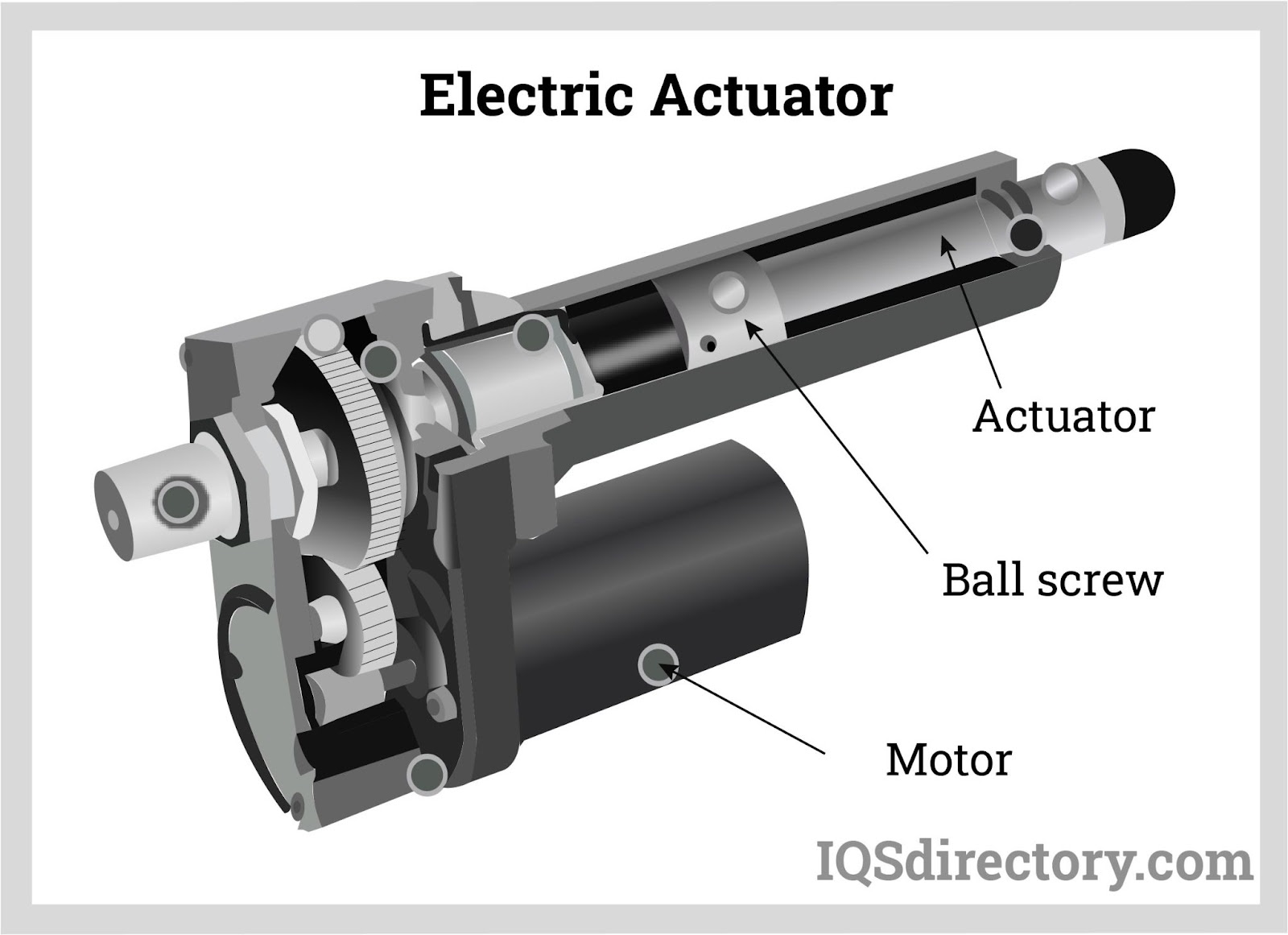
At its core, a linear actuator acts as a bridge between the ubiquitous rotating output of electric motors and the necessity for linear displacement in mechanical systems. Imagine a motor spinning a shaft; a linear actuator takes that spin and translates it into an extend-and-retract motion, much like a piston, but often with far greater control and positioning accuracy. This seemingly straightforward conversion unlocks a vast spectrum of possibilities, making these devices indispensable across virtually every industry that relies on controlled movement. From high-tech manufacturing floors to the quiet comfort of a smart home, linear actuators are silently, yet powerfully, driving the future.
The Core Mechanics: How Linear Actuators Work
The fundamental principle behind a linear actuator involves a mechanical advantage system that converts a high-speed, low-torque rotational input into a lower-speed, high-force linear output. While various types exist, electric linear actuators are the most prevalent in modern applications due to their versatility, control, and efficiency.
From Rotational to Linear Motion: The Essential Conversion
The magic of a linear actuator lies in its ability to harness the continuous spinning motion of a motor and transform it into a precise, finite linear stroke. This conversion is primarily achieved through a screw mechanism. A rotating screw (often called a leadscrew or ballscrew) engages with a nut. As the screw turns, the nut travels along its length, creating the desired linear movement. The pitch of the screw (the distance between adjacent threads) dictates the relationship between rotational turns and linear displacement, effectively controlling both speed and force. A finer pitch yields greater force but slower speed, while a coarser pitch provides faster motion at lower force. This elegant mechanical principle is what separates a linear actuator from a simple rotary motor, making it a dedicated solution for push, pull, lift, or lower applications.
Key Components of an Electric Linear Actuator
An electric linear actuator is a carefully integrated system of several critical components, each playing a vital role in its operation:
- Electric Motor: This is the prime mover, providing the rotational input. Common types include DC brush motors (for simpler applications), DC brushless motors (for longer life and higher efficiency), and stepper or servo motors (for precise positional control in demanding applications).
- Gearbox: Often integrated between the motor and the screw mechanism, the gearbox reduces the motor’s speed and increases its torque. This allows the motor to operate at its optimal RPM while providing the necessary force for the application.
- Leadscrew/Ballscrew: This is the core component responsible for the rotational-to-linear conversion.
- Leadscrew: A standard threaded rod. It’s simpler, less expensive, and often self-locking (meaning it won’t back-drive under load when the motor is off). However, it has higher friction and lower efficiency.
- Ballscrew: Features a recirculating ball bearing system between the screw and the nut. This significantly reduces friction, leading to much higher efficiency, smoother operation, and greater load capacity, but it typically requires a braking mechanism to prevent back-driving.
- Nut (or Ball Nut): This component rides along the screw. In a leadscrew system, it’s a threaded nut. In a ballscrew system, it’s a ball nut containing recirculating ball bearings.
- Extension Rod/Inner Tube: Connected to the nut, this rod extends and retracts as the nut moves along the screw, delivering the linear motion to the external load.
- Outer Tube/Housing: This protects the internal components from dust, debris, and environmental factors. It also provides mounting points for the actuator.
- Limit Switches: Integrated at the ends of the stroke, these automatically cut power to the motor when the actuator reaches its fully extended or retracted position, preventing damage.
- Feedback Devices (Optional but Common): Potentiometers, Hall effect sensors, or encoders can be included to provide real-time information about the actuator’s exact position, enabling closed-loop control and greater precision.
These components work in concert to deliver reliable, controlled linear motion, making the electric linear actuator a versatile and powerful tool for a vast array of technological applications.
Diverse Types and Their Technological Nuances
While electric linear actuators are prominent, the broader category encompasses several distinct types, each leveraging different physical principles and offering unique advantages and disadvantages in terms of force, speed, precision, and cost.
Electric Linear Actuators
Electric actuators are distinguished by their reliance on electric motors for power, offering unparalleled control and efficiency in many scenarios. Their technological nuances often stem from the type of screw mechanism and motor employed.
Leadscrew vs. Ballscrew Mechanisms
- Leadscrew Actuators: These use a simple threaded rod and nut. They are generally more affordable, self-locking (can hold a position without continuous power), and robust. However, due to friction between the screw and nut, they have lower efficiency, generate more heat, and are less suitable for high-speed or heavy-duty continuous cycling applications. Their precision is good for many tasks, but wear can affect long-term accuracy.
- Ballscrew Actuators: Employing recirculating ball bearings between the screw and nut, ballscrew actuators drastically reduce friction. This translates to much higher efficiency (often over 90%), smoother operation, higher speed capabilities, and longer life, especially under heavy loads or frequent cycles. They offer superior precision and repeatability. The trade-off is higher cost and the fact that they are typically not self-locking, requiring an external brake or continuous motor power to hold position against a load.
Stepper vs. Servo Motors
- Stepper Motor Actuators: Stepper motors move in discrete angular steps, making them ideal for open-loop control (no feedback required) where precise positioning is crucial and speed is moderate. They offer excellent holding torque at rest. However, they can lose steps under heavy loads or rapid acceleration, leading to positional errors if not properly sized or paired with feedback.
- Servo Motor Actuators: Servo motors are designed for closed-loop control, meaning they continuously receive feedback (from an encoder) to verify and correct their position. This allows for extremely high precision, dynamic speed control, and the ability to handle varying loads without losing position. They are generally more expensive and require a servo drive controller, but offer superior performance for demanding applications requiring high accuracy and speed.
Rod-style vs. Rodless Actuators
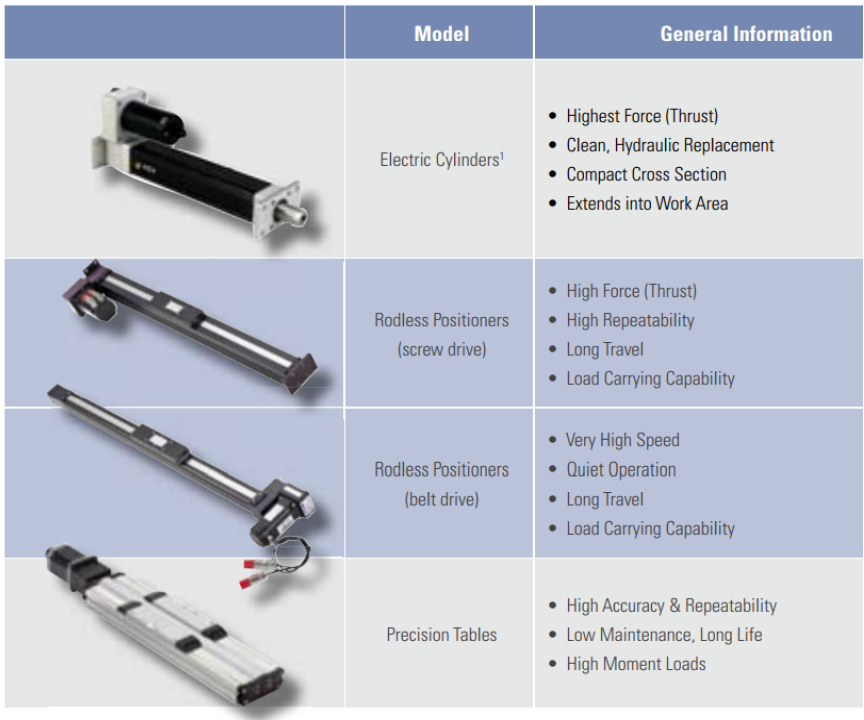
- Rod-style Actuators: These are the most common, featuring an extending/retracting rod that pushes or pulls a load. They are versatile, robust, and available in various sizes and stroke lengths. Their main limitation is that the rod extends, requiring clear space equal to the stroke length.
- Rodless Actuators: Designed for applications where space is at a premium, rodless actuators move a carriage or saddle along their length without an external rod. The load is mounted directly to the moving carriage. They offer a compact footprint relative to their stroke length, making them suitable for confined spaces, but can be more complex and expensive.
Hydraulic Linear Actuators
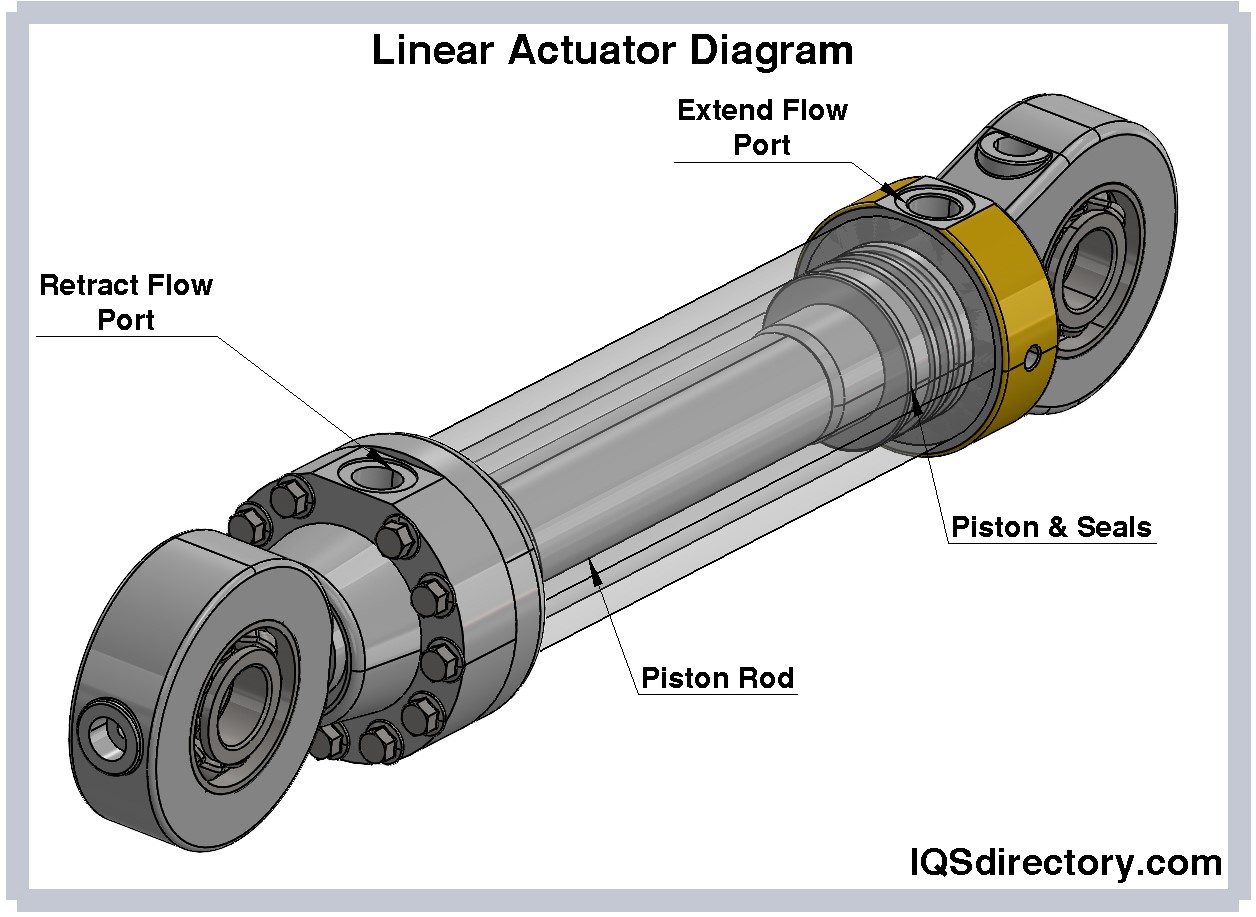
Hydraulic actuators utilize incompressible fluid (oil) under pressure to generate linear force. They are characterized by their ability to produce immense forces, making them ideal for heavy industrial applications like construction machinery, heavy lifting, and material handling where sheer power is paramount. While powerful, they require a hydraulic power unit (pump, reservoir, valves), are prone to leaks, and offer less precise control than electric options without sophisticated servo-hydraulic systems.
Pneumatic Linear Actuators
Pneumatic actuators use compressed air to generate linear motion. They are known for their simplicity, speed, and low cost, particularly for applications requiring rapid, high-cycle operations with moderate forces. They are common in factory automation for clamping, stopping, and basic pick-and-place tasks. However, they lack the precise positioning capabilities of electric actuators, require an air compressor system, and can be less energy-efficient if not properly managed.
Specialized Linear Actuators
Beyond these core types, specialized actuators exist for niche technological demands:
- Voice Coil Actuators: Employing the Lorentz force principle (like a loudspeaker), these actuators offer incredibly fast, precise, and smooth motion over short strokes. They are ideal for high-bandwidth, light-load applications such as optical focusing, precise material handling, and medical device actuation where zero cogging and rapid response are critical.
- Piezoelectric Actuators: These utilize the property of certain materials (piezoceramics) to expand or contract when an electric voltage is applied. They provide ultra-high resolution and extremely fine positioning over very short strokes (micrometers or nanometers). They are crucial in nanotechnology, precision optics, and scientific instrumentation.
- Magnetic Linear Actuators (Linear Motors): These are essentially “unrolled” rotary motors, producing linear motion directly without a screw mechanism. They offer extremely high speeds, accelerations, and precision, with no mechanical wear components (other than bearings for guidance). They are used in high-end manufacturing, machine tools, and semiconductor processing.
Each type of linear actuator presents a unique set of technological capabilities, allowing engineers to select the optimal solution for diverse application requirements, balancing factors like force, speed, precision, cost, and environmental considerations.
Applications Across Industries: Where Technology Meets Movement
The versatility and adaptability of linear actuators have made them indispensable components across an astonishing array of industries, acting as the muscles that power automation, enhance convenience, and enable critical operations.
Industrial Automation and Robotics
In the realm of modern manufacturing, linear actuators are fundamental. They are the driving force behind sophisticated pick-and-place robots, precisely moving components on assembly lines. They power conveyor belt systems and packaging machinery, ensuring goods are moved, sorted, and sealed efficiently. In CNC machines, they provide the accurate linear motion required for cutting and shaping materials with micron-level precision. Beyond the factory floor, they control valves and dampers in process control systems, regulating fluid and air flow in complex industrial environments. Their ability to deliver repeatable and controlled motion is critical for mass production and high-quality output.
Medical and Healthcare
The healthcare sector relies heavily on linear actuators for both patient comfort and critical medical procedures. They enable the smooth, quiet, and precise adjustments of hospital beds, operating tables, and dental chairs, enhancing patient care and ergonomic access for medical staff. In advanced diagnostic equipment like MRI and CT scanners, actuators are responsible for positioning patients and moving scanning components with high accuracy. They are also integral to laboratory automation, fluid dispensing systems, and even prosthetic limbs, where miniature actuators provide lifelike movement and dexterity. The demand for reliability, quiet operation, and hygiene often drives the selection of specific actuator technologies here.
Automotive and Aerospace
The automotive industry utilizes linear actuators for a wide range of functions that enhance safety, comfort, and performance. They control power liftgates and trunks, adjust car seats and headrests, deploy spoilers for improved aerodynamics, and even manage engine throttle controls and active suspension systems. In aerospace, where precision and reliability are paramount, actuators are used to control flight surfaces (ailerons, flaps, rudders), deploy landing gear, and adjust cabin elements like overhead bins and seat recline mechanisms. The stringent requirements for durability, weight, and environmental tolerance push the boundaries of actuator design in these sectors.
Home and Office Automation
Bringing convenience and accessibility to everyday life, linear actuators are increasingly found in smart homes and modern offices. They enable adjustable standing desks, allowing users to transition between sitting and standing with ease. They can automate TV lifts and projector screens, open and close windows and skylights, or even control cabinet doors and drawers in smart kitchens. For individuals with mobility challenges, actuators power stairlifts, patient lifts, and adjustable furniture, promoting independence and accessibility. The focus here is often on quiet operation, aesthetic integration, and ease of use.
Renewable Energy
The push towards sustainable energy sources has also seen linear actuators play a crucial role. In solar panel tracking systems, actuators precisely adjust the angle of solar panels throughout the day to maximize sun exposure and energy capture, significantly improving efficiency. In wind turbines, they are used for pitch control of the blades, optimizing their angle to the wind for maximum power generation and for safety during high winds. Their robust design allows them to operate reliably in challenging outdoor environments.
Across these diverse fields, linear actuators are not just components; they are enablers, transforming static structures into dynamic systems, enhancing user experience, and driving the capabilities of modern technology forward.
Advantages and Technological Considerations
The widespread adoption of linear actuators, particularly electric ones, stems from a compelling set of advantages they offer over traditional mechanical linkages or other actuation methods. However, like all technologies, they also come with specific considerations and limitations.
Precision and Control
One of the foremost advantages of electric linear actuators, especially those equipped with servo motors and encoders, is their exceptional precision and control. They can achieve highly accurate and repeatable positioning, often to fractions of a millimeter, making them indispensable for tasks requiring fine adjustments. Their programmability allows for complex motion profiles, including variable speeds, accelerations, and deceleration ramps. This level of control is superior to simple pneumatic or hydraulic systems, which often rely on open-loop operation and are harder to precisely stop at intermediate positions.
Energy Efficiency
Electric linear actuators generally boast higher energy efficiency compared to their hydraulic and pneumatic counterparts, particularly for holding a position. While a hydraulic or pneumatic system constantly consumes energy to maintain pressure, an electric actuator, especially a leadscrew type, can often hold a load with no power (due to its self-locking nature) or minimal power (for servo/ballscrew systems). Even under dynamic loads, modern electric actuators convert a higher percentage of input electrical energy into useful mechanical work, reducing operating costs and environmental impact.
Space and Simplicity
Linear actuators often offer a more compact and streamlined solution than complex mechanical linkages, cams, or levers designed to achieve linear motion from a rotary motor. By integrating the motor, gearbox, and screw mechanism into a single unit, they simplify design, reduce the number of components, and minimize assembly time. This integration also leads to a cleaner aesthetic and reduces the physical footprint required for motion control.
Durability and Maintenance
Designed for robustness, many linear actuators are built to withstand harsh industrial environments, with features like IP (Ingress Protection) ratings against dust and water. Their relatively few moving parts, especially in electric types with sealed gearboxes and self-lubricating nuts, contribute to a long operational lifespan. Maintenance requirements are often minimal, typically involving periodic inspection and lubrication, especially compared to the complex fluid management and leak potential of hydraulic systems.
Challenges and Limitations
Despite their many benefits, linear actuators are not without their technological considerations:
- Force and Speed Limitations: While powerful, electric linear actuators typically cannot match the sheer force output of hydraulic systems for extremely heavy loads, or the raw speed of some pneumatic cylinders for light, rapid movements. There is often a trade-off between speed and force; an actuator designed for high force will typically be slower, and vice-versa.
- Duty Cycle and Heat Generation: Continuous operation under heavy loads can lead to heat buildup, especially in leadscrew actuators due to friction. Manufacturers specify a “duty cycle” (percentage of time an actuator can run vs. rest) to prevent overheating and premature wear. Exceeding this can shorten the actuator’s life.
- Back-driving: Ballscrew actuators are generally not self-locking, meaning a load can push the rod back if the motor is not actively holding position or a brake is not engaged. This requires careful consideration in safety-critical applications.
- Cost: High-precision, high-force, or high-speed electric linear actuators, particularly those with ballscrews, servo motors, and integrated feedback, can be significantly more expensive than simpler hydraulic or pneumatic cylinders, especially for lower precision tasks.
Understanding these advantages and limitations is crucial for engineers and designers to select the most appropriate linear actuation technology for any given application, balancing performance, reliability, and cost.
The Future of Linear Actuation Technology
The trajectory of linear actuator technology is one of continuous innovation, driven by demands for greater efficiency, intelligence, and integration within the broader landscape of smart systems and industrial automation. The future holds exciting developments that promise to expand their capabilities and applications even further.
Miniaturization and Integration
One clear trend is the drive towards miniaturization. As devices become smaller and more complex, there’s a growing need for compact, yet powerful, actuators that can fit into tighter spaces. This includes micro-actuators for medical implants, portable electronics, and precision scientific instruments. Concurrently, greater integration of electronics and control systems directly into the actuator housing is becoming standard. “Smart actuators” will increasingly feature onboard processors, motor drivers, and network communication capabilities, reducing cabling complexity and simplifying system design.
Enhanced Connectivity and IoT
The Industrial Internet of Things (IIoT) is transforming how machinery operates, and linear actuators are no exception. Future actuators will be designed with enhanced connectivity, allowing them to seamlessly integrate into network environments. This will enable real-time data collection on performance parameters (position, speed, load, temperature), facilitating predictive maintenance, remote diagnostics, and optimized operational efficiency. Actuators will become active data points in smart factories, communicating their status and contributing to overall system intelligence.
Advanced Materials and Design
Research into advanced materials will continue to yield lighter, stronger, and more durable components for linear actuators. This includes novel composites for housing, ceramics for bearings, and improved alloys for screws and nuts. Such advancements will enable actuators to operate at higher speeds and forces, withstand harsher environments, and offer longer service lives with even less maintenance. Furthermore, optimized mechanical designs, potentially leveraging generative design and additive manufacturing (3D printing), will lead to more efficient power transmission, reduced friction, and quieter operation.
AI and Machine Learning in Control
The application of artificial intelligence (AI) and machine learning (ML) to actuator control systems represents a significant leap forward. Future actuators may incorporate AI algorithms that can learn from operational data to optimize their performance dynamically, adjust to changing loads, and predict potential failures before they occur. This could lead to self-tuning actuators that automatically adapt to environmental changes, compensate for wear, and operate at peak efficiency throughout their lifespan, pushing the boundaries of adaptive control and truly intelligent motion.
In conclusion, linear actuators are far more than simple mechanical components; they are sophisticated technological devices that underpin much of the automated world we inhabit. From their foundational mechanics of converting rotational to linear motion, through their diverse types and myriad applications across industries, they represent a critical intersection of engineering, physics, and digital control. As technology continues its relentless march forward, driven by demands for greater precision, efficiency, and intelligence, linear actuators will undoubtedly evolve, becoming even more integrated, compact, and capable, continuing to drive the engines of innovation and enhance our technological capabilities in ways we are only just beginning to imagine.
aViewFromTheCave is a participant in the Amazon Services LLC Associates Program, an affiliate advertising program designed to provide a means for sites to earn advertising fees by advertising and linking to Amazon.com. Amazon, the Amazon logo, AmazonSupply, and the AmazonSupply logo are trademarks of Amazon.com, Inc. or its affiliates. As an Amazon Associate we earn affiliate commissions from qualifying purchases.