
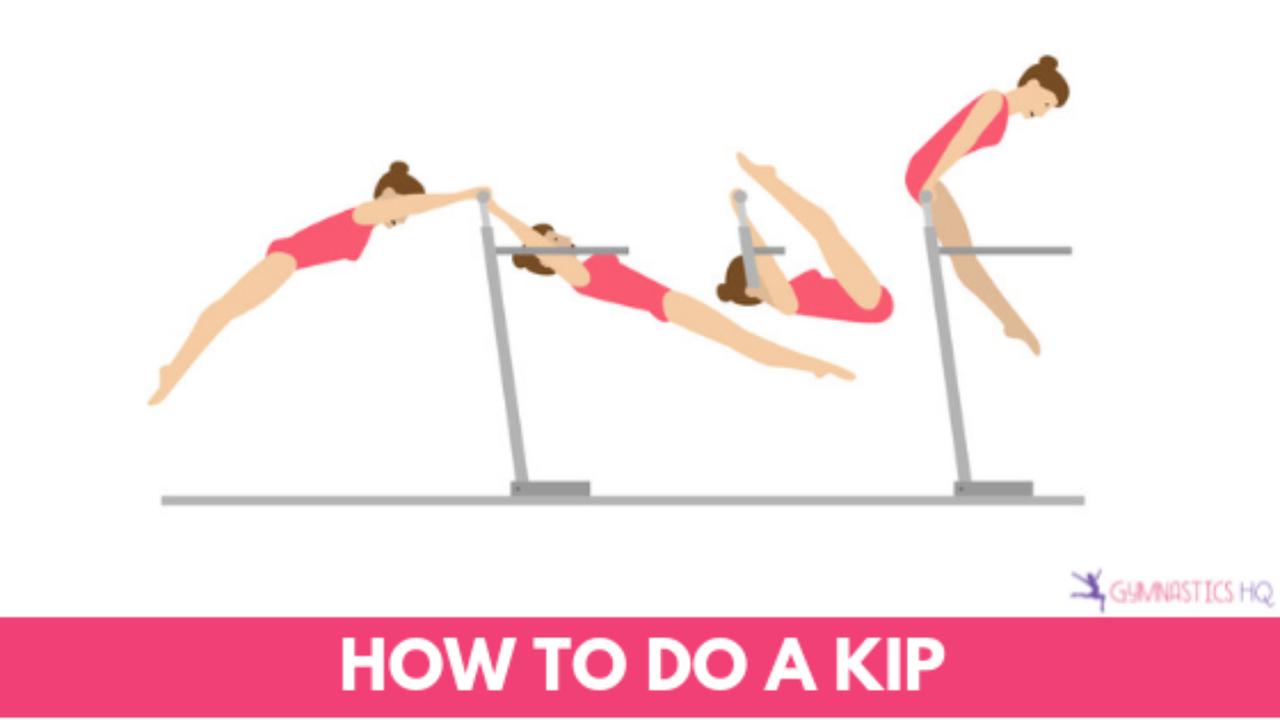
In the world of elite gymnastics, the “kip” is often described as the most fundamental yet frustrating transition an athlete must master on the uneven bars or high bar. Physically, a kip is the movement that brings a gymnast from a hanging position below the bar to a support position above it. While it appears to be a singular motion, it is a complex sequence involving momentum, timing, and center-of-gravity shifts.
Historically, mastering the kip was a matter of trial and error, guided only by a coach’s eye. Today, however, the intersection of sports science and advanced technology has transformed how athletes understand and execute this pivotal move. From high-speed motion capture to AI-driven skeletal tracking, technology is providing the data necessary to turn a struggling beginner into a proficient competitor.
High-Speed Video Analysis: Deconstructing the Physics of the Kip
The primary challenge of the kip lies in its invisibility; the critical transition happens in a fraction of a second. To the naked eye, it is difficult to see exactly where a gymnast loses momentum. This is where high-speed imaging and digital video analysis software have become indispensable tools for modern training facilities.
Frame-by-Frame Kinematic Analysis
By utilizing cameras capable of capturing 240 frames per second (fps) or higher, coaches can break the kip down into its constituent parts: the glide, the pike, and the pull. Software platforms like Dartfish or Quintic allow for “kinematic overlays,” where digital lines are drawn over the gymnast’s limbs to measure joint angles. For instance, tech can identify if a gymnast’s hips are dropping too early during the “snap” phase. If the angle between the torso and the thighs deviates by even five degrees from the optimal path, the software flags it, providing a visual data point that a human coach might miss.
Vector Tracking and Velocity Mapping
Advanced digital analysis doesn’t just show what happened; it shows the force behind it. Modern video tech uses vector tracking to map the velocity of the gymnast’s center of mass. In a kip, the horizontal momentum of the glide must be converted into vertical lift. Technology allows coaches to see a “velocity heat map,” showing exactly where the athlete is accelerating and where they are stalling. By visualizing these vectors, athletes can understand the “sweet spot” of the swing—the exact moment when gravity is no longer an enemy but an assistant.
Wearable Technology: Quantifying the ‘Snap’ and Center of Gravity
While video provides external observation, wearable technology offers internal data. The rise of Inertial Measurement Units (IMUs) and smart fabric has allowed gymnastics to move into the era of “Quantified Self” training.
Inertial Measurement Units (IMUs) and Gyroscopes
Small, lightweight IMUs can be placed on a gymnast’s waist or wrists to measure angular velocity and G-forces. During a kip, the “snap”—the explosive movement where the toes are brought to the bar—is the most critical phase. Sensors can measure the peak acceleration of this snap. By comparing an athlete’s data against a database of “perfect” kips performed by Olympians, the tech can provide a percentage-based efficiency score. This biofeedback loop allows for rapid correction, as the athlete can see on a tablet exactly how much “snap force” they generated after every single attempt.
Pressure-Sensitive Grips and Haptic Feedback
The hands are the only point of contact with the bar during a kip. New experimental tech involves pressure-sensitive grips that measure the distribution of weight across the palms. If a gymnast is “death-gripping” the bar during the glide, they create friction that kills momentum. Smart grips can provide haptic feedback—a small vibration—the moment a gymnast’s grip pressure exceeds the optimal threshold. This real-time tactile tech helps athletes develop the “light touch” required to transition smoothly from a hang to a front support.

AI and Computer Vision: The Rise of the Virtual Gymnastics Coach
Artificial Intelligence (AI) is perhaps the most significant technological leap in gymnastics. Computer vision algorithms are now capable of analyzing a gymnast’s form without the need for wearable sensors, making high-level data analysis accessible to local clubs and home learners.
Pose Estimation and Neural Networks
Using a process called “pose estimation,” AI models like OpenPose can identify key landmarks on the human body (wrists, elbows, shoulders, hips, knees, and ankles) from a standard smartphone video. These landmarks are then connected into a digital skeleton. For the kip, the AI analyzes the “glide-to-pull” ratio. Neural networks trained on thousands of successful kips can instantly diagnose a failure. Whether it is “late arm pull” or “insufficient hollow body hold,” the AI provides a text-based or audio-based critique, effectively acting as a digital assistant coach that is available 24/7.
Reducing Injury Risk via Predictive Modeling
One of the most valuable tech applications in gymnastics is injury prevention. A poorly executed kip puts significant strain on the shoulders and lower back. AI software can perform “load monitoring” by calculating the torque applied to the shoulder joints during the transition phase. If the data shows that an athlete is compensating for poor technique by “muscling” the move—placing excessive stress on the rotator cuff—the system can alert the coach to stop the session. This predictive modeling ensures that the quest to master the kip doesn’t end in a season-ending injury.
VR and Simulation: The Digital Frontier of Elite Training
Mastering the kip is as much a mental challenge as it is a physical one. Many gymnasts suffer from “spatial disorientation” during the rapid flip of the kip. Virtual Reality (VR) and digital simulations are now being used to bridge this cognitive gap.
Virtual Reality for Spatial Awareness
VR headsets allow gymnasts to experience the kip in a controlled, 360-degree digital environment. By watching a first-person simulation of a perfect kip, the athlete’s brain begins to map out the spatial cues required for the move. This “mental blueprinting” helps reduce the fear factor and builds the neural pathways necessary for the transition. When the athlete finally steps up to the real bar, their vestibular system is already familiar with the sensation of the horizon shifting during the pull-to-support phase.
Augmented Reality (AR) Overlays in Live Training
The next step in training tech is the use of AR glasses on the gym floor. Coaches can use AR to project a “ghost image” of a perfect kip onto the actual bar while the athlete is watching. This allows the gymnast to see the ideal body path superimposed over their own workspace. AR can also display “target zones” in the air—virtual markers that the gymnast needs to hit with their toes or hips to achieve maximum efficiency. By turning the mastering of a kip into a data-driven, interactive game, technology increases engagement and accelerates the learning curve.

Conclusion: The Integrated Future of Gymnastics Mastery
The question of “what is a kip in gymnastics” has evolved. It is no longer just a physical movement; it is a data-driven event. Through the lens of technology, the kip is a study in kinematics, a challenge of sensor-measured forces, and a puzzle solved by artificial intelligence.
As technology continues to shrink in size and grow in power, the barrier to entry for professional-level analysis is disappearing. We are entering an era where every gymnast, regardless of their location, can have access to the same biomechanical insights as an Olympic athlete. By embracing these tech tools, the gymnastics community is ensuring that the path to mastering the bar is safer, faster, and more precise than ever before. The “perfect kip” is no longer a mystery—it is a measurable, achievable digital reality.
aViewFromTheCave is a participant in the Amazon Services LLC Associates Program, an affiliate advertising program designed to provide a means for sites to earn advertising fees by advertising and linking to Amazon.com. Amazon, the Amazon logo, AmazonSupply, and the AmazonSupply logo are trademarks of Amazon.com, Inc. or its affiliates. As an Amazon Associate we earn affiliate commissions from qualifying purchases.