
A Keynesian economist is an individual who subscribes to the economic theories of John Maynard Keynes, a British economist whose revolutionary ideas reshaped macroeconomic thought in the 20th century. At its core, Keynesian economics posits that government intervention is often necessary to stabilize an economy, particularly during recessions or periods of high unemployment. This school of thought challenges the classical economic view that free markets will automatically self-correct and achieve full employment without external aid. For anyone engaged in financial markets, business planning, or even personal budgeting, understanding the Keynesian framework is crucial, as it profoundly influences government policy, central bank actions, and the overall economic landscape.

The Foundations of Keynesian Thought
The genesis of Keynesian economics is deeply rooted in a pivotal moment of economic crisis, providing context for its radical proposals.
John Maynard Keynes and The General Theory
John Maynard Keynes published his seminal work, The General Theory of Employment, Interest and Money, in 1936 amidst the throes of the Great Depression. This period was characterized by widespread unemployment, collapsed demand, and a pervasive sense of economic despair that existing classical economic theories struggled to explain or resolve. Classical economists believed that markets would naturally revert to equilibrium, with flexible wages and prices ensuring full employment. However, the prolonged stagnation of the 1930s directly contradicted this optimistic outlook.
Keynes observed a fundamental flaw in this classical assumption: economies could get stuck in a state of underemployment equilibrium, where demand was insufficient to utilize all available resources, including labor. His theory offered a powerful alternative, suggesting that aggregate demand – the total demand for goods and services in an economy – was the primary driver of economic activity, and a deficiency in this demand could lead to persistent recession.
Core Tenets: Aggregate Demand and Government Intervention
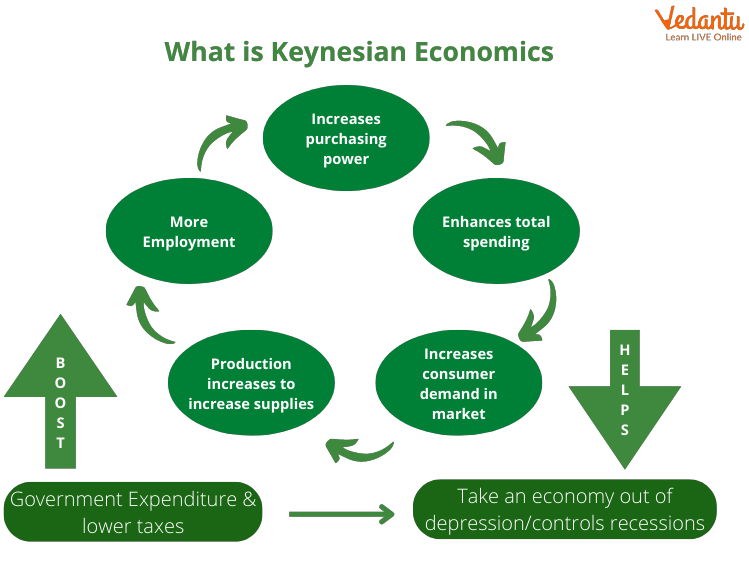
The central pillar of Keynesian economics is the belief that aggregate demand dictates the level of employment and output in an economy. When aggregate demand falls, businesses reduce production, leading to layoffs and further reductions in demand, creating a vicious cycle.
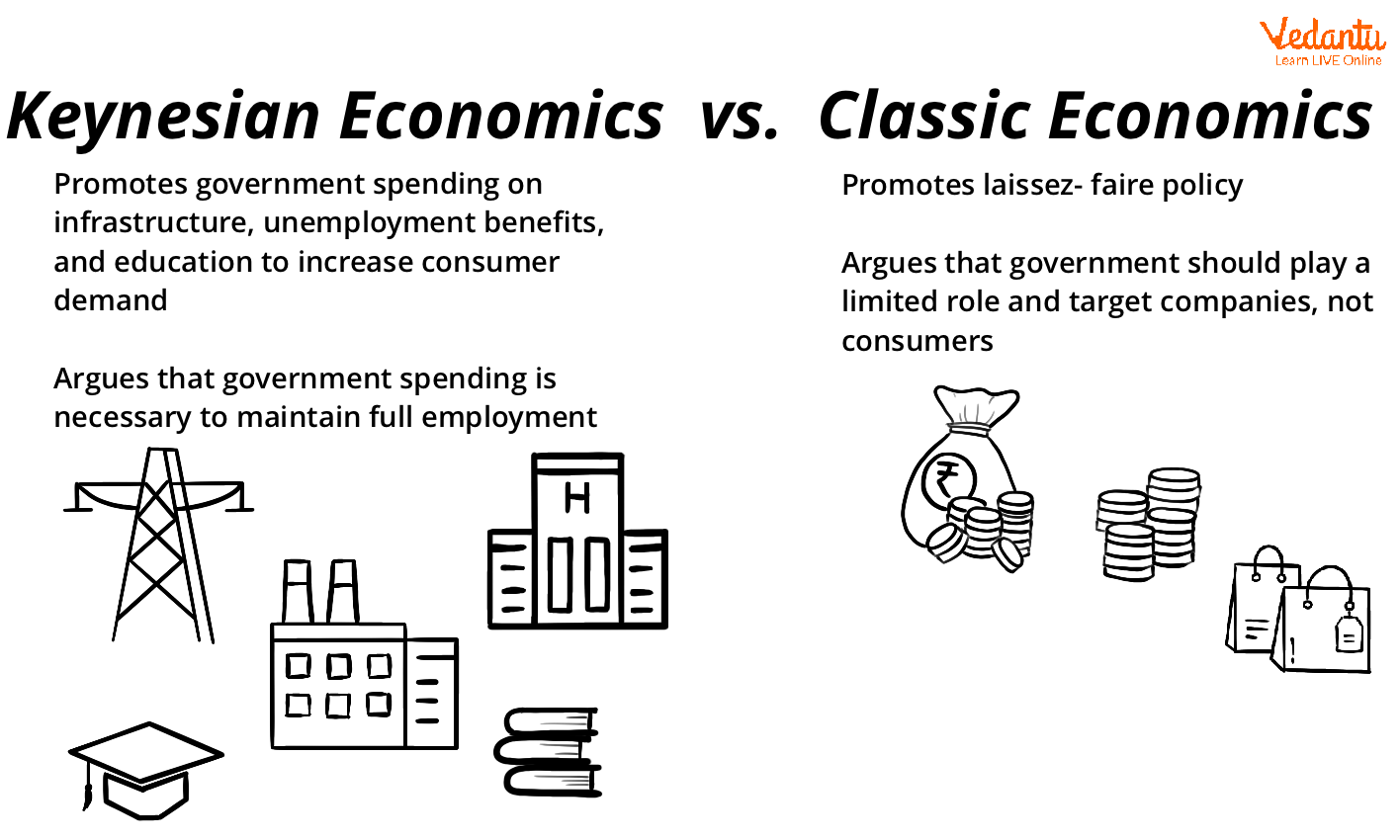
Keynesians argue that markets do not always self-correct quickly or efficiently enough. Factors such as “sticky wages” (wages that are slow to adjust downwards) and “animal spirits” (irrational investor and consumer confidence) can exacerbate downturns. In such scenarios, the private sector alone cannot pull the economy out of a slump. This is where government intervention becomes not just permissible but essential. Keynesian economists advocate for active fiscal and monetary policies to manage aggregate demand, stimulate growth, and mitigate the severity of economic cycles.
Key Concepts and Tools in Keynesian Economics
Keynesian economists rely on a specific set of concepts and policy tools to analyze and influence economic performance.
Fiscal Policy: Spending and Taxation
Fiscal policy is the cornerstone of Keynesian demand management. It involves the government adjusting its spending levels and tax rates to influence the economy.
- Expansionary Fiscal Policy: During a recession, a Keynesian economist would recommend increasing government spending (e.g., infrastructure projects, social programs) or cutting taxes. Both actions aim to inject money into the economy, boosting aggregate demand, encouraging consumption, and stimulating investment. The objective is to compensate for the shortfall in private sector demand.
- Contractionary Fiscal Policy: Conversely, during periods of high inflation or an overheated economy, Keynesians might suggest decreasing government spending or raising taxes. This aims to reduce aggregate demand, cool down the economy, and control inflationary pressures.
Monetary Policy (Keynesian Perspective): Interest Rates and Money Supply
While Keynes himself focused more on fiscal measures, later Keynesian thought integrated monetary policy as another crucial tool, albeit with some nuances. Central banks use monetary policy to influence the availability and cost of money and credit.
- Lowering Interest Rates: During a downturn, a central bank might lower policy interest rates. This makes borrowing cheaper for businesses and consumers, encouraging investment and consumption, thereby boosting aggregate demand.
- Increasing Money Supply: Quantitative easing, for instance, involves a central bank purchasing government bonds or other financial assets to increase the money supply directly, further lowering long-term interest rates and encouraging lending.
Keynesians acknowledge that monetary policy can be less effective than fiscal policy in a “liquidity trap,” where interest rates are already near zero, and conventional monetary policy loses its potency because people hoard money rather than investing it.
The Multiplier Effect
A critical concept in Keynesian economics is the “multiplier effect.” This theory suggests that an initial injection of government spending (or tax cut) can lead to a much larger increase in overall economic output. For example, if the government spends $100 million on a new road, those funds become income for construction workers, suppliers, and engineers. These individuals, in turn, spend a portion of their new income, which then becomes income for others, and so on. This ripple effect means that the total increase in GDP is a multiple of the initial government expenditure. The size of the multiplier depends on the marginal propensity to consume (the proportion of extra income that households spend rather than save).
Paradox of Thrift
The “paradox of thrift” illustrates another counter-intuitive Keynesian insight. While saving is generally considered a virtue for individuals, Keynesians argue that if everyone attempts to save more during a recession, it can collectively harm the economy. Increased saving leads to reduced consumption and investment, further decreasing aggregate demand and ultimately worsening the recession. This can lead to lower incomes for everyone, ironically making it harder for individuals to achieve their desired level of saving. This paradox highlights the collective action problem in a depressed economy and underscores the need for government intervention to stimulate demand.
The Role of a Keynesian Economist in Practice
Keynesian economists often play a significant role in shaping public policy and economic strategy.
Policy Recommendation and Analysis
Governments, central banks, and international organizations frequently employ Keynesian economists to provide expert advice. They analyze economic data, forecast trends, and recommend specific fiscal and monetary policies aimed at achieving macroeconomic stability. During economic crises, their expertise is particularly sought after to devise stimulus packages, employment programs, and financial sector interventions. Their recommendations often involve advocating for targeted spending, tax adjustments, or interest rate changes designed to manage aggregate demand effectively.
Interpreting Economic Indicators
A Keynesian economist pays close attention to key economic indicators, using them to diagnose the health of the economy and inform policy choices.
- Unemployment Rate: High unemployment signals a deficiency in aggregate demand and underutilized productive capacity.
- Inflation Rate: High inflation indicates an overheated economy where demand outstrips supply, potentially calling for contractionary policies.
- Gross Domestic Product (GDP): GDP growth rates are crucial for understanding whether the economy is expanding or contracting.
- Consumer Confidence and Investment Spending: These indicators provide insights into the private sector’s willingness to spend and invest, which are vital components of aggregate demand.
Counter-cyclical Policies
A core principle of Keynesian policy is “counter-cyclical” action. This means the government should act against the prevailing economic cycle:
- During a recession (downturn): Implement expansionary policies (increase spending, cut taxes, lower interest rates) to stimulate demand and mitigate the slump.
- During a boom (upturn): Implement contractionary policies (reduce spending, raise taxes, raise interest rates) to prevent overheating, asset bubbles, and inflation.
This deliberate management aims to smooth out the peaks and troughs of the business cycle, fostering greater economic stability and reducing the severity of recessions.
Critiques and Evolution of Keynesian Economics
Despite its profound influence, Keynesian economics has faced substantial critiques and has evolved over time.
Challenges from Monetarism and New Classical Economics
In the 1970s, Keynesian ideas came under fire, primarily from the Monetarist school led by Milton Friedman. Monetarists argued that inflation was primarily a monetary phenomenon, caused by excessive growth in the money supply, and that discretionary fiscal policy was often ineffective due to lags and political interference. They advocated for stable, predictable money supply growth over active demand management.
New Classical economists went further, arguing that rational expectations among economic agents would largely nullify the effects of predictable government policies. If people anticipate future government actions, they will adjust their behavior accordingly, rendering the policies ineffective. These schools pushed for less government intervention and a greater reliance on free markets.
Supply-Side Economics
Another challenge came from supply-side economics, which gained prominence in the 1980s. In contrast to Keynesianism’s demand-side focus, supply-siders argued that economic growth could be better stimulated by policies aimed at increasing the aggregate supply of goods and services. This often involved tax cuts on businesses and high-income earners, deregulation, and policies to incentivize production and investment, believing these would “trickle down” to the rest of the economy.
New Keynesianism
In response to these critiques and to incorporate modern macroeconomic insights, “New Keynesianism” emerged. New Keynesians acknowledge the importance of rational expectations and the long-run neutrality of money but emphasize “market imperfections” such as sticky prices and wages (due to menu costs or staggered contracts) that prevent markets from clearing instantly. These frictions mean that even rational agents can’t fully adjust to economic shocks, leaving room for short-run policy effectiveness. New Keynesian models integrate microeconomic foundations with the core Keynesian belief in the role of aggregate demand and the potential for government intervention to improve economic outcomes, particularly during periods of underemployment.
Relevance in Today’s Financial World
Keynesian principles continue to be highly relevant, especially in navigating complex global financial challenges.
Navigating Recessions and Crises
The 2008 global financial crisis and the COVID-19 pandemic both saw a resurgence of Keynesian policies. Governments worldwide implemented massive fiscal stimulus packages, including increased spending on unemployment benefits, infrastructure, and direct aid to businesses and households. Central banks drastically cut interest rates and engaged in quantitative easing on an unprecedented scale. These actions, largely guided by Keynesian tenets, aimed to prevent a complete collapse of aggregate demand and mitigate the severity of the economic downturns. Many economists credit these aggressive interventions with averting a second Great Depression.
Impact on Investing and Business Finance
For investors and businesses, understanding the Keynesian perspective is crucial. Anticipating government fiscal and monetary policy decisions can significantly impact investment strategies and business planning:
- Investment Decisions: During a projected recession, an investor might expect government stimulus, which could favor certain sectors (e.g., infrastructure, consumer staples due to direct aid). Low-interest rates driven by central bank policy can make bonds less attractive and push investors towards equities or other assets.
- Business Strategy: Businesses assess potential future demand based on anticipated government actions. During periods of stimulus, businesses might be more inclined to invest in expansion, hiring, or R&D, expecting increased consumer spending. Conversely, during periods of fiscal austerity, they might prepare for slower growth and tighter credit conditions.
- Financial Market Indicators: Bond yields, stock market performance, and currency values often react strongly to announcements related to fiscal spending plans, central bank interest rate decisions, and inflation forecasts – all areas where Keynesian analysis offers insight.
The Future of Macroeconomic Policy
The ongoing debates surrounding government debt, inflation, and the appropriate size of the state continue to incorporate Keynesian ideas. While no single school of thought perfectly explains every economic phenomenon, Keynesian economics provides a robust framework for understanding how governments can actively manage economies, particularly in times of crisis. Its legacy ensures that the role of aggregate demand and the potential for strategic intervention remain central to discussions on macroeconomic stability and prosperity in the global financial landscape.
aViewFromTheCave is a participant in the Amazon Services LLC Associates Program, an affiliate advertising program designed to provide a means for sites to earn advertising fees by advertising and linking to Amazon.com. Amazon, the Amazon logo, AmazonSupply, and the AmazonSupply logo are trademarks of Amazon.com, Inc. or its affiliates. As an Amazon Associate we earn affiliate commissions from qualifying purchases.