
The humble key, a ubiquitous tool that grants access and secures our most valuable possessions, is a marvel of materials science and precision engineering. While often taken for granted, its composition is carefully chosen to balance durability, machinability, corrosion resistance, and security. Far from a simple piece of metal, a key embodies centuries of technological refinement, leveraging specific alloys and manufacturing processes to fulfill its critical function within a lock mechanism. Understanding what a key is made of delves into the metallurgical properties that define its performance and reliability in a world increasingly reliant on sophisticated access control.
The Foundational Materials of Traditional Keys
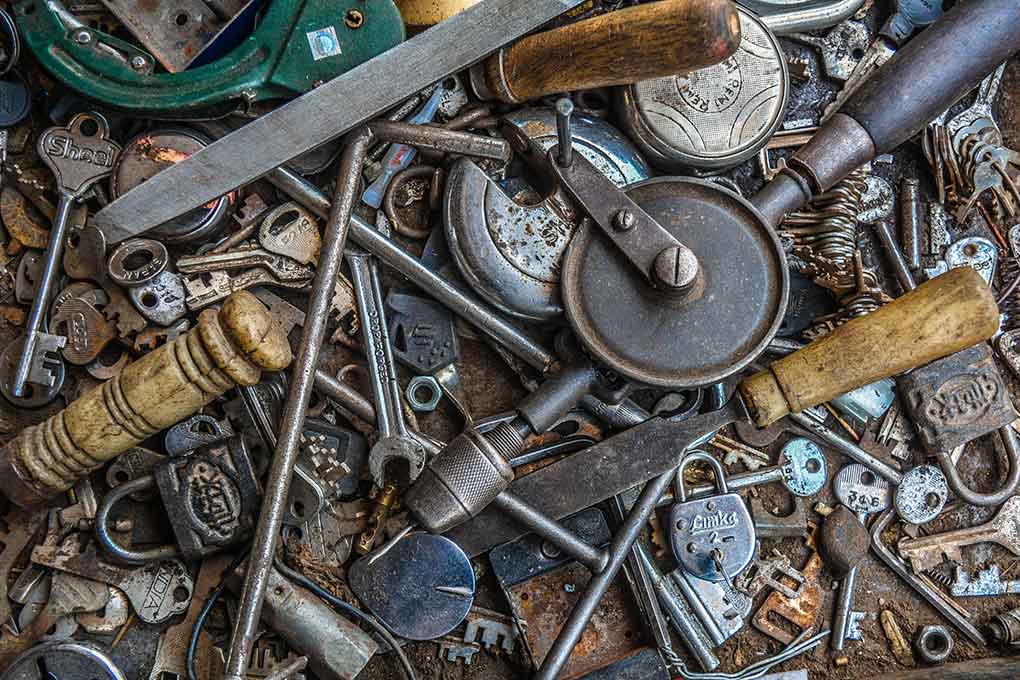
The primary materials used in key manufacturing have been selected for their specific properties, each contributing to the key’s overall functionality and longevity. These alloys represent a careful balance of strength, ductility, and resistance to environmental factors, all critical for a device that undergoes frequent mechanical stress and environmental exposure.
Brass: The Enduring Standard
Brass stands as the most common material for traditional mechanical keys, a testament to its exceptional suitability for the application. This alloy, primarily composed of copper and zinc (typically 60-70% copper and 30-40% zinc), offers a unique combination of properties that make it ideal for key production. From a technological standpoint, brass is highly valued for its excellent machinability. Its relatively soft nature allows for precise cutting and milling, enabling the creation of intricate bitting patterns with high accuracy without excessive tool wear. This precision is paramount for a key to correctly interact with the delicate pin tumblers or wafers within a lock cylinder.
Beyond its ease of shaping, brass possesses good wear resistance, essential for a component that experiences repeated friction against the lock’s internal mechanisms. Its inherent corrosion resistance, particularly against oxidation, ensures that keys maintain their structural integrity and smooth operation even when exposed to moisture or humid environments, preventing rust that could jam a lock. Furthermore, brass exhibits a favorable coefficient of friction against the steel or brass components typically found in a lock, contributing to smooth key insertion and rotation. The yellow hue of brass is also aesthetically pleasing and easily recognizable, though modern brass keys often receive a nickel plating for enhanced surface hardness and a silver-like finish.
Nickel Silver: Enhancing Durability and Aesthetics
Often mistaken for a silver-containing alloy due to its appearance, nickel silver (also known as German silver) is a copper alloy with nickel and often zinc, but no actual silver. Typical compositions include 50-60% copper, 15-30% zinc, and 10-30% nickel. The inclusion of nickel significantly enhances several key properties, making it a premium choice for key manufacturing, especially for higher-quality or specialized keys.
From an engineering perspective, nickel silver offers superior strength and hardness compared to brass. This increased hardness translates directly into improved wear resistance, meaning keys made from nickel silver are less prone to bending, breaking, or showing signs of wear and tear, even with heavy, frequent use. This is particularly advantageous for master keys or keys used in high-traffic commercial environments where durability is paramount. The added strength also contributes to a key’s overall resistance to manipulation attempts, making it more challenging to duplicate or deform.
Additionally, nickel silver possesses excellent corrosion resistance, often outperforming standard brass in certain environmental conditions. Its distinctive silvery-white luster provides a sophisticated aesthetic, which is why it’s often used for automotive keys or those intended for luxury applications. The material’s good ductility, despite its increased hardness, still allows for precise machining, ensuring that the benefits of enhanced durability do not compromise the accuracy required for effective lock interaction.
Steel: For High-Security and Specialized Applications
While less common for everyday mechanical keys due to its cost and machinability challenges compared to brass or nickel silver, steel is employed in specialized and high-security key applications where ultimate strength and resistance to brute force are paramount. Various grades of steel can be used, including stainless steel for corrosion resistance and hardened carbon steel for extreme durability.
The primary advantage of steel keys lies in their exceptional strength and hardness. This makes them incredibly resistant to bending, breaking, or grinding, providing a significant deterrent against physical attacks or attempts at forced entry. For high-security locks, such as those used in government facilities, banking, or industrial complexes, steel keys offer an unmatched level of physical integrity. Their robustness also makes them suitable for situations where keys might be subjected to harsh environments or rough handling.
However, steel presents certain manufacturing challenges. It is significantly harder to machine than brass or nickel silver, requiring specialized tooling and slower production speeds, which contributes to higher manufacturing costs. While stainless steel offers excellent corrosion resistance, other steel alloys may require coatings or platings to prevent rust. The interaction of steel keys with softer lock components must also be carefully considered to avoid excessive wear on the lock itself. Despite these complexities, steel remains the material of choice for applications where uncompromising strength is a non-negotiable requirement for physical security.
Engineering and Manufacturing: Crafting Precision from Raw Materials
The journey from raw metal alloy to a functional key is a sophisticated process involving multiple engineering disciplines, focusing on precision, efficiency, and consistent quality. Modern key manufacturing leverages advanced machinery and metallurgical knowledge to produce millions of highly accurate keys annually.
Stamping and Milling: Mass Production Meets Accuracy
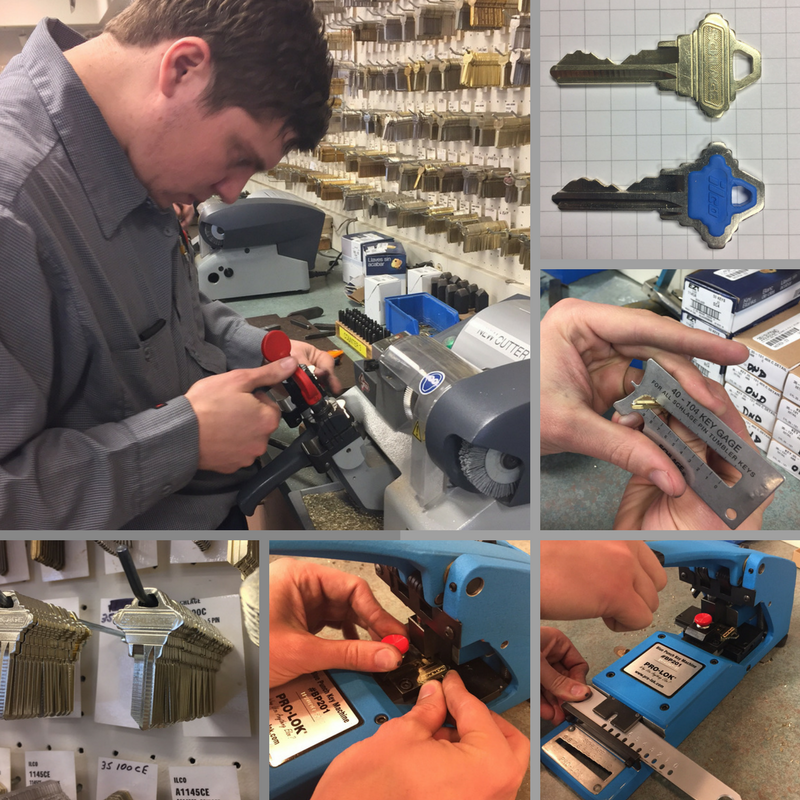
The vast majority of traditional keys are produced through a combination of stamping and milling, a sequence of processes optimized for mass production while maintaining critical dimensional accuracy.
The process typically begins with large sheets or coils of the chosen alloy (e.g., brass or nickel silver). These are fed into high-speed stamping presses where a key blank is first cut out. Stamping involves applying immense force to a die, punching out the rough shape of the key profile (the cross-sectional shape that slides into the keyway) and often an initial head shape. This is an efficient way to create the basic form.
Following stamping, the key blanks move to precision milling machines. These machines, often CNC (Computer Numerical Control) controlled, are programmed to cut the intricate bitting pattern onto the key blade. The bitting, consisting of a series of specific depths and spacing, is what dictates which lock the key will operate. Milling involves removing small amounts of material with rotating cutting tools. Multi-axis milling machines can achieve the highly accurate angles and depths required for modern key designs. The precision of this milling process is absolutely critical; even a fraction of a millimeter deviation can render a key inoperable or compromise the lock’s security. Advanced sensors and quality control systems are integrated into these lines to ensure that each key meets exact specifications.
Casting and Sintering: Specialized Key Production
While stamping and milling dominate mass production, other manufacturing techniques like casting and sintering are employed for specialized key types or when specific material properties are desired.
Casting involves pouring molten metal into a mold, allowing it to solidify into the desired key shape. This method is less common for standard mechanical keys due to the higher potential for imperfections (e.g., porosity, surface finish issues) and the need for significant post-casting machining to achieve the necessary bitting precision. However, casting can be advantageous for complex key head designs, integrated key-fob combinations, or for keys made from alloys that are difficult to stamp or mill, especially those used in decorative or custom applications.
Sintering, also known as powder metallurgy, involves compacting powdered metal into a desired shape (a “green compact”) and then heating it to a temperature below its melting point. This causes the particles to fuse together, forming a solid, often porous, object. Sintering is particularly useful for producing keys with unique material properties, such as enhanced wear resistance or self-lubricating characteristics, by combining different metal powders or incorporating non-metallic elements. It can also produce near-net-shape components, reducing the need for extensive post-processing. While not as widespread for traditional keys, sintering offers a pathway for developing keys from advanced composites or for applications requiring specific mechanical or tribological properties.
The Role of Coatings and Platings
To further enhance the performance and aesthetics of keys, various coatings and platings are often applied after the core manufacturing processes. These surface treatments are critical in addressing specific technological requirements.
Nickel plating is one of the most common applications. It provides a hard, wear-resistant surface that protects the softer brass underneath, extending the key’s lifespan and maintaining its smooth operation within the lock. Nickel plating also gives keys a bright, silvery finish, improving their aesthetic appeal and making them resemble nickel silver keys.
Chrome plating offers similar benefits, providing an even harder and more corrosion-resistant surface, often used for keys that need to withstand very harsh environments or specific chemical exposures. For decorative or branding purposes, keys might also be plated with precious metals or colored PVD (Physical Vapor Deposition) coatings to offer unique finishes and enhanced scratch resistance. These coatings are not merely cosmetic; they are engineered layers designed to improve the key’s interaction with the lock, reduce friction, prevent degradation, and ultimately enhance the overall reliability of the mechanical security system.
Material Properties and Security Implications
The choice of key material is not merely about cost or aesthetics; it fundamentally impacts the key’s functionality, durability, and its role within the broader security ecosystem. The specific properties of the chosen alloy directly influence how a key withstands daily use, environmental factors, and potential manipulation attempts.
Durability and Wear Resistance
A key’s primary function requires it to be repeatedly inserted, turned, and withdrawn from a lock. This constant mechanical interaction inevitably leads to wear and tear. The durability and wear resistance of the key’s material are paramount to its long-term reliability. Brass, with its good balance of hardness and malleability, offers sufficient wear resistance for most residential and commercial applications. Its ability to resist abrasion from the lock’s internal pins and springs ensures that the bitting profile remains accurate over thousands of cycles.
Nickel silver, with its higher nickel content, significantly outperforms brass in terms of hardness and wear resistance. This makes it an ideal choice for high-traffic environments, master key systems, or situations where keys are subjected to more rigorous use. Steel, as the hardest of the common key materials, provides exceptional resistance to wear, making it suitable for high-security applications where uncompromising longevity and resistance to deformation are critical. A key that wears down prematurely will lose its bitting accuracy, leading to potential jamming, difficulty in operation, or outright failure to open the lock, compromising the security system’s integrity.
Malleability and Pick Resistance
While hardness is desirable for durability, an excessively brittle key material would be prone to snapping under torque. Therefore, a degree of malleability (the ability to be deformed without breaking) is crucial. Brass keys strike an excellent balance; they are hard enough to resist wear but possess enough ductility to withstand moderate torsional stress without fracturing. This makes them relatively easy to duplicate using traditional key-cutting machines, which is a common convenience but also a security consideration.
The malleability of a key material also plays a subtle role in its resistance to picking. While lock picking primarily involves manipulating the internal mechanisms of the lock, the key’s material properties can indirectly affect the picker’s task. For instance, a very soft key material might deform slightly under extreme picking pressure, giving a false sense of feedback to the picker. However, advanced lock designs often incorporate hardened steel pins or anti-drill plates within the lock cylinder itself to counter material weaknesses of the key or the cylinder housing. High-security keys often feature complex bitting patterns and sidebar mechanisms rather than relying solely on the key’s material to deter picking. Nevertheless, the resistance of the key material to deliberate deformation or filing (e.g., “impressioning”) is a factor in its overall security profile.
Corrosion Resistance and Longevity
Keys are often exposed to varying environmental conditions, including moisture, humidity, temperature fluctuations, and even corrosive agents like sweat or saltwater. The material’s corrosion resistance is vital for maintaining the key’s functionality and the aesthetic appeal of the associated lock system over its intended lifespan.
Brass inherently offers good resistance to oxidation and rust, owing to its copper content. This makes brass keys reliable in most indoor and outdoor settings. Nickel silver further enhances this resistance, providing superior performance in more challenging environments. Steel keys, particularly stainless steel grades, offer exceptional corrosion resistance, making them ideal for marine environments, industrial settings with chemical exposure, or outdoor applications where rust would be a significant concern. For other steel alloys, protective coatings like nickel or chrome plating are essential to prevent rust formation, which could otherwise degrade the key’s surface, interfere with its operation, and potentially damage the lock cylinder. A corroded key can become stuck, fail to actuate the lock, or even break off inside the cylinder, leading to costly repairs and compromised security.
The Evolution of Key Materials in a Technological Landscape
The journey of key materials reflects humanity’s continuous pursuit of improved security, efficiency, and integration with evolving technologies. From ancient, simple metal keys to modern, sophisticated alloys, the underlying principles of materials science remain critical, even as the “key” itself transitions into digital forms.
From Basic Alloys to Advanced Composites
Historically, keys were forged from iron, bronze, or brass, with the choice dictated by availability and the craftsman’s skill. The advancements in metallurgy allowed for the precise alloying of copper and zinc to create consistent brass compositions, and later, the introduction of nickel in nickel silver, pushing the boundaries of durability and precision. These developments were driven by the need for more reliable, harder-wearing keys that could operate increasingly complex lock mechanisms.
Today, while brass and nickel silver remain dominant, research into advanced composites and novel alloys continues. For instance, some specialized keys, particularly in high-security environments, might incorporate advanced polymers or fiber-reinforced materials for specific properties like lightness, non-conductivity, or resistance to specialized detection methods. While not yet mainstream for traditional mechanical keys, the exploration of these materials showcases the ongoing technological innovation in physical security components. The goal is always to enhance the key’s physical integrity, its resistance to duplication, and its ability to withstand sophisticated bypass techniques.
The Intersection with Digital Security Systems
As technology progresses, the concept of a “key” has broadened considerably beyond a physical piece of metal. Digital keys, smart cards, biometric authenticators, and smartphone apps now serve similar access control functions. However, the understanding of materials science from traditional key manufacturing remains relevant. The underlying principles of secure identification and precise interaction—whether physical or digital—are shared.
For example, the robust construction of physical smart cards (containing microchips and antennas) often involves durable plastics and protective coatings, drawing parallels to the need for wear resistance and environmental protection in metal keys. The security features embedded in these digital “keys” rely on cryptographic algorithms, but their physical integrity ensures they can function reliably without being easily damaged or tampered with. Even in systems where a smartphone acts as a “key,” the device itself is a piece of advanced hardware, built from durable materials to ensure its reliability in performing access control functions. Thus, the engineering ethos that selects the right material for a metal key directly informs the design and material choices for modern digital access tokens.
Future Trends: Smart Materials and Integrated Keying
The future of key materials is likely to involve even greater integration with smart technologies and the use of “smart materials.” Imagine keys that can change their properties in response to stimuli, such as temperature or magnetic fields, or keys with embedded sensors that communicate directly with a lock or a central security system. While currently the realm of research and development, materials like shape-memory alloys, self-healing polymers, or advanced composite structures could lead to keys with unprecedented levels of security, resilience, and functionality.
Furthermore, the trend towards integrated keying systems will continue to blur the lines between physical and digital. Future keys might combine traditional mechanical bitting with RFID tags, NFC chips, or even microscopic biometric scanners directly integrated into the key head, crafted from robust and conductive materials. This evolution will require innovative material science to ensure that these multi-functional “keys” are not only secure and durable but also seamlessly integrate diverse technologies while maintaining a user-friendly form factor. The humble key, whether made of brass or advanced composites, remains a critical component in our built environment, constantly evolving through technological innovation to safeguard our spaces and assets.
aViewFromTheCave is a participant in the Amazon Services LLC Associates Program, an affiliate advertising program designed to provide a means for sites to earn advertising fees by advertising and linking to Amazon.com. Amazon, the Amazon logo, AmazonSupply, and the AmazonSupply logo are trademarks of Amazon.com, Inc. or its affiliates. As an Amazon Associate we earn affiliate commissions from qualifying purchases.