
In the realm of digital technology, we often marvel at the fluidity of user interfaces, the realism of three-dimensional video games, and the precision of robotic navigation. While we frequently attribute these advancements to “algorithms” or “AI,” the bedrock of these innovations is often rooted in classical geometry. One such fundamental concept is the inscribed angle.
To the casual observer, an inscribed angle is a simple geometric figure found in high school textbooks. To a software engineer, a UI designer, or a graphics programmer, it is a vital tool for calculating trajectories, rendering smooth visual elements, and defining spatial relationships within a digital environment. Understanding what an inscribed angle is—and how it functions within the tech ecosystem—is essential for anyone looking to master the intersection of mathematics and modern software development.
1. Understanding the Fundamentals: The Geometry Behind the Code
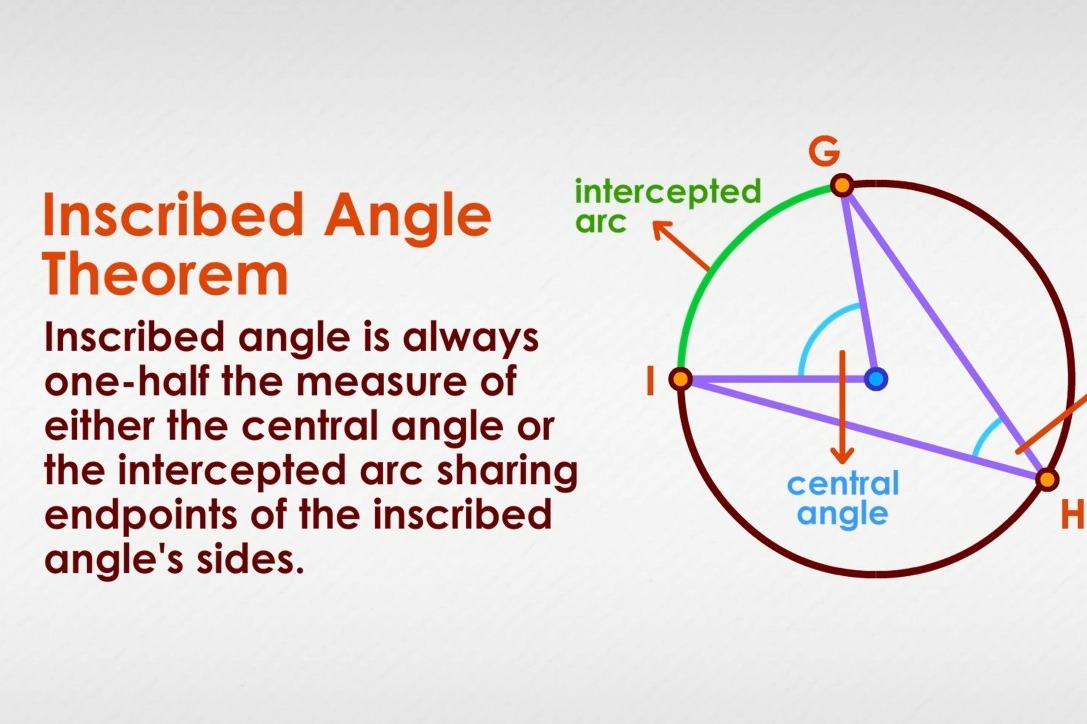
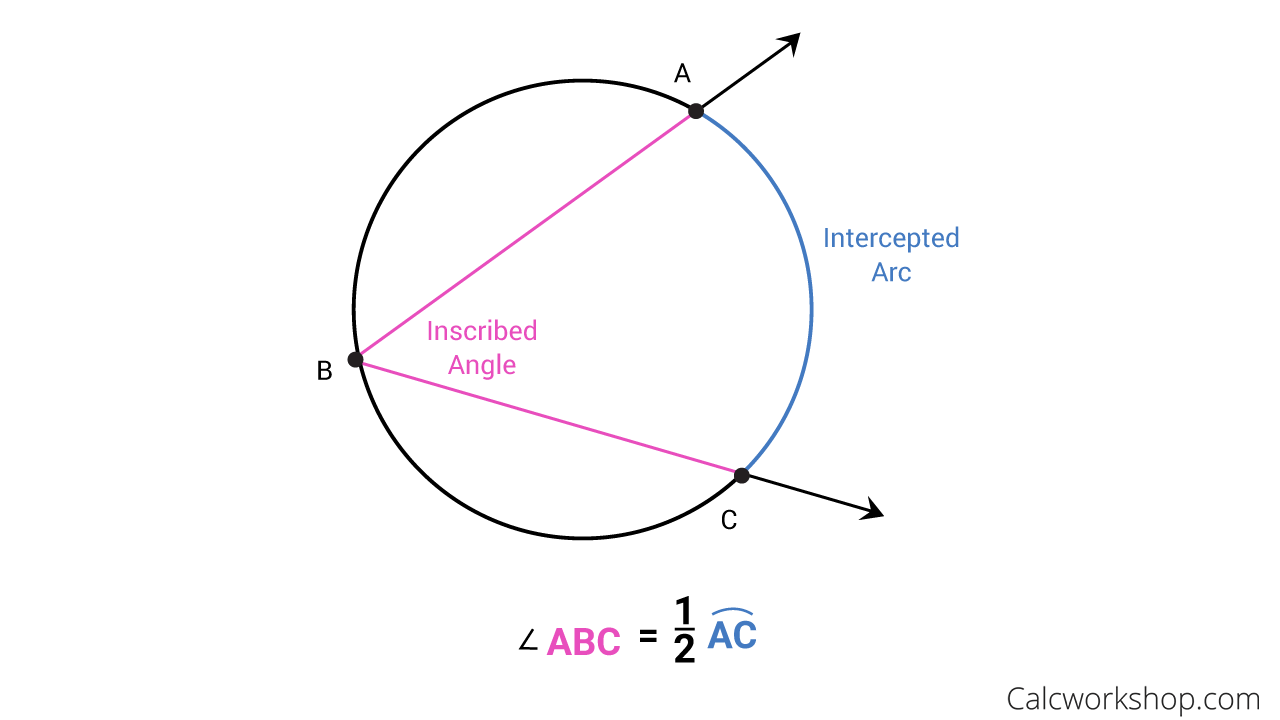
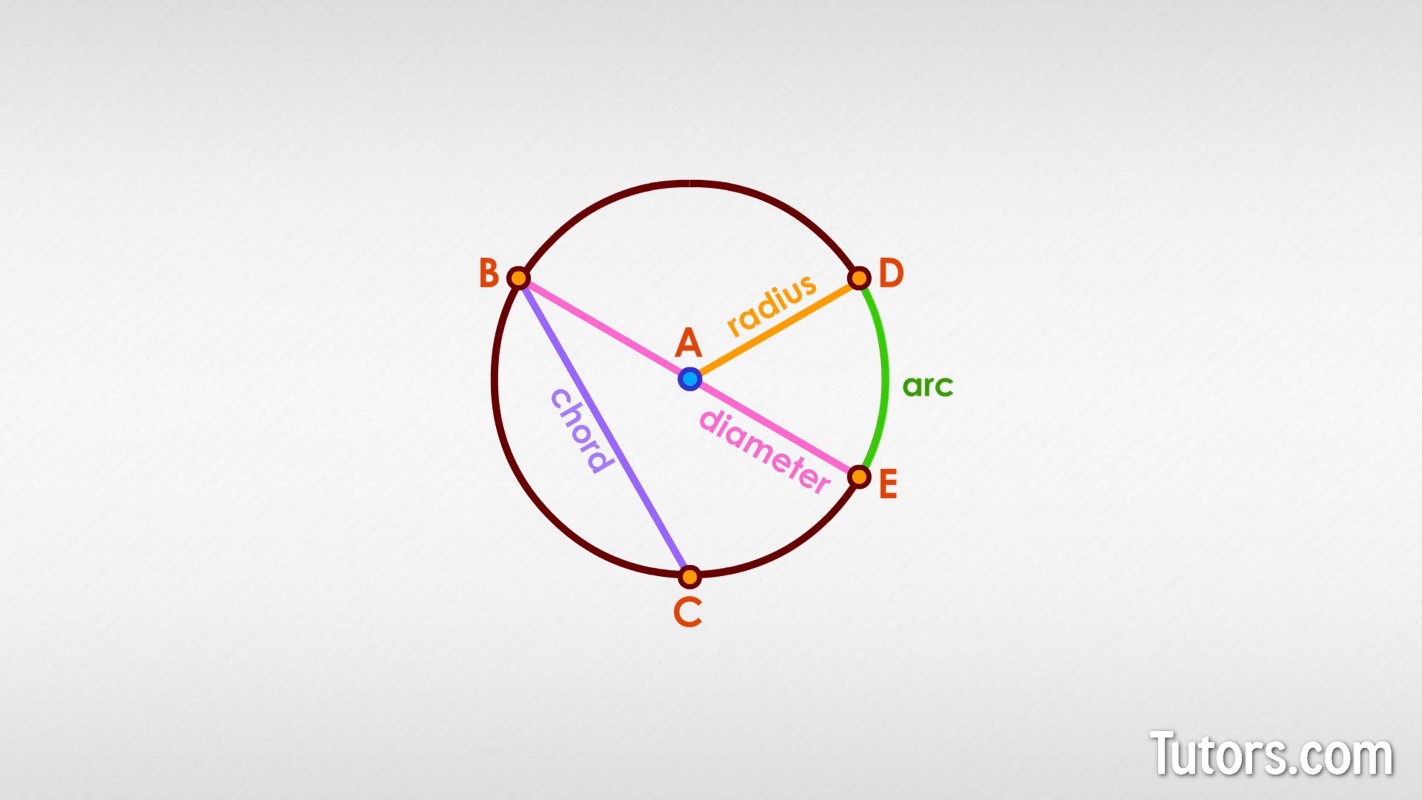
Before diving into complex technical applications, we must establish a clear definition. In geometry, an inscribed angle is an angle formed by two chords in a circle that have a common endpoint on the circle. This common endpoint is known as the vertex of the angle.
The Inscribed Angle Theorem
The core significance of this concept lies in the Inscribed Angle Theorem. This theorem states that the measure of an inscribed angle is exactly half the measure of its intercepted arc. For instance, if an arc spans 60 degrees of a circle’s circumference, the inscribed angle that “opens up” to that arc will measure 30 degrees.
Why Precision Matters in Technical Logic
In software engineering, particularly when dealing with vector graphics (like SVG) or canvas-based rendering in HTML5, precision is paramount. Computers do not “see” shapes; they calculate coordinates. When a developer instructs a program to draw a curved progress bar or a circular navigation menu, the system relies on these geometric constants to ensure that every pixel is placed with mathematical certainty. If the logic governing these angles is flawed, the visual output becomes distorted, leading to a poor user experience (UX) and potential bugs in the interface’s responsiveness.
2. Inscribed Angles in UI/UX Design and Vector Graphics
Modern UI/UX design is moving away from rigid, boxy layouts toward organic, rounded, and circular aesthetics. From the “Apple-style” rounded corners (squiurcles) to complex data visualization dashboards, the geometry of the circle is everywhere.
Vector-Based Rendering Engines
Programs like Adobe Illustrator, Figma, and Sketch utilize vector graphics, which are based on mathematical paths rather than fixed pixels. When a designer creates a curved path, the software often uses inscribed angles to determine the curvature’s consistency. By calculating the relationship between the vertex (the point on the curve) and the intercepted arc, these tools can scale images infinitely without losing quality. This is the “Tech” behind why a logo looks just as sharp on a smartwatch as it does on a 4K monitor.
CSS and Front-End Implementation
For front-end developers, understanding the math of circles is crucial when working with CSS properties like border-radius or complex clip-path animations. While basic rounded corners are handled by the browser’s engine, custom UI components—such as circular sliders or radial menus—require explicit geometric logic. If a developer wants to create a “pie timer” that depletes over sixty seconds, they are essentially manipulating the arc and the corresponding angles to update the visual state in real-time.
The Role of Trigonometry in Web Performance
By leveraging the properties of inscribed angles, developers can often bypass heavy trigonometric functions like Sine and Cosine for certain calculations. Since inscribed angles provide a fixed ratio (1:2) relative to their arcs, a clever programmer can use this constant to simplify calculations, reducing the computational load on the user’s browser and ensuring a smoother, 60-frames-per-second (FPS) experience.
3. The Role of Inscribed Angles in Game Development and Physics Engines
Video games are essentially massive, real-time geometry calculators. Whether it is a first-person shooter (FPS) or a top-down strategy game, the spatial relationship between objects is the core of the gameplay loop.
Hitboxes and Collision Detection
In game design, “collision detection” is the technology that determines when two objects touch. While many games use “bounding boxes,” circular hitboxes are often used for projectiles or character proximity zones because they are computationally cheaper to calculate. The inscribed angle comes into play when determining “Line of Sight” (LoS). If a player character is within a certain arc of an enemy’s vision, the game engine uses inscribed angle logic to calculate whether the enemy can “see” the player based on the angle of the vertex (the enemy’s eyes) and the arc of the player’s movement.
Field of View (FOV) Calculations
The FOV is a critical setting in modern gaming. It defines how much of the game world is visible on the screen at any given time. This is essentially an application of angles within a circular frustum. Developers use the principles of inscribed and central angles to project a 3D environment onto a 2D screen without creating “fisheye” distortion. Understanding the ratio of the angle to the arc allows developers to maintain a realistic sense of scale and distance, which is vital for immersion.
Procedural Animation and Pathfinding
In procedural animation, where character movements are generated by code rather than pre-recorded clips, inscribed angles help define the limits of joint rotation. When a character’s arm moves to pick up an object, the “Inverse Kinematics” (IK) system calculates the angles of the shoulder and elbow. By treating the reach of the arm as a radius of a circle, the system ensures that the movement stays within a mathematically “natural” arc, preventing the limbs from clipping through the character’s body.
4. Advanced Tech Applications: Computer Vision and Robotics
Beyond the screen, the geometry of inscribed angles is a cornerstone of hardware-centric technology, particularly in the fields of robotics and autonomous systems.
LIDAR and Spatial Mapping
Self-driving cars and robotic vacuum cleaners use LIDAR (Light Detection and Ranging) to map their surroundings. These sensors emit laser pulses in a circular pattern to detect obstacles. As the sensor rotates, it receives data points that form arcs. To reconstruct these points into a coherent map, the onboard computer must calculate the angles between the sensor (the vertex) and the objects detected (the arc). The Inscribed Angle Theorem allows the system to quickly triangulate distances and identify the shape of the room or the trajectory of a moving pedestrian.
Optical Character Recognition (OCR) and Image Analysis
Computer vision algorithms, such as those used in facial recognition or OCR, rely on detecting geometric primitives (points, lines, and circles). When an AI analyzes a photo of a human eye, it identifies the circle of the iris. By calculating the inscribed angles of reflections or the positioning of the eyelid relative to the pupil, the software can determine the direction of a person’s gaze. This technology is currently being used in “Attention Tracking” software for high-end laptops and automotive safety systems that alert drivers if they are falling asleep.
5. Optimizing Performance: Why Geometric Precision Matters in Software Engineering
In the tech industry, efficiency is the ultimate goal. Software that runs faster and uses less battery life is inherently more valuable. This is where the “elegant math” of inscribed angles proves its worth.
Reducing Computational Overhead
Complex math consumes CPU and GPU cycles. In mobile app development, where battery life is a primary constraint, developers strive to use the simplest possible mathematical models. Because the relationship between an inscribed angle and its arc is a constant (0.5), it requires significantly less processing power than calculating complex non-linear curves. By building graphical engines that prioritize these geometric shortcuts, tech companies can deliver high-performance software that runs efficiently on even budget-friendly hardware.
Enhancing Scalability and Responsiveness
As we move toward a future of “Spatial Computing” and Augmented Reality (AR) with devices like the Apple Vision Pro, the need for real-time geometric calculation is exploding. In an AR environment, digital objects must be “pinned” to the real world. As the user moves their head (changing the vertex of their view), the software must instantly recalculate the angles of every digital object in the room to maintain the illusion of reality. These calculations happen thousands of times per second, and they are almost entirely dependent on the foundational principles of circle geometry.
Conclusion: The Intersection of Math and Innovation
What is an inscribed angle? In a classroom, it is a diagram on a chalkboard. In the tech industry, it is a silent workhorse. It is the logic that allows a designer to create a perfect logo, a developer to render a seamless animation, a game engine to simulate a world, and a self-driving car to navigate a busy street.
As technology continues to evolve, our reliance on these fundamental geometric truths only grows. Whether you are coding the next big app or designing the user interface of the future, a deep understanding of concepts like the inscribed angle provides the mathematical “source code” necessary to build tools that are not only functional but also elegantly precise. In the world of tech, math isn’t just a subject—it’s the framework upon which our digital reality is built.
aViewFromTheCave is a participant in the Amazon Services LLC Associates Program, an affiliate advertising program designed to provide a means for sites to earn advertising fees by advertising and linking to Amazon.com. Amazon, the Amazon logo, AmazonSupply, and the AmazonSupply logo are trademarks of Amazon.com, Inc. or its affiliates. As an Amazon Associate we earn affiliate commissions from qualifying purchases.