
In the rapidly evolving landscape of HealthTech, the terminology used by clinicians is increasingly intertwined with sophisticated software and hardware capabilities. When a patient or a technician encounters the term “hypoechoic mass,” they are not just looking at a medical finding; they are looking at the culmination of complex signal processing, acoustic physics, and high-resolution digital rendering. From a technological standpoint, a hypoechoic mass represents a specific data signature within an ultrasonic field—a region that reflects fewer sound waves than its surrounding tissue, appearing darker on a digital interface.

Understanding this phenomenon requires a deep dive into the technology that makes it visible. As we move further into the era of AI-driven diagnostics and portable imaging hardware, the “hypoechoic mass” serves as a primary case study for how technology translates physical vibrations into actionable digital insights.
The Physics of Sound: How Ultrasonic Software Visualizes the Invisible
The detection of a hypoechoic mass is rooted in the sophisticated interplay between hardware transducers and signal-processing software. Unlike X-rays, which use ionizing radiation, ultrasound technology relies on high-frequency sound waves. The “tech stack” of a modern ultrasound machine is designed to interpret how these waves bounce off internal structures.
Transducers and Signal Processing
The journey begins with the transducer—a piece of hardware containing piezoelectric crystals. When an electric current is applied, these crystals vibrate, sending sound waves into the body. The software’s primary job is to measure the “Time of Flight” (ToF). When sound waves encounter a mass that is “hypoechoic,” the density and composition of that mass cause it to absorb more sound or allow more sound to pass through, rather than reflecting it back to the sensor. The digital signal processor (DSP) interprets these weak echoes as dark pixels on the screen. The precision of this hardware-software handoff determines the clarity of the mass’s borders.
Algorithms of Acoustic Impedance
At the heart of identifying a hypoechoic mass is the calculation of acoustic impedance. Software algorithms must account for the resistance a material offers to the passage of sound waves. Modern diagnostic tools use “Tissue Harmonic Imaging” (THI), a technology that filters out noise by analyzing the second-harmonic frequencies generated as sound travels through tissue. This technological refinement allows the software to distinguish a true hypoechoic mass from “artifacts” or digital noise, providing a higher-contrast image that is essential for accurate categorization.
AI and Machine Learning in Automated Mass Detection
The most significant trend in medical technology today is the integration of Artificial Intelligence (AI) to interpret what a hypoechoic mass signifies. Traditionally, the identification was left entirely to the human eye, but the rise of Computer-Aided Diagnosis (CAD) has shifted the paradigm.
Computer-Aided Diagnosis (CAD) Systems
CAD software acts as a secondary layer of analysis. Once the ultrasound hardware captures the image of a hypoechoic mass, machine learning models scan the pixels for specific patterns. These systems are trained on millions of labeled images, allowing them to identify “features” of the mass—such as irregular margins or internal vascularity—that might be invisible to a human operator. The goal of this tech is not to replace the radiologist but to provide a “probabilistic score,” flagging masses that require urgent attention.
Neural Networks and Pattern Recognition
Deep learning, a subset of AI, utilizes Convolutional Neural Networks (CNNs) to analyze the texture of a hypoechoic mass. In the tech world, this is referred to as “Radiomics.” Radiomics involves the extraction of quantitative features from medical images that are too complex for human perception. By analyzing the pixel distribution within the dark region of a hypoechoic mass, AI can predict the molecular or genetic makeup of the tissue. This “virtual biopsy” is a testament to how far software has come in transforming raw acoustic data into predictive intelligence.
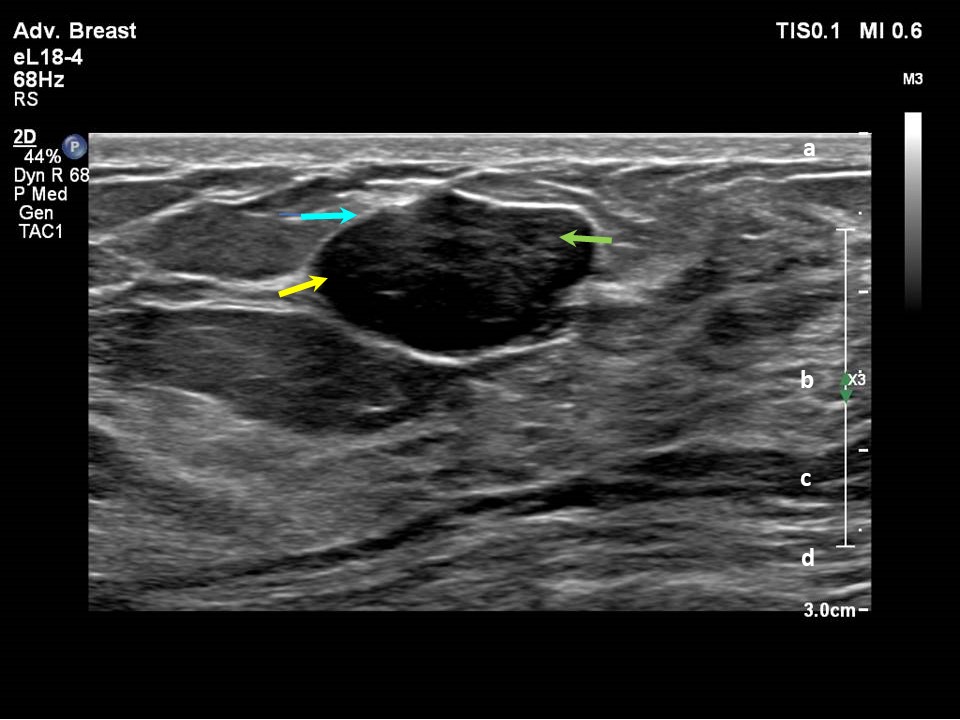
High-Resolution Hardware: The Evolution of Ultrasound Gadgets
The ability to detect and analyze a hypoechoic mass is no longer confined to massive, room-sized hospital consoles. The miniaturization of hardware has brought diagnostic technology to the “edge,” fundamentally changing the accessibility of imaging.
Portable and Handheld Ultrasound Devices
One of the most exciting trends in the tech space is the emergence of Point-of-Care Ultrasound (POCUS). Companies like Butterfly Network have pioneered the “Ultrasound-on-a-Chip” technology. By replacing traditional piezoelectric crystals with thousands of micro-machined sensors on a semiconductor chip, these devices can connect directly to a smartphone. For the first time, identifying a hypoechoic mass can happen in a remote clinic or an emergency vehicle, powered by the same mobile processing chips found in high-end consumer electronics.
3D and 4D Reconstruction Technologies
While traditional ultrasound provides a 2D slice of a mass, modern GPU-accelerated software allows for 3D and 4D (real-time 3D) reconstruction. By taking multiple “slices” of a hypoechoic mass, the software can stitch them together to create a volumetric model. This allows technicians to rotate the mass in a digital environment, examining its volume and its spatial relationship to surrounding blood vessels. This level of visualization is powered by high-end graphics processing units (GPUs) similar to those used in gaming and professional video rendering.
Data Security and Cloud Integration in Medical Imaging
When a hypoechoic mass is identified, the resulting image becomes a critical piece of digital data. The management, storage, and transmission of these files involve some of the most rigorous digital security and cloud infrastructure challenges in the tech industry.
Protecting Patient Data in the Age of IoT
Medical images are stored in a format known as DICOM (Digital Imaging and Communications in Medicine). As these files move from a handheld device to a hospital’s central server, they must be protected by robust encryption protocols. With the rise of the Internet of Medical Things (IoMT), ensuring that the data regarding a patient’s hypoechoic mass remains private is a top priority for cybersecurity firms. End-to-end encryption and blockchain-based audit trails are currently being explored to prevent unauthorized access to sensitive diagnostic data.
Interoperability and AI-Driven Radiomics
The future of medical tech lies in “Interoperability”—the ability of different software systems to communicate. When a hypoechoic mass is detected, the image should ideally be accessible across a cloud-based Electronic Health Record (EHR) system. Modern tech platforms are now using “Federated Learning,” a machine learning technique where the AI model is trained across multiple decentralized servers. This allows algorithms to learn how to better identify hypoechoic masses by accessing data from various hospitals without ever actually moving the sensitive images themselves.

Conclusion: The Convergence of Medicine and Machinery
The term “hypoechoic mass” might sound like a purely biological concern, but in the modern era, it is a digital one. It is a specific arrangement of pixels, a calculated frequency of sound, and a data point for a neural network. As we look toward the future of technology, the line between the physical body and the digital interface continues to blur.
Through the lens of tech, we see that identifying a hypoechoic mass is a feat of engineering. It requires the precision of semiconductor hardware, the power of GPU-driven rendering, the intelligence of machine learning, and the security of cloud infrastructure. As these technologies continue to advance, our ability to detect, analyze, and understand these masses will only become faster, more accurate, and more accessible, proving that the best medicine of the 21st century is, at its heart, great technology.
aViewFromTheCave is a participant in the Amazon Services LLC Associates Program, an affiliate advertising program designed to provide a means for sites to earn advertising fees by advertising and linking to Amazon.com. Amazon, the Amazon logo, AmazonSupply, and the AmazonSupply logo are trademarks of Amazon.com, Inc. or its affiliates. As an Amazon Associate we earn affiliate commissions from qualifying purchases.