
In the world of business finance and personal investing, the term “holding cost”—often referred to as a carrying cost—represents one of the most significant yet frequently overlooked variables on a balance sheet. At its core, a holding cost is the total expense associated with maintaining an inventory of goods or holding a specific investment over a period of time. Whether you are a retail business owner managing a warehouse full of products or a real estate investor waiting for the right market conditions to sell a property, understanding the mechanics of holding costs is essential for maintaining healthy cash flow and maximizing profitability.
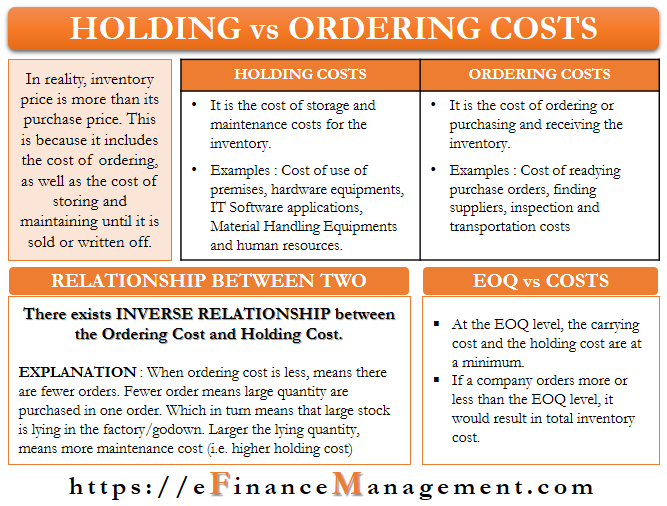
Holding costs are not merely a single line item; they are a composite of various direct and indirect expenses. Failure to account for these can lead to “profit leakage,” where the gross margins of a product are slowly eroded by the very act of keeping that product in stock. This article explores the intricate components of holding costs, how to calculate them, and the strategic financial measures required to minimize their impact.
The Anatomy of Holding Costs: Where Your Capital Goes
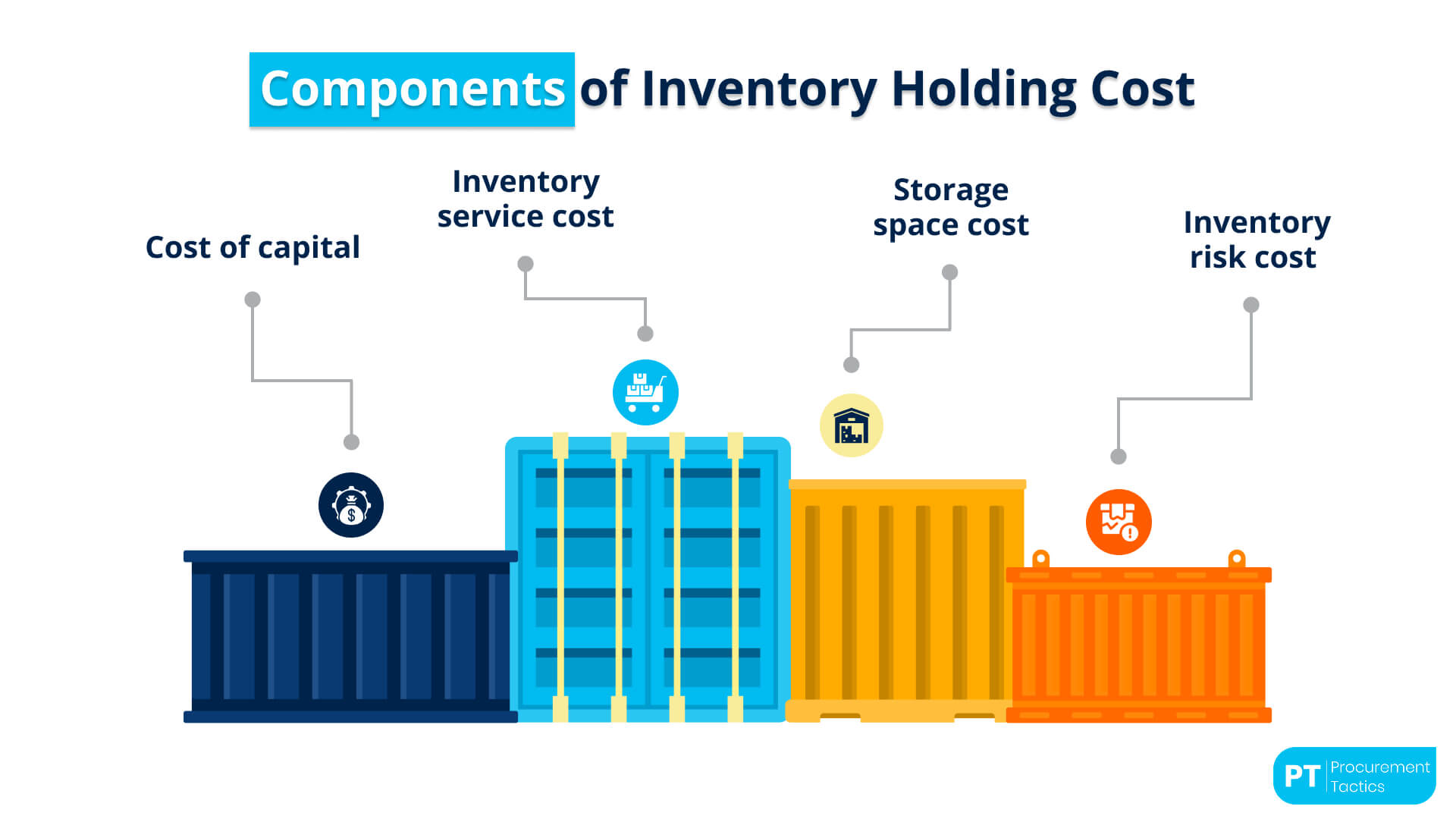
To manage holding costs effectively, one must first deconstruct them. In business finance, these costs are typically categorized into four main pillars: capital costs, storage space costs, inventory service costs, and inventory risk costs. Each of these pillars represents a different way that “sitting” assets drain a company’s financial resources.
The Intangible Cost: Opportunity Cost and Capital Allocation
The largest, yet most invisible, component of holding cost is the opportunity cost of capital. When a business invests money in inventory or an asset, that capital is “locked up.” It is no longer liquid and cannot be used for other purposes, such as research and development, marketing, or debt reduction.
From a financial perspective, if a company has $100,000 tied up in stagnant inventory, the holding cost includes the potential return that $100,000 could have earned if it were invested in a high-yield savings account, the stock market, or reinvested into a more productive area of the business. Investors often use the company’s Weighted Average Cost of Capital (WACC) to estimate this specific portion of the holding cost.
Direct Expenses: Storage, Warehousing, and Utilities
These are the most tangible holding costs. If you own or rent a warehouse to store goods, every square foot has a price tag. This category includes:
- Rent or Mortgage Payments: The cost of the physical space.
- Utilities: Heating, cooling, and lighting required to maintain the inventory, especially for perishable goods that require climate control.
- Maintenance: The upkeep of the facility and the equipment (like forklifts) used to move the inventory.
Risk-Based Expenses: Insurance, Taxes, and Depreciation
The longer an asset is held, the higher the risk associated with it. Inventory service costs include insurance premiums paid to protect the value of the goods against fire, theft, or damage. Additionally, many jurisdictions impose property taxes on the value of the inventory held at the end of the fiscal year.
Depreciation also plays a critical role. For physical goods, especially machinery or electronics, the value of the asset naturally declines over time. In the world of finance, holding a depreciating asset without a corresponding increase in market demand is a recipe for a net loss.
Holding Costs in Inventory Management and Business Operations
In supply chain management, holding costs are a critical variable in the Economic Order Quantity (EOQ) model. The goal of any financial manager is to find the “sweet spot” where the cost of ordering more inventory is perfectly balanced against the cost of holding that inventory.
Depreciation and Obsolescence: The Risk of Aging Goods
One of the most dangerous components of holding cost is obsolescence. This occurs when an item in inventory reaches the end of its product life cycle before it is sold. For example, a retailer holding a massive stock of last year’s smartphone models will find that the “cost” of holding those phones increases exponentially as newer models are released.
Obsolescence doesn’t just apply to tech. It applies to fashion (seasonal changes), perishables (expiration dates), and even industrial parts (new engineering standards). When an item becomes obsolete, the holding cost effectively becomes 100% of the item’s value, plus the costs already incurred to store it.
Calculating the Carrying Cost of Inventory
To maintain a professional grip on business finance, a company must calculate its Inventory Carrying Cost percentage. The standard formula is:
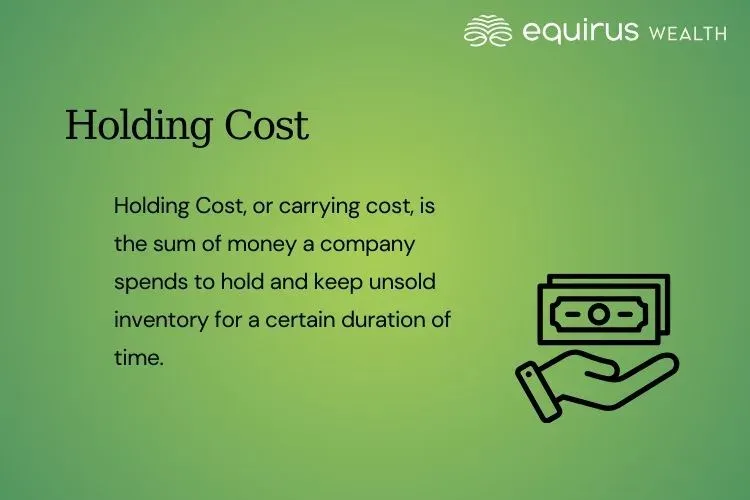
Inventory Carrying Cost = (Total Yearly Holding Costs / Total Yearly Inventory Value) x 100
For most industries, the carrying cost sits between 20% and 30% of the inventory value. For instance, if a business holds $1,000,000 worth of inventory and its total expenses for storage, insurance, opportunity cost, and risks total $250,000, its holding cost is 25%. This means that for every dollar of product kept in the warehouse for a year, the business is spending 25 cents just to keep it there. Understanding this percentage allows managers to set more accurate pricing and determine when to liquidate slow-moving stock.
The Impact of Interest Rates on Holding Costs
In an environment of rising interest rates, holding costs increase. Most businesses utilize lines of credit or loans to finance their inventory. As interest rates climb, the cost of the debt used to purchase that inventory rises, directly inflating the holding cost. This creates a ripple effect where businesses are forced to move inventory faster or raise prices to maintain their profit margins.
Beyond the Warehouse: Holding Costs in Real Estate and Investing
While often discussed in the context of retail or manufacturing, the concept of holding costs is equally vital in personal finance and investment portfolios. In these sectors, holding costs determine the “break-even” point of an investment.
Carrying Charges in Property Investment
For real estate investors, “holding costs” are often the difference between a successful “flip” and a financial disaster. When a developer purchases a property to renovate and sell, they are responsible for several ongoing expenses during the renovation period:
- Property Taxes: These accrue daily, regardless of whether the house is occupied.
- Loan Interest: Most real estate investors use “hard money” or bridge loans with high interest rates. Every month the house stays on the market, the interest eats into the final profit.
- Insurance and Utilities: Builders’ risk insurance and basic utilities to keep the project running.
- HOA Fees: If the property is in a managed community, these monthly fees persist until the title is transferred.
An investor who buys a house for $300,000 and expects to sell it for $400,000 might find that $30,000 of their projected profit is consumed by holding costs if the property sits on the market for six months instead of two.
Financial Markets: Margin Interest and Fees
In the stock and commodity markets, holding costs appear in the form of margin interest and overnight funding rates. If a trader buys a position using margin (borrowed money from a broker), they are charged interest for every day that position remains open.
In the case of commodities or futures, holding costs—often called “cost of carry”—include the costs of physically storing the underlying asset (like oil or gold) and the insurance for that asset. For the average retail investor, holding costs might also include management fees (expense ratios) in ETFs or mutual funds. While a 1% fee might seem small, it is a continuous holding cost that compounds over decades, potentially reducing the final value of a retirement portfolio by hundreds of thousands of dollars.
Strategic Minimization: Turning Holding Costs into Liquidity
Managing holding costs is not about eliminating them entirely—as some inventory is necessary to meet customer demand—but about optimizing them. Sophisticated financial management focuses on increasing the “Inventory Turnover Ratio,” which measures how many times a company’s inventory is sold and replaced over a period.
Adopting Just-In-Time (JIT) Inventory
Popularized by Japanese manufacturing, the Just-In-Time (JIT) method aims to reduce holding costs by receiving goods only as they are needed in the production process. By minimizing the amount of stock on hand, a company drastically reduces its need for warehouse space, lowers its insurance premiums, and frees up capital for other investments. However, this strategy requires impeccable supply chain logistics, as there is no “buffer” stock if a disruption occurs.
Utilizing Financial Tools for Better Cash Flow Forecasting
Modern business finance relies on sophisticated software to track inventory age and predict demand. By using predictive analytics, businesses can avoid “overstocking”—the primary driver of high holding costs.
Furthermore, businesses can use “ABC Analysis” to categorize inventory:
- A-Items: High-value items with low sales frequency (require tight control).
- B-Items: Moderate value and frequency.
- C-Items: Low-value items with high sales frequency (require less stringent holding cost management).
By focusing management efforts on the “A-Items,” which represent the largest portion of tied-up capital, businesses can significantly improve their liquidity.
Conclusion: The Strategic Importance of Monitoring Holding Costs
In any financial endeavor, whether running a multinational corporation or managing a personal brokerage account, the “cost of waiting” is a real and measurable expense. Holding costs serve as a constant reminder that time is money. By rigorously calculating these costs, acknowledging the hidden drain of opportunity costs, and employing lean management strategies, individuals and businesses can protect their margins and ensure that their capital is always working as hard as possible. Understanding holding costs is not just an accounting exercise; it is a fundamental pillar of sound financial strategy.
aViewFromTheCave is a participant in the Amazon Services LLC Associates Program, an affiliate advertising program designed to provide a means for sites to earn advertising fees by advertising and linking to Amazon.com. Amazon, the Amazon logo, AmazonSupply, and the AmazonSupply logo are trademarks of Amazon.com, Inc. or its affiliates. As an Amazon Associate we earn affiliate commissions from qualifying purchases.