
For most consumers, purchasing a vehicle is the second-largest financial commitment they will make, trailing only the purchase of a home. While much of the negotiation process at a dealership focuses on the “sticker price” or the monthly payment, the most critical number in the contract is often the Annual Percentage Rate (APR). Identifying what constitutes a “high” car interest rate is not a static calculation; it is a moving target influenced by the broader economy, the specific type of vehicle, and the borrower’s individual financial profile.

To navigate the world of auto finance, one must understand that interest is essentially the price of “renting” someone else’s money. When that price becomes disproportionate to the risk or the market average, it enters the territory of a high interest rate. In the current economic climate, understanding these thresholds is the difference between building equity in a vehicle and falling into a cycle of debt.
The Benchmarks: Defining a “High” Rate in Today’s Market
A car interest rate is considered high if it significantly exceeds the average rates offered to borrowers with similar credit profiles for similar vehicles. To determine if a rate is high, you must first look at the current prime rate set by the Federal Reserve and the corresponding averages reported by credit bureaus like Experian or TransUnion.
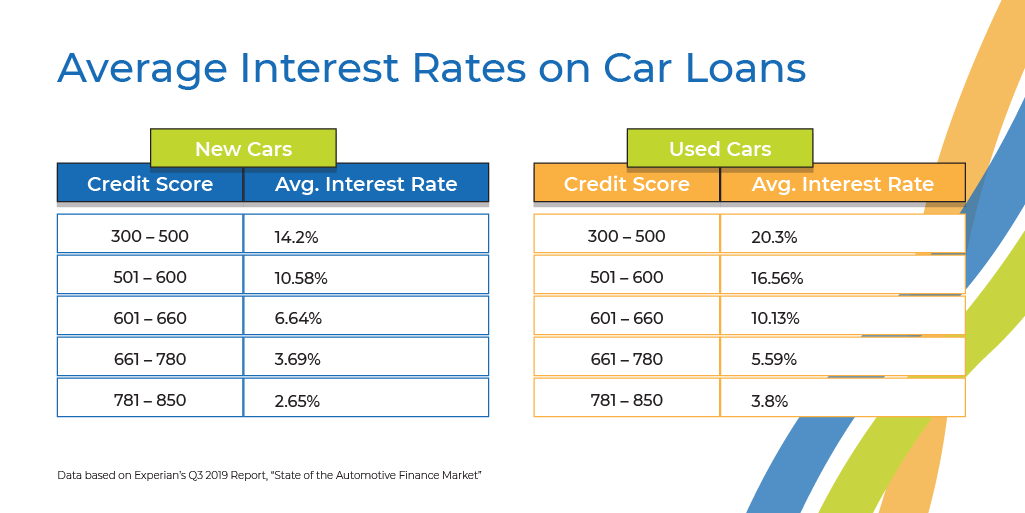
Historically, in a low-interest environment, a rate of 5% or 6% might have been considered high for a new car. However, as central banks adjust rates to combat inflation, the baseline shifts. Currently, for a borrower with “prime” credit (typically a score between 661 and 780), a competitive rate for a new car might hover between 6% and 8%. In this context, a rate of 12% for that same borrower would be objectively high.
Conversely, the definition of “high” changes drastically when looking at the used car market or borrowers with lower credit scores. Used cars carry higher interest rates because they are more difficult for lenders to value and represent a higher risk of mechanical failure, which could lead to a borrower defaulting. For a used vehicle, a “good” rate might be 10%, while a “high” rate would push toward 18% or 24%.
The Credit Tier Hierarchy
Lenders generally categorize borrowers into five distinct tiers, and the “high” threshold is different for each:
-
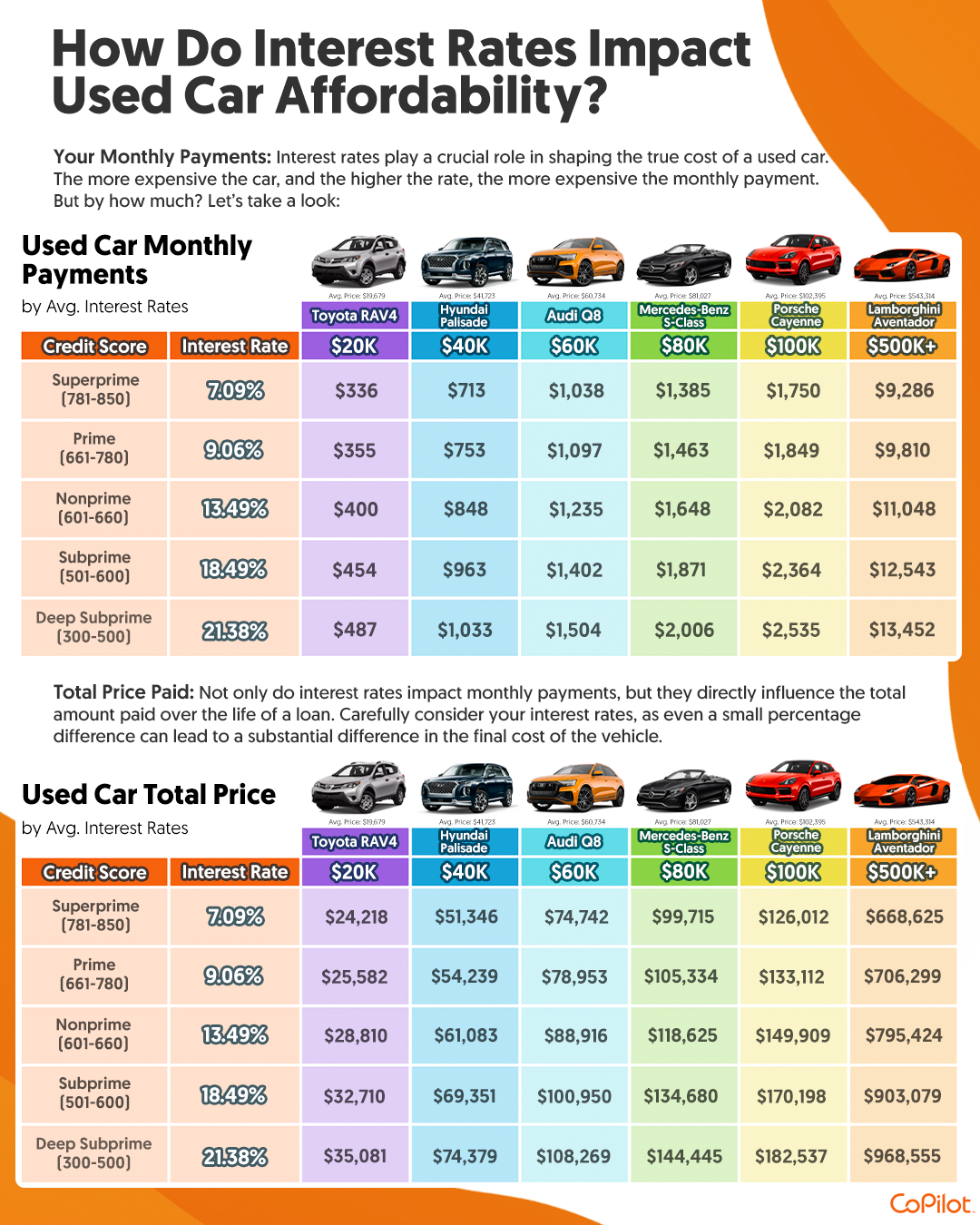
Super Prime (781–850): These borrowers receive the lowest rates. Anything above 7% for a new car in the current market would likely be considered high for this group.
-
Prime (661–780): These are standard reliable borrowers. A rate exceeding 9% on a new vehicle is generally considered high.
-
Non-Prime (601–660): Borrowers in this tier begin to see significantly higher costs. Rates between 10% and 15% are common, with anything over 16% being high.
-
Subprime (501–600): This is where rates often jump into the double digits. A “high” rate here might be anything over 20%.
-
Deep Subprime (300–500): Borrowers in this category often face predatory rates. While they may see offers of 25% or higher, anything exceeding the state’s usury laws or the 25% mark is exceptionally high and financially dangerous.
Factors That Drive Interest Rates Upward
Understanding why you are being offered a specific rate requires looking at several variables beyond just your credit score. Lenders use complex algorithms to determine the risk of loss, and several “red flags” can cause a rate to spike.
Vehicle Age and Mileage
The collateral for an auto loan is the vehicle itself. Because cars are depreciating assets, lenders are cautious. A new car loses value quickly, but it is under warranty and less likely to break down. A ten-year-old used car, however, is a riskier bet. If the engine fails, the borrower might stop making payments because the car is no longer functional. To compensate for this risk, lenders charge higher interest rates on older, high-mileage vehicles. If you are looking at a car that is more than seven years old, expect the “low” end of the interest spectrum to be significantly higher than it would be for a 2024 model.
The Loan Term Length
In an effort to make monthly payments more affordable, many consumers are opting for 72-month or even 84-month loan terms. While this lowers the monthly outflow, it almost always increases the interest rate. Lenders view long-term loans as riskier because there is a higher statistical probability that the borrower’s financial situation will change over seven years. Furthermore, a longer term means the vehicle will likely be worth less than the remaining loan balance (being “underwater”) for a significant portion of the loan life. Choosing a term longer than 60 months is one of the fastest ways to turn a “good” rate into a “high” one.
Debt-to-Income Ratio (DTI)
Your credit score measures how you have handled debt in the past, but your DTI measures your ability to handle debt in the present. If your monthly obligations (rent, student loans, credit cards) take up 45% or more of your gross income, a lender may see you as a high-risk borrower regardless of your 750 credit score. To mitigate this risk, they may offer a higher interest rate than your credit score alone would suggest.
The Financial Impact: The Real Cost of a High APR
The difference between a 5% interest rate and a 15% interest rate on a $35,000 car loan is not just a few dollars a month; it is a staggering sum over the life of the loan. To understand why a high rate is so damaging, one must look at the total interest paid and the speed of equity accumulation.
Total Interest Paid
Consider a $30,000 loan for 60 months. At a “good” rate of 6%, the monthly payment is roughly $580, and the total interest paid over the life of the loan is approximately $4,800. If that rate jumps to a “high” rate of 16%, the monthly payment rises to $730. More importantly, the total interest paid balloons to over $13,700. In this scenario, the borrower is paying nearly half the original value of the car just in interest. This “interest tax” drains personal wealth and prevents the borrower from investing that money elsewhere.
The Negative Equity Trap
One of the most dangerous aspects of a high interest rate is that it slows down how quickly you pay off the principal of the loan. In the early years of a high-interest loan, the majority of your monthly payment goes toward interest rather than the car’s balance. Because cars depreciate so quickly, a high interest rate often ensures that you owe more on the car than it is worth for nearly the entire duration of the loan.
This becomes a crisis if the car is totaled in an accident or if you need to sell it. If you owe $20,000 on a car that is only worth $14,000 because your high interest rate prevented you from paying down the principal, you must come up with $6,000 out of pocket just to get out of the loan.
How to Avoid and Combat High Interest Rates
If you find yourself facing a high interest rate offer, you are not without options. Avoiding the “high rate trap” requires preparation and a willingness to walk away from the dealership desk.
The Power of Pre-Approval
One of the biggest mistakes consumers make is relying on “captive financing” (the financing offered by the dealership). Dealerships often add a “markup” to the interest rate offered by the bank as a commission for facilitating the loan. To avoid this, always secure a pre-approval from a credit union or a local bank before stepping onto the lot. If a credit union offers you 7% and the dealer offers you 10%, you immediately know the dealer’s rate is “high” and can negotiate accordingly.
Improving Your Credit Profile
If your interest rate is high due to a low credit score, sometimes the best financial move is to wait. Spending six months paying down credit card balances to lower your credit utilization can jump your score by 50 points or more, potentially moving you from a “Subprime” rate to a “Non-Prime” or “Prime” rate. The savings from waiting six months to buy a car can amount to thousands of dollars over the life of the loan.
The Refinancing Route
If you are already locked into a high-interest loan, you are not necessarily stuck there for the next five years. If your credit score has improved since you bought the car, or if market rates have dropped, you can refinance your auto loan. Many lenders specialize in auto refinancing, allowing you to pay off the high-interest loan with a new, lower-interest one. This can lower your monthly payment and significantly reduce the total interest you will pay.
Larger Down Payments
A high interest rate is calculated based on the principal balance. By providing a larger down payment, you reduce the “Loan-to-Value” (LTV) ratio. Lenders are often willing to lower the interest rate if you have significant skin in the game, as it reduces their risk. Even if they don’t lower the rate, the high interest is being applied to a smaller number, which saves you money in the long run.
In conclusion, a high car interest rate is a relative figure, but its impact on your financial health is absolute. By staying informed about current market benchmarks, understanding your own credit standing, and aggressively shopping for the best terms, you can ensure that your next vehicle purchase is a tool for mobility rather than a burden on your financial future. Knowledge of these rates is the first step in moving from a passive consumer to an empowered personal financier.
aViewFromTheCave is a participant in the Amazon Services LLC Associates Program, an affiliate advertising program designed to provide a means for sites to earn advertising fees by advertising and linking to Amazon.com. Amazon, the Amazon logo, AmazonSupply, and the AmazonSupply logo are trademarks of Amazon.com, Inc. or its affiliates. As an Amazon Associate we earn affiliate commissions from qualifying purchases.