
In the intricate world of business finance, understanding foundational terms is paramount for accurate record-keeping, strategic planning, and tax compliance. Among these essential terms, “gross receipt” stands out as a critical indicator of a business’s total economic activity. Far more than just a simple count of money received, gross receipts form the bedrock upon which much of a company’s financial analysis, taxation, and operational decisions are built.
The Foundation of Business Revenue
At its core, a gross receipt represents the total amount of money and the value of other consideration a business receives from all sources, before any deductions, allowances, or returns are subtracted. It encompasses every dollar, every piece of property, or every service exchanged for goods or services rendered, interest earned, or assets sold. This top-line figure is the initial measure of a business’s inflows, painting a broad picture of its financial activity over a specific period.
For many small businesses and sole proprietors, particularly those operating on a cash basis, the concept of gross receipts can often feel synonymous with their total income. However, for larger entities and those employing accrual accounting, understanding the precise components and implications of gross receipts is vital. It serves as the starting point for calculating various financial metrics, determining tax obligations, and assessing the overall scale of an enterprise. Without a clear grasp of gross receipts, a business lacks the fundamental data needed to truly understand its operational footprint and financial health.
Components of Gross Receipts
Gross receipts are comprehensive, encompassing a wide array of income streams that flow into a business. Understanding these components is crucial for accurate financial reporting and tax calculations. While the most obvious source is typically from primary business operations, gross receipts extend to include almost all forms of incoming value.
Sales of Goods and Services
This is the most direct and often the largest component for many businesses. It includes all income generated from the sale of products or the provision of services. Whether a retail store sells a product, a consultant charges for their expertise, or a manufacturer ships goods, the value received counts towards gross receipts. This includes cash sales, credit sales, and even the fair market value of goods or services received in trade.
Rental Income
If a business owns property, equipment, or other assets that it leases to others, any rent collected from these arrangements contributes to its gross receipts. This could range from commercial real estate leases to the rental of specialized machinery.
Interest Income
Businesses often hold bank accounts, make loans, or invest in debt instruments. Any interest earned on these financial assets, whether from savings accounts, certificates of deposit (CDs), or loans extended to other parties, is counted as a gross receipt.
Dividend Income
For businesses that hold equity investments in other companies, dividends received from those stock holdings also add to the gross receipts. These represent a share of the profits distributed by the issuing company.
Royalties
If a business owns intellectual property, such as patents, copyrights, or trademarks, and licenses it for use by others, the royalty payments received are a component of gross receipts. This is common in industries like publishing, music, and technology.
Gains from Asset Sales
When a business sells an asset that is not inventory (e.g., old office equipment, a vehicle, a piece of real estate used in operations), the proceeds from that sale are considered a gross receipt. This typically includes the entire sale price, not just the capital gain.
Other Income
This category acts as a catch-all for any other revenue streams that don’t fit neatly into the above categories but still represent an inflow of funds or value. This could include income from insurance settlements, certain grants, or even the fair market value of items received in barter transactions.
It is important to note that gross receipts include both cash and non-cash forms of income. For instance, if a business exchanges services for another business’s services, the fair market value of the services received would be considered a gross receipt, even if no cash changed hands. Similarly, income recognized under accrual accounting for services rendered or goods delivered, even if payment has not yet been received, will contribute to gross receipts for that period.
Gross Receipts vs. Other Financial Metrics
While gross receipts provide an essential top-line figure, it’s crucial to differentiate them from other financial metrics that offer a more nuanced view of a business’s performance and profitability. Confusing these terms can lead to significant misinterpretations of financial health.

Gross Receipts vs. Net Receipts
The distinction between gross and net receipts is fundamental. Gross receipts represent the total amount received before any deductions. Net receipts, conversely, are the amounts received after various deductions have been applied. These deductions typically include returns and allowances for unsatisfactory goods, discounts offered to customers for early payment, or other adjustments. Understanding net receipts gives a more accurate picture of the revenue retained after accommodating customer adjustments.
Gross Receipts vs. Revenue
Often, “gross receipts” and “revenue” are used interchangeably, especially for service-based businesses or those with straightforward sales. However, there can be subtle differences. Revenue, particularly “operating revenue,” typically refers to income derived from a company’s primary business activities (e.g., selling goods or services). Gross receipts can be a broader term, encompassing all forms of income, including non-operating income like interest, dividends, or gains from the sale of non-inventory assets. For many businesses, particularly under accrual accounting, total revenue reported on the income statement will align very closely with gross receipts from operations, but gross receipts will also capture other financial inflows.
Gross Receipts vs. Gross Profit
Gross profit is a measure of profitability, not just inflow. It is calculated by subtracting the Cost of Goods Sold (COGS) from gross receipts (or revenue). COGS includes the direct costs attributable to the production of the goods sold by a company, such as material costs and direct labor. Gross receipts are merely the money coming in; gross profit tells you how much money is left over after paying for the direct costs of what you sold. A high gross receipt figure doesn’t necessarily mean high gross profit if COGS are also high.
Gross Receipts vs. Taxable Income
Taxable income is the figure used to determine a business’s income tax liability. It is derived by taking gross receipts (or total revenue) and then subtracting all allowable business expenses, deductions (like depreciation or amortization), and sometimes exemptions. Gross receipts are the starting point, but numerous adjustments are made before arriving at the final taxable income. A business can have substantial gross receipts but, after all deductions, a much lower — or even zero — taxable income.
Why Gross Receipts Matter: Practical Applications
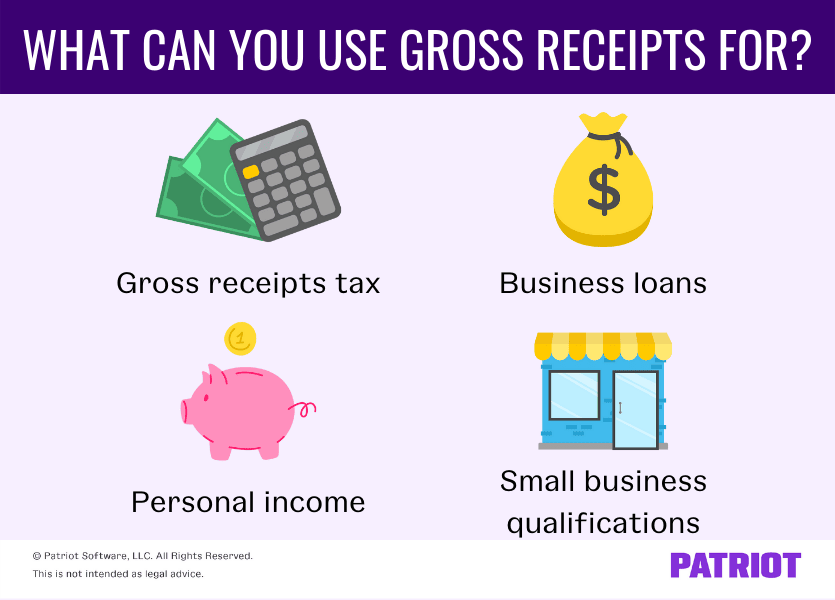
The significance of gross receipts extends far beyond a simple bookkeeping entry. They serve as a vital metric with profound implications for taxation, financial analysis, compliance, and strategic planning.
Taxation
Gross receipts are a cornerstone of business taxation. Many local, state, and even federal tax calculations begin with this figure. For instance, some states impose a “gross receipts tax,” which is a tax on the total revenue of a business, regardless of its profitability. Additionally, gross receipts often determine a business’s eligibility for certain tax breaks, simplified accounting methods (like the cash basis for small businesses), or even the specific tax forms they must file. The IRS, for example, uses gross receipts to classify businesses and monitor compliance with tax laws, making accurate reporting absolutely critical.
Financial Reporting and Analysis
For internal management, investors, and lenders, gross receipts provide an immediate gauge of a business’s scale and operational activity. They offer a raw, unfiltered look at the total economic value flowing into the company. Analysts use gross receipts to assess growth trajectories, market penetration, and the overall volume of business conducted. While not a measure of profitability, it’s a key component in calculating other crucial financial ratios and helps in understanding a company’s top-line performance.
Budgeting and Forecasting
Effective financial planning hinges on accurate data, and gross receipts serve as a primary input for budgeting and forecasting. Businesses use historical gross receipts to project future income, which then informs decisions about expenditures, investments, and resource allocation. Understanding potential gross receipts helps managers anticipate cash flow and plan for periods of growth or contraction.
Compliance
Beyond taxation, various regulatory bodies and industry standards require businesses to report their gross receipts for permits, licenses, and other compliance purposes. This can include anything from local business licensing requirements to federal reporting for certain industries. Accurate tracking ensures a business remains in good standing with all relevant authorities.
Managing and Tracking Gross Receipts Effectively
Given their widespread importance, effective management and meticulous tracking of gross receipts are non-negotiable for any successful business. This involves a combination of diligent record-keeping, strategic accounting choices, and leveraging modern financial tools.
Accurate Record-Keeping
The foundation of effective gross receipt management is impeccable record-keeping. Every transaction that results in an inflow of funds or value must be documented. This includes sales invoices, cash register receipts, bank statements, payment processing reports, rental agreements, interest statements, and any other relevant financial documents. Maintaining a clear, organized system for these records is crucial for audits, tax preparation, and financial analysis.
Choosing an Accounting Method
The method a business chooses for its accounting—cash basis or accrual basis—significantly impacts how and when gross receipts are recognized.
- Cash Basis Accounting: Under this method, income is recognized when cash is actually received, regardless of when the service was performed or the product was delivered. This is simpler and often preferred by small businesses and sole proprietorships.
- Accrual Basis Accounting: This method recognizes income when it is earned, regardless of when the cash is received. For example, if an invoice is issued for services rendered, the income is recognized even if the customer hasn’t paid yet. Most larger businesses are required to use accrual accounting.
The choice of method directly influences the reported gross receipts for any given period, impacting financial statements and tax liabilities.
Utilizing Financial Tools
Modern accounting software (e.g., QuickBooks, Xero, Sage) and Enterprise Resource Planning (ERP) systems are invaluable for automating the tracking of gross receipts. These tools can integrate with point-of-sale systems, bank accounts, and payment processors to automatically record transactions, generate invoices, and compile comprehensive financial reports. This automation reduces human error, saves time, and provides real-time insights into a business’s gross receipts.
Regular Reconciliation
Periodically reconciling bank statements with internal financial records is critical to ensure accuracy. This process helps identify discrepancies, missed entries, or errors, guaranteeing that all gross receipts are accounted for and correctly categorized. Regular reconciliation provides an additional layer of verification and helps maintain the integrity of financial data.

Professional Guidance
Navigating the complexities of gross receipts, especially concerning tax implications and accounting standards, can be challenging. Engaging with qualified accountants or tax advisors is highly recommended. These professionals can help businesses choose the appropriate accounting method, ensure compliance with all relevant tax laws, optimize financial strategies, and provide expert insights into the meaning and application of gross receipts within a broader financial context. Their expertise can prevent costly errors and ensure a business is making informed financial decisions based on accurate data.
aViewFromTheCave is a participant in the Amazon Services LLC Associates Program, an affiliate advertising program designed to provide a means for sites to earn advertising fees by advertising and linking to Amazon.com. Amazon, the Amazon logo, AmazonSupply, and the AmazonSupply logo are trademarks of Amazon.com, Inc. or its affiliates. As an Amazon Associate we earn affiliate commissions from qualifying purchases.