
In the hyper-competitive landscape of global footwear, brands often struggle to find a balance between aesthetic appeal and structural integrity. While fast-fashion conglomerates prioritize rapid turnover and low production costs, a specific segment of the market has doubled down on a 19th-century manufacturing technique to define their corporate identity: the Goodyear welt.
For high-end footwear manufacturers, the Goodyear welt is more than just a method of attaching a sole to an upper; it is a powerful brand signal. It communicates a commitment to durability, sustainability, and craftsmanship that justifies a premium price point. This article explores the Goodyear welt not merely as a mechanical process, but as a cornerstone of brand strategy for heritage labels and modern luxury houses alike.
1. The Anatomy of a Brand Promise: Defining the Goodyear Welt
Before analyzing its impact on brand strategy, one must understand the technical superiority that allows this construction method to command such authority. Named after Charles Goodyear Jr.—who patented the machinery to automate the process in 1869—the Goodyear welt is the gold standard of shoe construction.
The Technical Mechanics of Quality
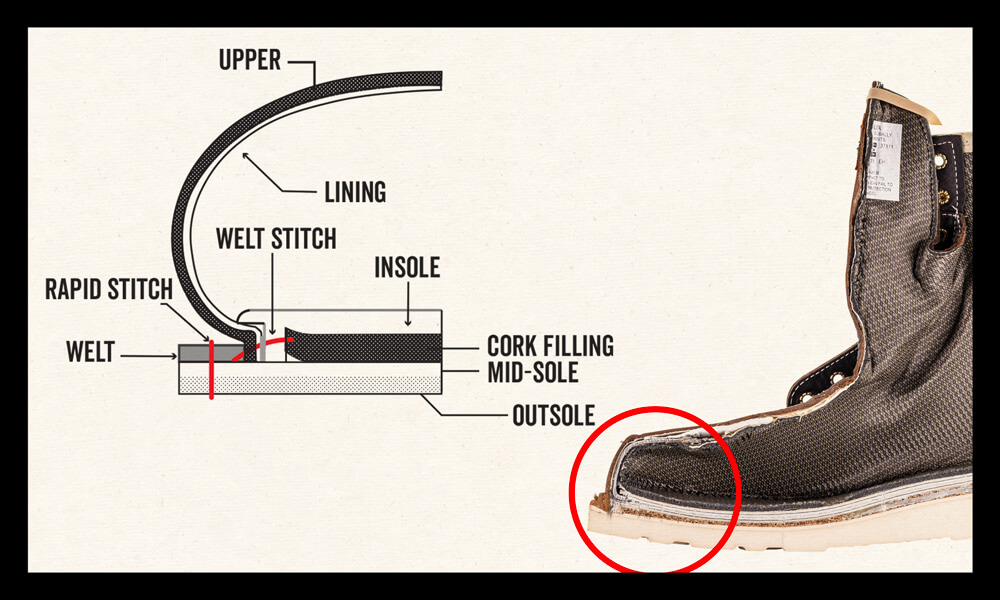
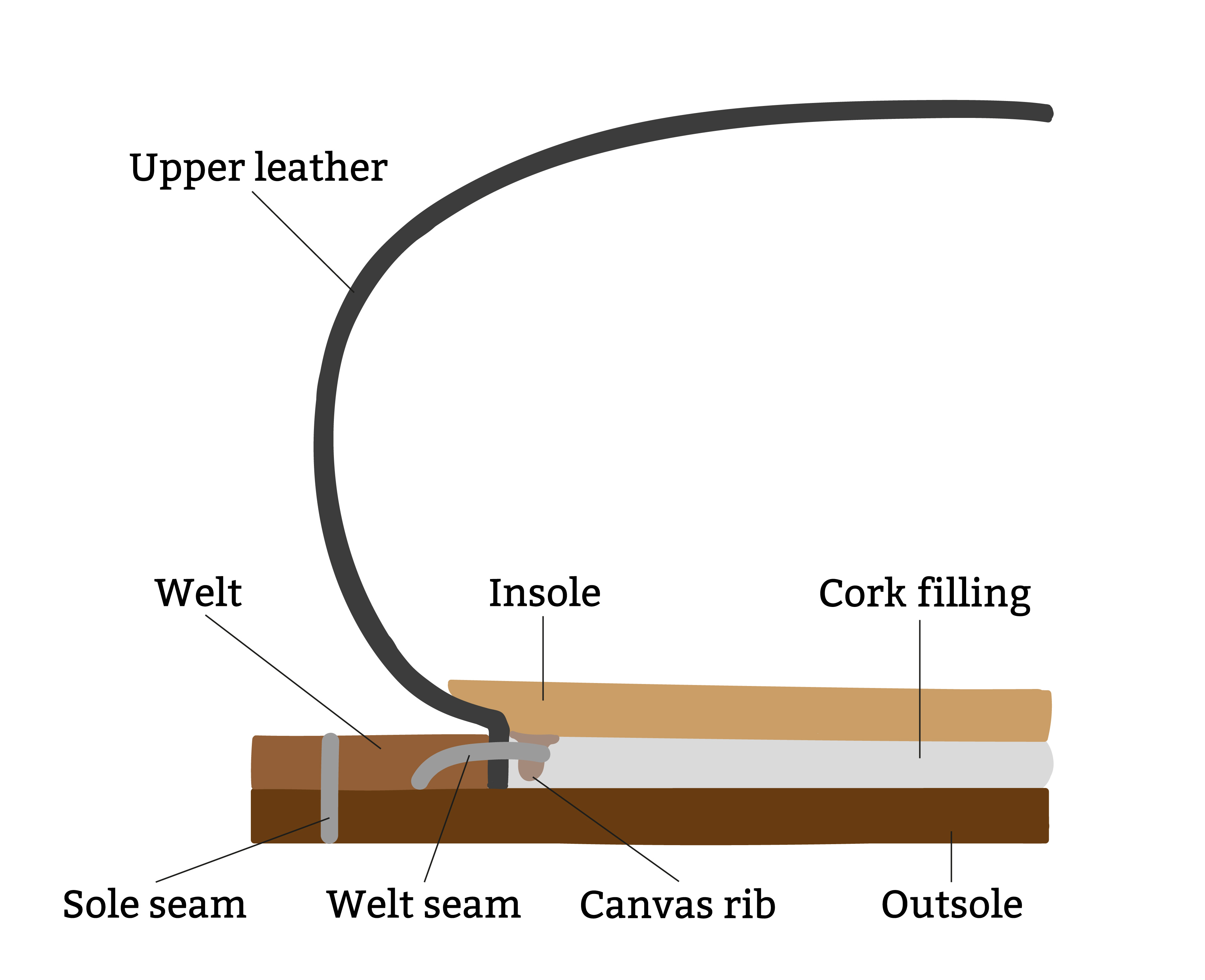
At its core, a Goodyear-welted shoe involves a strip of leather, rubber, or plastic (the “welt”) that is stitched to the upper and the insole of the shoe. The outsole is then stitched directly to that welt. This creates a “three-part sandwich” that offers a significant advantage: the stitching is on the outside of the shoe’s structure.
From a brand perspective, this technical detail is a “Value Proposition.” Because the welt acts as an intermediary, the sole can be removed and replaced multiple times without damaging the upper. When a brand sells a Goodyear-welted boot, they are not selling a disposable product; they are selling a lifelong companion.
The “Cork Fill” and Brand Comfort
A hallmark of this construction is the cavity created between the insole and the outsole, which is typically filled with a cork paste. Over time, the wearer’s foot compresses this cork, creating a custom footbed. For brands like Alden or Allen Edmonds, this “custom fit” narrative is essential to their brand identity. They aren’t just selling shoes; they are selling a bespoke-level experience achieved through industrial precision.
2. Construction as Identity: Why Heritage Brands Bet Everything on the Welt
In the world of brand strategy, “authenticity” is the most valuable currency. For heritage brands, the Goodyear welt is the proof of that authenticity. It serves as a tangible link to a pre-industrial era of quality, even when manufactured using modern machinery.
Building a “Buy It For Life” Narrative
The rise of the “Buy It For Life” (BIFL) movement has transformed the Goodyear welt from a niche manufacturing detail into a mainstream marketing asset. Brands like Red Wing Heritage and Wolverine use the “resolability” of their boots to position themselves against the “planned obsolescence” of modern consumerism.
By emphasizing that their products can be repaired rather than replaced, these brands align themselves with the values of sustainability and conscious consumption. This is a strategic move to capture the “intentional consumer”—a demographic that views their purchases as investments rather than expenses.
The Authority of Origin
Many brands that utilize Goodyear welting lean heavily into their geographic and historical origins. Whether it is the “Made in England” prestige of Northamptonshire or the “American Workwear” ruggedness of Minnesota, the welt is the thread that ties the brand to its history. To remove the Goodyear welt from these brands would be to strip them of their DNA; it is the mechanical embodiment of their corporate history.
3. The Marketing of Longevity: How Manufacturing Becomes a Status Symbol
In marketing, a “feature” is what a product does, while a “benefit” is what it does for the customer. The Goodyear welt is a rare example of a feature that has been successfully marketed as a status symbol. It signifies that the wearer is knowledgeable, values quality over trends, and possesses the financial literacy to invest in long-term value.
Differentiation in a Crowded Market
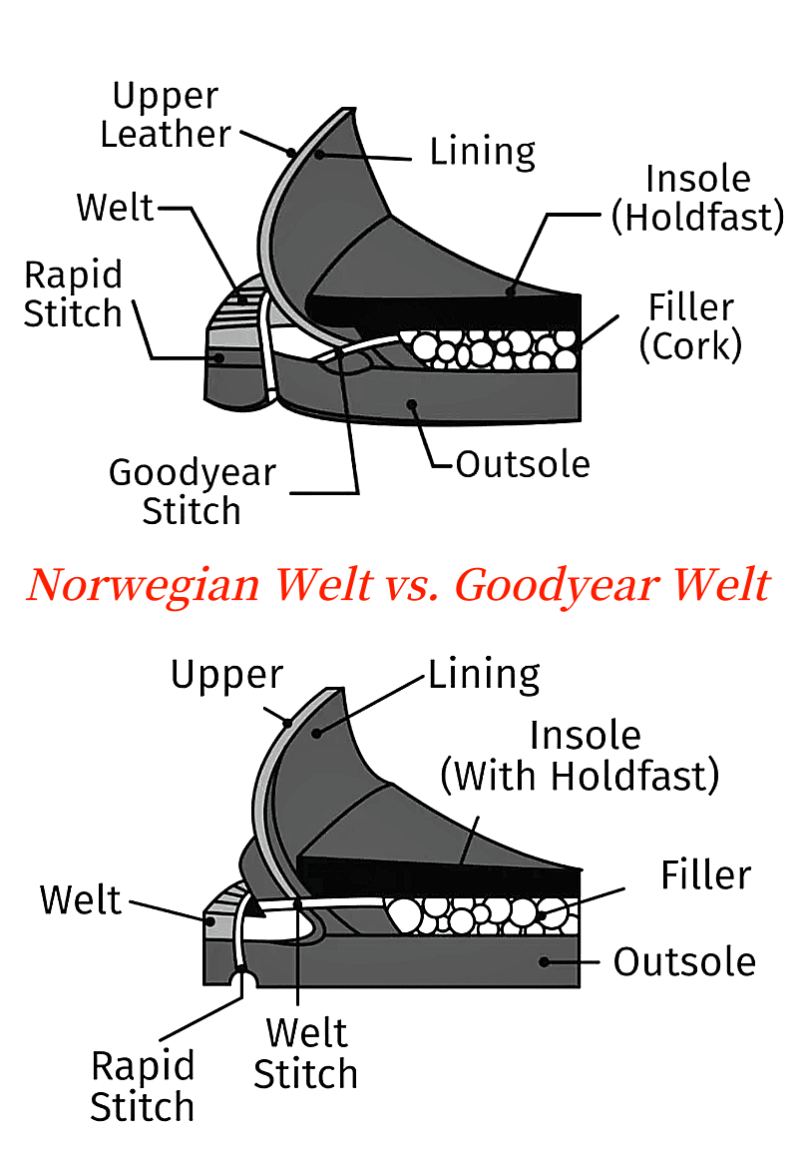
Most mass-market shoes use “cemented” construction—essentially gluing the sole to the upper. While cost-effective, these shoes are irreparable. Brands that utilize the Goodyear welt use this contrast to create a “Us vs. Them” narrative.
By educating the consumer on the “failure points” of glued shoes, premium brands create a barrier to entry. They position their products as the “rational choice,” effectively devaluing cheaper competitors in the eyes of the consumer. The Goodyear welt becomes a badge of membership in an elite tier of consumers who “know better.”
The Aesthetics of the Welt
There is also a visual component to this brand strategy. The visible stitching along the perimeter of the sole (the “welt stitch”) is an iconic design cue. Brands like Dr. Martens have turned this functional element into a visual trademark—their signature yellow welt stitching is one of the most recognizable brand assets in the world. In this case, the Goodyear welt is not just a construction method; it is a visual logo.
4. Brand Equity and the Psychology of the “Resole”
One of the most unique aspects of the Goodyear-welted brand strategy is the “aftermarket” relationship. Unlike most brands that lose contact with a customer after the initial sale, Goodyear-welted brands often facilitate a decades-long relationship through repair services.
Customer Lifetime Value (CLV)
When a brand offers an in-house “recrafting” service, they are significantly increasing their Customer Lifetime Value. A customer who sends their 10-year-old boots back to the factory for a new sole is a customer who is deeply embedded in the brand’s ecosystem. This service reinforces brand loyalty and provides the brand with constant data on how their products age, allowing for continuous improvement and a narrative of “unfailing quality.”
The Emotional Bond of Aging
A Goodyear-welted shoe patinas and shapes itself to the wearer over years. This creates an emotional bond that a disposable shoe can never achieve. From a brand strategy perspective, this is the ultimate goal: emotional resonance. When a product becomes an heirloom, the brand stops being a vendor and starts being a part of the customer’s personal history. This level of brand equity is nearly impossible to achieve with cemented footwear.
5. Case Study: The Evolution of Dr. Martens and the Bespoke Giants
To see the Goodyear welt in action as a brand tool, one only needs to look at the divergence between subculture icons and traditional luxury houses.
Dr. Martens: From Workwear to Subculture Icon
Dr. Martens’ use of the Goodyear welt was originally a functional choice for postal workers and factory laborers who needed durable, waterproof footwear. However, the brand successfully transitioned this “utility” into “rebellion.” The Goodyear welt provided the ruggedness required for the punk and skinhead movements of the 70s and 80s. Today, Dr. Martens maintains the Goodyear welt as a core part of its “Originals” line to preserve its “rebel” brand identity, even as it scales into a global fashion powerhouse.
The Northamptonshire Giants: Church’s, Crockett & Jones, and Edward Green
At the other end of the spectrum, brands like Crockett & Jones use the Goodyear welt to signify “quiet luxury.” For these brands, the welt is a sign of adherence to the highest standards of British shoemaking. Their brand strategy is built on exclusivity and the “connoisseur” model. They do not need to shout about their quality; the Goodyear welt is a “handshake” between the brand and the elite consumer, acknowledging a shared appreciation for the finest things in life.
Conclusion: The Welt as a Sustainable Future for Branding
As the global market shifts toward sustainability and “slow fashion,” the Goodyear welt is more relevant than ever. It represents a pivot away from the “fast-and-cheap” model that has dominated the last three decades of retail.
For a brand, adopting or maintaining Goodyear welt construction is a declaration of intent. It signals that the brand values the long-term over the short-term, quality over quantity, and the customer’s investment over a quick sale. In an age of digital transience and disposable products, the Goodyear welt remains a firm, stitched-down foundation for building a brand that lasts a lifetime. Whether it is a rugged work boot or a sleek dress shoe, the welt is the ultimate proof that in the world of brand strategy, how something is made is just as important as the name on the box.
aViewFromTheCave is a participant in the Amazon Services LLC Associates Program, an affiliate advertising program designed to provide a means for sites to earn advertising fees by advertising and linking to Amazon.com. Amazon, the Amazon logo, AmazonSupply, and the AmazonSupply logo are trademarks of Amazon.com, Inc. or its affiliates. As an Amazon Associate we earn affiliate commissions from qualifying purchases.