
The concept of a “good salary” is deeply personal, multifaceted, and often elusive. While general statistics can offer a superficial benchmark, a truly “good” salary in the US transcends mere numbers, intertwining with individual financial goals, geographic location, lifestyle expectations, and the broader economic landscape. It’s a dynamic figure that shifts with life stages, career progression, and even global events. This article delves into what constitutes a good salary, exploring the various factors that shape this critical aspect of personal finance and offering insights to help individuals assess their own financial well-being.
Defining “Good”: More Than Just a Number
At its core, a good salary enables an individual or household to not only meet their basic needs but also pursue their financial aspirations, build wealth, and achieve a desired quality of life without undue financial stress. This definition immediately highlights the subjectivity involved; what one person considers sufficient, another might deem inadequate.
The Subjectivity of Financial Well-being
Financial well-being isn’t solely about the absolute dollar amount earned, but rather the feeling of security, freedom, and opportunity that income provides. For some, a good salary means the ability to comfortably pay rent, groceries, and utilities. For others, it extends to funding vacations, saving for retirement, investing in children’s education, or owning a home in a desirable neighborhood. These varied expectations mean that two individuals earning the exact same income might have vastly different perceptions of its “goodness.” A single person with no debt living in a low-cost area might feel affluent on an income that would leave a parent of three in a high-cost city struggling.
Beyond Averages: Understanding Your Personal Context
While national averages provide a starting point, they rarely tell the full story. A good salary is intrinsically linked to an individual’s specific circumstances: their age, education, industry, career stage, family size, health status, and most importantly, their personal financial goals. Someone aiming for early retirement will likely define a “good” salary differently than someone focused on a comfortable work-life balance or debt repayment. Therefore, understanding your personal context and priorities is the first crucial step in evaluating your income.
Benchmarking Your Income: National Averages and Medians
Despite the subjectivity, national income statistics offer valuable benchmarks to understand where your earnings stand in relation to the broader US population. These figures provide a macro perspective, helping to frame the discussion of what constitutes a “good” salary.
The Difference Between Mean and Median Income
When discussing income statistics, it’s vital to distinguish between mean (average) and median. The mean income is the sum of all incomes divided by the number of earners, which can be skewed upwards by a small number of very high earners. The median income, conversely, is the midpoint where half of the earners make more and half make less. For a more representative picture of what the “typical” American earns, the median income is often a more insightful metric as it is less affected by outliers.
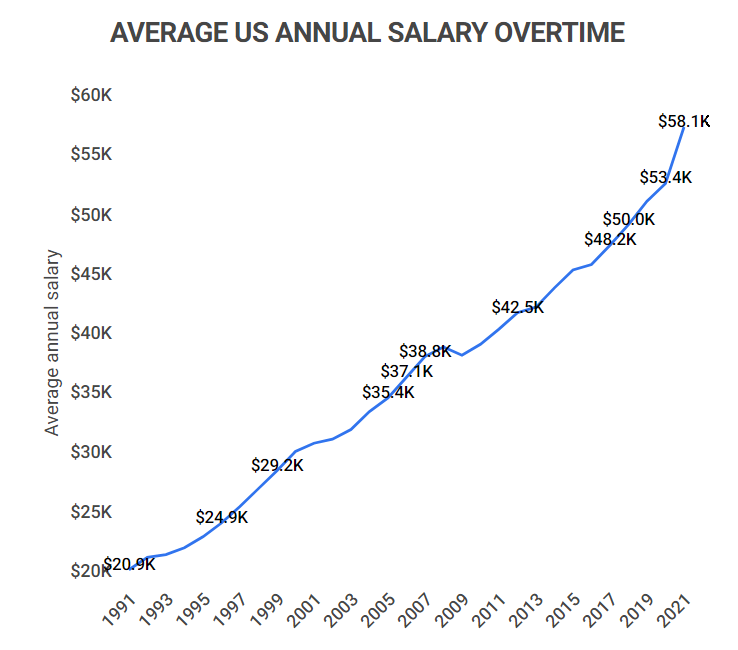
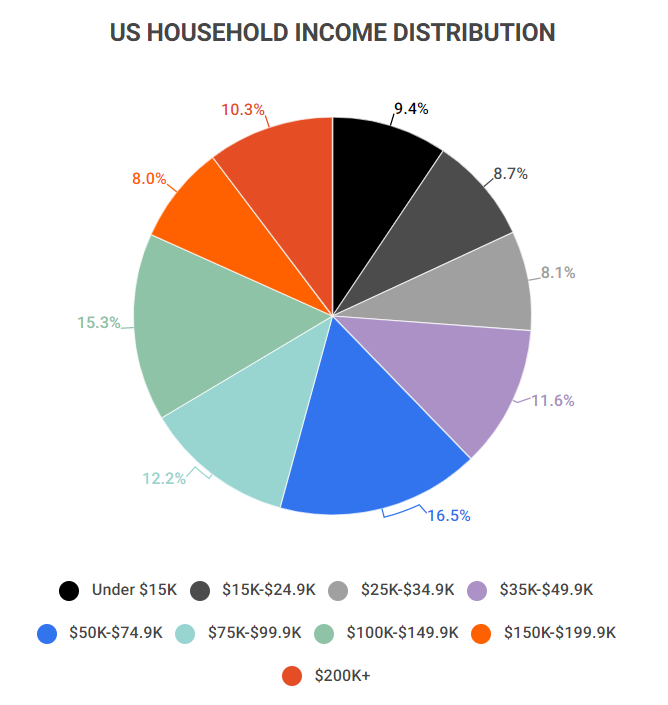
As of recent data (e.g., late 2023/early 2024), the median household income in the US typically hovers around $75,000 to $80,000 per year, while the median individual income is considerably lower, often in the range of $40,000 to $50,000. These figures fluctuate with economic cycles and data sources, but they provide a general ballpark. Earning significantly above the national median for your household or individual income could be considered “good” from a statistical standpoint, suggesting you are in a higher earning bracket relative to the general population.
Current Income Statistics in the US (e.g., Household, Individual)
To contextualize further:
- Median Household Income: Often considered the most relevant figure for assessing economic well-being, as most households consist of multiple individuals and/or earners. As noted, this has been around $75,000-$80,000.
- Median Individual Income: This figure, often around $40,000-$50,000, reflects what an individual earner makes. Many households rely on multiple individual incomes to reach or exceed the median household income.
- Average Personal Income: This tends to be higher than the median due to the influence of high earners, often in the range of $60,000-$70,000.
These figures illustrate that an individual earning $60,000 might be well above the median individual income but potentially below the median household income if they are the sole earner supporting a family.
Income Brackets and Wealth Distribution
Beyond the median, looking at income brackets provides another layer of understanding. For instance, being in the top 20% of earners might require an individual income exceeding $100,000 or a household income well over $150,000, depending on the year and specific data set. While such figures are often associated with a “good” or even “excellent” salary, it’s crucial to remember that the purchasing power of these amounts varies dramatically across different regions of the country.
The Geographic Factor: Cost of Living Matters
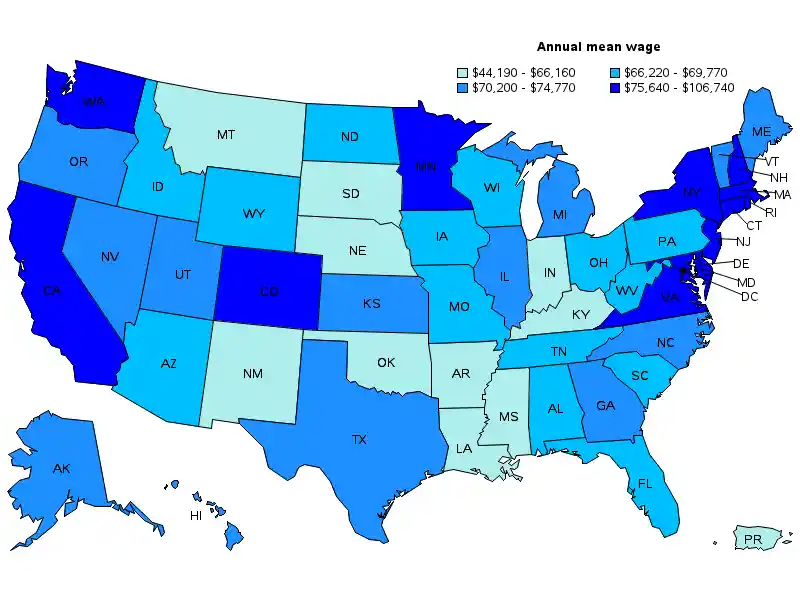
Perhaps no single factor influences the “goodness” of a salary more profoundly than the cost of living in a particular geographic area. A salary that affords a luxurious lifestyle in a rural town in Alabama might barely cover basic expenses in Manhattan or San Francisco.
High-Cost vs. Low-Cost States and Cities
The US exhibits extreme variations in the cost of living. Cities like New York City, San Francisco, Honolulu, Boston, and Washington D.C. consistently rank among the most expensive places to live, driven by exorbitant housing costs, higher taxes, and elevated prices for goods and services. In these areas, a “good” salary might need to be well into the six figures—say, $150,000 or even $200,000 for a single person, or significantly more for a family—just to maintain a comfortable middle-class lifestyle.
Conversely, states like Mississippi, Arkansas, Oklahoma, and parts of the Midwest and Southeast offer significantly lower costs of living. In these regions, a salary of $70,000 to $90,000 could provide a very comfortable lifestyle, allowing for homeownership, savings, and discretionary spending that would be unimaginable on the same income in a major coastal city.
Impact on Purchasing Power and Lifestyle
The stark difference in cost of living directly impacts purchasing power. A $100,000 salary effectively becomes a $50,000 salary in terms of real purchasing power when moving from a low-cost area to a high-cost one (or vice versa). This is why comparing salaries across different regions without adjusting for cost of living can be misleading. A “good” salary is ultimately one that provides sufficient purchasing power to meet your financial goals and desired lifestyle in your specific location.
Tools for Cost of Living Comparison
Fortunately, numerous online tools and calculators (e.g., from NerdWallet, BestPlaces, Numbeo) allow individuals to compare the cost of living between different cities or states. These resources can help you understand how much more (or less) you would need to earn in a new location to maintain your current standard of living, making them invaluable for career planning or relocation decisions.
Personal Circumstances and Financial Goals
Beyond geography and general statistics, your personal financial landscape and future aspirations play a defining role in determining if your salary is truly “good.”
Household Size and Dependents
A single individual with no dependents generally has fewer financial obligations than a couple supporting multiple children. The number of people relying on a single income, or the total income of a household, dramatically shifts the calculus. A $100,000 salary might be excellent for a single person but merely adequate for a family of four in many parts of the US, especially when factoring in costs like childcare, healthcare, and education.
Debt Burden (Student Loans, Mortgages, Credit Cards)
Significant debt—whether from student loans, a hefty mortgage, or accumulated credit card balances—can eat away at even a respectable income, leaving less for savings, investments, or discretionary spending. A good salary, in this context, is one that not only covers living expenses but also allows for diligent debt repayment strategies, moving towards financial freedom. Conversely, a lower income combined with minimal debt might lead to greater financial comfort than a higher income burdened by substantial liabilities.
Savings, Investments, and Retirement Planning
A truly “good” salary empowers you to look beyond immediate expenses and plan for the future. This includes consistently contributing to a robust emergency fund, investing for long-term growth (e.g., in a 401(k), IRA, or brokerage account), and saving for significant life events like a down payment on a home, a child’s education, or retirement. If your current salary leaves you consistently struggling to save or invest, it might not be “good enough” for your long-term financial health, regardless of how it compares to national averages. Experts often recommend saving at least 15% of your income for retirement, alongside other savings goals.
Lifestyle Expectations and Discretionary Spending
What does your desired lifestyle entail? Do you dream of frequent international travel, dining out regularly, owning designer items, or living in a spacious home? Or are you content with a more minimalist approach? Your salary’s “goodness” is also a function of its ability to support your chosen lifestyle and allow for discretionary spending that brings you joy and fulfillment, without compromising your core financial stability.
Industry, Education, and Experience: Key Determinants
While personal factors are crucial, external market forces related to your profession, qualifications, and experience also heavily influence potential earnings.
High-Paying Sectors and Emerging Opportunities
Certain industries are inherently higher-paying due to demand, specialized skills required, or profitability. Technology (software engineering, data science, cybersecurity), healthcare (physicians, specialists), finance (investment banking, quantitative analysis), and engineering (petroleum, aerospace) consistently feature some of the highest average salaries. Emerging fields, particularly in tech and specialized healthcare, often present lucrative opportunities for those with the right skills. If you’re in a historically lower-paying sector, a “good” salary might look different than someone in a high-growth industry.
The Value of Education and Specialized Skills
Generally, higher levels of education correlate with higher earnings. A bachelor’s degree typically earns significantly more over a lifetime than a high school diploma, and advanced degrees (master’s, doctorate, professional degrees like JD or MD) often command premium salaries. Beyond formal education, specialized certifications, in-demand technical skills (e.g., coding languages, cloud computing), and soft skills (e.g., leadership, complex problem-solving) are highly valued and can substantially boost earning potential. Investing in your skills and education is a direct path to a “better” salary.
Experience and Career Progression
As you gain experience and advance in your career, your market value typically increases. Entry-level positions naturally pay less than senior roles, management positions, or expert-level individual contributor roles. A “good” salary often implies not just your current earnings but also your trajectory and potential for growth within your field. Regular salary negotiations, performance reviews, and strategic career moves are essential for maximizing this progression.
The Importance of Benefits and Total Compensation
Finally, when evaluating a “good” salary, it’s crucial to consider the total compensation package, not just the base pay. Employer-provided benefits can add significant value and financial security, often equivalent to tens of thousands of dollars annually. These can include:
- Health Insurance: A major cost for individuals and families.
- Retirement Contributions: 401(k) matching or pension plans.
- Paid Time Off: Vacation, sick leave, holidays.
- Bonuses and Commissions: Performance-based incentives.
- Stock Options or Equity: Especially common in tech.
- Life and Disability Insurance.
- Wellness Programs, Tuition Reimbursement, Childcare Assistance.
A seemingly lower base salary with an exceptional benefits package might, in fact, be “better” than a higher base salary with minimal benefits, as it reduces out-of-pocket expenses and contributes to long-term financial security.
In conclusion, “what is a good salary in the US?” has no single, definitive answer. It’s a dynamic calculation involving national benchmarks, regional economics, personal financial circumstances, and career progression. Ultimately, a good salary is one that aligns with your individual financial goals, supports your desired lifestyle without undue stress, and provides a clear path to building wealth and achieving long-term financial security in your specific corner of the American landscape.
aViewFromTheCave is a participant in the Amazon Services LLC Associates Program, an affiliate advertising program designed to provide a means for sites to earn advertising fees by advertising and linking to Amazon.com. Amazon, the Amazon logo, AmazonSupply, and the AmazonSupply logo are trademarks of Amazon.com, Inc. or its affiliates. As an Amazon Associate we earn affiliate commissions from qualifying purchases.