
The art of crafting a riddle is as old as language itself, a playful yet profound challenge to the intellect. While often associated with children’s games or whimsical literature, riddles, at their core, are powerful tools for cognitive engagement. They are puzzles that demand critical thinking, pattern recognition, and the ability to look beyond the literal. In the realm of technology, understanding what constitutes a “good riddle” can illuminate how we design user interfaces, develop AI, and even approach complex problem-solving. A well-structured riddle mirrors the challenges we face when navigating intricate systems, deciphering cryptic error messages, or understanding the underlying logic of an algorithm.
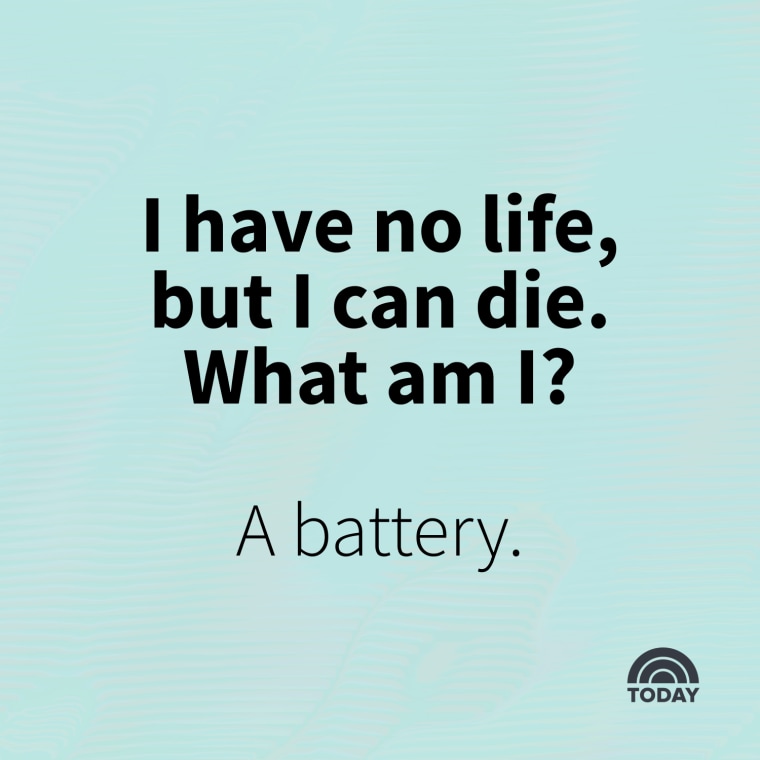
A “good riddle,” particularly within a technological context, is not merely a series of confusing clues. It’s a carefully constructed enigma that balances obscurity with discoverability. It should be challenging enough to stimulate thought but not so opaque as to induce frustration. The solution should feel like an “aha!” moment, a spark of insight that rewards the effort expended. This principle is directly applicable to user experience design, where intuitive navigation and clear information architecture are paramount. When users can “solve” the intended path through an application or website, that’s a testament to good design, akin to a well-crafted riddle where the solution feels earned.
Moreover, the concept of a riddle extends to how we approach problem-solving in technological fields. Debugging code, for instance, is essentially a riddle. We are presented with an anomaly (the bug), and we must use a process of elimination and logical deduction to uncover its source. The effectiveness of our debugging strategy, the efficiency of our analysis, and the clarity of our eventual solution all echo the qualities of a superior riddle. This article will explore the fundamental elements that define a “good riddle,” and critically, how these principles translate into the design, development, and understanding of technological systems.
The Anatomy of a Well-Crafted Riddle
At its heart, a good riddle is a delicate balance of misdirection and clarity, a linguistic tightrope walk that engages the mind in a unique way. It’s not simply about hiding the answer; it’s about creating a pathway of thought that, when navigated successfully, leads the solver to the intended conclusion. This pathway is constructed through specific rhetorical devices and structural elements that, when combined effectively, transform a simple question into a captivating mental exercise.
Obscurity and Inference: The Art of Hinting
The primary characteristic of any riddle is its inherent obscurity. The subject is not directly named but is instead described through a series of attributes, actions, or effects. This obscurity is not meant to be absolute; rather, it’s a controlled fog that obscures the subject while simultaneously providing the necessary clues for inference. A good riddle uses evocative language that hints at the subject’s nature without explicitly revealing it. For example, instead of saying “I have a screen and I show you things,” a riddle might say, “I have a face that shows many worlds, but no voice to tell a tale.” The power lies in the metaphorical connections the solver is invited to make.
Precision and Economy of Language: Every Word Matters
Conversely, a good riddle is also characterized by a remarkable economy of language. Every word is chosen with intent, serving a specific purpose in either building the enigma or providing a crucial clue. There is no room for ambiguity or unnecessary verbiage. The clues, while indirect, must be precise enough to point towards the correct solution and exclude plausible but incorrect alternatives. This precision in language mirrors the need for clear and unambiguous instructions in technical documentation, user interfaces, and programming code. A poorly worded instruction or a vague variable name in tech can lead to significant errors, much like an imprecise clue in a riddle can lead to a nonsensical answer. The effectiveness of a riddle, therefore, hinges on its ability to be both evocative and precise.
The “Aha!” Moment: Rewarding Cognitive Effort
Perhaps the most satisfying element of a good riddle is the “aha!” moment it provides. This is the point where the scattered clues coalesce, the disparate observations click into place, and the solution suddenly becomes clear. This moment of insight is deeply rewarding, not just because the puzzle is solved, but because the solver feels they have earned the solution through their own mental exertion. A well-designed technological system can evoke a similar feeling. When a user intuitively understands how to perform a complex task, or when a piece of software elegantly resolves a difficult problem, it creates a sense of accomplishment. This feeling is akin to cracking a challenging riddle; it validates the user’s intelligence and their interaction with the technology. The riddle, in this sense, is a contained experience of discovery and resolution, a microcosm of the learning and problem-solving processes inherent in technology.
Riddles in the Digital Landscape: From UI to AI
The principles that define a good riddle are not confined to paper and ink. They are deeply embedded in the architecture and functionality of the digital world. From the intuitive design of an app to the complex reasoning of an artificial intelligence, the essence of a well-crafted riddle can be observed and applied. Understanding these connections allows us to appreciate the subtle, yet powerful, ways in which we engage with technology.
User Interface Design: The Intuitive Enigma

User interface (UI) design is, in many ways, the art of creating riddles for users. A well-designed interface presents a series of interactive elements and information in a way that is intuitive and easy to navigate. The goal is for the user to “solve” the interface, to understand its purpose and how to interact with it, without explicit, lengthy instructions. For example, an icon that clearly represents its function, or a button that visually suggests its interactivity, acts as a well-formed clue. The arrangement of these elements, the flow of navigation, and the feedback provided to the user are all part of the riddle’s structure. When an interface is confusing, it’s like a riddle with misleading or insufficient clues, leading to frustration rather than discovery. Conversely, an interface that is effortlessly understood is a testament to a skillfully crafted “digital riddle.” The “aha!” moment here is the user’s realization of how to accomplish their task efficiently, a direct reward for their cognitive engagement with the design.
Algorithmic Thinking: Decoding the Machine’s Logic
At a deeper level, the logic of algorithms and artificial intelligence can be viewed through the lens of riddles. An algorithm is a set of instructions designed to solve a problem. Debugging an algorithm is akin to solving a riddle where the expected output is the “answer,” and the faulty code represents the confusing clues. Developers must decipher the logic, identify the flawed reasoning, and then provide the correct “solution” (the corrected code).
In the context of AI, especially in areas like natural language processing or image recognition, the AI is trained to “solve” complex riddles presented by data. For instance, an AI tasked with identifying objects in an image is essentially being taught to solve the riddle: “What is this collection of pixels?” The training data provides the “clues” (labeled images), and the AI learns to infer the answer. The better the AI, the more adept it is at solving these complex, data-driven riddles, drawing accurate conclusions from vast amounts of information, mirroring how a skilled riddle solver can piece together subtle hints to arrive at a surprising yet logical answer.
Cybersecurity: Unmasking Digital Deception
Cybersecurity is a constant battle of riddles, where defenders try to “solve” the intentions of attackers, and attackers try to create deceptive “riddles” to bypass security measures. Phishing emails, for example, are often crafted as riddles designed to trick users into revealing sensitive information. They present a scenario (a fake problem or an enticing offer) that requires a specific “action” (clicking a link, providing credentials) to “solve.” A good phishing attempt is one that uses convincing but ultimately misleading clues, making it difficult to discern the truth.
On the defensive side, security analysts are constantly working to decipher the “riddles” posed by malware and intrusion attempts. They look for anomalies, unusual patterns, and hidden indicators – the equivalent of subtle clues – to understand the nature of the threat and how to neutralize it. The effectiveness of security software often relies on its ability to recognize and solve these digital riddles, identifying malicious intent hidden within seemingly innocuous data streams.
The Enduring Appeal of the Riddle in a Technological Age
Despite the rapid advancements in technology, the fundamental human desire to solve puzzles and engage in intellectual challenges remains. The riddle, in its myriad forms, continues to be a powerful tool for learning, entertainment, and cognitive development. In a world increasingly dominated by screens and algorithms, the ability to think critically, interpret abstract concepts, and engage in creative problem-solving is more valuable than ever.
Enhancing Cognitive Skills: The Mental Workout
Riddles are an excellent form of mental exercise. They train our brains to think laterally, to make connections between seemingly unrelated concepts, and to challenge our assumptions. The process of deconstructing a riddle, analyzing its components, and formulating potential solutions strengthens our analytical and critical thinking skills. This is directly transferable to technological pursuits. The ability to approach a complex coding problem with a structured, analytical mindset, or to design an intuitive user flow, is cultivated through the same cognitive processes that make one adept at solving riddles. The practice of metaphorical thinking, essential for understanding abstract programming concepts or complex system interactions, is inherently fostered by engaging with riddles.
Fostering Creativity and Innovation: Beyond the Obvious
A good riddle often requires thinking outside the box. The solution is rarely the most obvious interpretation of the clues. This process of exploring multiple possibilities and challenging conventional wisdom is the bedrock of creativity and innovation. In technology, breakthroughs often come from individuals who can look at existing problems and envision novel solutions – solutions that might seem unconventional at first, much like the unexpected answer to a cleverly constructed riddle. The ability to reframe a problem, to approach it from a different angle, is a skill that can be honed through regular engagement with riddles. This mindset is crucial for developing new technologies, designing more efficient systems, and pushing the boundaries of what is currently possible.
The Social and Communicative Aspect: Sharing the Challenge
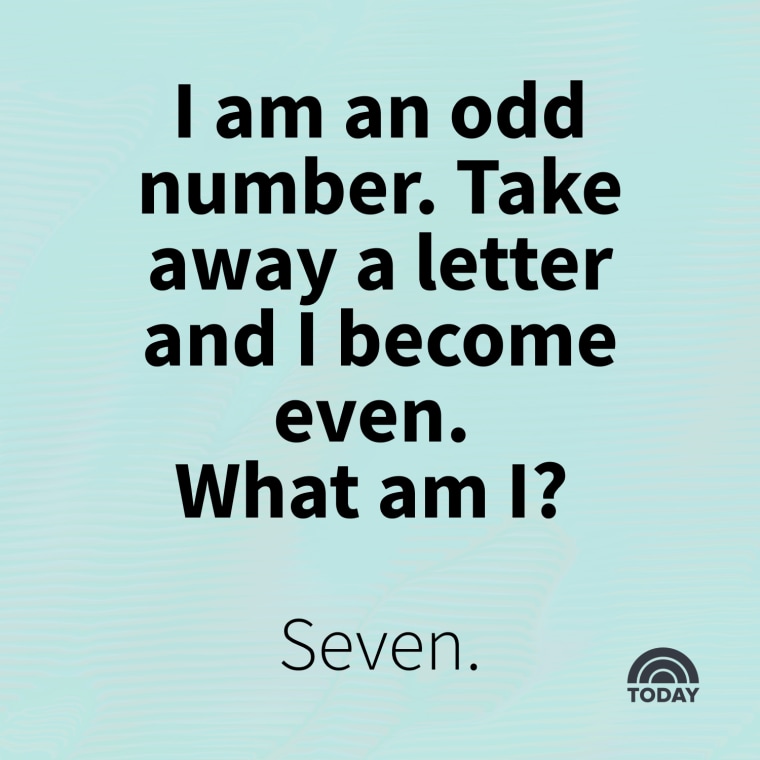
Riddles have always been social. They are shared among friends, posed in gatherings, and form the basis of collaborative problem-solving. This social dimension extends to technology. Collaborative coding platforms, online forums for technical support, and team-based problem-solving in engineering all rely on effective communication and shared understanding. The ability to articulate a problem clearly, to understand another’s perspective, and to work together towards a common solution are skills that are nurtured by the shared experience of tackling riddles. Presenting a technical challenge in a way that is understandable and engaging, much like a well-posed riddle, can foster collaboration and accelerate progress. The act of collaboratively solving a riddle, or a technical problem, strengthens bonds and enhances collective intelligence.
In conclusion, a “good riddle” is far more than a trivial pastime. It is a masterclass in communication, logic, and cognitive engagement. The principles that define its effectiveness – clarity within obscurity, precision of language, and the reward of earned insight – are directly applicable to the design, development, and utilization of technology. By understanding what makes a riddle compelling, we can gain valuable insights into creating more intuitive user experiences, more robust algorithms, and more innovative solutions in the ever-evolving digital landscape. The riddle, in its timeless form, continues to offer a profound lens through which to understand our interactions with the modern world.
aViewFromTheCave is a participant in the Amazon Services LLC Associates Program, an affiliate advertising program designed to provide a means for sites to earn advertising fees by advertising and linking to Amazon.com. Amazon, the Amazon logo, AmazonSupply, and the AmazonSupply logo are trademarks of Amazon.com, Inc. or its affiliates. As an Amazon Associate we earn affiliate commissions from qualifying purchases.