
Embarking on the entrepreneurial journey is often fueled by the desire for financial independence, wealth creation, and a significant return on investment. The question, “What is a good business to start up?” isn’t merely about finding a viable idea; it’s fundamentally about identifying a venture that offers strong financial prospects, sustainable income streams, and ultimately, a pathway to monetary success. In a landscape teeming with opportunities, discerning which paths lead to genuine financial prosperity requires a keen understanding of market dynamics, personal financial readiness, and the strategic deployment of capital. This article delves into the financial underpinnings of successful startups, exploring various models and considerations that define a truly “good” business from a monetary perspective.
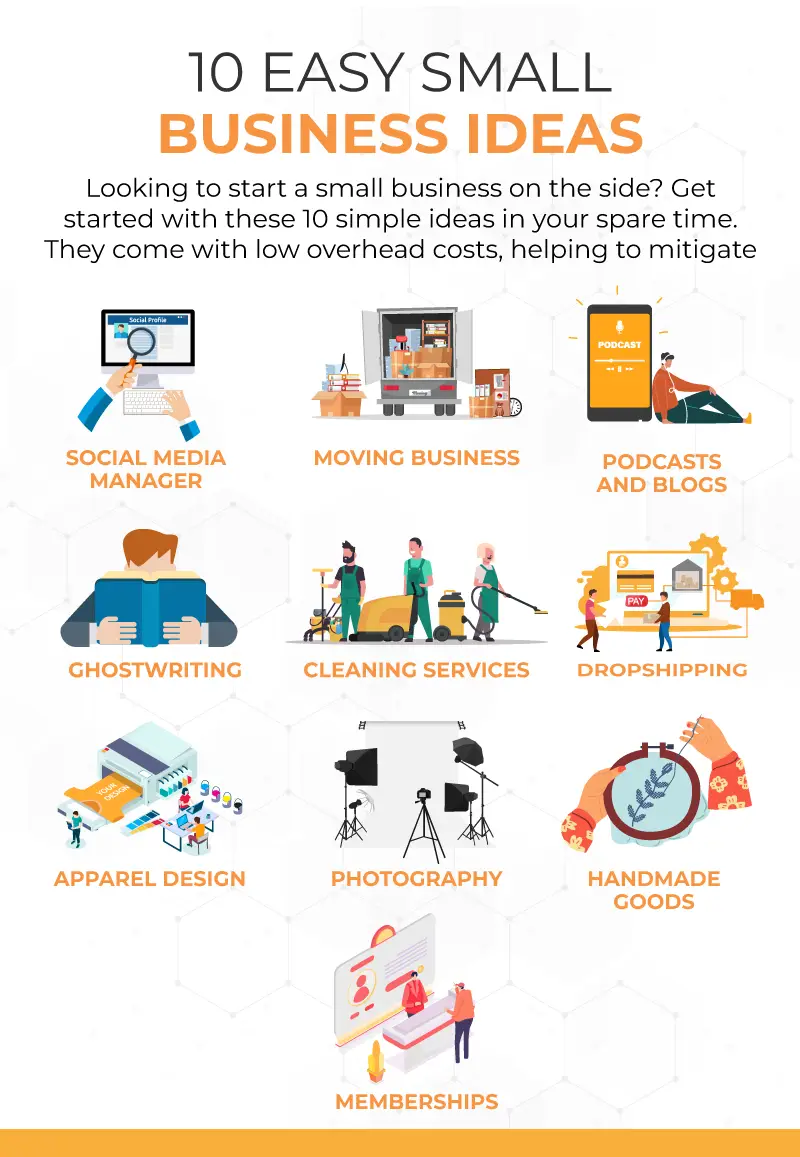
Understanding the Landscape of Entrepreneurship for Financial Success
Before diving into specific business ideas, it’s crucial to establish a framework for evaluating their financial potential. A “good business” isn’t just one that makes money, but one that aligns with your financial goals, offers a robust return on investment, and can adapt to economic shifts. This requires a strategic approach to market analysis and an honest assessment of one’s financial resources and risk appetite.
Identifying Market Gaps and Profit Opportunities
The bedrock of any financially successful business lies in its ability to solve a problem or fulfill an unmet need in the market – a market gap. Identifying these gaps is paramount, as they represent areas where demand outstrips supply, thus creating inherent profit opportunities. For example, during times of economic uncertainty, businesses offering cost-saving solutions or essential services often thrive. Similarly, emerging technologies frequently open new niches for innovative products or services. Researching market trends, analyzing competitor offerings, and listening to consumer feedback are invaluable for uncovering these lucrative spaces. A good business doesn’t just enter a crowded market; it finds an underserved segment or a unique angle that allows it to capture market share and generate profits efficiently. This could mean a new software tool for a niche industry, a specialized consulting service, or an innovative way to deliver an existing product. The key is to find where money is currently being spent inefficiently or where a new spending habit could be cultivated.
Assessing Personal Financial Readiness and Risk Tolerance
Starting a business invariably requires an initial financial outlay, whether it’s for equipment, marketing, or operational expenses. A critical step in choosing a good business is to honestly assess your personal financial readiness. Do you have savings to invest? Are you prepared to forgo a stable salary for a period? What level of debt are you comfortable taking on? Understanding your capital availability and risk tolerance is vital. Some businesses, like tech startups requiring significant R&D, demand substantial upfront investment and carry higher financial risks. Others, such as service-based freelancing or dropshipping, can be started with minimal capital, reducing the personal financial exposure. A “good” business for you is one whose financial requirements align with your personal financial capacity and comfort level with risk, ensuring you can sustain yourself and the business through its nascent stages without undue stress.
The Role of Scalability in Long-Term Income Generation
While initial profits are encouraging, a truly good business possesses scalability – the ability to grow revenue without a proportional increase in costs. Scalability is a cornerstone of long-term financial success and wealth accumulation. Businesses based on digital products, software-as-a-service (SaaS) models, or highly systemized service offerings often exhibit high scalability. Once the initial investment in development or infrastructure is made, the cost to serve an additional customer can be very low, leading to exponential profit growth. Conversely, businesses that are heavily reliant on owner-operator time or require significant physical expansion for every unit of growth may have limited scalability. When evaluating a business idea, consider its potential to expand geographically, diversify its offerings, or automate its processes to serve a larger customer base more efficiently, thereby maximizing its potential for long-term income generation.
Low-Cost Entry Points with High Income Potential
For many aspiring entrepreneurs, the challenge isn’t just finding a good idea, but finding one that doesn’t demand exorbitant upfront capital. Fortunately, the digital age has democratized entrepreneurship, opening doors to ventures with low entry barriers and significant upside for financial returns.
Digital Services and Consulting: Leveraging Expertise Online
One of the most accessible and financially rewarding paths is offering digital services or consulting. If you possess specialized knowledge or skills in areas like digital marketing, graphic design, web development, content writing, SEO, or virtual assistance, you can package your expertise into a service. The startup costs are typically minimal, often requiring just a computer, internet connection, and perhaps some professional software. The income potential, however, can be substantial, as consultants can command high hourly rates or project fees. The key to financial success here lies in building a strong portfolio, networking, and effectively marketing your skills to a global client base, often through platforms like LinkedIn, Upwork, or specialized industry forums. This model allows for direct monetization of intellectual capital with very little physical overhead.
E-commerce and Dropshipping: Capitalizing on Global Markets
E-commerce offers a vast arena for businesses with high income potential, and dropshipping stands out for its particularly low entry barrier. With dropshipping, you sell products online without needing to manage inventory or shipping. When a customer places an order, you purchase the item from a third-party supplier who then ships it directly to the customer. This model eliminates the need for significant capital investment in inventory, warehousing, and logistics, drastically reducing risk. While profit margins per item might be lower than traditional retail, the ability to offer a wide range of products and scale quickly through online advertising makes it a financially attractive option. Success hinges on selecting profitable niches, effective marketing, and reliable suppliers, allowing you to tap into global markets and generate substantial sales volumes.
Niche Content Creation: Monetizing Passion and Knowledge
The rise of creator economies has made niche content creation a legitimate and often highly profitable business venture. Whether it’s through blogging, podcasting, YouTube channels, or social media, creating valuable content around a specific niche allows you to build an audience that can be monetized in multiple ways. Income streams include advertising revenue, affiliate marketing (promoting products and earning a commission), sponsorships, selling your own digital products (e-books, courses), and direct audience support (e.g., Patreon). While it takes time to build an audience, the initial financial investment is minimal, often just time and basic equipment. The long-term financial payoff can be significant, offering passive income streams and the flexibility of being your own boss. The critical factor for financial success is consistency, providing high-quality content, and understanding your audience’s monetary value.
Sustainable Business Models for Consistent Revenue Streams
Beyond immediate income, a “good business” emphasizes sustainability and the generation of consistent, predictable revenue. These models reduce financial volatility and provide a more stable foundation for growth and wealth accumulation.
Subscription-Based Services: Building Recurring Income

One of the most robust financial models is the subscription-based service. Customers pay a recurring fee (monthly, annually) for access to a product or service. This could range from SaaS products (e.g., project management tools, cloud storage) to curated content platforms, online learning subscriptions, or even physical product boxes. The beauty of this model lies in its predictability of revenue (Monthly Recurring Revenue – MRR), which makes financial forecasting easier and provides a stable cash flow. This predictability is highly attractive to investors and allows for more aggressive growth strategies. Key to success is retaining subscribers through continuous value provision and excellent customer service, ensuring a steady stream of income that can be reinvested into business growth.
Service-Oriented Businesses: Direct Value for Direct Payment
Service-oriented businesses, from professional consulting and coaching to specialized trades (e.g., plumbing, electrical, IT support), offer direct value in exchange for payment. While they might appear less scalable than digital products, they can be highly profitable and sustainable when built on strong client relationships, reputation, and efficient operations. The financial advantage here is often lower overhead compared to product-based businesses, and the ability to command premium rates for specialized skills or quick problem-solving. By focusing on niche markets, delivering exceptional quality, and building referral networks, service businesses can establish a consistent flow of high-value clients and achieve robust financial health. Furthermore, they can often be scaled by hiring and training additional staff, transitioning from a sole proprietorship to an agency model.
Product-Based Ventures with High-Profit Margins
While some product-based businesses require significant inventory investment, focusing on products with high-profit margins can lead to a financially rewarding venture. This often includes niche artisanal products, customized goods, luxury items, or products where you have a unique competitive advantage (e.g., proprietary technology, unique design). The financial strategy here involves careful cost analysis, efficient supply chain management, and effective pricing strategies to maximize the difference between production cost and selling price. Online marketplaces and direct-to-consumer (DTC) models have made it easier for small businesses to reach customers directly, bypassing traditional retail intermediaries and preserving higher margins. A good product-based business not only sells well but also ensures that each sale contributes significantly to the bottom line, allowing for faster capital accumulation and reinvestment.
Crucial Financial Considerations Before Launch
Even the most brilliant business idea can falter without a solid financial foundation and meticulous planning. Before launching, entrepreneurs must address several critical financial aspects to ensure the venture’s viability and long-term success.
Developing a Robust Business Plan and Financial Projections
A comprehensive business plan isn’t just a document for investors; it’s a vital financial roadmap for the entrepreneur. It outlines your business model, market analysis, operational strategies, and critically, detailed financial projections. This includes anticipated startup costs, revenue forecasts, profit and loss statements, and cash flow projections for the first 3-5 years. These projections force you to confront the monetary realities of your venture, identifying potential shortfalls and opportunities for optimizing spending. A good business plan demonstrates a clear understanding of how the business will generate revenue, manage expenses, and ultimately achieve financial sustainability and profitability. It’s the blueprint for financial decision-making, guiding everything from pricing strategies to marketing budgets.
Securing Funding: Bootstrapping, Loans, and Investment
Funding is the lifeblood of any startup. The “good business” is one that considers its funding strategy carefully. Bootstrapping, or self-funding through personal savings or initial profits, offers maximum control and avoids debt or equity dilution. It’s often suitable for low-cost entry businesses. For ventures requiring more capital, small business loans from banks or government programs can provide necessary funds at manageable interest rates. This option is ideal when you have a clear repayment plan and sufficient collateral. For high-growth businesses with significant potential, angel investors or venture capital might be sought, though this involves giving up equity in exchange for capital and expertise. Understanding the financial implications of each funding source – including interest rates, repayment schedules, and equity stakes – is crucial to choosing the path that best supports your business’s financial future.
Managing Cash Flow and Operational Expenses Effectively
Cash flow is king. A business can be profitable on paper but fail if it runs out of cash to cover its day-to-day operations. Effective cash flow management involves monitoring money coming in (revenue) and going out (expenses) closely. This means optimizing payment terms with customers, managing inventory efficiently, and negotiating favorable terms with suppliers. Equally important is controlling operational expenses – the ongoing costs of running the business. Identifying areas where costs can be reduced without compromising quality or efficiency (e.g., negotiating leases, optimizing utility usage, leveraging automation) directly impacts the bottom line. A good business continually scrutinizes its spending, ensuring every dollar spent contributes to its financial health and growth, rather than becoming a drain on resources.
Future-Proofing Your Venture for Enduring Financial Health
The definition of a “good business” evolves, especially in a dynamic economic environment. To ensure enduring financial health, a business must be adaptable, resilient, and forward-thinking, constantly seeking ways to secure its future profitability and wealth generation.
Embracing Automation and Efficiency for Profitability
In today’s competitive landscape, leveraging technology for automation and efficiency is not just an advantage; it’s a financial imperative. Automating repetitive tasks – from customer service inquiries via chatbots to accounting processes, marketing campaigns, and inventory management – reduces labor costs, minimizes human error, and frees up valuable time for strategic activities. This directly impacts profitability by decreasing operational expenses while increasing output and service quality. A good business continuously invests in tools and systems that streamline operations, making it more agile, cost-effective, and ultimately, more financially robust. Efficiency also means optimizing workflows, cutting down on waste, and ensuring that every resource is utilized to its maximum financial potential.
Diversifying Income Streams and Adapting to Market Shifts
Reliance on a single income stream or market can be a significant financial vulnerability. A truly good business actively seeks to diversify its income. This might involve developing new products or services, expanding into different market segments, licensing intellectual property, or creating complementary offerings. Diversification acts as a financial buffer, mitigating risks associated with market fluctuations, changes in consumer preferences, or the emergence of new competitors. Furthermore, a future-proof business is one that closely monitors market trends and is prepared to adapt its strategies, products, or services to remain relevant and financially competitive. This agility ensures that the business can pivot when necessary, capitalizing on new opportunities and avoiding obsolescence, thereby safeguarding its long-term financial viability.

Exit Strategies and Valuation for Long-Term Wealth Building
While immediate profits are important, a “good business” from a financial perspective also considers its long-term wealth creation potential, including potential exit strategies. Whether you plan to sell the business, pass it down, or take it public, having an exit strategy in mind from the outset can influence key financial decisions. Building a business that is attractive to potential buyers – one with robust financial records, strong recurring revenue, a solid customer base, and scalable operations – maximizes its valuation. Understanding how businesses in your industry are valued (e.g., multiples of revenue or EBITDA) helps you make choices that enhance this value over time. Focusing on building enterprise value ensures that your entrepreneurial efforts culminate not just in ongoing income, but in a significant asset that can be leveraged for substantial long-term wealth building, solidifying its status as a truly good business venture.
In conclusion, answering “What is a good business to start up?” is a deeply financial exercise. It involves identifying market opportunities that promise strong returns, starting with a clear understanding of your own financial capacity, and building models that generate predictable, scalable income. Critical financial planning, disciplined cash flow management, and a forward-looking strategy that embraces efficiency and diversification are paramount. By adhering to these money-centric principles, entrepreneurs can transform a mere idea into a financially thriving and enduring enterprise that delivers both profit and personal wealth.
aViewFromTheCave is a participant in the Amazon Services LLC Associates Program, an affiliate advertising program designed to provide a means for sites to earn advertising fees by advertising and linking to Amazon.com. Amazon, the Amazon logo, AmazonSupply, and the AmazonSupply logo are trademarks of Amazon.com, Inc. or its affiliates. As an Amazon Associate we earn affiliate commissions from qualifying purchases.