
In the intricate architecture of human biology, glands function as the essential manufacturing centers of the body. They are specialized organs or groups of cells that synthesize and secrete substances—ranging from hormones to enzymes—that regulate everything from metabolism and growth to digestion and emotional response. Understanding the role of glands is fundamental to grasping how the body maintains homeostasis, the delicate internal balance required for survival.
Whether they are releasing powerful chemical messengers directly into the bloodstream or discharging enzymes into specific body cavities, glands serve as the operational command centers for internal physiology. By categorizing these structures based on their secretion pathways, we can better understand how our bodily systems interact to sustain life.

The Dual Architecture: Exocrine vs. Endocrine
To understand the nature of a gland, one must first distinguish between the two primary pathways through which they distribute their products: the exocrine system and the endocrine system. While both are responsible for secretion, their methods of delivery determine their unique functions within the human anatomy.
Exocrine Glands: The System of Channels
Exocrine glands are characterized by their use of ducts. These glands produce substances such as sweat, saliva, tears, digestive enzymes, and mucus, and then transport these materials via a network of tubes directly to the surface of the body or into a hollow organ.
For instance, the salivary glands located in the mouth secrete saliva into the oral cavity to facilitate the initial stages of digestion. Similarly, the sweat glands situated within the skin help regulate body temperature by releasing moisture onto the skin’s surface, where it evaporates to provide a cooling effect. These structures are localized in their impact, focusing their work on specific targets rather than systemic regulation.
Endocrine Glands: The Chemical Messengers
In contrast, endocrine glands are ductless. They operate by secreting hormones—potent chemical messengers—directly into the interstitial fluid surrounding the gland, from which the hormones diffuse into the bloodstream. Once they enter the circulatory system, these hormones travel throughout the body, acting on specific target cells or organs that possess the corresponding receptors.
This system is responsible for long-range communication. The endocrine system works in tandem with the nervous system to coordinate complex processes, such as puberty, glucose regulation, and the stress response. Because they rely on the circulatory system for distribution, endocrine glands have the power to influence tissues far removed from their physical location.
The Command Centers: Key Endocrine Regulators
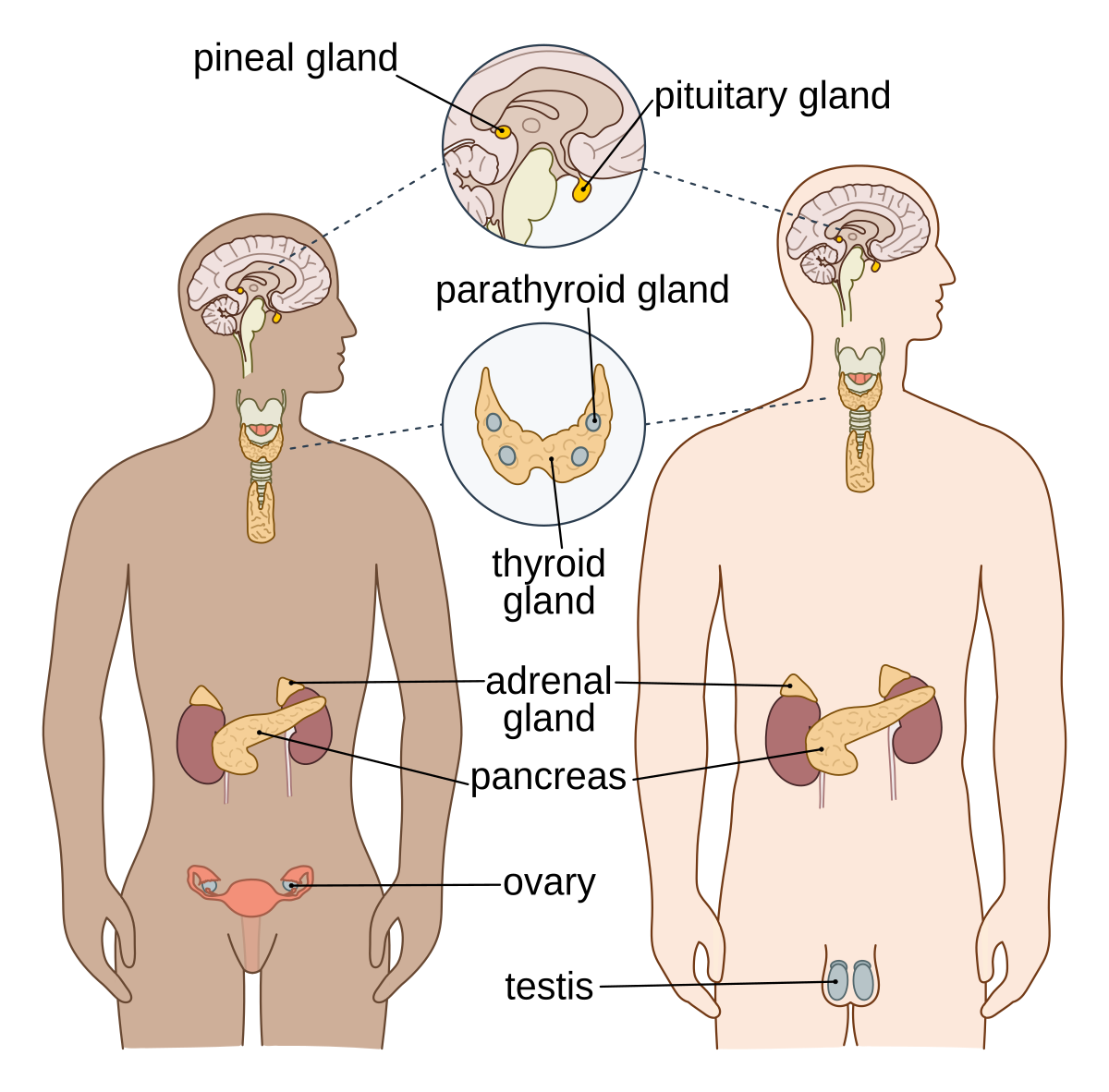
The endocrine system is a hierarchy of interconnected glands that monitor and adjust bodily functions in real-time. At the top of this hierarchy is the interplay between the hypothalamus and the pituitary gland, often referred to as the “master glands.”
The Hypothalamic-Pituitary Axis
The hypothalamus, located at the base of the brain, acts as the primary link between the nervous system and the endocrine system. It receives input from the brain regarding internal conditions like body temperature, hunger, and fatigue, and responds by sending signals to the pituitary gland.
The pituitary gland, a pea-sized structure resting just below the hypothalamus, serves as the primary distributor of instructions. It releases a variety of hormones that stimulate other glands—such as the thyroid, the adrenal glands, and the gonads—to produce their own hormones. This master-slave relationship ensures that hormonal production is synchronized with the body’s immediate needs.
The Thyroid and Adrenal Glands
Located in the neck, the thyroid gland plays a critical role in metabolic management. It produces hormones like thyroxine, which dictate the speed at which cells consume energy. If the thyroid is overactive, the body’s metabolism races; if underactive, the body slows down, leading to fatigue and weight gain.
Complementing this is the adrenal system, which sits atop the kidneys. The adrenal glands are instrumental in the body’s reaction to stress. Through the release of cortisol and adrenaline, these glands prepare the body for “fight or flight” responses, increasing heart rate and blood pressure when threats are perceived. Together, these glands maintain the structural and chemical stability of the organism under varying environmental pressures.
Regulation and Homeostasis: The Feedback Loop Mechanism
The precision with which the body maintains its internal balance—homeostasis—is a testament to the sophistication of glandular feedback loops. Most glandular activity is governed by negative feedback, a regulatory process that prevents the body from over-producing or under-producing vital chemicals.
The Negative Feedback Loop
A negative feedback loop functions similarly to a thermostat in a house. When a particular hormone level rises above the required threshold, the gland (or the organ monitoring the hormone) detects the excess and signals the producing gland to slow down or cease production. Conversely, if levels drop, the gland is prompted to increase activity.
A classic example of this is the regulation of blood sugar by the pancreas. When blood glucose levels rise after a meal, the pancreas releases insulin to help cells absorb the sugar. As glucose levels return to the normal range, the pancreas slows the production of insulin. This prevents blood sugar from dropping to dangerous levels, showcasing the gland’s ability to act as a self-regulating instrument.
Disruptions and Pathologies
When these feedback loops fail, the results can be significant. Glandular dysfunction often manifests as clinical conditions such as diabetes (involving the pancreas), hyperthyroidism or hypothyroidism (involving the thyroid), or Cushing’s syndrome (involving the adrenal glands). These conditions arise when a gland either produces too much or too little of its intended substance, or when the target tissues become resistant to the signals being sent.
Modern medicine relies heavily on understanding these pathways to treat hormonal imbalances. Synthetic hormone replacement therapy, for instance, mimics the role of the endocrine system in patients whose glands are no longer producing necessary chemicals in sufficient quantities.
The Future of Endocrine Science and Beyond
As scientific understanding of the human body advances, the definition of what constitutes a “gland” continues to be refined. Researchers are increasingly identifying cells previously thought to be static that act as endocrine units, such as those found in the heart, the kidneys, and even adipose (fat) tissue.
The Expanding Map of Secretion
It is now known that adipose tissue is not merely a storage site for energy; it acts as an endocrine organ, secreting adipokines that influence inflammation, insulin sensitivity, and satiety. This revelation has shifted the medical perspective on obesity from a metabolic storage issue to an endocrine imbalance. Similarly, the discovery that the heart releases atrial natriuretic peptide to manage blood pressure demonstrates that glandular function is more distributed throughout the body than previously imagined.

Integration with Modern Diagnostics
Modern diagnostic tools now allow for the precise mapping of glandular health. Through blood panels, imaging, and genomic sequencing, clinicians can identify the exact points where endocrine communication breaks down. By viewing the gland as an essential component of a broader communicative network, medicine has moved toward a more holistic approach to treating systemic disease.
The study of glands remains one of the most vital fields in biology. From the rapid response of the adrenal glands during a high-stakes moment to the slow, rhythmic pulses of the reproductive glands guiding human development, these organs are the silent engines of existence. By maintaining the chemical consistency of our internal environment, glands ensure that, despite the chaos of the outside world, the human machine continues to function with remarkable resilience and precision.
aViewFromTheCave is a participant in the Amazon Services LLC Associates Program, an affiliate advertising program designed to provide a means for sites to earn advertising fees by advertising and linking to Amazon.com. Amazon, the Amazon logo, AmazonSupply, and the AmazonSupply logo are trademarks of Amazon.com, Inc. or its affiliates. As an Amazon Associate we earn affiliate commissions from qualifying purchases.