
The Financial Footprint of General Education Requirements
General education (gen ed) classes represent a fundamental component of most undergraduate degree programs, designed to provide students with a broad foundation across various disciplines outside of their chosen major. From a financial perspective, these courses are not merely academic prerequisites; they constitute a significant segment of a student’s overall investment in higher education. Understanding their monetary implications is crucial for savvy financial planning regarding college.
Understanding the Direct Costs: Tuition and Fees
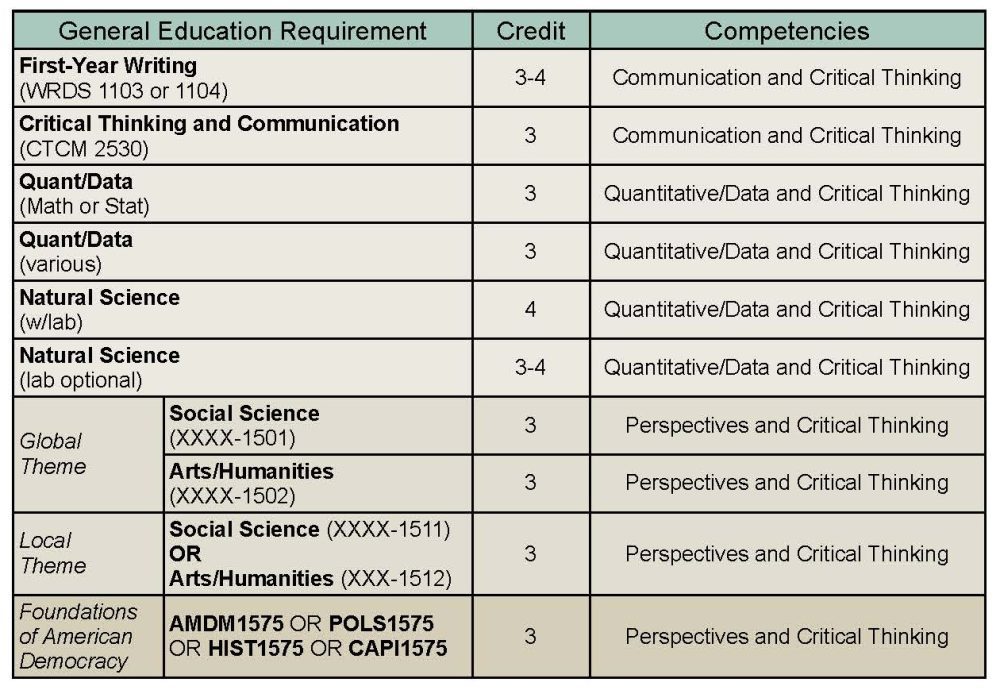
Every credit hour taken in a gen ed course translates directly into tuition costs. For a typical bachelor’s degree requiring 120 credit hours, and with gen ed requirements often ranging from 30 to 60 credits, a substantial portion of a student’s tuition bill is allocated to these foundational subjects. At institutions where tuition rates can exceed hundreds or even thousands of dollars per credit, the cumulative cost of general education can run into tens of thousands of dollars. This direct expenditure is often overlooked when students and families focus solely on the “major” courses. Beyond tuition, each gen ed class typically involves additional expenses, such as textbooks, course materials, and potentially lab fees, all of which add to the total financial outlay. For instance, a student pursuing a science-heavy gen ed sequence might incur significant lab fees, while a literature course requires specific editions of texts. These seemingly minor costs accumulate, making it imperative to factor them into the financial planning for a degree. The financial planning for a college education, therefore, must meticulously account for the full complement of gen ed credits, not just those directly tied to a specific career path.
The Opportunity Cost: Time and Delayed Earnings
Beyond the direct costs, gen ed requirements impose a significant opportunity cost. Time spent fulfilling these requirements, which often span the first two years of a four-year program, is time not spent specializing in a major that might lead to immediate employment or higher earning potential. For students eager to enter the workforce, every semester dedicated to general education is a semester where potential income is deferred. If a student could theoretically complete their specialized training sooner by bypassing extensive gen ed requirements, the foregone earnings represent a tangible financial loss. This becomes particularly relevant in discussions around the economic efficiency of a college degree. Furthermore, extended time in college often means prolonged student loan accumulation. Each additional semester or year required to complete gen ed courses can add to a student’s total loan burden, increasing the principal amount and the overall interest accrued over the life of the loan. This extended debt repayment period can impact a graduate’s financial flexibility for years, affecting major life decisions such as buying a home, starting a family, or pursuing further education. Therefore, while gen eds aim to broaden intellectual horizons, their financial ramifications in terms of direct cost and opportunity cost demand careful consideration.
Maximizing Return on Investment (ROI) from Gen Ed Courses
While general education requirements represent a considerable financial commitment, approaching them strategically can significantly enhance their return on investment (ROI). Instead of viewing them as mere hurdles, students can leverage gen ed courses to develop skills and knowledge that directly or indirectly contribute to their financial success, both in immediate career entry and long-term wealth building.
Strategic Course Selection for Financial Acumen
Not all gen ed courses offer the same practical financial benefits, but many can be chosen strategically to bolster financial acumen. For instance, selecting economics as a social science requirement, or statistics as a quantitative reasoning course, directly equips students with tools for understanding markets, analyzing data, and making informed financial decisions. These skills are invaluable in any career path, from personal budgeting and investing to corporate finance and entrepreneurial ventures. Similarly, a critical thinking or logic course, often fulfilling a humanities or philosophy requirement, can hone analytical abilities essential for evaluating complex financial products, understanding investment risks, and identifying sound business strategies. Even courses in communication (English composition, public speaking), typically fulfilling a foundational writing or oral communication gen ed, contribute significantly. Strong communication skills are consistently ranked by employers as vital, directly impacting a professional’s ability to negotiate salaries, present business proposals, articulate value propositions, and manage client relationships—all of which directly translate into higher earning potential and career advancement. By prioritizing gen eds that foster these “hard” and “soft” financial skills, students can transform requirements into assets.
Cost-Saving Strategies for Fulfilling Gen Ed Requirements
Minimizing the financial outlay for gen ed courses directly improves the overall ROI of a degree. Several strategies exist for cost-effective completion:
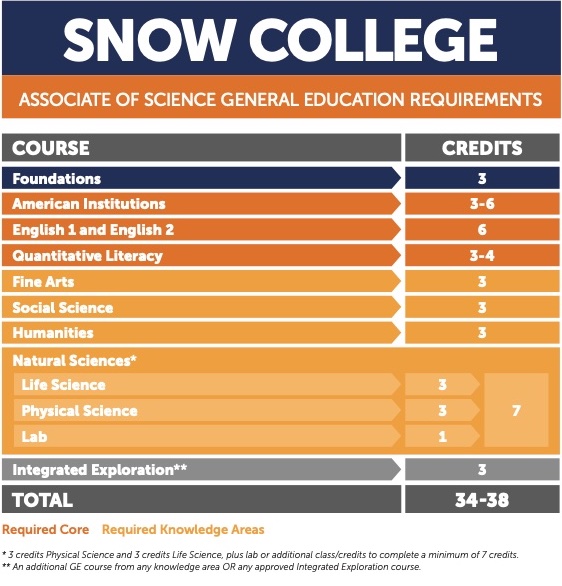
One of the most impactful strategies is community college transfers. Completing general education requirements at a local community college before transferring to a four-year institution can yield substantial savings, as community college tuition rates are often significantly lower. For example, a student might save thousands of dollars per year by completing 30-60 gen ed credits at a community college before matriculating to a more expensive university for their major-specific courses. Articulation agreements between community colleges and universities often ensure seamless credit transfer, making this a financially smart pathway.
Another powerful tool is testing out of courses through programs like the College-Level Examination Program (CLEP) or by utilizing Advanced Placement (AP) credits earned in high school. CLEP exams allow students to demonstrate proficiency in various subjects and earn college credit without taking the corresponding course. This not only saves on tuition but also reduces the time spent in college, accelerating entry into the workforce or major-specific studies. Similarly, high scores on AP exams can grant direct college credit for gen ed requirements, effectively converting high school effort into college cost savings.
Finally, exploring online courses for gen ed requirements can offer flexibility and potentially lower costs. While not universally cheaper, some online programs or specific online courses may have reduced fees compared to traditional in-person classes, or they might allow students to save on living expenses and transportation if they can study from home. Strategic planning around these options can significantly reduce the financial burden of general education, making the overall degree a more efficient investment.
Gen Eds as a Foundation for Diverse Financial Futures
Beyond direct financial literacy or cost savings, general education courses play a subtle yet powerful role in shaping a student’s long-term financial trajectory. By fostering a broad skill set and diverse perspectives, they can enhance adaptability, cultivate entrepreneurial thinking, and ultimately contribute to sustained earning potential in an ever-evolving economic landscape.
Broadening Perspectives for Entrepreneurship and Innovation
The interdisciplinary nature of gen ed courses can be a fertile ground for cultivating an entrepreneurial mindset. By exposing students to subjects ranging from history and philosophy to art and science, gen eds encourage a holistic understanding of complex problems and human needs. An art history class, for instance, might hone observational skills and an appreciation for design, which can be invaluable in product development or marketing. A philosophy course could develop logical reasoning and ethical frameworks crucial for navigating business dilemmas. When students draw connections across disparate fields, they often uncover innovative solutions or identify untapped market opportunities that purely specialized training might miss. This ability to think “outside the box,” to synthesize information from various domains, is a hallmark of successful entrepreneurs and innovators. In a financial context, this translates into the capacity to create new value, identify profitable ventures, and adapt to changing economic conditions, rather than being confined to a single, potentially vulnerable, career path. Gen eds, therefore, are not merely about accumulating knowledge but about developing a mindset that can generate financial opportunities.
Enhancing Adaptability and Long-Term Career Earning Potential
Perhaps the most significant long-term financial benefit of general education lies in its contribution to a graduate’s adaptability and “future-proofing” their career. The soft skills honed through gen ed classes—critical thinking, effective communication (both written and oral), problem-solving, and teamwork—are consistently cited by employers as highly desirable, often more so than specific technical skills which can quickly become obsolete. These skills are portable across industries and job functions, providing a robust foundation that allows individuals to pivot careers, learn new technologies, and take on diverse roles as economic landscapes shift. For example, a strong background in literature might refine analytical and interpretive skills, making a candidate excellent at strategic planning or market analysis, even if their major was in engineering.
This adaptability directly translates into enhanced long-term earning potential. Professionals who can consistently learn, adapt, and communicate effectively are more likely to secure promotions, negotiate higher salaries, and remain employed even during economic downturns. They are also better positioned to identify and capitalize on new career opportunities as industries evolve. In essence, while a specialized major provides the initial entry point into a career, the broad intellectual toolkit forged by gen ed courses provides the resilience and versatility necessary for sustained growth and financial stability throughout a career lifetime. This makes gen eds a long-term investment in human capital, yielding dividends far beyond the initial degree.
The Debate: Are Gen Eds a Financial Burden or a Smart Investment?
The discussion around general education requirements often boils down to a central financial question: Are they a necessary and valuable investment that pays dividends over time, or an extraneous financial burden that inflates college costs and delays career entry? Both perspectives hold merit, depending on an individual’s goals and career aspirations.
Arguments for Financial Efficiency: Direct Skill Focus
Proponents of a more financially efficient educational model often view extensive gen ed requirements as an unnecessary cost. Their argument centers on the idea that students should focus primarily on acquiring direct, job-specific skills that will lead to immediate employment and higher starting salaries. From this viewpoint, spending time and tuition dollars on courses outside of one’s major, especially those perceived as having little direct vocational application (e.g., philosophy, art history, certain literature courses), diverts resources that could otherwise be used for specialized training. This perspective often highlights the rising cost of higher education and the burden of student debt, suggesting that streamlining curricula to focus solely on career-relevant subjects would reduce costs, shorten degree completion times, and accelerate entry into the workforce. The rise of vocational schools, certification programs, and skill-based bootcamps reflects this demand for highly targeted, financially efficient education. For students with clear career paths and an urgency to minimize educational debt, the argument for cutting down on broad general education to prioritize direct skill acquisition is compelling, presenting gen eds as a potential financial drag rather than an asset.

Arguments for Long-Term Financial Value: Holistic Development
Conversely, a strong case can be made for general education as a smart, long-term financial investment due to its emphasis on holistic development. This perspective, often associated with the “liberal arts advantage,” argues that gen eds cultivate critical thinking, complex problem-solving, communication, and ethical reasoning skills. These are not merely “soft skills” but foundational competencies that enhance an individual’s capacity to learn, adapt, and thrive in any professional environment. Employers, particularly for leadership roles and positions requiring innovation, frequently seek candidates who possess these broad abilities, recognizing that technical skills can be taught on the job but foundational cognitive abilities are more difficult to cultivate quickly.
From a financial standpoint, a well-rounded education fosters resilience against economic shifts, allows for career pivots, and supports upward mobility through enhanced leadership and strategic thinking capabilities. Graduates with a strong general education background are often better equipped to understand global markets, navigate diverse teams, and innovate within their industries, leading to greater job security and higher lifetime earnings. While the immediate financial return of a philosophy class might not be evident, its contribution to developing a nuanced perspective and refined analytical skills can indirectly lead to more effective decision-making in business, better negotiation skills, and a greater capacity to adapt to future job demands. Therefore, for those seeking sustained career growth, leadership opportunities, and long-term financial stability, general education is viewed not as a burden, but as a crucial investment in a versatile and robust intellectual toolkit.
aViewFromTheCave is a participant in the Amazon Services LLC Associates Program, an affiliate advertising program designed to provide a means for sites to earn advertising fees by advertising and linking to Amazon.com. Amazon, the Amazon logo, AmazonSupply, and the AmazonSupply logo are trademarks of Amazon.com, Inc. or its affiliates. As an Amazon Associate we earn affiliate commissions from qualifying purchases.