
In the vast landscape of electrical engineering and measurement instrumentation, the galvanometer stands as a foundational piece of technology. Long before the era of digital multimeters and microprocessor-controlled diagnostic tools, the galvanometer provided the essential mechanism for detecting and measuring small electric currents. By understanding the principles behind this device, one gains a clearer perspective on the evolution of modern sensing technology and the fundamental behavior of electromagnetism in circuits.
The Core Principles of Galvanometer Operation
At its most fundamental level, a galvanometer is an electromechanical instrument. Its primary purpose is to act as an analog actuator, moving a pointer or a mirror in response to the flow of an electric current through a coil placed in a magnetic field. This reaction is governed by the Lorentz force, which dictates that a current-carrying conductor placed within a magnetic field experiences a force perpendicular to both the direction of the current and the magnetic field lines.

Magnetic Field Interaction
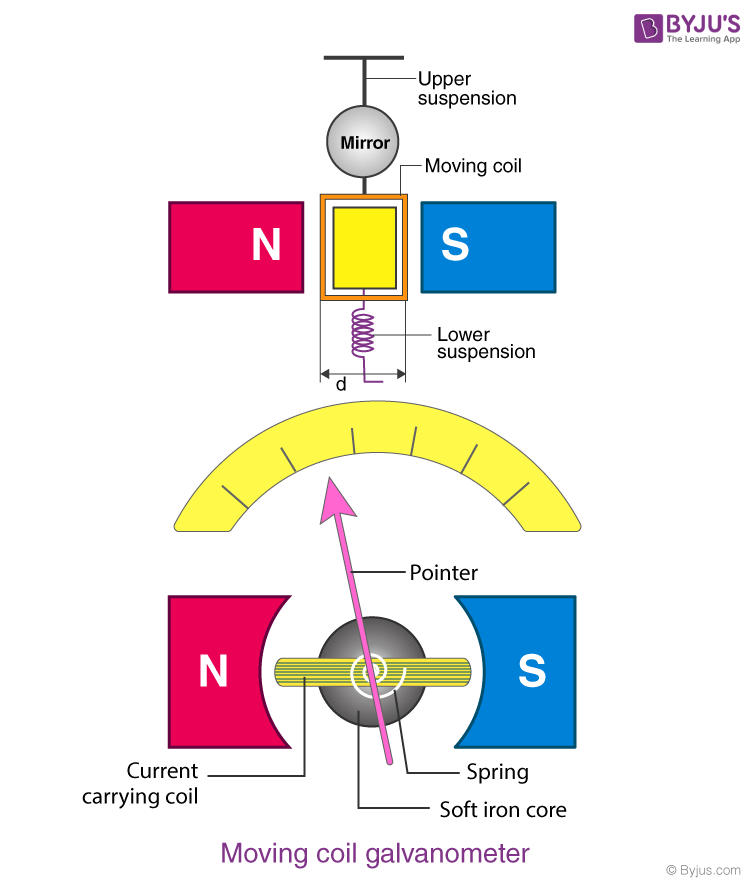
The design of a classic D’Arsonval galvanometer centers on a moving coil suspended between the poles of a permanent magnet. When a direct current passes through this coil, it generates its own magnetic field. The interaction between the permanent magnetic field and the coil’s induced field creates a torque that causes the coil to rotate. To ensure accurate measurement, the coil is often wound around a soft iron core, which helps to concentrate the magnetic flux, thereby increasing the device’s sensitivity.
Restoring Force and Equilibrium
The rotation of the coil cannot be infinite. To measure the magnitude of the current, the device utilizes a control spring or a torsion wire. This component provides a counter-torque, or “restoring force,” that opposes the rotation caused by the magnetic field. When the torque generated by the current equals the torque of the spring, the coil reaches a state of equilibrium. The degree of deflection is directly proportional to the amount of current flowing through the coil, allowing for a calibrated scale to provide a readable numerical value.
Evolution of Galvanometer Technology
While the basic principle remains constant, the mechanical design of galvanometers has evolved significantly to meet the needs of different industries—from telegraphy and high-precision laboratory research to industrial power diagnostics.
The Moving Coil (D’Arsonval) Galvanometer
The D’Arsonval galvanometer is the most recognizable version of the device. Because the permanent magnet remains stationary while the coil rotates, this configuration is highly resistant to external magnetic interference. This stability made it the standard for laboratory instrumentation for decades. Its high sensitivity allows it to detect micro-ampere levels of current, making it invaluable in the early development of sensitive electronic circuits.
The Moving Magnet Galvanometer
In contrast to the moving coil design, the moving magnet galvanometer features a small magnet suspended inside a stationary coil. When current flows through the coil, the magnetic field interacts with the suspended magnet, causing it to deflect. While these designs were instrumental in early electromagnetic experiments, they are susceptible to interference from surrounding magnetic fields, such as those caused by nearby heavy machinery or even the Earth’s own magnetic field. Consequently, they are largely regarded as historical artifacts rather than modern diagnostic tools.
Ballistic Galvanometers
A specialized evolution of the galvanometer is the ballistic galvanometer. Unlike standard instruments designed to measure steady-state current, the ballistic version is designed to measure the total charge quantity passing through the circuit in a short pulse. This is achieved by increasing the moment of inertia of the moving part, allowing the galvanometer to “integrate” the flow over time. These devices were critical for researchers exploring capacitor discharge, magnetic flux measurements, and the hysteresis cycles of ferromagnetic materials.
Applications in Modern Electronics and Engineering
Although digital displays have largely replaced analog needle-based galvanometers in consumer electronics, the underlying mechanics remain relevant in specialized tech sectors. Understanding the galvanometer is essential for anyone involved in high-end instrumentation, robotics, and physical computing.
Current Sensing and Calibration
Modern digital multimeters still utilize the concept of current sensing, though the physical deflection is often replaced by Hall effect sensors or shunt resistors combined with Analog-to-Digital Converters (ADCs). However, in high-precision laboratory settings, the “null detector” remains a vital application of the galvanometer. By utilizing a highly sensitive galvanometer to detect when a bridge circuit is perfectly balanced (a condition where no current flows through the detector), engineers can achieve levels of measurement accuracy that surpass standard digital polling techniques.
Galvanometers in Laser and Optical Systems
One of the most exciting contemporary applications of galvanometer technology is the “galvo-scanner.” In laser cutting, laser engraving, and high-speed projection systems, galvanometer-driven mirrors are used to steer laser beams with extreme precision and speed.
By attaching tiny mirrors to the shaft of a high-speed moving-coil motor, engineers can manipulate the laser beam’s position across an X-Y plane at frequencies reaching thousands of cycles per second. This technology relies on the same Lorentz force principles as the original D’Arsonval galvanometer but optimizes the design for inertia and response time. Without these high-speed galvo-scanners, modern 3D laser printing and industrial material marking would not be capable of their current levels of throughput and detail.
Maintenance, Sensitivity, and Practical Considerations
For those working with galvanometers—whether vintage units for education or precision galvo-scanners for manufacturing—maintaining the integrity of the device is paramount.
Achieving Maximum Sensitivity
The sensitivity of a galvanometer is defined by the deflection produced per unit of current. To maximize this, manufacturers focus on three key variables: the number of turns in the coil, the strength of the magnetic field, and the tension of the restoring spring. In laboratory settings, these devices are often equipped with a mirror and a light-beam pointer. By projecting a beam of light onto a distant scale, even a minuscule physical rotation of the coil results in a large, easily observable shift of the light spot. This “optical lever” technique effectively eliminates mechanical friction as a source of measurement error.
Damping and Stability
A significant engineering challenge in galvanometer design is “damping.” If a galvanometer is under-damped, the needle or mirror will oscillate back and forth before coming to rest, wasting time and risking potential mechanical stress. If it is over-damped, it will take an excessively long time to return to equilibrium. Modern designers use air damping or eddy-current damping to ensure the device is “critically damped.” This allows the pointer to reach the correct reading as quickly as possible without overshooting the mark, providing a seamless user experience in diagnostic workflows.

Calibration and Digital Integration
In the context of modern tech-stack development, transitioning from analog signals to digital data is a common requirement. Galvanometers provide a bridge between the physical and digital worlds. When integrating these components into modern systems, engineers must often use transimpedance amplifiers to convert the output of the galvanometer into a voltage range suitable for a microcontroller. This intersection of electromagnetic physics and digital signal processing remains a hallmark of high-end industrial design, proving that even centuries-old principles continue to drive the trajectory of current technology trends.
Ultimately, the galvanometer is more than a piece of history; it is a testament to the elegance of classical physics. By bridging the gap between magnetic fields and readable human data, it paved the way for the sophisticated diagnostic and scanning technologies that define our modern digital age. Whether serving as a sensitive null-balance indicator or powering a high-speed laser scanner, the galvanometer remains an indispensable tool for precision engineering.
aViewFromTheCave is a participant in the Amazon Services LLC Associates Program, an affiliate advertising program designed to provide a means for sites to earn advertising fees by advertising and linking to Amazon.com. Amazon, the Amazon logo, AmazonSupply, and the AmazonSupply logo are trademarks of Amazon.com, Inc. or its affiliates. As an Amazon Associate we earn affiliate commissions from qualifying purchases.