
Compound interest stands as one of the most powerful concepts in the world of finance, often hailed by experts as the “eighth wonder of the world.” It’s the engine behind wealth creation, a fundamental principle for investors, and a critical factor in understanding both savings growth and debt accumulation. Far from being a mere academic curiosity, mastering the formula and its implications is essential for anyone looking to make informed financial decisions, plan for their future, or simply understand how money truly grows—or shrinks—over time. At its core, compound interest is interest earned not only on the initial principal but also on the accumulated interest from previous periods. This seemingly simple idea creates an exponential growth curve, allowing your money to work harder for you, generating returns on its own returns. Understanding its formula isn’t just about plugging numbers into an equation; it’s about grasping the mechanics of financial growth and leveraging it to your advantage.
Understanding the Power of Compound Interest
Before diving into the mathematical representation, it’s crucial to grasp the fundamental concept of compound interest and how it differs from its simpler counterpart. This understanding illuminates why it’s such a cornerstone of effective financial planning and investment strategies.
Simple Interest vs. Compound Interest: A Fundamental Difference
To truly appreciate the power of compounding, one must first understand simple interest. Simple interest is calculated solely on the principal amount of a loan or deposit. If you invest $1,000 at a 5% simple interest rate, you would earn $50 each year, regardless of how many years pass. The principal never changes for the interest calculation. While easy to calculate and understand, simple interest does not foster significant long-term growth because the interest earned is never reinvested or added back to the principal.
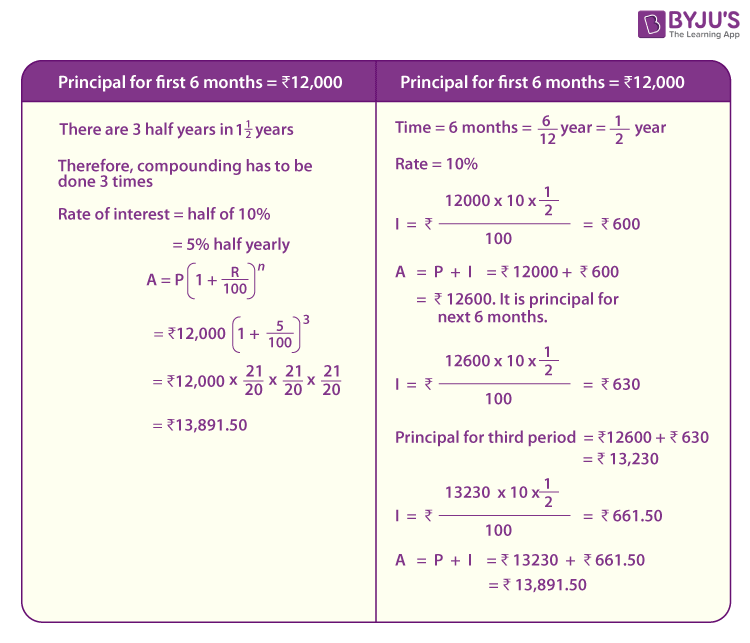
Compound interest, on the other hand, is the earning of interest on both the initial principal and the accumulated interest from previous periods. Imagine that same $1,000 at a 5% compound interest rate. In the first year, you earn $50, bringing your total to $1,050. In the second year, the 5% interest is calculated on $1,050, yielding $52.50. Now your total is $1,102.50. This pattern continues, with each successive period’s interest calculation benefiting from the growth of prior periods. This mechanism is what gives compound interest its remarkable exponential growth potential.
The “Snowball Effect”: How Wealth Grows Over Time
The phenomenon of compound interest is often referred to as the “snowball effect.” Picture a small snowball rolling down a hill; as it descends, it gathers more snow, growing larger and picking up speed. Similarly, with compound interest, your initial investment (the small snowball) earns interest. This interest is then added to your principal, making your “snowball” bigger. In the next period, a larger principal earns even more interest, which is again added, and the cycle continues, accelerating the growth.
This effect is particularly pronounced over longer time horizons. Small, consistent investments made early in life can grow into substantial sums, primarily due to the extended period over which compound interest can work its magic. Conversely, delaying investments significantly diminishes the compounding potential, as there’s less time for the “snowball” to gather momentum. Understanding this dynamic underscores the importance of starting early and being patient, allowing time to be your greatest ally in wealth accumulation.
Deconstructing the Compound Interest Formula
While the concept of compound interest is straightforward, its mathematical representation precisely quantifies this growth. There are a few variations, but the standard formula is the most commonly used for typical investment scenarios.
The Standard Formula Explained: A = P(1 + r/n)^(nt)
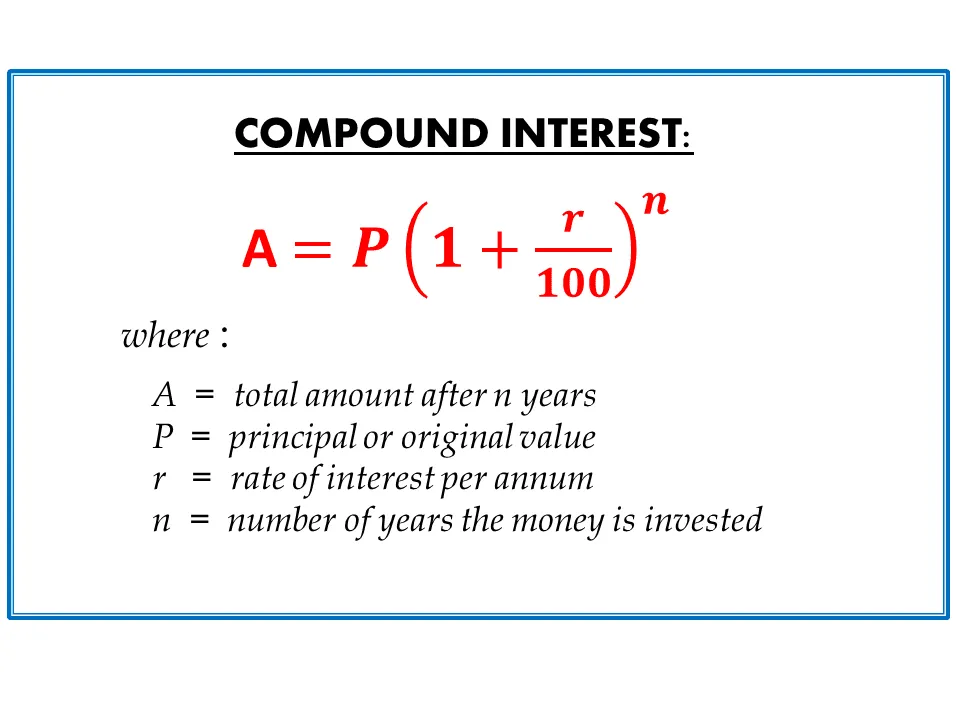
The most widely recognized formula for compound interest, where interest is compounded a finite number of times per period, is:
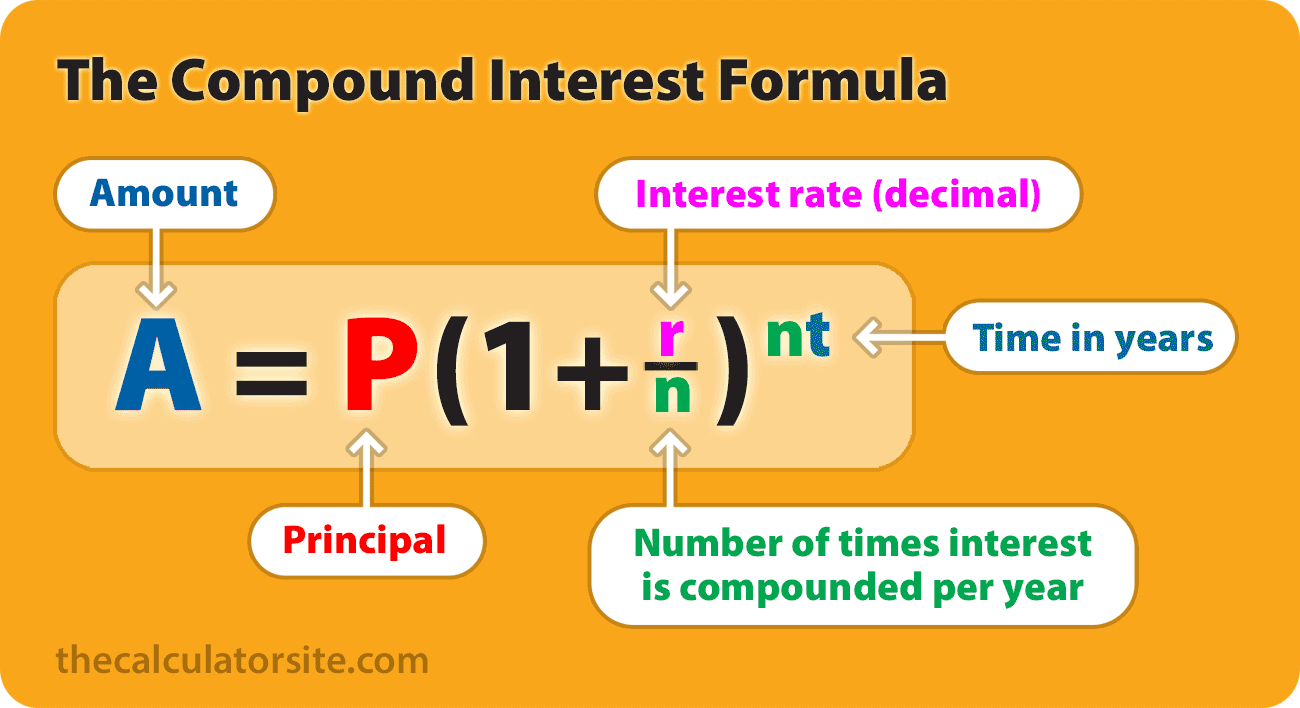
A = P(1 + r/n)^(nt)
Let’s break down each variable:
-
A = Future Value of the Investment/Loan, including interest: This is the total amount of money you will have after the specified period, taking into account both your initial investment and all the accumulated compound interest.
-
P = Principal Investment Amount (the initial deposit or loan amount): This is the starting sum of money upon which interest will be calculated. It’s the foundation of your investment.
-
r = Annual Interest Rate (as a decimal): This is the stated percentage rate of interest for the year. It’s crucial to convert this percentage into a decimal for the formula (e.g., 5% becomes 0.05).
-
n = Number of times that interest is compounded per year: This variable defines the compounding frequency. Common values for ‘n’ include:
-
1 for annually
-
2 for semi-annually
-
4 for quarterly
-
12 for monthly
-
365 for daily
-
-
t = Number of years the money is invested or borrowed for: This represents the duration over which the interest will be compounded.
How it works:
The term (1 + r/n) represents the growth factor for each compounding period. r/n calculates the interest rate for a single compounding period. Adding 1 to this ensures that the principal is carried forward along with the interest.
The exponent (nt) represents the total number of compounding periods over the entire investment horizon. For instance, if you invest for 10 years and interest compounds monthly (n=12), then nt would be 120 (12 * 10), meaning interest is compounded 120 times. Multiplying the growth factor by itself nt times calculates the cumulative effect of compounding over the total periods.
Continuous Compounding: The Theoretical Limit (A = Pe^(rt))
While most financial products compound interest at discrete intervals (monthly, quarterly, annually), there is a theoretical concept known as continuous compounding. This occurs when interest is compounded an infinite number of times over a given period, meaning the interest is constantly being added to the principal and earning its own interest without any delay.
The formula for continuous compounding is:
A = Pe^(rt)
Here’s what the new variable means:
- e = Euler’s number (an irrational mathematical constant approximately equal to 2.71828): This constant naturally arises in many areas of mathematics and finance, particularly when dealing with continuous growth processes.
Continuous compounding represents the upper limit of how much interest can be earned. While it’s rare to find products that genuinely compound continuously in practice, this formula is often used in financial modeling, derivatives pricing, and advanced financial calculations to simplify assumptions or analyze scenarios where compounding frequency is very high. For the vast majority of personal finance applications, the standard discrete compounding formula is sufficient and accurate.
The Unseen Forces: Factors Influencing Compound Growth
Beyond the formula itself, several key variables act as powerful levers that dictate the ultimate magnitude of your compounded returns. Understanding these forces allows you to strategize more effectively for wealth accumulation.
Initial Principal: The Foundation of Your Investment
The initial principal (P) is the bedrock of your compound interest journey. Quite simply, a larger starting sum provides a larger base upon which interest can be earned. If two individuals invest at the same interest rate and for the same duration, the one with the higher initial principal will invariably end up with a significantly larger future value. This highlights the importance of consistent savings and, if possible, making larger initial contributions to investments. The more you put in at the beginning, the more fuel you provide for the compounding engine.
Interest Rate: The Accelerator of Growth
The annual interest rate (r) acts as the accelerator for your investment’s growth. Even seemingly small differences in interest rates can lead to substantial discrepancies in future value, especially over long periods. A 7% annual return will not just be slightly better than a 5% return; due to compounding, it will be dramatically better. This is why seeking competitive interest rates for savings and investments, and conversely, minimizing high-interest debt, is a crucial financial strategy. Higher rates provide more aggressive growth per compounding period, amplifying the snowball effect faster.
Time Horizon: The Ultimate Lever
Perhaps the most potent, yet often underestimated, factor in compound interest is the time horizon (t). The longer your money remains invested and allowed to compound, the more significant the returns become. This is because the exponential nature of compounding truly shines over extended periods. The magic of “interest on interest” takes time to build momentum. An investment made at age 25 with a modest contribution will likely outperform a much larger investment made at age 45, simply because the earlier investment had an additional 20 years to compound. This underscores the paramount importance of starting to save and invest as early as possible. Time literally allows your money to grow on itself over and over again.
Compounding Frequency: More Frequent, More Growth
The frequency of compounding (n) also plays a role, albeit generally a less dramatic one than time or interest rate. The more frequently interest is compounded (e.g., daily vs. annually), the more often the accrued interest is added back to the principal, allowing it to start earning interest sooner. While the difference between annual and monthly compounding might seem minor in the short term, over decades, daily compounding will yield slightly more than annual compounding, all else being equal. Most online savings accounts and investment platforms compound interest daily or monthly, ensuring that investors benefit from this slight acceleration of growth.
Practical Applications of Compound Interest in Personal Finance
Understanding the formula and its variables is just the beginning. The true value lies in applying these principles to real-world financial scenarios, enabling smarter decisions regarding both assets and liabilities.
Investing for Retirement: 401(k)s and IRAs
Compound interest is the bedrock of long-term retirement planning. Vehicles like 401(k)s, IRAs (Individual Retirement Accounts), and other investment accounts rely heavily on compounding to grow significant nest eggs over decades. Contributions made early in your career have the longest time to compound, benefiting enormously from the “snowball effect.” Even relatively small, consistent contributions, combined with market returns, can mushroom into millions over 30-40 years, demonstrating the unparalleled power of time and compounding in achieving financial independence for retirement.
Debt Management: The Double-Edged Sword
While compound interest is an investor’s best friend, it can be a consumer’s worst enemy when it comes to debt. High-interest debts, such as credit card balances, operate on the same compounding principle. If you carry a balance on a credit card with a high annual percentage rate (APR), interest is often compounded daily or monthly on that balance. This means you’re paying interest not only on your original purchase but also on the interest that has already accrued. This rapidly escalates the total amount owed, making it incredibly difficult to pay off the principal and illustrating why compound interest can work against you with such devastating efficiency. Understanding this highlights the urgency of paying off high-interest debt as quickly as possible.
Savings Accounts and Certificates of Deposit (CDs)
Even at lower interest rates, savings accounts and Certificates of Deposit (CDs) demonstrate the basic principle of compound interest. While they may not offer the explosive growth of stock market investments, the interest earned on these accounts is regularly added back to your principal, slowly but steadily increasing your total balance over time. For emergency funds or short-term savings goals where capital preservation is paramount, compounding in these lower-risk vehicles ensures your money continues to grow, albeit at a more conservative pace.
Student Loans and Mortgages: Long-term Commitments
Compound interest is also baked into the structure of long-term loans like student loans and mortgages. For mortgages, the interest is typically compounded monthly, and early payments are heavily weighted towards interest. Over the life of a 30-year mortgage, you often pay significantly more in interest than the original principal amount, a direct consequence of compounding over such an extended period. Similarly, student loans accrue interest, and if payments are deferred or only minimums are made, the interest can capitalize (be added to the principal), leading to a larger loan balance and more interest accruing on that higher amount.
Leveraging Financial Tools for Compound Interest Mastery
In today’s digital age, a myriad of financial tools are available to help individuals understand, manage, and optimize the power of compound interest for their financial goals.
Compound Interest Calculators: Predicting Your Future Wealth
One of the most accessible and valuable tools is the online compound interest calculator. These calculators allow you to input various parameters—initial principal, interest rate, compounding frequency, and time horizon—to instantly project the future value of your investment. This provides an immediate, tangible understanding of how different variables impact growth. They are excellent for planning, setting realistic expectations, and visualizing the long-term impact of consistent saving and investing, allowing you to run various “what-if” scenarios for your financial future.
Robo-Advisors and Investment Platforms: Automating Growth
Modern investment platforms and robo-advisors streamline the process of investing, making it easier for compound interest to work its magic. These tools can automate regular contributions, diversify portfolios, and often automatically reinvest dividends and capital gains. By automating these processes, they ensure that earnings are consistently added back to the principal, maximizing the compounding effect without requiring constant manual intervention from the investor. This “set it and forget it” approach, combined with automatic rebalancing, ensures your investments are always working optimally.
Budgeting and Financial Planning Software: Fueling Your Principal
While not directly calculating compound interest, budgeting and financial planning software indirectly fuel its power. By helping individuals track income and expenses, identify savings opportunities, and adhere to a financial plan, these tools enable users to free up more money for investing. The more effectively you manage your budget and increase your savings rate, the larger your initial principal (P) and subsequent contributions become. As we’ve established, a larger principal significantly accelerates compound growth, making budgeting software an indirect but vital tool for harnessing compounding.
In conclusion, understanding “what is a formula of compound interest” transcends mere mathematical knowledge; it’s a fundamental insight into how money grows, for better or worse, across virtually all financial contexts. Whether you are meticulously planning for retirement, strategically paying down debt, or simply building an emergency fund, the principles of compound interest are at play. By grasping the formula, recognizing the critical influence of time, interest rate, and principal, and leveraging modern financial tools, individuals can consciously steer their financial journey towards wealth creation rather than falling victim to compounding debt. Embracing this powerful concept is not just smart finance; it’s a cornerstone of financial literacy and long-term prosperity.
aViewFromTheCave is a participant in the Amazon Services LLC Associates Program, an affiliate advertising program designed to provide a means for sites to earn advertising fees by advertising and linking to Amazon.com. Amazon, the Amazon logo, AmazonSupply, and the AmazonSupply logo are trademarks of Amazon.com, Inc. or its affiliates. As an Amazon Associate we earn affiliate commissions from qualifying purchases.