
In the rapidly evolving landscape of industrial hardware and fabrication technology, the flux welder—more formally known as the Flux-Cored Arc Welding (FCAW) machine—stands as a cornerstone of modern structural engineering. While traditional welding methods have existed for centuries, the technological refinement of FCAW has revolutionized how we approach metal assembly in environments ranging from heavy-duty shipyards to precision-focused construction sites. At its core, a flux welder is a sophisticated power source that utilizes a continuous, hollow wire electrode filled with a specialized flux compound to create durable, high-strength bonds between metals.
Understanding the technology behind flux welding requires an appreciation for the shift from manual “stick” welding to semi-automatic systems. By integrating advanced wire-feed mechanisms with specialized metallurgical chemistry, flux welders provide a level of efficiency and versatility that older technologies simply cannot match. This article explores the engineering, technical applications, and hardware considerations that define flux welding technology in the modern era.
The Engineering Behind Flux-Cored Arc Welding (FCAW)
To understand what a flux welder is, one must first understand the “flux” itself. In the world of metallurgy, atmospheric gases like oxygen and nitrogen are the enemies of a clean weld; they cause porosity and brittleness. Traditional MIG (Metal Inert Gas) welding solves this by using a separate tank of shielding gas. However, flux-cored technology integrates the protection directly into the consumable hardware.
The Self-Shielding Mechanism
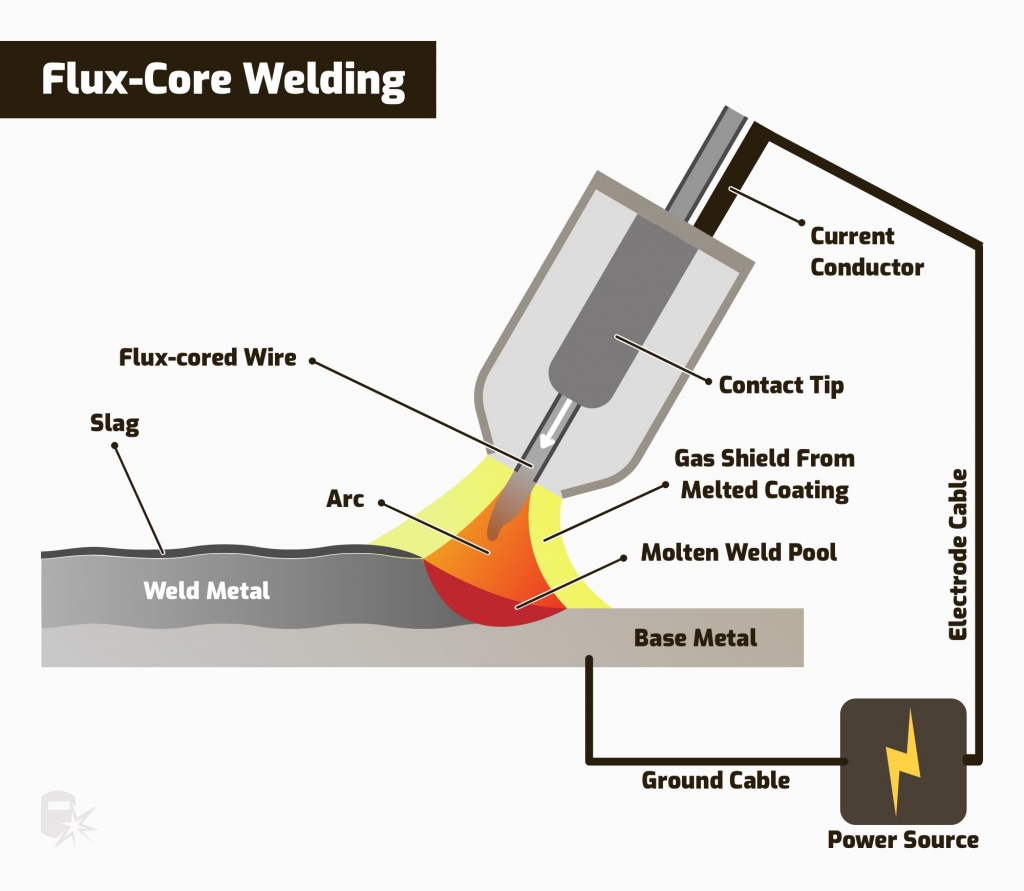
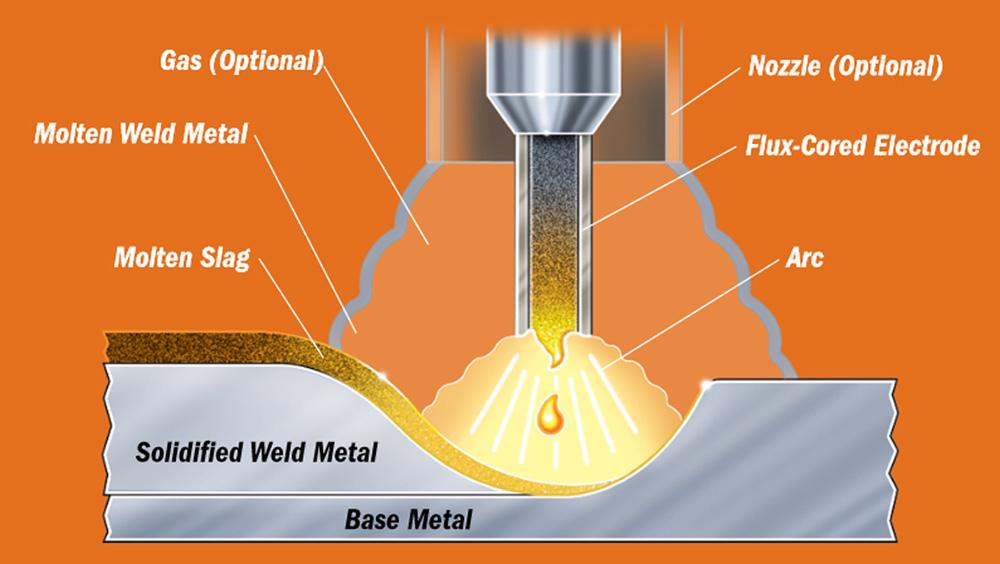
The “core” of the flux-cored wire is a technical marvel. It contains a granular mixture of minerals, ferroalloys, and deoxidizers. When the welder pulls the trigger, the machine feeds this wire through the gun, and an electric arc is struck between the wire and the workpiece. The heat of the arc causes the flux to vaporize, creating a protective gas shield around the molten weld pool. As the weld cools, the flux forms a layer of “slag” on top, which protects the metal from atmospheric contamination during the critical cooling phase. This internal chemical engineering eliminates the need for external gas tanks, making the hardware significantly more portable.
Gas-Shielded vs. Gasless Tech (Dual Shield)
While many associate flux welding with “gasless” operation, the technology is actually divided into two distinct sub-categories. Self-shielded FCAW (as described above) is the go-to for outdoor applications. However, “Dual Shield” welding uses both a flux-cored wire and an external supply of CO2 or Argon-mix gas. This hybrid approach represents the pinnacle of welding tech for heavy-duty industrial fabrication. The external gas provides a pristine environment, while the internal flux adds alloying elements and increases deposition rates, allowing for incredibly deep penetration in thick structural steel.
Technological Evolution: From Stick to Flux
The development of the flux welder was a direct response to the limitations of Shielded Metal Arc Welding (SMAW), commonly known as stick welding. In the stick welding era, operators had to stop frequently to replace spent electrodes. This was inefficient and introduced potential points of failure at every “restart.”
Comparative Analysis with MIG Welding
Technologically, flux welding is the “rugged sibling” of MIG welding. While MIG welding (GMAW) is excellent for thin materials and clean shop environments, it fails in the presence of wind or surface contaminants like rust and mill scale. Flux welders utilize a different electrical polarity—usually DCEN (Direct Current Electrode Negative) for self-shielded wire—which concentrates the heat on the wire rather than the base metal. This allows the flux welder to “burn through” contaminants that would ruin a standard MIG weld. The technological trade-off is a more violent arc and more “spatter,” but the result is a deeper, more reliable fusion in demanding conditions.
Inverter Technology and the Modern Power Source
The hardware inside a flux welder has undergone a digital transformation over the last decade. Older “transformer-style” welders were massive, heavy machines that relied on large copper coils to step down voltage. Modern flux welders utilize Inverter Technology (specifically Insulated Gate Bipolar Transistors or IGBTs). These digital power sources switch the incoming power at high frequencies, allowing the machine to be smaller, lighter, and more energy-efficient. Furthermore, inverter technology allows for “synergic” control, where the machine’s internal microprocessor automatically adjusts the voltage based on the wire-feed speed set by the user, ensuring a stable arc even for less experienced operators.
Practical Applications and Technical Use Cases
Because of its unique chemical and physical properties, flux welding technology is the preferred choice for specific high-stakes industrial applications. It is not merely a “general” tool; it is a specialized instrument designed for high-productivity environments.
Outdoor Fabrication and Structural Integrity
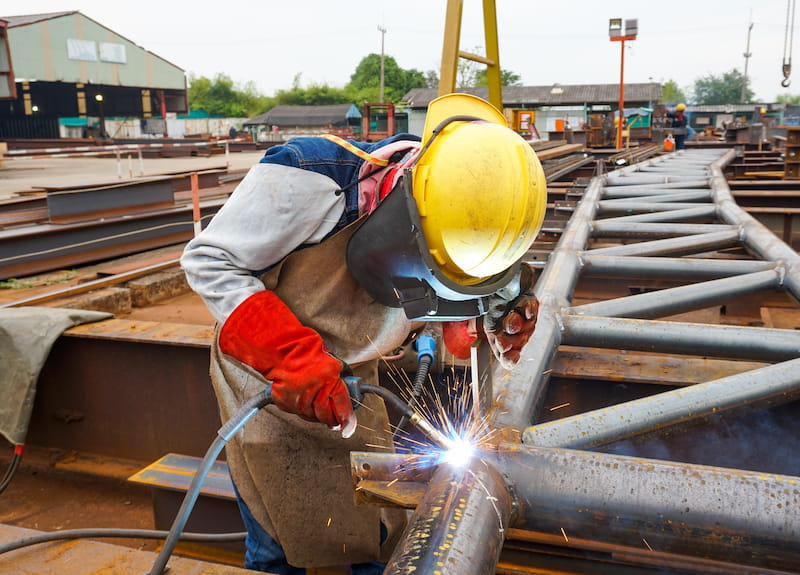
One of the primary technological advantages of a flux welder is its immunity to wind. In outdoor construction—such as bridge building or skyscraper framing—a light breeze can blow away the shielding gas of a MIG welder, leading to a failed weld. Because the flux welder generates its own shield at the point of contact, it is essentially “wind-proof.” This reliability makes it the standard for structural steel erection, where the integrity of a joint is a matter of public safety.
High Deposition Rates in Heavy Manufacturing
In the manufacturing of heavy machinery, such as bulldozers or ship hulls, speed is just as important as strength. Flux welding tech offers a higher “deposition rate” than almost any other manual process. This means the machine can melt more metal into the joint per minute. This is achieved because the current in a flux-cored wire travels through the outer metal sheath (since the core is non-conductive powder), leading to high current density and rapid melting. This allows fabricators to complete massive joints in half the time it would take using traditional stick or MIG methods.
Selecting the Right Hardware: A Buyer’s Guide to Flux Welder Tech
For those looking to integrate flux welding into their technical repertoire, understanding the specifications of the hardware is vital. Not all flux-capable machines are created equal, and the internal components dictate the machine’s longevity and performance.
Key Specs: Duty Cycle and Voltage
The “Duty Cycle” is perhaps the most critical technical spec of any welder. It represents the percentage of a ten-minute period that the machine can weld at a specific amperage without overheating. A high-end industrial flux welder might have a 60% or 100% duty cycle, whereas a hobbyist “tech-gadget” welder might only offer 20%. Furthermore, the choice between 110V and 220V power input changes the machine’s capability. While 110V units are portable, they often lack the “dig” or penetration depth required for materials thicker than 1/4 inch.
Digital Interfaces and Synergic Controls
The user interface of modern flux welders has moved away from simple analog dials to sophisticated LED displays. Many contemporary units feature “Synergic Logic.” In a manual setup, the user must perfectly balance wire speed (measured in Inches Per Minute) and voltage. In a synergic system, you simply select the wire diameter and the material thickness, and the machine’s onboard computer calculates the ideal arc characteristics. This digital assist reduces the learning curve and ensures that the metallurgical properties of the weld are optimized for the specific hardware in use.
The Future of Metal Fabrication Tech
As we look toward the future of the fabrication industry, the flux welder continues to evolve. We are seeing the rise of “multi-process” machines—all-in-one digital units that can switch between Flux-Cored, MIG, TIG, and Stick welding with the press of a button. These machines utilize advanced software to manage the power output, offering “pulse” settings that reduce spatter and improve the aesthetic quality of the flux weld, which was historically its main drawback.
Furthermore, flux-cored wire technology is becoming more specialized. Engineers are developing new flux chemistries that allow for welding exotic alloys or providing extreme weather resistance. As automation and robotics become more prevalent in “Industry 4.0,” the flux welder remains a vital component, often mounted on robotic arms to perform high-speed, high-strength welds in automotive and aerospace manufacturing.
In conclusion, a flux welder is far more than just a metal-joining tool. It is a sophisticated piece of technology that balances complex chemistry with electrical engineering to solve the problems of the real-world environment. Whether it is the self-shielding properties that allow for outdoor construction or the inverter technology that makes high-powered units portable, the flux welder represents a pinnacle of industrial hardware design. For the technician or engineer, mastering this technology is not just about joining two pieces of metal; it is about harnessing a powerful metallurgical process to build the infrastructure of the modern world.
aViewFromTheCave is a participant in the Amazon Services LLC Associates Program, an affiliate advertising program designed to provide a means for sites to earn advertising fees by advertising and linking to Amazon.com. Amazon, the Amazon logo, AmazonSupply, and the AmazonSupply logo are trademarks of Amazon.com, Inc. or its affiliates. As an Amazon Associate we earn affiliate commissions from qualifying purchases.