
The automotive world is replete with a myriad of engine configurations, each designed with specific goals in mind, whether it’s power output, fuel efficiency, packaging, or sheer refinement. Among these, the flat 6 engine stands out as a unique and highly esteemed piece of engineering, particularly celebrated for its distinctive characteristics and a legacy built on performance and balance. Often referred to as a “boxer” engine due to the way its pistons move simultaneously towards and away from the crankshaft, like boxers punching, this horizontally opposed six-cylinder powerhouse represents a fascinating intersection of mechanical ingenuity and vehicle dynamics.

The Engineering Marvel: Defining the Flat 6
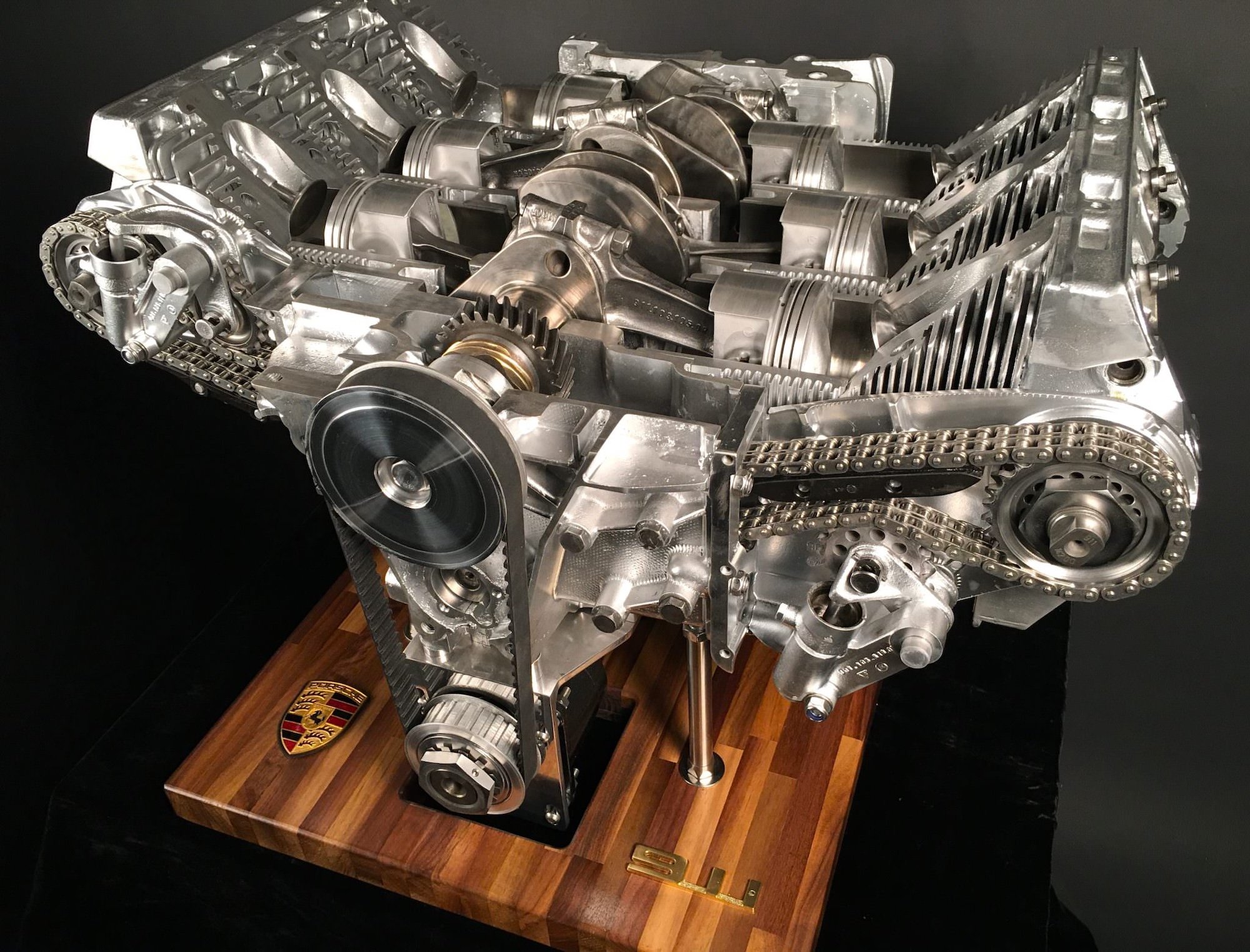
At its core, a flat 6 engine distinguishes itself from more common inline or V-configurations by its unique cylinder arrangement. Instead of cylinders aligned in a single row or in two banks forming a “V” shape, a flat 6 features two banks of three cylinders positioned horizontally on opposite sides of a central crankshaft. The pistons in opposing cylinders are connected to the crankshaft in such a way that they move in and out simultaneously, creating a distinct “punching” motion.
Horizontal Piston Arrangement
The most defining characteristic is the horizontal orientation of the cylinders. This means the cylinder bores lie flat, parallel to the ground, rather than vertically (as in an inline engine) or at an angle (as in a V-engine). This layout inherently contributes to a lower overall engine profile, which has profound implications for vehicle design and performance. Each cylinder bank contains three cylinders, forming a compact, wide power unit.
Opposing Cylinder Motion
The “boxer” moniker is more than just a descriptive nickname; it highlights a crucial mechanical feature. Unlike V-engines where opposing pistons often share a crankpin and move in the same direction or alternate, in a true flat-six, opposing pistons move in opposite directions at the same time. When one piston moves outwards from the crankshaft, its directly opposing counterpart moves inwards. This synchronized, opposing motion is key to the engine’s inherent balance characteristics.
Crankshaft and Firing Order
A single crankshaft runs through the center of the engine, connecting all six piston-and-rod assemblies. The design of this crankshaft and the specific firing order of the cylinders are meticulously engineered to maximize the benefits of the boxer layout. A 120-degree crankshaft spacing between the throws for each pair of opposing cylinders, combined with a precise firing sequence, ensures an even power delivery and contributes significantly to the engine’s remarkable smoothness. The typical firing order is designed to optimize combustion cycles and manage vibrations effectively across all six cylinders.
Advantages of the Horizontally Opposed Design
The flat 6 engine’s distinctive architecture is not merely an aesthetic choice; it delivers tangible performance and dynamic benefits that have endeared it to engineers and enthusiasts alike. These advantages stem directly from its horizontal configuration and the unique piston dynamics.
Superior Balance and Smoothness
One of the most significant benefits of the flat 6 design is its exceptional primary and secondary balance. Because opposing pistons move in opposite directions simultaneously, the forces generated by their inertia largely cancel each other out. This intrinsic self-balancing characteristic minimizes vibrations throughout the engine’s operating range, resulting in an exceptionally smooth and refined power delivery. Unlike inline-four engines that often require balance shafts or V-engines that use counterweights, a well-designed flat 6 can achieve remarkable balance without additional complex components, simplifying the design and reducing parasitic losses. This smoothness translates directly into a more pleasant driving experience and reduced stress on engine components.
Lower Center of Gravity
By lying flat, the engine’s mass is distributed lower in the chassis compared to vertically oriented inline or V-engines. This lower center of gravity (CoG) is a critical advantage for vehicle dynamics. A lower CoG reduces weight transfer during cornering, braking, and acceleration, leading to enhanced stability, reduced body roll, and improved handling characteristics. For high-performance sports cars, where every millimeter of CoG reduction can translate into a tangible performance gain on a track, this is a profound benefit that significantly impacts agility and responsiveness.
Compact Vertical Packaging
While the flat 6 is typically wider than other configurations, its vertical height is remarkably compact. This allows vehicle designers greater flexibility in packaging, especially in low-slung sports cars where hood lines and aerodynamic profiles are paramount. The reduced vertical dimension enables lower hood heights, contributing to better forward visibility and improved pedestrian safety crash performance. It also potentially frees up space above the engine for ancillary components, air intake systems, or simply a more streamlined vehicle aesthetic.
Disadvantages and Engineering Challenges
Despite its numerous advantages, the flat 6 engine is not without its compromises and unique engineering challenges. These factors often contribute to its niche application in the automotive market, particularly in high-performance or specialized vehicles.
Increased Width and Engine Bay Constraints

The most immediate downside of the horizontally opposed layout is its inherent width. Spreading six cylinders out flat means the engine occupies a significant amount of horizontal space in the engine bay. This can make packaging challenging, especially in vehicles designed with narrower body shells or those that need to accommodate other front-mounted components like large radiators or crash structures. The increased width can also necessitate wider wheel arches or modifications to the vehicle’s frame, impacting overall design flexibility and manufacturing costs.
Complex Head and Exhaust Design
With cylinder heads on opposite sides, the design of the intake and exhaust manifolds can become more complex than in an inline engine. Exhaust routing, in particular, requires careful engineering to ensure equal length runners for optimal flow and scavenging, which is crucial for maximizing power and achieving a desirable exhaust note. Servicing components located on the outboard sides of the engine, such as spark plugs or valve covers, can also be more labor-intensive and require specialized tools due to reduced accessibility within a constrained engine bay.
Maintenance Accessibility
The wide, low profile can present accessibility challenges for routine maintenance and more extensive repairs. Tasks like spark plug replacement, which might be straightforward on an inline engine, can require significant disassembly or specialized maneuvers on a flat 6 due to tight clearances against frame rails or wheel wells. This can lead to higher labor costs for servicing, a factor often considered in the total cost of ownership for vehicles employing this engine type.
Iconic Applications and Enduring Legacy
Few engine configurations are as strongly associated with specific automotive brands and their performance philosophies as the flat 6. Its distinct character and proven capabilities have cemented its place in automotive history.
Porsche: The Quintessential Boxer
No discussion of the flat 6 is complete without acknowledging Porsche. The German automaker has almost exclusively championed the flat 6 engine in its iconic 911 series since its inception in 1963. The rear-mounted, horizontally opposed engine became a foundational element of the 911’s unique driving dynamics, contributing to its distinctive weight distribution and handling characteristics. From air-cooled classics to modern water-cooled, turbocharged powerhouses, the flat 6 has been continually refined by Porsche, showcasing its versatility and potential for extreme performance. Porsche’s dedication to the flat 6 is a testament to its intrinsic benefits for sports car applications, delivering a unique balance of power, sound, and chassis integration.
Subaru: All-Wheel Drive Synergy
While Porsche defines the flat 6 in the sports car realm, Subaru has extensively used horizontally opposed engines across its broader vehicle lineup, including both four-cylinder and six-cylinder versions. For Subaru, the flat 6 (often branded as the “H6” engine) perfectly complements their symmetrical all-wheel-drive (AWD) system. The engine’s low, flat profile allows it to be mounted low and longitudinally in the chassis, enhancing the vehicle’s center of gravity and providing an ideal layout for routing power evenly to all four wheels. This synergy between the boxer engine and AWD system has become a hallmark of Subaru vehicles, contributing to their reputation for stability, traction, and rugged capability.
Other Historical Users
While Porsche and Subaru are the most prominent modern proponents, other manufacturers have experimented with flat 6 engines. Chevrolet developed a flat 6 for the Corvair in the 1960s, a rear-engined, air-cooled unit. Alfa Romeo also famously used a flat 6 engine in its Alfa 6 sedan, though this was a much less common application. These examples underscore the diverse engineering approaches taken to harness the unique attributes of the flat 6 layout.
Technological Evolution and Future Prospects
The flat 6 engine, like all internal combustion engines, has undergone significant technological evolution to meet increasing demands for performance, efficiency, and environmental compliance. Its future is tied to the broader shifts within the automotive industry.
Direct Injection and Variable Valve Timing
Modern flat 6 engines incorporate advanced technologies such as direct fuel injection and variable valve timing (VVT) and lift systems. Direct injection precisely delivers fuel directly into the combustion chamber, allowing for higher compression ratios, improved fuel atomization, and more efficient combustion, leading to increased power and better fuel economy. VVT systems optimize valve overlap and lift across the engine’s RPM range, improving torque delivery, throttle response, and emissions control. These technologies have allowed flat 6 engines to remain competitive in an era of stringent efficiency standards.
Turbocharging and Forced Induction
To enhance power output and mitigate the effects of downsizing for efficiency, turbocharging has become a common feature in many contemporary flat 6 engines, especially in performance applications. Forced induction allows smaller displacement engines to produce power levels previously only attainable by much larger, naturally aspirated units. Modern turbocharging systems, often with twin turbos or variable geometry turbos, are designed to minimize turbo lag and deliver a broad, accessible torque curve, further cementing the flat 6’s performance credentials.
Emissions Regulations and Hybridization
As global emissions regulations tighten, the future of the pure internal combustion flat 6 faces increasing pressure. Engine manufacturers are exploring various avenues to ensure its viability. This includes further refinement of combustion processes, advanced exhaust aftertreatment systems, and lightweight materials. Perhaps the most significant trend is hybridization, where the flat 6 engine is paired with electric motors and battery packs. This allows for electric-only driving at low speeds, torque fill, and regenerative braking, significantly reducing fuel consumption and emissions. Porsche, for instance, has already demonstrated highly effective hybrid flat 6 powertrains in its racing endeavors, hinting at the future direction for its road cars. The flat 6, as a testament to sophisticated mechanical engineering, is poised to evolve within these new technological frameworks, ensuring its distinctive note and dynamic advantages continue to resonate in the cars of tomorrow.
aViewFromTheCave is a participant in the Amazon Services LLC Associates Program, an affiliate advertising program designed to provide a means for sites to earn advertising fees by advertising and linking to Amazon.com. Amazon, the Amazon logo, AmazonSupply, and the AmazonSupply logo are trademarks of Amazon.com, Inc. or its affiliates. As an Amazon Associate we earn affiliate commissions from qualifying purchases.