
In the complex landscape of global commerce, few business models have proven as resilient and financially empowering as the farm cooperative. At its core, a farm cooperative is a private business organization owned and controlled by the farmers who use its services. However, from a professional financial perspective, it is much more: it is a strategic vehicle for capital pooling, risk mitigation, and market leverage. By banding together, individual producers transform from price-takers in a volatile market into a collective powerhouse capable of achieving economies of scale usually reserved for multinational corporations.

Understanding the farm cooperative requires a deep dive into business finance, equity structures, and the unique ways these entities generate value for their member-owners. This article explores the economic architecture of cooperatives, their financial benefits, and why they remain a cornerstone of modern agribusiness finance.
The Economic Structure of Farm Cooperatives
The financial foundation of a farm cooperative differs significantly from a traditional investor-owned firm (IOF). While an IOF seeks to maximize profits for external shareholders, a cooperative exists to provide economic benefits to its member-users. This structural difference dictates how capital is raised, how profits are distributed, and how the business is governed.
Member Ownership and Equity Contribution
In a farm cooperative, the “customers” are also the “owners.” To join, a farmer typically invests a certain amount of equity, which provides the cooperative with the initial capital necessary to build infrastructure—such as grain elevators, processing plants, or fertilizer distribution centers. Unlike stocks traded on a public exchange, this equity is often tied directly to the level of participation the member has with the cooperative. This ensures that the financial interests of the business remain perfectly aligned with the operational needs of the producers.
The Patronage Dividend System
One of the most distinct financial features of a cooperative is the patronage dividend. At the end of a fiscal year, if the cooperative has generated a surplus (profit) after covering operating costs and investments, that surplus is returned to the members. However, these “dividends” are not distributed based on how much equity a member holds, but rather on how much business they did with the cooperative. If a farmer sold 10% of the cooperative’s total grain volume, they would theoretically receive 10% of the distributable earnings. This creates a direct correlation between business activity and financial reward.
Democratic Financial Governance
While traditional corporations operate on a “one share, one vote” basis—allowing wealthy investors to exert disproportionate control—cooperatives typically operate on a “one member, one vote” principle. From a business finance perspective, this prevents hostile takeovers and ensures that the strategic direction of the entity remains focused on the long-term economic stability of the farming community rather than short-term quarterly earnings for outside speculators.
Financial Advantages for Modern Producers
For the individual farmer, the primary motivation for joining a cooperative is the enhancement of their own balance sheet. Agriculture is a capital-intensive industry with thin margins; the cooperative serves as a financial shield against these pressures.
Achieving Economies of Scale
Individual farmers often lack the volume to negotiate favorable prices for inputs or high-value contracts for outputs. A cooperative aggregates the demand of hundreds or thousands of farmers. When a cooperative purchases fuel, seed, or fertilizer, it does so in massive quantities, securing wholesale pricing that an individual could never achieve. These cost savings are passed directly back to the member, lowering the “Cost of Goods Sold” on the farmer’s individual income statement.
Value-Added Processing and Market Access
Often, the greatest profit margins in agriculture are found not in the growing of the raw commodity, but in the processing and marketing of the finished product. By pooling their financial resources, farmers can own the processing plants that turn milk into cheese or wheat into flour. This “vertical integration” allows farmers to capture the “value-added” profits that would otherwise go to a third-party food processor. This shift moves the farmer further up the value chain, diversifying their income streams.
Risk Management and Market Stability
The agricultural market is notoriously volatile, influenced by weather, geopolitical shifts, and fluctuating commodity prices. Cooperatives act as a stabilizing force. Many cooperatives offer sophisticated financial tools, such as hedging programs and forward-contracting, which allow farmers to lock in prices and protect their cash flow from sudden market downturns. By spreading risk across a larger pool of assets, the cooperative provides a safety net that protects individual members from total financial ruin during lean years.

Capital Formation and Investment Strategies
Maintaining a competitive edge in modern agriculture requires constant reinvestment in technology and infrastructure. Farm cooperatives utilize unique strategies to manage their capital and ensure long-term solvency.
Retained Earnings and Revolving Capital
To fund growth without relying solely on external debt, cooperatives often use a “revolving capital” system. When patronage dividends are declared, the cooperative may distribute a portion in cash (often at least 20% for tax purposes) and retain the remainder as equity to fund operations. This retained equity is credited to the member’s account and is eventually “revolved” or paid back to the member after a set period (e.g., 7 to 15 years). This provides the cooperative with an interest-free or low-cost source of working capital while eventually returning the full value to the farmer.
Access to Specialized Credit
Cooperatives have access to unique financial institutions designed specifically to support their model. In the United States, for instance, the Farm Credit System and CoBank provide specialized lending to agricultural cooperatives. Because cooperatives are seen as stable, asset-backed entities with a committed member base, they often secure more favorable lending terms than an individual farmer might receive at a commercial bank. This lower cost of capital allows the cooperative to invest in large-scale projects, such as rail terminals or sustainable energy shifts, that drive future profitability.
Tax Implications and Subchapter T
From a tax perspective, farm cooperatives in many jurisdictions operate under specific codes (such as Subchapter T of the Internal Revenue Code in the U.S.). This allows for “single-level” taxation. Profits generated by the cooperative that are distributed as patronage refunds are not taxed at the corporate level; instead, they are taxed only once at the individual member level. This tax efficiency maximizes the amount of capital that stays within the agricultural ecosystem rather than being diverted to government coffers.
Farm Cooperatives vs. Traditional Agribusiness Corporations
When evaluating the “Money” aspect of agriculture, it is essential to contrast the cooperative model with the traditional corporate model. Both are vital to the economy, but their financial incentives differ.
Priority of ROI: Members vs. Investors
In a traditional agribusiness corporation, the primary duty of management is to provide a Return on Investment (ROI) to shareholders. If selling fertilizer at a higher price increases corporate profit, the corporation will do so. In contrast, if a cooperative has a “surplus” from fertilizer sales, that money is eventually returned to the farmers who bought it. In the cooperative model, the “profit” is essentially a pricing adjustment, ensuring the farmer pays the lowest possible net price.
Long-Term Resilience vs. Short-Term Gains
Investor-owned firms are often under pressure to meet quarterly earnings targets, which can lead to short-term decision-making. Cooperatives, being owned by the people who rely on them for their livelihoods, tend to take a much longer view. They are more likely to invest in infrastructure that may not pay off for a decade but will ensure the viability of the local agricultural economy for the next generation. This long-term capital outlook makes cooperatives some of the most enduring businesses in the financial world.
Community Wealth Retention
From a macro-economic perspective, cooperatives are powerful tools for wealth retention. In a corporate model, profits often flow out of rural communities and into the pockets of distant shareholders or urban financial centers. In a cooperative model, the wealth generated stays in the hands of the local producers. This creates a multiplier effect: farmers reinvest their dividends into local equipment dealers, labor, and services, bolstering the entire regional economy.
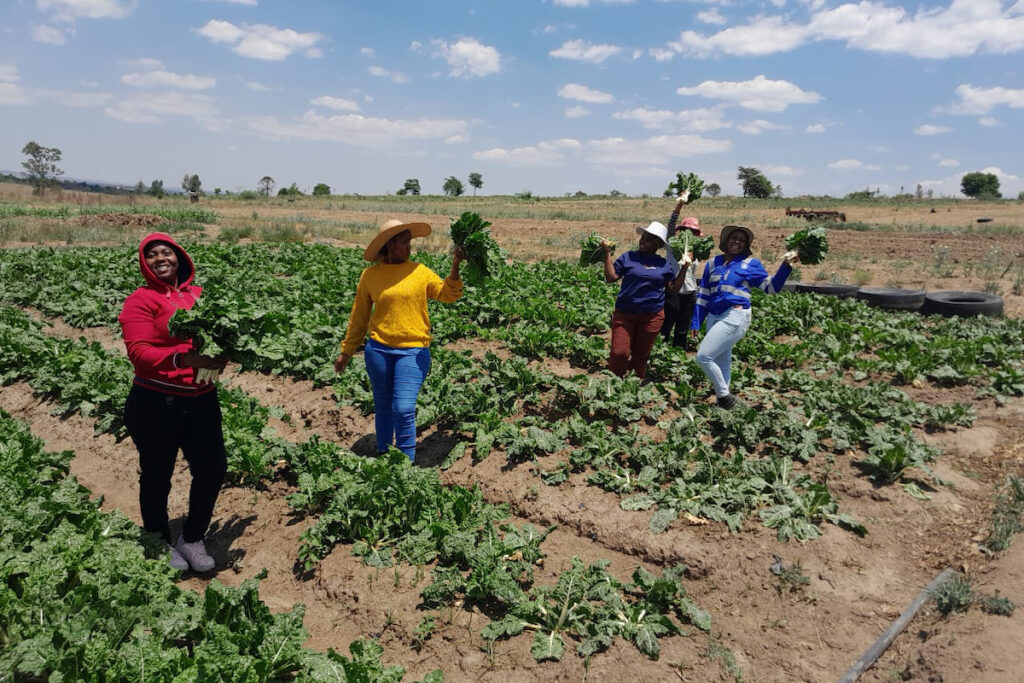
The Future of the Cooperative Financial Model
As we look toward the future, the financial relevance of the farm cooperative is only increasing. The rise of “Big Data” in agriculture, the need for massive investments in carbon-sequestration technologies, and the increasing complexity of global supply chains require more capital than ever before.
Cooperatives are now evolving into sophisticated financial hubs. They are exploring “New Generation Cooperatives” (NGCs), which allow for more fluid trade of equity shares and more rigid delivery contracts to ensure high-quality supply chains. They are also leading the way in “Green Finance,” utilizing their collective scale to access carbon credit markets that would be inaccessible to a single 500-acre farm.
In conclusion, a farm cooperative is far more than a social arrangement; it is a sophisticated business strategy. By focusing on collective equity, patronage-based returns, and cost-efficiency, cooperatives provide individual farmers with the financial “heavier hitting” power of a corporation while maintaining the independence of the family farm. For any professional looking at the intersection of finance and agriculture, the cooperative model stands as a masterclass in how to leverage collective resources for individual financial success.
aViewFromTheCave is a participant in the Amazon Services LLC Associates Program, an affiliate advertising program designed to provide a means for sites to earn advertising fees by advertising and linking to Amazon.com. Amazon, the Amazon logo, AmazonSupply, and the AmazonSupply logo are trademarks of Amazon.com, Inc. or its affiliates. As an Amazon Associate we earn affiliate commissions from qualifying purchases.