
In the realm of modern technology—ranging from professional recording studios to the sleek interfaces of mobile applications—few components are as ubiquitous yet understated as the fader. At its simplest, a fader is a type of transducer or control mechanism that allows for the gradual increase or decrease of an electrical signal’s intensity. Unlike a simple on/off switch, which offers a binary choice, a fader provides a spectrum of control, allowing for nuance, precision, and artistry.
Whether you are looking at a multi-million dollar mixing console in a legendary recording studio or sliding your finger across a smartphone screen to adjust brightness, you are interacting with the concept of the fader. Understanding what a fader is, how it functions, and its evolution from mechanical hardware to sophisticated software is essential for anyone interested in audio engineering, video production, or user interface design.
Understanding the Mechanics: How Physical Faders Work
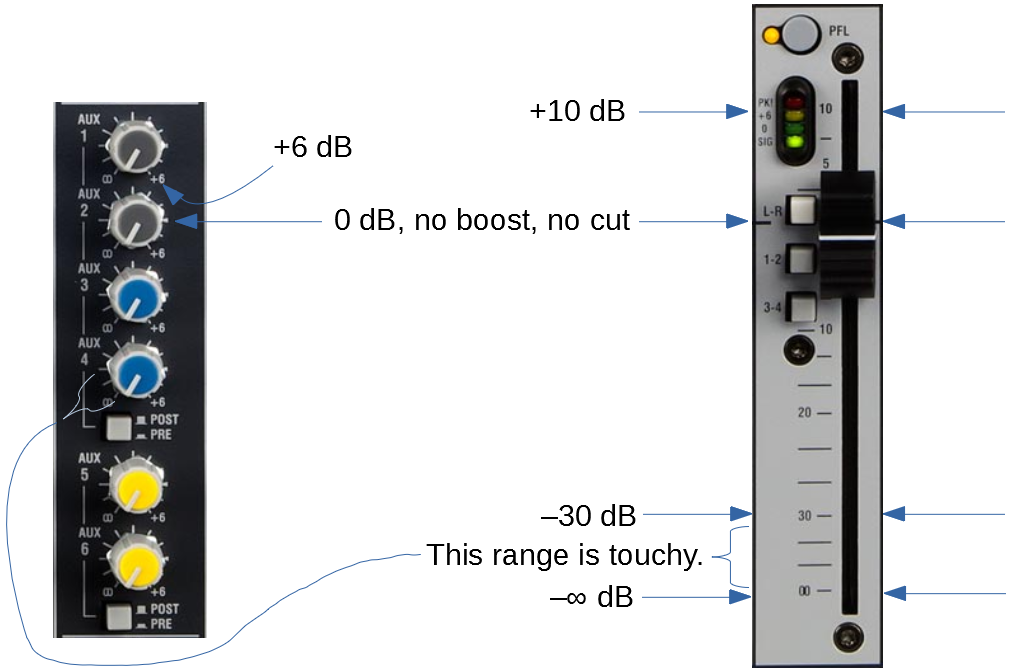
Before the digital revolution, faders were strictly mechanical devices. To understand the technology today, we must first look at the physical architecture that defined the “fader” as we know it. Unlike a rotary potentiometer (a knob), which requires a circular motion, a fader uses a linear motion. This design is not merely aesthetic; it is ergonomic and functional.
Potentiometers and Electrical Resistance
At the heart of a traditional analog fader is a linear potentiometer. As the user slides the “fader cap” along a track, a “wiper” moves across a resistive element. By changing the position of the wiper, the amount of resistance in the circuit changes, which in turn alters the voltage of the signal passing through it. In audio, this translates to a change in volume.
The quality of a physical fader is often measured by its “throw”—the physical distance it can travel. A standard “long-throw” fader (often 100mm) allows for incredibly precise adjustments, which is why they are the gold standard in professional mixing consoles.
Linear vs. Logarithmic Tapers
One of the most critical aspects of fader technology is the “taper,” or the relationship between the position of the slider and the actual change in the signal. Because human hearing is logarithmic rather than linear, audio faders are specifically engineered with a logarithmic (or “audio”) taper. This ensures that as you move the fader, the increase in perceived volume feels smooth and natural to the human ear. If a fader used a simple linear taper for audio, the volume would seem to jump drastically at one end of the scale and barely change at the other.
Motorized Faders and Modern Automation
In contemporary high-end tech, physical faders have become “smart.” Motorized faders are equipped with small servo motors and touch-sensitive circuitry. When a sound engineer plays back a recorded session, the faders move automatically on the desk, reflecting the automation data stored in the computer. This marriage of mechanical engineering and software control allows for complex, repeatable performances that were impossible in the early days of analog recording.
Faders in the Digital Age: Software and Virtual Interfaces
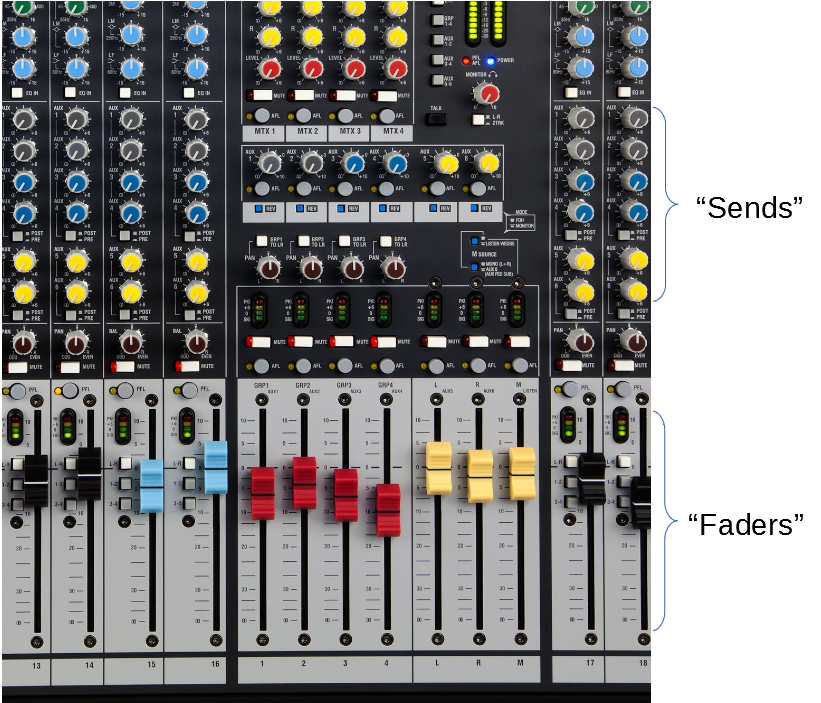
As technology migrated from hardware racks to “In-The-Box” (ITB) workflows, the fader was reimagined for the digital screen. Today, most people interact with virtual faders within Digital Audio Workstations (DAWs), video editing suites, and even everyday consumer apps.
The Role of Faders in DAWs
In software like Pro Tools, Logic Pro, or Ableton Live, the virtual fader is the central tool for balancing a mix. While they lack the tactile feedback of hardware, virtual faders offer advantages that physical ones cannot. For instance, digital faders can be grouped infinitely, allowing a single movement to control dozens of tracks simultaneously with mathematical precision.
Furthermore, digital faders operate within the realm of Floating Point math. In a 32-bit or 64-bit digital environment, faders provide a dynamic range that exceeds the capabilities of any physical circuit, allowing for “clean” gain adjustments without the introduction of mechanical noise or “crackle” common in aging hardware.
Digital Signal Processing (DSP) and Precision
Software faders are essentially visual representations of mathematical algorithms. When you move a fader in a software app, you are telling the Digital Signal Processing (DSP) engine to multiply the signal’s sample values by a specific coefficient. This allows for features like “VCA Groups” (Voltage Controlled Amplifiers), where the relationship between multiple faders can be maintained perfectly across a complex project.
Touchscreens and Haptic Feedback
The rise of tablets and smartphones has introduced a new way to interact with faders. On a touchscreen, a fader is a UI (User Interface) element that tracks the Y-axis movement of a finger. To bridge the gap between the glass screen and the physical world, developers are increasingly using haptic feedback—subtle vibrations—to simulate the “click” or “resistance” of a real fader, making the digital experience more intuitive for professionals.
Applications Beyond Audio: Video, Lighting, and Industrial Design
While the term “fader” is most closely associated with sound, the technology is a cornerstone of various other tech sectors. Any industry that requires the smooth transition from one state to another utilizes fader technology.
Video Switching and Transitions
In live television broadcasting and video editing, faders are used to manage transitions. A “T-Bar” is a specialized type of fader found on video switchers. It allows a director to manually “fade” between two video sources, creating a cross-dissolve. In software like Adobe Premiere or DaVinci Resolve, virtual faders are used for color grading, allowing editors to incrementally adjust “lift, gamma, and gain” to achieve a specific cinematic look.
DMX Lighting Control Systems
In the world of live events and theater, lighting consoles are dominated by rows of faders. Using the DMX512 protocol, these faders control everything from the brightness of a spotlight to the speed of a strobe or the movement of a motorized light head. The fader allows the lighting designer to “fade in” a scene gradually, preventing the jarring effect of lights simply snapping on or off.
UI/UX Design Principles
In broader technology circles, the “slider” (a cousin of the fader) is a fundamental element of User Experience (UX) design. Tech companies use faders for settings that don’t have a specific “right” answer but rather a “preferred” level—such as screen brightness, microphone sensitivity, or even the “intensity” of a photo filter on Instagram. The fader is the ultimate tool for user customization, providing a sense of agency and granular control over a device.
Advanced Features and Future Trends
As we look toward the future of technology, the fader continues to evolve, integrating with Artificial Intelligence and new hardware materials to become even more responsive.
AI-Driven Automation and Smart Mixing
We are entering an era where faders can “move themselves” based on intelligent analysis. AI tools are now available that can listen to a piece of audio and automatically adjust faders to prevent “clipping” or to ensure that a vocal remains audible over a loud background track. This “auto-leveling” technology uses the logic of a fader to perform real-time adjustments, saving hours of manual labor for content creators and podcasters.
Optical and Magnetic Fader Technology
To solve the problem of mechanical wear and tear, tech manufacturers are developing “contactless” faders. Traditional faders eventually wear out because the wiper physically rubs against the track. New optical faders use infrared light to detect position, while magnetic faders (like those found in high-end DJ mixers) use Hall Effect sensors to track movement without any physical contact. These technologies ensure that the fader will never become “scratchy” or fail due to dust and friction, representing a significant leap in hardware longevity.
The Integration of IoT and Remote Control
With the rise of the Internet of Things (IoT), faders are no longer tethered to the device they control. Technicians can now use a tablet to move virtual faders that control massive sound systems or industrial lighting arrays from across a stadium via Wi-Fi. This decoupling of the control interface from the processing hardware is a major trend in professional tech, allowing for more flexible and mobile workflows.
Conclusion
From the sliding potentiometers of the 1950s to the AI-augmented virtual sliders of today, the fader remains a cornerstone of human-machine interaction. It is a testament to the power of elegant design; it takes a complex electrical or mathematical process and distills it into a simple, intuitive motion.
Whether you are a professional engineer or a casual tech user, the fader provides the precision necessary to turn “too much” or “too little” into “just right.” As we move further into a world of gesture-based controls and automated systems, the fundamental concept of the fader—the ability to move smoothly through a range of possibilities—will continue to be an indispensable tool in our technological toolkit.
aViewFromTheCave is a participant in the Amazon Services LLC Associates Program, an affiliate advertising program designed to provide a means for sites to earn advertising fees by advertising and linking to Amazon.com. Amazon, the Amazon logo, AmazonSupply, and the AmazonSupply logo are trademarks of Amazon.com, Inc. or its affiliates. As an Amazon Associate we earn affiliate commissions from qualifying purchases.