
Expected value is a fundamental concept in the world of finance, investing, and economic decision-making. Far from being an abstract statistical curiosity, it serves as a powerful tool for individuals and institutions to quantify the average outcome of a future event when faced with uncertainty. Understanding expected value empowers better financial planning, smarter investment choices, and more robust business strategies, offering a crucial lens through which to evaluate opportunities and risks.
The Core Concept of Expected Value in Finance
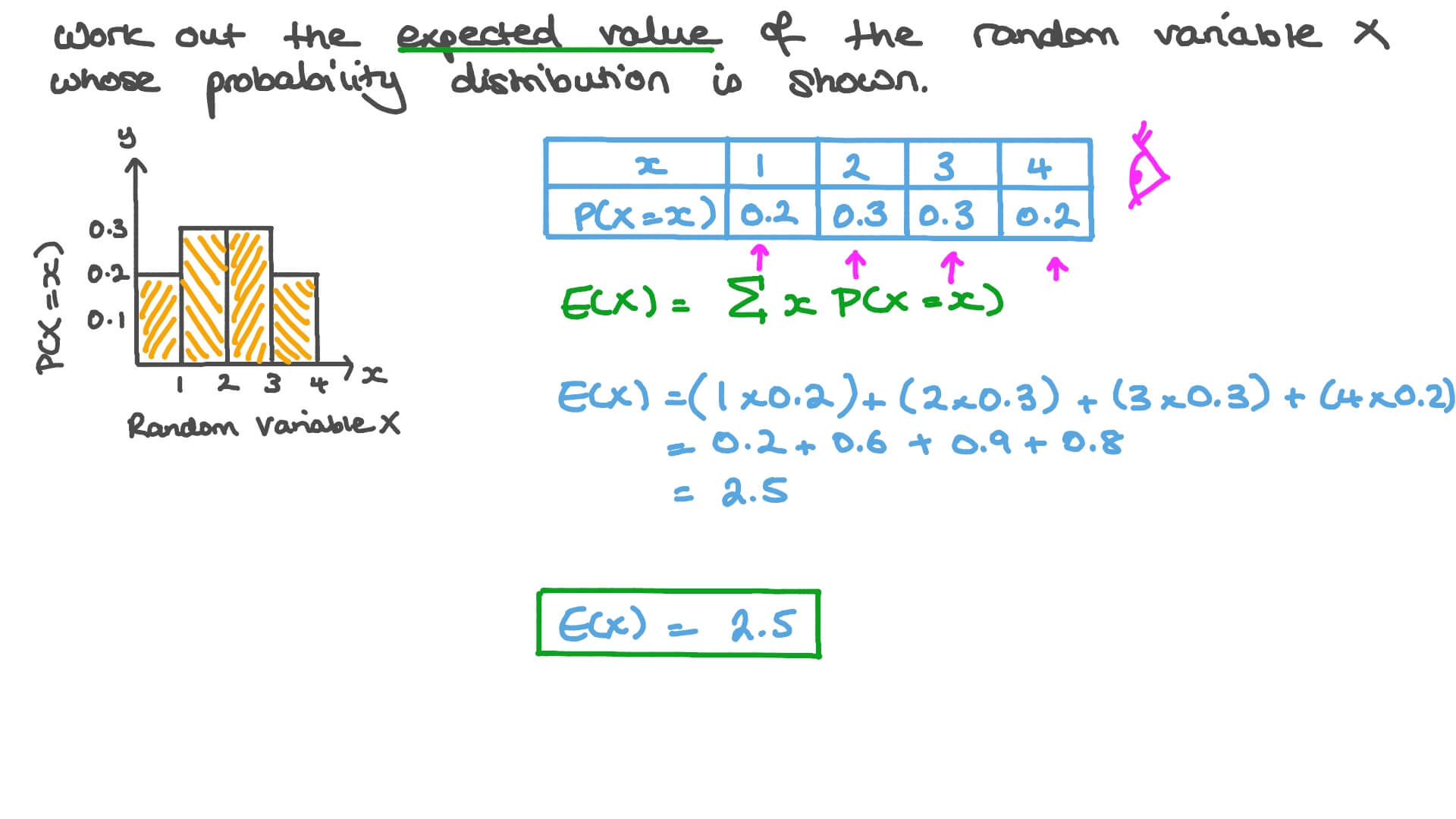
At its heart, expected value (EV) represents the long-term average outcome of a random variable. In financial contexts, this variable often relates to the potential returns or losses of an investment, the profitability of a business venture, or the cost-benefit analysis of a particular financial decision. It’s not about predicting a single future event with certainty, but rather about calculating the weighted average of all possible outcomes, with each outcome weighted by its probability of occurrence.
Defining Expected Value
Imagine you’re contemplating a financial decision with multiple possible outcomes, each with a specific likelihood. The expected value helps you answer: “If I were to make this decision many, many times, what would be my average gain or loss per decision?” It’s a probabilistic forecast that provides a single, representative figure for the ‘average’ result over the long run.
For instance, consider a financial asset that could either increase in value by 20% or decrease by 10% over a year. If you knew the probability of each outcome, expected value would allow you to calculate the average return you could anticipate from holding that asset repeatedly over many such periods. It’s a measure of what you can statistically expect to happen, not what will happen in a single instance.
Probability and Outcomes
The two pillars of expected value are the potential outcomes and their associated probabilities.
- Outcomes: These are the distinct results that can occur from a financial event or decision. In finance, outcomes are typically expressed as monetary values – profits, losses, returns, costs, or revenues. For example, an investment might have outcomes like “$1,000 gain,” “$500 loss,” or “break even.”
- Probabilities: Each outcome must have a probability assigned to it, representing the likelihood of that specific outcome occurring. Probabilities are expressed as percentages or decimals (e.g., 50% or 0.50). A crucial rule is that the sum of the probabilities for all possible outcomes must always equal 1 (or 100%). These probabilities can be derived from historical data, statistical models, market analysis, or expert judgment.
The interplay between these two components is what makes expected value such a powerful analytical tool. It forces a structured consideration of all possibilities, moving beyond simple best-case/worst-case scenarios to a more nuanced, probability-weighted assessment.
Calculating Expected Value: A Practical Approach
The calculation of expected value is straightforward, making it highly applicable across various financial scenarios. It involves multiplying each possible outcome by its probability and then summing these products.
Formula Breakdown
The general formula for expected value (EV) is:
EV = (Outcome₁ × Probability₁) + (Outcome₂ × Probability₂) + … + (Outcomeₙ × Probabilityₙ)
Where:
- Outcome₁, Outcome₂, …, Outcomeₙ are the different possible financial results (e.g., profit, loss, return).
- Probability₁, Probability₂, …, Probabilityₙ are the respective probabilities of each outcome occurring.
Simple Investment Example
Let’s illustrate with a common investment scenario. Suppose you’re considering investing $10,000 in a new venture, and you’ve analyzed the following potential outcomes over a year:
- Outcome 1 (Success): A 60% chance (0.60) of gaining $5,000.
- Outcome 2 (Moderate): A 25% chance (0.25) of gaining $1,000.
- Outcome 3 (Failure): A 15% chance (0.15) of losing $3,000.
Notice that the probabilities sum to 0.60 + 0.25 + 0.15 = 1.00.
Now, let’s calculate the Expected Value:
EV = ($5,000 × 0.60) + ($1,000 × 0.25) + (-$3,000 × 0.15)
EV = ($3,000) + ($250) + (-$450)
EV = $2,800
The expected value of this investment is $2,800. This suggests that, on average, if you were to make this exact type of investment many times, you would expect to gain $2,800 per investment. A positive expected value indicates that, statistically, the venture is worthwhile over the long run.
Expected Value in Investment Decisions

Expected value is an indispensable tool for investors navigating the inherent uncertainties of financial markets. It helps quantify potential returns and risks, informing decisions from individual stock selection to complex portfolio construction.
Evaluating Risky Assets
For individual assets like stocks, bonds, or real estate, investors can use expected value to compare different opportunities. By estimating the potential future values (outcomes) and their probabilities, an investor can calculate the expected return for each asset. An asset with a higher positive expected return is generally more attractive, assuming similar levels of risk. For example, comparing two stocks, one with an EV of 8% annual return and another with 6%, suggests the first is statistically more promising.
Portfolio Management
Beyond single assets, expected value plays a critical role in strategic portfolio management. Investors use it to assess the expected return of an entire portfolio, which is the sum of the expected returns of its constituent assets, weighted by their allocation percentages. This allows for optimization, where investors can adjust their asset allocation to achieve a desired expected return given their risk tolerance. Diversification strategies often aim to maintain a high expected return while reducing overall portfolio volatility.
Option Pricing and Derivatives
In the realm of derivatives, particularly options, expected value forms a cornerstone of pricing models. The value of an option depends on the probability of the underlying asset’s price moving in a certain direction, reaching a certain level, and the time left until expiration. Sophisticated models, like the Black-Scholes model, implicitly (or explicitly in some binomial models) use expected value concepts to determine the fair price of an option by considering the probability-weighted outcomes of the underlying asset’s future price movements. Investors and traders use expected value to evaluate whether an option is underpriced or overpriced relative to its statistical potential.
Applying Expected Value to Personal Finance and Business Strategy
The utility of expected value extends beyond investment portfolios, offering significant insights into personal financial planning and core business operations.
Insurance and Risk Management
For personal finance, expected value is fundamental to understanding insurance. An insurance policy is essentially a contract where you pay a premium to transfer risk. From the insurer’s perspective, they calculate the expected value of payouts for a large pool of policyholders. If the expected payout (cost) per policyholder is, say, $500 per year, they will charge a premium higher than this (e.g., $700) to cover administrative costs and generate a profit. For the individual, buying insurance has a negative expected value in purely financial terms (you expect to pay more in premiums than you receive in claims, on average), but it provides peace of mind and protection against catastrophic losses that you couldn’t otherwise afford, demonstrating that not all decisions are purely financially rational.
Project Valuation and Capital Budgeting
Businesses use expected value extensively in capital budgeting and project valuation. When deciding whether to invest in a new project, expand operations, or launch a new product, companies face various uncertainties. By estimating the potential profits or losses from a project under different market conditions (outcomes) and assigning probabilities to these conditions, firms can calculate the expected net present value (NPV) or expected return on investment (ROI) for each project. This allows management to prioritize projects with the highest positive expected value, ensuring resources are allocated efficiently to ventures most likely to generate long-term value for shareholders.
Online Ventures and Side Hustles
Even for individuals pursuing online income or side hustles, expected value can be a powerful decision-making tool. Considering starting a dropshipping business, a freelance service, or investing in a crypto project? Estimate the potential monthly income (or loss) under different scenarios (e.g., high demand, moderate demand, low demand) and assign probabilities to these scenarios. Calculating the expected monthly income or profit can help you decide which venture is most financially promising and worth dedicating your time and capital to, rather than relying solely on optimism or anecdotal evidence.
Limitations and Nuances of Expected Value
While incredibly powerful, expected value is not without its limitations. Acknowledging these nuances is crucial for its effective application in financial decision-making.
Not a Guarantee
The most important caveat is that expected value is an average over the long run; it is not a guarantee of a specific outcome in a single trial. If you invest in a project with an expected value of $2,800, you will either gain $5,000, gain $1,000, or lose $3,000 – you will never gain exactly $2,800. This is particularly relevant for one-off, high-stakes decisions where the average outcome doesn’t truly reflect the potential for ruin.
Risk Aversion and Utility
Expected value does not account for an individual’s or firm’s attitude toward risk. Some investors are risk-averse, meaning they prefer a certain smaller gain over an uncertain larger gain with the same expected value. The concept of “utility” helps explain this, as the emotional value of an extra dollar might decrease as one’s wealth increases. A $1,000 loss might be catastrophic for someone with $5,000 but merely an inconvenience for someone with $1 million, even if the expected value calculation remains the same. Therefore, expected value should be considered alongside an understanding of one’s own risk tolerance and financial capacity.

Data Accuracy
The accuracy of an expected value calculation is directly dependent on the accuracy of the probabilities and estimated outcomes. If the probabilities are mere guesses or the outcomes are poorly estimated, the resulting expected value will be misleading. In finance, assigning accurate probabilities, especially to future events, can be challenging and often relies on historical data, statistical models, or expert judgment, which all carry inherent uncertainties. Over-optimistic or pessimistic biases in probability assignments can skew results significantly.
Despite these limitations, expected value remains an indispensable analytical tool. When used thoughtfully, it provides a robust, quantitative framework for evaluating financial opportunities, managing risk, and making more informed decisions in an inherently uncertain world.
aViewFromTheCave is a participant in the Amazon Services LLC Associates Program, an affiliate advertising program designed to provide a means for sites to earn advertising fees by advertising and linking to Amazon.com. Amazon, the Amazon logo, AmazonSupply, and the AmazonSupply logo are trademarks of Amazon.com, Inc. or its affiliates. As an Amazon Associate we earn affiliate commissions from qualifying purchases.