
In the rapidly evolving landscape of modern technology, the term “embed” has transitioned from a niche web development command to a fundamental concept that powers everything from social media feeds to the inner workings of Large Language Models (LLMs). At its core, an embed is a way to integrate a piece of content, a functional tool, or a complex data structure into another environment without requiring the user to leave the original interface.
Whether you are a developer looking to streamline a website’s user experience or a data scientist working on high-dimensional vector spaces, understanding the nuances of embedding is crucial. This article explores the two primary pillars of “embeds” in the tech world: web-based content integration and the sophisticated world of machine learning embeddings.
The Fundamentals of Web Embedding: Bridging the Digital Divide
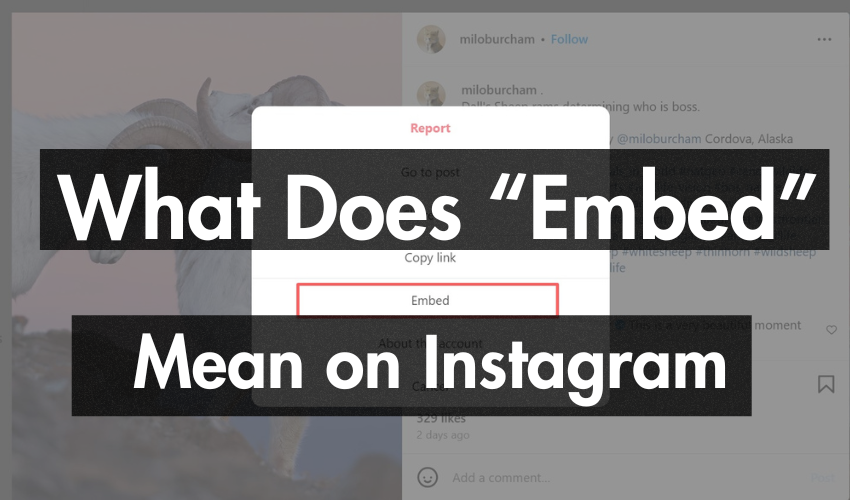
For most internet users, an “embed” is the window through which they watch a YouTube video on a blog post or view a live tweet inside a news article. In the context of web development, embedding is the process of placing external content into a host webpage. Instead of hosting the file itself—which would consume significant bandwidth and storage—the developer uses a snippet of code that calls upon the source server to render the content in real-time.
The Anatomy of an iFrame
The most common method for web embedding is the <iframe> (inline frame). An iFrame acts as a portal, essentially displaying a completely different website or media player within a specific coordinate on your page. This technology allows for seamless interoperability. For instance, when you embed a Google Map, you aren’t just looking at a static image; you are interacting with Google’s live API, allowing for zooming, scrolling, and real-time traffic updates—all while remaining on the host site.
Beyond iFrames: The Evolution of
While iFrames are the gold standard, HTML5 also provides the <embed> and <object> tags. Historically, these were used for external plugins like Adobe Flash or Silverlight. In the modern tech stack, however, these tags are more frequently used to integrate PDFs or interactive SVG graphics. The shift away from plugins toward native browser support has made embedding faster and more secure, reducing the “weight” of web pages and improving mobile responsiveness.
The Technical Logic of Hotlinking vs. Embedding
It is important to distinguish embedding from “hotlinking.” Hotlinking is often considered poor etiquette (or even theft) where an image is linked directly from another server to save space. Embedding, conversely, is usually done via official APIs or provided “embed codes” that the content creator intends to be shared. This creates a symbiotic relationship: the host site gains rich content, and the source site (like YouTube or SoundCloud) gains views and data insights.
The Strategic Importance of Multimedia and Social Integration
In the age of the “attention economy,” keeping a user on your platform is the highest priority. This is where the strategic application of embeds becomes a vital tool for software developers and content creators alike.
Enhancing User Experience (UX) and Retention
Embeds serve as a friction-reducing mechanism. If a tutorial website requires a user to click a link to watch a video on a separate tab, the likelihood of that user returning to finish the article drops significantly. By embedding the video directly into the text, the developer creates a “sticky” environment. This keeps the session duration high and ensures that the user’s focus remains centered on the host’s brand rather than getting lost in the “rabbit hole” of a third-party platform.
Social Proof and Real-Time Data
For modern SaaS (Software as a Service) platforms and e-commerce sites, embedding social proof is a powerful psychological tool. Integrating live Instagram feeds or Twitter testimonials via embeds provides a sense of “live-ness” that static images cannot replicate. Furthermore, financial tools often embed real-time stock tickers or currency converters. These embeds are more than just visual elements; they are functional software components that provide utility without the developer having to build complex financial engines from scratch.
The SEO Implications of Embedding
There is a common misconception that embedding content might hurt SEO (Search Engine Optimization) because the content technically lives on another server. However, modern search algorithms recognize the value of rich media. A well-placed embed that improves a user’s “time-on-page” signals to search engines that the content is high-quality and relevant. While the crawler may not credit the host site for the text inside an iFrame, the overall behavioral metrics of the page are significantly bolstered.

Machine Learning and Vector Embeddings: The AI Revolution
While web embeds handle how we see content, another type of embed—the Vector Embedding—is currently revolutionizing how computers understand content. In the realm of Artificial Intelligence and Data Science, an embedding is a way to represent words, images, or even complex user behaviors as a series of numbers (a vector) in a high-dimensional space.
Converting Language into Mathematics
To a computer, the word “apple” is just a string of characters. It doesn’t know if an apple is a fruit or a tech company. Through a process called “Embedding,” AI models like GPT-4 or Claude convert that word into a vector—perhaps a list of 1,536 different numbers. In this multi-dimensional map, words with similar meanings are placed closer together. “Apple” and “Pear” would be mathematically close, while “Apple” and “Spaceship” would be far apart. This allows AI to perform semantic searches, understanding the intent behind a query rather than just matching keywords.
Applications in RAG (Retrieval-Augmented Generation)
One of the most significant trends in tech today is RAG. Businesses are embedding their entire internal documentation—thousands of PDFs and spreadsheets—into vector databases. When a user asks a chatbot a question, the system converts that question into an embedding, finds the most mathematically similar sections of the internal documents, and feeds that specific context to the AI. This process prevents “hallucinations” and allows AI tools to serve as expert consultants for specific corporate datasets.
Image and Audio Embeddings
The concept isn’t limited to text. Modern facial recognition software works by creating an embedding of your face. It doesn’t store a photo; it stores a mathematical signature of the distances between your eyes, nose, and mouth. Similarly, music streaming services use audio embeddings to recommend songs. By analyzing the “vector” of a song’s rhythm, key, and instrumentation, the algorithm can find “mathematically similar” tracks, creating the seamless recommendation engines we use daily.
Digital Security and the Risks of Embedding
As powerful as embeds are, they are not without risk. In the world of digital security, embedding third-party content is often viewed as a potential “attack vector.”
Cross-Site Scripting (XSS) and Clickjacking
When you embed content from a third party, you are essentially giving their code permission to run on your site. If the source site is compromised, an attacker could use an iFrame to inject malicious scripts into your website (XSS) or overlay invisible buttons to trick users into clicking something they didn’t intend to (Clickjacking). This is why modern browsers have implemented strict security headers, such as Content Security Policy (CSP), which allow developers to dictate exactly which domains are “trusted” for embedding.
The Privacy Trade-off
Embeds often act as a tracking mechanism. When a user visits a page with a Facebook “Like” button or a YouTube video, those platforms can drop cookies into the user’s browser, tracking their journey across the web. For tech companies operating in regions with strict data privacy laws like GDPR (General Data Protection Regulation), managing these embeds requires careful implementation of “consent walls,” where the embed only loads once the user has agreed to third-party tracking.
The Future of Embeds: Interoperability and the “Modular” Web
The future of technology is moving toward a more modular, interconnected ecosystem. We are seeing the rise of “micro-frontends,” where a single web application is actually a collection of different embedded modules managed by different teams.
No-Code and the Democratization of Embedding
The rise of tools like Notion, Airtable, and Canva has democratized the use of embeds. In these platforms, “embedding” is the primary way users build workflows. A Notion page might embed a Google Calendar, a Figma design, and a Slack thread. This “Lego-brick” approach to building digital workspaces means that the ability to understand and utilize embeds is no longer just a skill for developers, but a core competency for any digital professional.
The Singularity of Web and AI Embeds
We are approaching a point where web embeds and AI embeddings will merge. Imagine a website that uses AI embeddings to analyze a user’s behavior in real-time and then dynamically “embeds” the specific tools or content they need at that exact moment. This level of personalization—driven by mathematical data embeddings and delivered via web-based integration—represents the next frontier of the user experience.
In conclusion, an “embed” is much more than a snippet of code or a link to a video. It is the connective tissue of the modern internet. From the simple iFrames that allow us to share media to the complex vector spaces that allow machines to think, embedding is the technology that makes the digital world feel cohesive, interactive, and intelligent. Understanding how to leverage these tools safely and effectively is essential for anyone looking to navigate the future of the tech landscape.
aViewFromTheCave is a participant in the Amazon Services LLC Associates Program, an affiliate advertising program designed to provide a means for sites to earn advertising fees by advertising and linking to Amazon.com. Amazon, the Amazon logo, AmazonSupply, and the AmazonSupply logo are trademarks of Amazon.com, Inc. or its affiliates. As an Amazon Associate we earn affiliate commissions from qualifying purchases.