
In the rapidly evolving landscape of modern technology, where components are shrinking to the atomic level and processing speeds are reaching unprecedented heights, a silent and invisible force remains one of the greatest threats to hardware integrity: Electrostatic Discharge (ESD). While most people recognize ESD as the harmless “zap” felt when touching a doorknob after walking across a carpet, in the realm of technology, this phenomenon is a catastrophic event. For engineers, data center managers, and hardware developers, understanding and mitigating ESD is not just a technical requirement—it is a foundational pillar of digital reliability and security.
The Science and Mechanism of ESD in Electronics
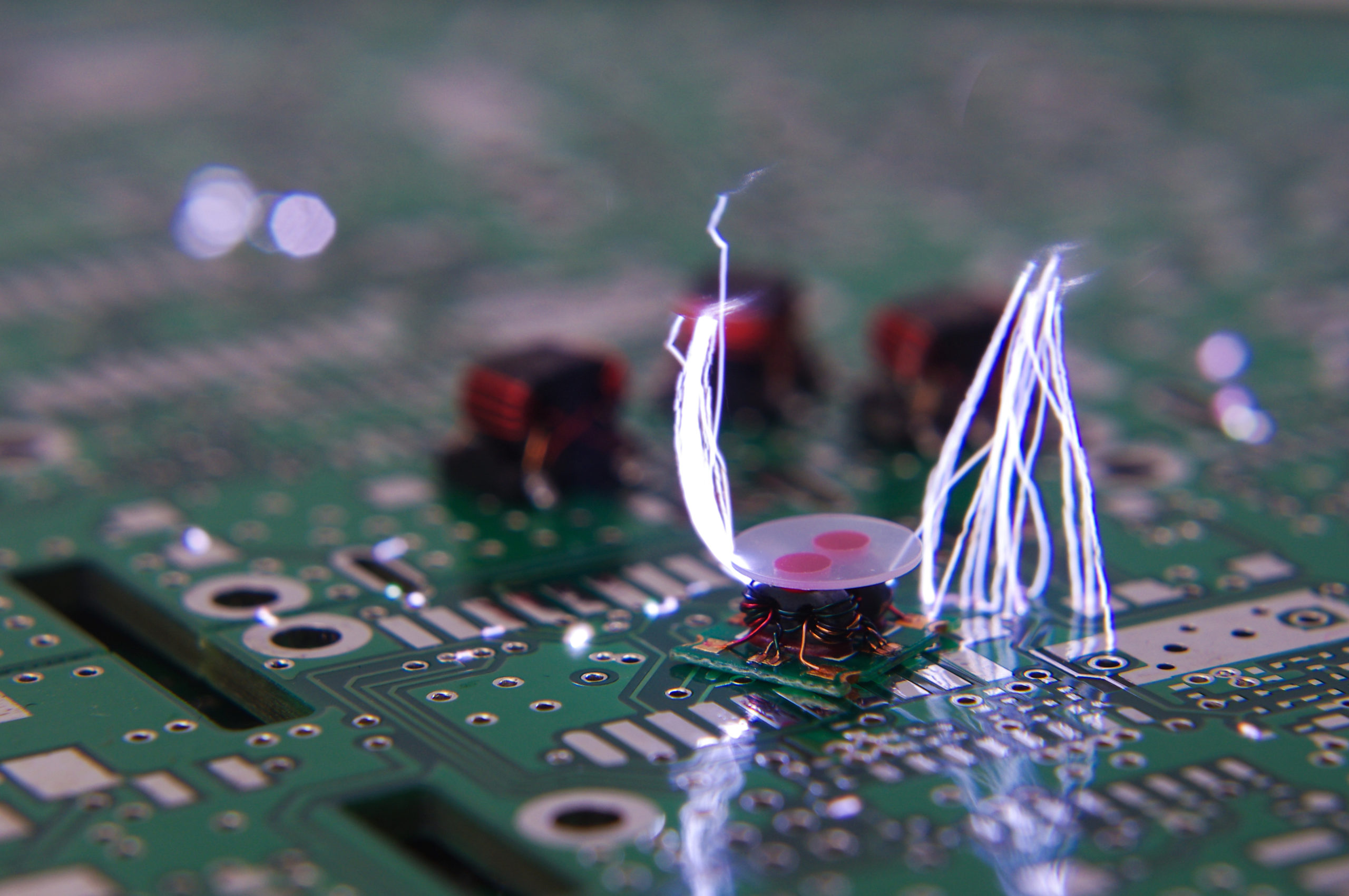
At its core, Electrostatic Discharge is the sudden flow of electricity between two electrically charged objects caused by contact, an electrical short, or dielectric breakdown. To understand its impact on technology, we must first look at the physics of how these charges build up and why they are so lethal to integrated circuits.
The Physics of Static Charge and the Triboelectric Effect
Static electricity is usually generated through the triboelectric effect, a process where certain materials become electrically charged after they come into contact with another different material and are then separated. In a tech environment, this happens constantly: a technician’s sleeve brushing against a plastic casing, a circuit board sliding out of a shipping bag, or even airflow moving over insulating surfaces. When these surfaces part, one gains electrons while the other loses them, creating a potential difference.
How Discharge Occurs in Tech Components
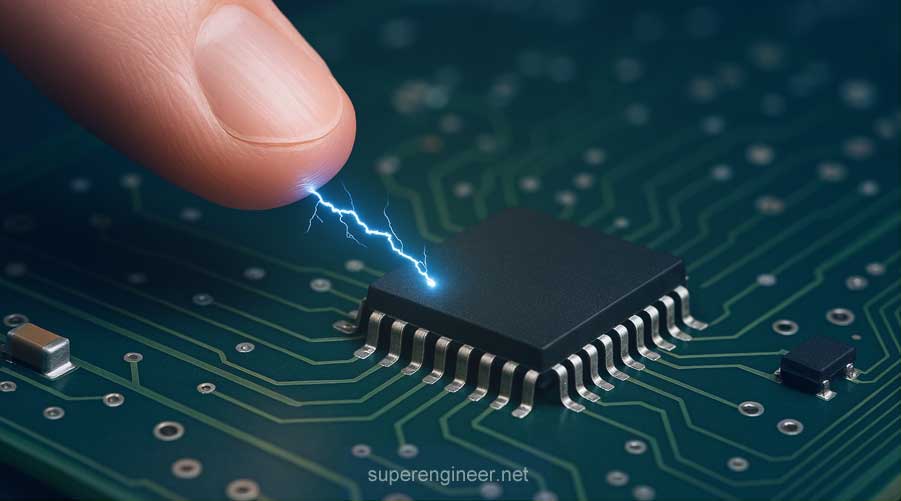
When a charged object—such as a human finger or a metallic tool—comes close to a sensitive electronic component, the accumulated potential energy seeks a path to equilibrium. If the voltage is high enough, it will “jump” the air gap or surge through the conductive traces of a microchip. While a human may not feel a discharge until it reaches approximately 3,000 volts, high-tech components like MOSFETs (Metal-Oxide-Semiconductor Field-Effect Transistors) can be permanently damaged by as little as 10 to 30 volts.
Latent vs. Catastrophic Failures
The tech industry classifies ESD damage into two categories. Catastrophic failure is immediate; the device simply stops working because a physical path has been melted into the silicon. However, the more insidious threat is latent failure. In these cases, the ESD event weakens the component without destroying it entirely. The device passes initial quality tests but fails prematurely once deployed in the field. This “walking wounded” scenario is a nightmare for tech reliability, leading to unpredictable system crashes and expensive warranty returns.
Protecting Digital Infrastructure: ESD in Data Centers and Manufacturing
As our reliance on cloud computing and Big Data grows, the infrastructure supporting these services must be shielded from environmental hazards. ESD is a primary concern in the manufacturing of semiconductors and the maintenance of massive data centers that house the world’s most sensitive hardware.
The Vulnerability of Modern Semiconductors
The trend in technology has always been toward miniaturization. As transistors become smaller, the insulating layers within microchips become thinner. Modern 3nm and 5nm process nodes are incredibly delicate. A discharge that would have been negligible twenty years ago is now powerful enough to punch a hole through the microscopic gates of a modern processor. This vulnerability means that the entire supply chain—from the silicon wafer fab to the final assembly line—must be an ESD-protected area (EPA).
Cleanroom Standards and Anti-Static Environments
To combat ESD, tech manufacturing facilities employ rigorous environmental controls. These environments utilize specialized flooring made of conductive materials that bleed static charge into the ground. Humidity is also strictly monitored; dry air promotes static buildup, so maintaining a precise level of moisture in the air is a critical tech-ops strategy. Furthermore, industry standards such as ANSI/ESD S20.20 provide a framework for organizations to design and implement ESD control programs that ensure the longevity of high-end hardware.
Protective Gear and Tools (ESDS Equipment)
Technicians working with Electrostatic Discharge Sensitive (ESDS) devices must adhere to strict protocols. This includes wearing ESD-safe smocks with conductive fibers, using grounded wrist straps, and ensuring that all tools—from soldering irons to screwdrivers—are ESD-certified. In data centers, hot-swapping server blades requires the use of specialized anti-static packaging and handling procedures to prevent a single spark from taking down an entire rack of high-performance computing nodes.

ESD and Digital Security: The Hardware Perspective
While ESD is often viewed through the lens of physical maintenance, it has significant implications for digital security and system resilience. In an era where hardware-level hacks and side-channel attacks are becoming more sophisticated, the integrity of the physical layer is paramount.
Hardware Trojans and Side-Channel Vulnerabilities
In some advanced cybersecurity research, intentional electrostatic stress is studied as a method to induce faults in hardware. By triggering controlled electrical “glitches,” attackers may attempt to bypass security protocols or extract cryptographic keys from a device’s memory. While this is a highly specialized field, it highlights why tech developers prioritize robust ESD shielding—not just for longevity, but to prevent the hardware from behaving in unpredictable, exploitable ways.
Resilience in Critical Infrastructure
For technology deployed in critical sectors—such as aerospace, medical devices, and telecommunications—ESD protection is a matter of safety. A router in a telecom hub or a controller in an automated hospital wing must be immune to the static generated by personnel and environmental factors. If an ESD event causes a “bit flip” or a temporary logic error in a critical system, the result could be a total system lockout or the corruption of sensitive data. Tech firms focus heavily on “Hardening” their designs, using Transient Voltage Suppressors (TVS) and shielding to ensure that the digital logic remains isolated from the physical chaos of static electricity.
Emerging Tech Trends and the Evolution of ESD Protection
As we look toward the future of technology—incorporating Artificial Intelligence, Edge Computing, and Wearables—the strategies for managing ESD are evolving. We are moving away from passive protection toward more active, intelligent monitoring systems.
Miniaturization and the Shrinking Margin for Error
The push for “More than Moore” (adding functionality to chips rather than just shrinking them) introduces new ESD challenges. 2.5D and 3D chip stacking technologies, which place layers of circuits on top of one another, create complex thermal and electrical environments. Because these layers are so dense, traditional ESD protection circuits can take up too much valuable real estate on the chip. Engineers are now forced to innovate with new materials and thinner, more efficient protection diodes to keep up with the demands of next-generation AI accelerators.
AI-Driven Monitoring Systems for ESD Prevention
The “Smart Factory” or Industry 4.0 movement is bringing AI into the fight against ESD. Advanced sensors can now monitor the electrostatic potential of a room in real-time, sending data to AI models that predict when an ESD event is likely to occur based on movements, airflow, and humidity changes. Instead of reacting to damage, tech companies can now use predictive analytics to pause production or alert technicians before a sensitive component is ever put at risk.
The Rise of Wearables and IoT
Consumer technology is also seeing a shift. As we wear more tech—smartwatches, fitness trackers, and even smart clothing—devices are constantly exposed to the static-heavy environment of human skin and fabric. The challenge for tech designers is to create devices that are both highly sensitive to bio-signals and incredibly rugged against the thousands of volts of static electricity generated by a person putting on a polyester jacket. This has led to breakthroughs in flexible, conductive polymers and advanced casing designs that redirect discharge away from the internal sensors.
Conclusion: The Enduring Importance of ESD Awareness in Tech
Electrostatic Discharge might seem like a relic of basic physics, but in the world of high-tech, it is a modern adversary that requires constant vigilance. As our devices become more powerful and more integrated into our daily lives, the consequences of an ESD event grow more severe. From the manufacturing floor of a semiconductor giant to the server racks of a global cloud provider, the management of static electricity is a fundamental requirement for the digital age.
By integrating rigorous ESD protocols, investing in advanced protective materials, and leveraging AI for environmental monitoring, the tech industry continues to push the boundaries of what is possible. Ultimately, the battle against ESD is a testament to the precision of modern engineering: it is the art of protecting the world’s most powerful digital “brains” from the smallest, most invisible sparks. Understanding ESD is not just about preventing a “zap”; it is about ensuring the reliability, security, and longevity of the entire technological ecosystem.
aViewFromTheCave is a participant in the Amazon Services LLC Associates Program, an affiliate advertising program designed to provide a means for sites to earn advertising fees by advertising and linking to Amazon.com. Amazon, the Amazon logo, AmazonSupply, and the AmazonSupply logo are trademarks of Amazon.com, Inc. or its affiliates. As an Amazon Associate we earn affiliate commissions from qualifying purchases.