
Buying a car is one of the most significant financial decisions many individuals make, often second only to purchasing a home. While the sticker price and negotiation over the vehicle’s value typically dominate the conversation, an array of additional charges can quickly inflate the final “out-the-door” cost. Among these, the “document fee,” often abbreviated as “doc fee,” frequently emerges as a source of confusion and frustration for consumers. Understanding what a document fee is, why it’s charged, and how it impacts your overall finances is crucial for any savvy car buyer. This comprehensive guide will demystify the document fee, empowering you with the knowledge to navigate your next car purchase more effectively.
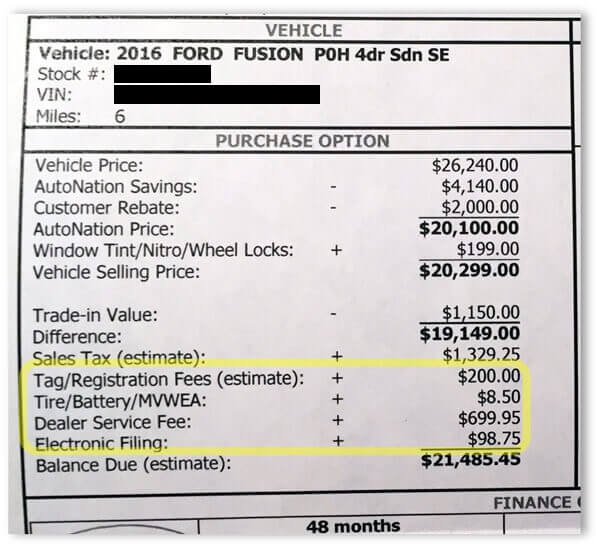
Understanding the Document Fee Landscape
The document fee is a charge imposed by dealerships to cover the costs associated with preparing and processing the paperwork involved in selling a vehicle. While seemingly straightforward, its application and specifics can vary significantly, making it a nuanced component of the car-buying process.
Definition and Purpose
At its core, a document fee is a charge for the administrative overhead incurred by the dealership to finalize a sale. This typically includes the costs of preparing the sales contract, processing title and registration documents, handling emissions certificates (where applicable), and ensuring compliance with various state and federal regulations. Essentially, it’s the dealership’s way of charging for the clerical work necessary to transfer ownership legally and correctly.
However, the nature of this fee often leads to debate. While dealerships justify it as a legitimate recovery of administrative expenses, critics argue that it can sometimes be an arbitrary charge or a profit center disguised as a necessary cost. Unlike sales tax or registration fees, which are government-mandated and pass-through costs, the doc fee is set by the individual dealership, within legal limits.
State Regulations and Variability
One of the most perplexing aspects of document fees is their variability across different states and even within states. Each state has its own regulations regarding document fees, ranging from states that cap the fee at a specific amount (e.g., $100-$300) to states with no cap at all, allowing dealerships to charge whatever they deem appropriate (provided it’s applied consistently). Some states even prohibit charging a separate document fee entirely, requiring such costs to be absorbed into the vehicle’s selling price.
This disparity means that a doc fee that is considered reasonable or even minimal in one state could be exorbitant or illegal in another. For instance, a buyer in a state with a $75 cap will experience a very different fee structure than someone in a state where doc fees routinely exceed $800. This regional variance underscores the importance of local knowledge when budgeting for a car purchase.
Common Dealer Justifications
Dealerships often provide a range of justifications for document fees. Beyond the basic administrative costs of preparing contracts and title transfers, they might include:
-
Compliance with Legal Requirements: Ensuring all documents meet state and federal legal standards, which can be complex and time-consuming.
-
Processing Loans and Leases: If financing is involved, additional paperwork for loan applications, credit checks, and lease agreements adds to the administrative burden.
-
Record Keeping: Maintaining accurate records for all sales for a specified period, as required by law.
-
Dealership Infrastructure: Indirectly, these fees might contribute to the overhead of the finance and insurance (F&I) department, which handles much of this paperwork.
While these justifications hold some truth, the key challenge for consumers lies in the lack of transparency about what exactly the fee covers and whether the amount charged truly reflects the actual cost of these services. Without a detailed breakdown, it’s difficult for buyers to ascertain the fairness of the charge.
The Financial Impact on Your Car Purchase
The document fee, while often appearing as a single line item, can have a surprisingly significant financial impact on the overall cost of your vehicle and your monthly payments. Understanding this impact is crucial for accurate budgeting and preventing unexpected financial strain.
Adding to the Bottom Line
The most direct financial impact of a document fee is its addition to the total purchase price of the car. If you’re buying a car for $25,000 and the dealership charges a $500 doc fee, your actual purchase price before taxes and registration effectively becomes $25,500. This increase, though it might seem small in relation to the car’s overall price, can quickly add up, especially when combined with other fees.
Furthermore, if you are financing your car purchase, the document fee becomes part of the amount you finance. This means you will not only pay the fee itself but also interest on that fee over the life of your loan. A $500 doc fee financed over five years at 5% interest could end up costing you an additional $60-$70 in interest, further increasing your total expenditure. For buyers on a strict budget, every dollar counts, and these cumulative costs can push a purchase beyond comfortable limits.
Hidden Costs and Transparency Issues
The term “hidden cost” is often associated with document fees, not because they are literally hidden from the buyer (they must be disclosed by law), but because their purpose and amount are often opaque until late in the negotiation process. Many buyers focus solely on the vehicle’s price, only to be presented with a comprehensive “out-the-door” price that includes a substantial doc fee they hadn’t anticipated.
This lack of upfront transparency can lead to buyer frustration and a feeling of being misled. When a buyer believes they have negotiated a great deal on the car’s price, only to find a significant doc fee added, it can erode trust and make the entire buying experience feel less straightforward. The perception of it being a “junk fee” or a “dealer profit booster” is common precisely because its justification isn’t always clearly communicated or understood.
Calculating the True Cost of Your Vehicle
To avoid surprises, it’s essential to calculate the true “out-the-door” cost of your vehicle, which includes all fees and taxes. This calculation should encompass:
-
Negotiated Vehicle Price: The agreed-upon price of the car itself.
-
Document Fee: The administrative charge from the dealership.
-
Sales Tax: Varies by state and local jurisdiction, typically calculated on the total sale price (including the doc fee in many states).
-
Registration and Tag Fees: Government charges for registering the vehicle and obtaining license plates.
-
Title Fee: A small government fee for processing the vehicle’s title.
-
Other Optional Fees: Such as extended warranties, paint protection, or credit life insurance (which are usually negotiable and often unnecessary).
By adding all these components together, you arrive at the total amount you will need to pay. If you’re financing, this total will be your loan principal. Being aware of this comprehensive sum from the outset allows for more accurate budgeting and prevents post-purchase financial strain.
Strategies for Navigating and Negotiating Doc Fees
While document fees are a standard part of car buying, they are not always unassailable. Understanding how to approach them can save you money and ensure a more transparent transaction.
Researching State Laws and Average Fees
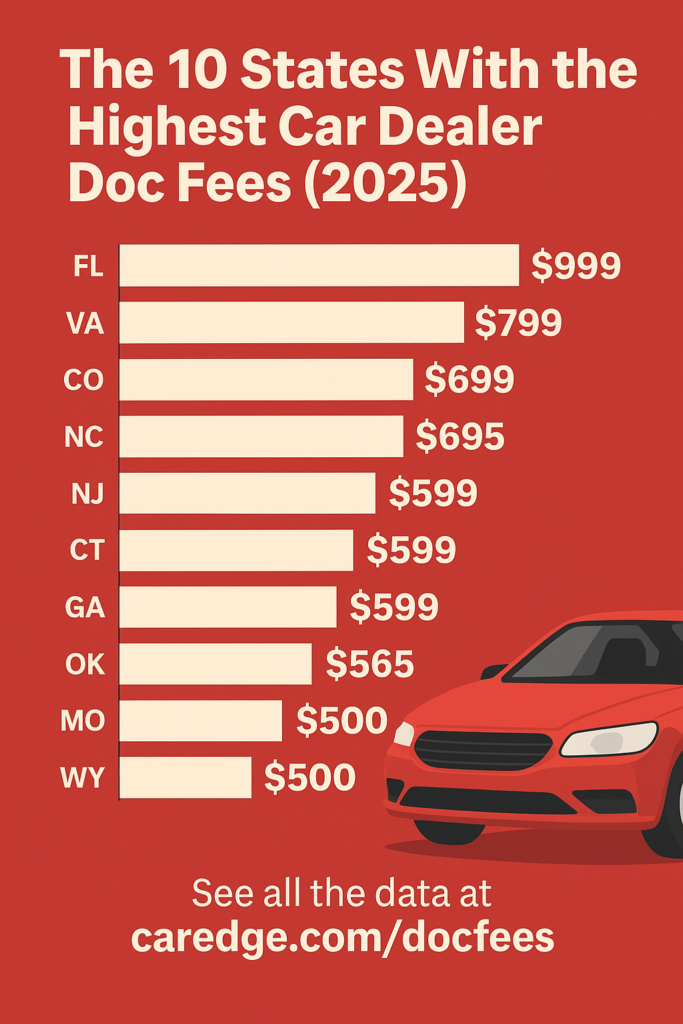
Your first and most crucial step should be research. Before you even set foot in a dealership, investigate your state’s regulations regarding document fees. Is there a legal cap? Are they required to be consistent for all buyers? Websites of state consumer protection agencies or motor vehicle departments often provide this information.
Additionally, search for average document fees in your specific area. Online forums, consumer review sites, and automotive resources can offer insights into what local dealerships typically charge. Armed with this knowledge, you can quickly identify if a dealership is charging an unusually high fee that might warrant a challenge. Knowing the legal limits and common practices in your region empowers you to distinguish between a standard charge and an excessive one.
The Negotiability Debate: When and How
Directly negotiating a document fee can be challenging. In many states, dealerships are legally required to charge the same document fee to every customer to avoid discriminatory practices. If a dealership lowers the fee for you, they would, in theory, have to lower it for everyone, which they are unlikely to do. Therefore, directly asking a dealer to “waive the doc fee” is often met with resistance or a polite refusal.
However, this doesn’t mean the fee is entirely non-negotiable in an indirect sense. If a dealership is unwilling to budge on the doc fee, you can use it as leverage to negotiate a lower price on the vehicle itself or secure additional perks. For instance, you could say, “I understand the $600 doc fee is non-negotiable, but if you can lower the car’s price by $600, we have a deal.” This shifts the focus from the fee to the overall “out-the-door” price, which is ultimately what matters most to your finances. You could also negotiate for add-ons like floor mats, a full tank of gas, or an oil change package to offset the fee.
Comparing Dealers and Their Fee Structures
Since document fees can vary widely, shopping around at multiple dealerships is an effective strategy. Don’t just compare the advertised prices of cars; compare the total out-the-door prices from different dealerships. A car advertised at a slightly higher price might end up being cheaper if it comes from a dealership with a significantly lower doc fee.
When contacting dealerships, explicitly ask about their document fee early in the conversation. Make it clear that you are comparing total prices, including all fees. This transparency from your end can encourage dealerships to be more upfront about all costs. Use the information you gather to inform your decision, prioritizing dealers who offer transparent pricing and competitive total costs, rather than just the lowest sticker price.
Legal Protections and Consumer Rights
While document fees are generally legal, consumers are not without protections. Understanding your rights can help you identify and address potentially unfair or illegal practices.
When a Doc Fee Might Be Illegal or Excessive
A document fee could be illegal if it violates specific state caps or regulations. For example, if your state caps doc fees at $100, and a dealership charges $500, that portion of the fee is illegal. Similarly, if a state requires that the fee be charged consistently to all buyers, and you discover the dealership selectively waives it for some but not others (unless legally allowed under specific circumstances), it could be a discriminatory practice.
“Excessive” is a more subjective term but can be a red flag. If your research indicates that the average doc fee in your state is $200, and a dealership charges $800 in a non-capped state, while technically legal, it’s certainly excessive and points to it being a significant profit center for that dealer. Such a high fee should prompt further negotiation on the vehicle price or a decision to take your business elsewhere.
Reporting Unfair Practices
If you believe a dealership has charged you an illegal or fraudulent document fee, or engaged in deceptive practices related to it, you have avenues for recourse. You can contact:
-
Your State’s Attorney General’s Office: They often have consumer protection divisions that handle complaints against businesses.
-
Your State’s Department of Motor Vehicles (DMV) or equivalent: They oversee dealership licensing and practices.
-
The Federal Trade Commission (FTC): While not handling individual cases, the FTC collects complaints to identify patterns of deceptive practices.
-
A Consumer Protection Attorney: For more complex cases, legal counsel may be appropriate.
Documenting all communications, advertisements, and purchase agreements related to the fee is crucial when making a complaint.
The Importance of the Buyer’s Order
The “Buyer’s Order” or purchase agreement is the most critical document in your car buying journey. It’s the final contract outlining all charges. Before signing anything, meticulously review every line item on the buyer’s order. Ensure that the document fee is clearly stated and matches what you were told. Verify that there are no unexpected or unexplained charges.
This document is your legal record of the transaction. Never be pressured to sign it until you fully understand and agree to every fee listed. If you find discrepancies or charges you don’t recognize or agree with, question them immediately. If the dealership cannot provide a satisfactory explanation or remove an illegal charge, do not sign. Walking away is always an option if the terms are not acceptable.
Final Considerations for a Smart Car Purchase
Navigating document fees successfully is part of a broader strategy for making a financially sound car purchase. It’s about empowering yourself with information and maintaining a focus on the bigger financial picture.
Total Out-the-Door Price Focus
The single most important financial metric when buying a car is the total “out-the-door” price. This is the absolute amount you will pay to drive the car off the lot, including the vehicle price, all fees (like the doc fee), and all taxes. Instead of fixating on just the vehicle’s negotiated price, always ask for and compare the out-the-door price from different dealerships. This holistic approach ensures that no hidden fees or charges surprise you at the last minute. By focusing on this figure, you can effectively compare offers and determine which dealership truly provides the best overall value for your money.
Empowering Yourself with Information
Knowledge is your most powerful tool in any financial negotiation, especially when buying a car. Understanding what a document fee is, its legal limits in your state, typical charges, and how it impacts your finances allows you to approach the dealership with confidence. It transforms you from a passive recipient of charges into an active participant who can question, compare, and negotiate effectively. Spend time researching not only the car but also the buying process itself, including common fees and negotiation tactics. This preparation will not only save you money but also reduce stress and improve your overall buying experience.

The Role of Financial Planning in Car Buying
A car purchase should always be integrated into your broader financial plan. This means:
-
Budgeting Realistically: Account for all potential costs, including the vehicle price, doc fees, sales tax, insurance, maintenance, and fuel.
-
Understanding Your Credit: A good credit score can secure better interest rates, saving you thousands over the life of a loan.
-
Considering Down Payments: A larger down payment reduces the amount you finance and lowers your monthly payments and total interest paid.
-
Evaluating Trade-ins: Understand the true value of your trade-in and how it impacts the total cost of the new vehicle.
By approaching car buying with a comprehensive financial plan, you move beyond just negotiating the price of the car and instead ensure that the entire transaction aligns with your financial goals and capabilities. The document fee, while a small part of this puzzle, is a perfect example of how attention to detail in financial matters can lead to significant savings and a more secure financial future.
aViewFromTheCave is a participant in the Amazon Services LLC Associates Program, an affiliate advertising program designed to provide a means for sites to earn advertising fees by advertising and linking to Amazon.com. Amazon, the Amazon logo, AmazonSupply, and the AmazonSupply logo are trademarks of Amazon.com, Inc. or its affiliates. As an Amazon Associate we earn affiliate commissions from qualifying purchases.