
At its core, mathematics provides the fundamental language and tools upon which all modern technology is built. Concepts that might seem abstract in a pure mathematical context often underpin complex systems, algorithms, and security protocols in the digital world. Among these foundational concepts is the “divisor,” a seemingly simple idea with profound implications across various technological domains. Understanding what a divisor is, and its related concepts, is not merely an academic exercise; it’s an insight into the very mechanics of how our digital world functions, from the efficiency of our algorithms to the security of our online communications.
The Core Concept of Divisors and Its Algorithmic Resonance
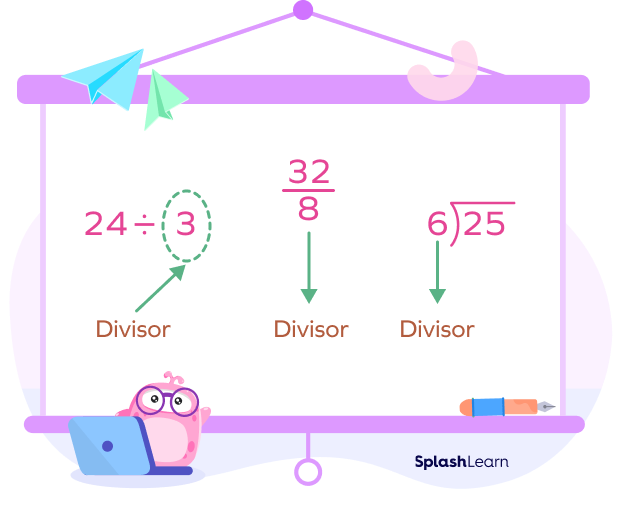
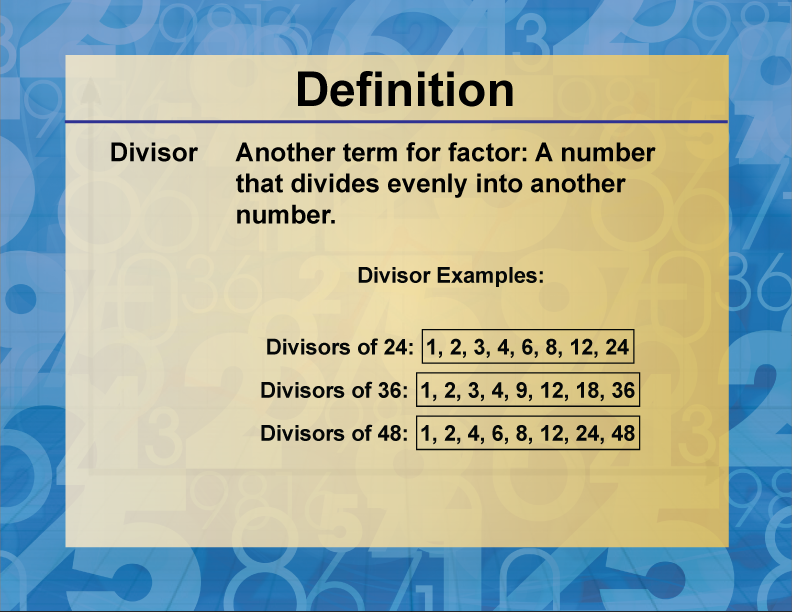
In mathematics, a divisor of an integer n is an integer d that divides n without leaving a remainder. In simpler terms, if you can divide n by d and get another integer, then d is a divisor of n. For example, the number 12 has divisors 1, 2, 3, 4, 6, and 12, because 12 can be divided evenly by each of these numbers. The concept extends to positive and negative integers, but in most computational contexts, especially when dealing with magnitudes or resource allocation, positive divisors are primarily considered.
Definition and Practical Examples in Computation
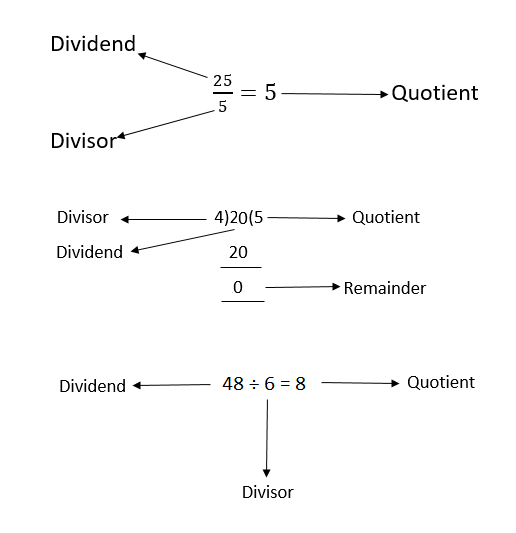
Formally, an integer d is a divisor of an integer n if there exists an integer k such that n = d * k. This definition, while straightforward, immediately hints at algorithmic processes. When a computer program needs to determine if one number divides another, it essentially performs a division operation and checks for a zero remainder. This is represented by the modulo operator (% in many programming languages), where n % d == 0 indicates that d is a divisor of n.
Consider a simple array management task. If an application needs to partition a dataset of N items into D equally sized batches for parallel processing, D must be a divisor of N. If N is 100 and we want 4 batches, 100 % 4 == 0, so each batch gets 25 items. If we chose 3 batches, 100 % 3 != 0, leading to an uneven distribution or requiring special handling for the remainder, which can introduce inefficiencies or complexities in algorithm design. This basic principle of divisibility underpins efficient resource allocation and task distribution in multi-threaded applications or distributed computing environments.
Divisibility Rules as Precursors to Optimization Algorithms
Before computers, mathematicians developed divisibility rules (e.g., a number is divisible by 2 if it’s even, by 3 if its digits sum to a multiple of 3, by 5 if it ends in 0 or 5). These rules are essentially simplified algorithms for determining divisibility without performing full division. In computing, analogous rules or pre-checks are often employed to optimize performance. For instance, when searching for prime numbers (numbers whose only positive divisors are 1 and themselves), trial division algorithms often skip checking divisibility by even numbers after 2, or by multiples of 3 after 3, drastically reducing computation for large numbers. This foresight in avoiding unnecessary calculations mirrors the fundamental spirit of algorithmic efficiency.
Divisors in Computer Science: Building Blocks of Efficiency and Structure
The concept of divisors permeates various aspects of computer science, influencing everything from the performance of algorithms to the design of data structures and the organization of memory. Its silent role is critical in ensuring robustness and speed.
Algorithm Efficiency and Complexity
Many algorithms inherently rely on divisibility. Consider prime factorization, a problem central to number theory and, as we’ll see, cryptography. Efficiently finding all divisors of a number or determining if a number is prime directly impacts the performance of algorithms that use these operations. The time complexity of such algorithms often depends on how quickly these divisibility checks can be performed. For example, Pollard’s rho algorithm for integer factorization, while complex, leverages properties of divisors to break down large numbers into their prime factors more efficiently than brute-force trial division, which becomes computationally infeasible for very large numbers.
Furthermore, algorithms designed for tasks like finding the Greatest Common Divisor (GCD) or Least Common Multiple (LCM) are fundamental. Euclid’s algorithm for GCD, which dates back centuries, is a prime example of an efficient algorithm based purely on properties of divisibility and remainders. Its speed and elegance make it a staple in various computational tasks, from simplifying fractions in symbolic computation to cryptographic protocols.
Data Structures and Memory Management
Divisors play a subtle but critical role in the design and implementation of certain data structures. Hash tables, for instance, rely on hash functions to map keys to array indices. A common practice in hash function design is to use a prime number for the table size (or a number with few small prime factors) to minimize collisions and ensure a more uniform distribution of data. This choice is rooted in the mathematical properties of divisors and modular arithmetic, where a prime modulus tends to spread remainders (and thus array indices) more evenly.
Similarly, in memory allocation, systems sometimes allocate memory blocks in sizes that are multiples of certain base units. This can simplify alignment requirements for processors, ensuring data access is optimized. While not directly about “divisors” in the conceptual sense, the principle of allocation in integer multiples of a base unit implicitly leverages divisibility for efficiency. For instance, if a system operates with 64-byte cache lines, then data structures are often sized or aligned to be multiples of 64 bytes to prevent cache misses and improve performance.
Divisors and Cybersecurity: The Bedrock of Digital Trust
Perhaps the most impactful application of divisors in technology lies within cybersecurity, particularly in the realm of cryptography. The security of much of our digital communication and data relies on the mathematical difficulty of operations related to divisors, especially for very large numbers.
Cryptography and Prime Numbers
Public-key cryptography, the backbone of secure internet communication (HTTPS), digital signatures, and secure messaging, is heavily dependent on prime numbers and their divisors. The RSA algorithm, one of the most widely used public-key cryptosystems, derives its security from the practical difficulty of factoring the product of two large prime numbers.
Here’s how it connects:
- Key Generation: RSA involves choosing two very large prime numbers,
pandq. These are kept secret. - Modulus Calculation: A modulus
nis calculated asn = p * q. Thisnis part of the public key. - Security Premise: For an attacker to decrypt a message encrypted with RSA, they would typically need to factor
nback into its prime divisorspandq. Whilepandqare divisors ofnby definition, ifpandqare sufficiently large (hundreds of digits long), finding these prime divisors is computationally infeasible with current technology, even for the most powerful supercomputers.
The strength of RSA, therefore, directly hinges on the concept of divisors and the extreme difficulty of finding the prime divisors of a very large composite number. The sheer magnitude of these numbers transforms what is mathematically possible into what is practically impossible within a reasonable timeframe, thus securing our data.
Hashing Functions and Data Integrity
While not directly about factoring, hashing functions often use prime numbers in their design to ensure good distribution and collision resistance. A strong cryptographic hash function produces a fixed-size output (hash value) for any input data, such that even a tiny change in the input produces a drastically different hash. These functions are crucial for verifying data integrity (e.g., ensuring a downloaded file hasn’t been tampered with) and in password storage. The mathematical properties of primes and related modular arithmetic often guide the design of these functions, aiming for maximal “randomness” in their output, indirectly benefiting from the uniform distribution properties associated with prime divisors.
Advanced Applications: From Error Correction to AI
The influence of divisors extends beyond fundamental computer science and security, touching specialized fields like error correction and even playing a conceptual role in the architecture of machine learning.
Error Detection and Correction Codes
When data is transmitted over noisy channels (like radio waves or the internet), errors can occur. Error detection and correction codes are mathematical schemes that add redundant information to data, allowing receivers to detect and sometimes correct errors. Many of these codes, particularly cyclic codes like Cyclic Redundancy Checks (CRCs) used in network protocols and storage devices, are built upon finite fields (also known as Galois fields). The operations within these fields are heavily based on polynomial arithmetic where division and remainders play a central role, analogous to integer divisors. For instance, a CRC calculation involves dividing a data polynomial by a generator polynomial (whose properties are related to divisibility) and using the remainder as the checksum. The mathematical properties of these polynomials and their “divisors” are precisely what enable the codes to detect and correct specific patterns of errors.
Machine Learning and Data Partitioning
While less direct, the concept of divisors conceptually influences certain aspects of machine learning model training and data handling. In deep learning, training data is often divided into “batches” for processing. The size of these batches can significantly impact training stability and efficiency. Often, batch sizes are chosen to be powers of 2 (e.g., 32, 64, 128, 256) which are highly divisible, aligning well with memory architectures and parallel processing capabilities of modern GPUs. When dealing with datasets, if N samples are to be divided into B batches, B ideally should be a divisor of N to ensure all batches are of equal size, simplifying the training loop and preventing issues with partial batches that require special handling. This practical consideration, driven by computational efficiency, subtly echoes the mathematical concept of divisors.
In conclusion, “what is a divisor math” reveals a concept far more critical than a simple arithmetic definition. It is a foundational mathematical principle whose properties are intricately woven into the fabric of modern technology. From optimizing algorithms and structuring data to securing our digital communications and building resilient systems, divisors, and their associated mathematical theories, provide the unseen scaffolding upon which the technological world stands. Their enduring relevance underscores the timeless power of pure mathematics in shaping practical innovation.
aViewFromTheCave is a participant in the Amazon Services LLC Associates Program, an affiliate advertising program designed to provide a means for sites to earn advertising fees by advertising and linking to Amazon.com. Amazon, the Amazon logo, AmazonSupply, and the AmazonSupply logo are trademarks of Amazon.com, Inc. or its affiliates. As an Amazon Associate we earn affiliate commissions from qualifying purchases.