
In the modern global economy, the movement of goods is no longer just a logistical necessity; it is a sophisticated financial lever. For business owners, investors, and financial analysts, understanding the mechanics of the “distribution center” (DC) is essential for evaluating a company’s operational efficiency and long-term profitability. While a casual observer might mistake a distribution center for a simple warehouse, the two are fundamentally different in terms of asset utilization, cash flow impact, and their role on the corporate balance sheet.
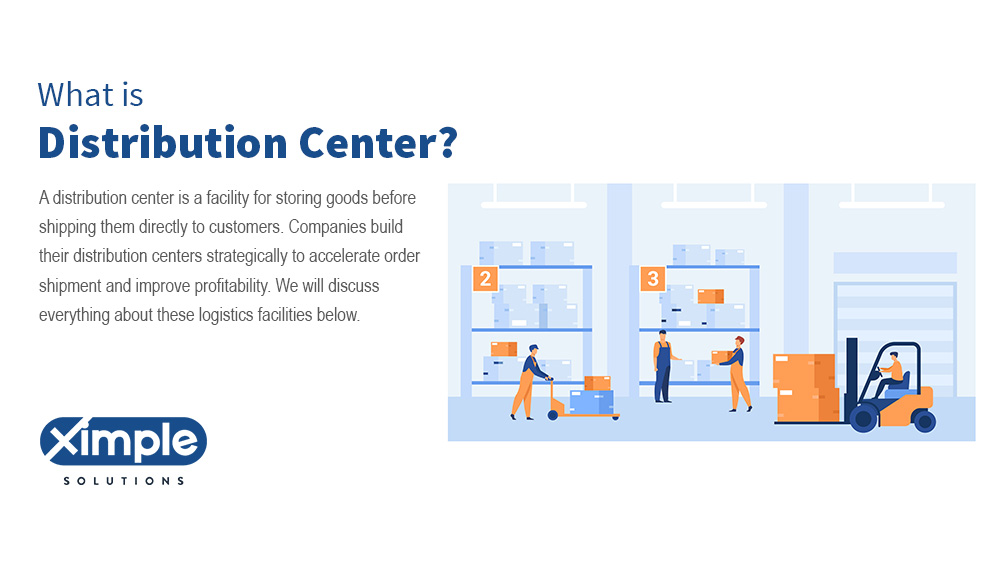
A distribution center is a specialized facility designed to store products temporarily and facilitate their rapid movement to retailers, wholesalers, or directly to consumers. From a business finance perspective, it is a high-velocity hub where inventory—essentially “frozen” capital—is unfrozen and converted back into revenue. This article explores the distribution center through the lens of money, focusing on its role as a strategic financial asset, its impact on the bottom line, and its significance in investment portfolios.
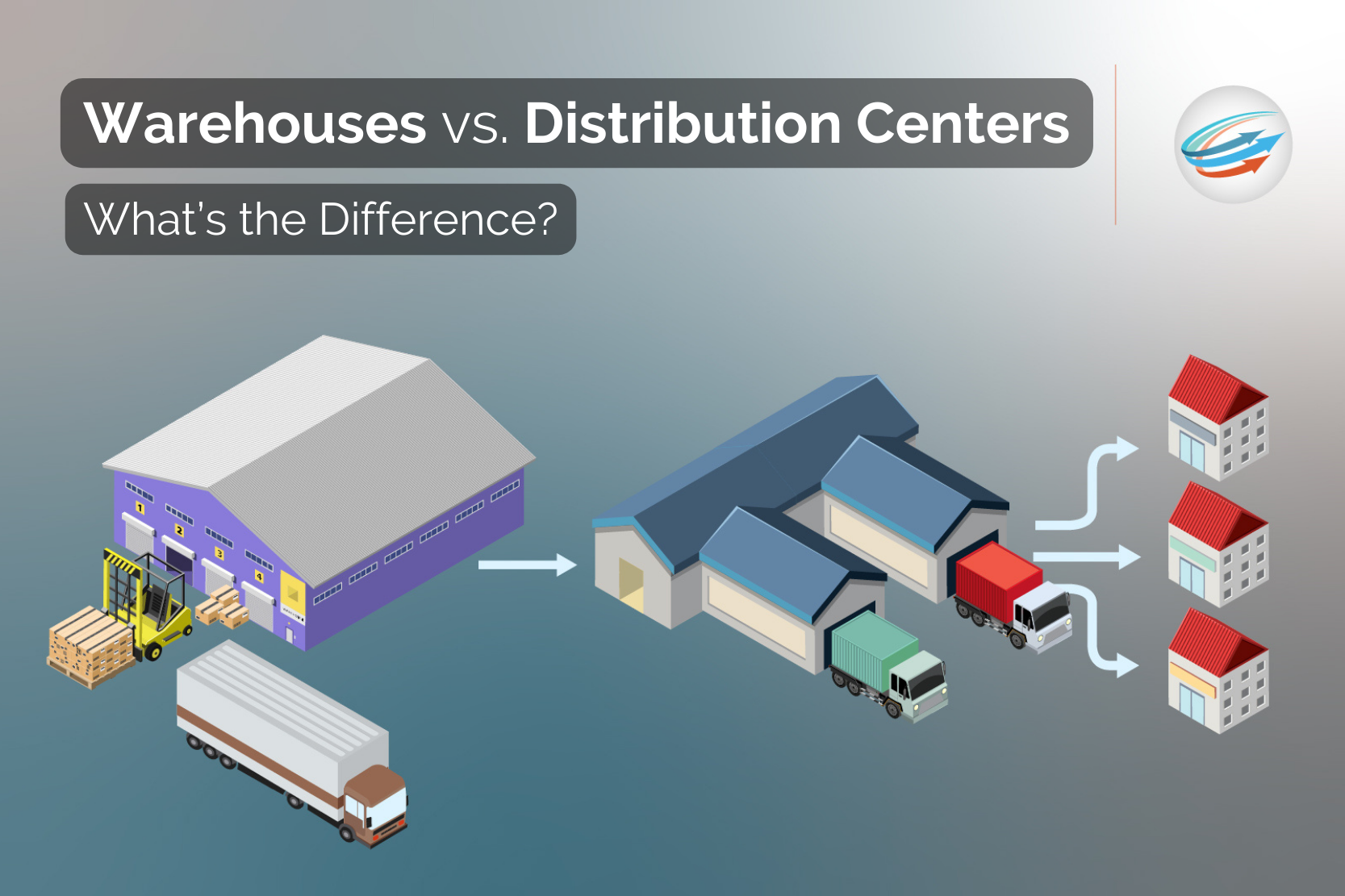
The Financial Infrastructure of Modern Commerce
To understand a distribution center, one must first distinguish it from a traditional warehouse. In financial terms, a warehouse is often viewed as a cost center where goods sit for extended periods, incurring storage fees and tying up working capital. In contrast, a distribution center is a profit-enabling asset designed for throughput.
Capital Expenditure (CapEx) vs. Operational Expenditure (OpEx)
Establishing a distribution center requires a significant Capital Expenditure (CapEx). This includes the acquisition of industrial real estate, the installation of high-tech sorting systems, and the integration of enterprise resource planning (ERP) software. For a mid-to-large-scale enterprise, these initial costs can range from tens of millions to hundreds of millions of dollars.
However, the ongoing financial health of a DC is measured by its Operational Expenditure (OpEx). This includes labor costs, energy consumption, maintenance, and the “cost of speed.” From a financial management standpoint, the goal is to balance the high upfront CapEx by achieving a lower per-unit OpEx over time. An efficient distribution center reduces the “cost of goods sold” (COGS) by streamlining the path from the manufacturer to the customer, thereby protecting gross margins.
The Distribution Center as a Strategic Asset
In the eyes of an investor, a distribution center is more than a building; it is a strategic asset that provides a competitive moat. Companies like Amazon or Walmart use their massive network of DCs to achieve economies of scale that smaller competitors cannot match. This infrastructure allows them to offer lower prices while maintaining healthy margins, as their logistics costs per order are significantly lower than those of companies relying on third-party logistics (3PL) providers. When evaluating a company’s valuation, the efficiency of its distribution network is often a key indicator of its ability to scale revenue without a linear increase in costs.
Cost Structures and Profitability Drivers
The primary financial objective of a distribution center is to maximize “Inventory Turnover.” In accounting, inventory is an asset, but in practical business finance, it is a liability-in-waiting. The longer a product sits in a facility, the more it costs in terms of insurance, depreciation, and the opportunity cost of the capital used to purchase it.
Managing Holding Costs and Inventory Carrying Costs
Inventory carrying costs typically range from 15% to 30% of the inventory’s total value annually. These costs include taxes, insurance, storage space, and the risk of obsolescence—particularly in the electronics or fashion industries. A high-performing distribution center utilizes sophisticated data analytics to minimize these “holding costs.”
By employing “Just-in-Time” (JIT) delivery and cross-docking (a process where goods are moved directly from incoming trucks to outgoing trucks with little to no storage time), a distribution center drastically increases the velocity of capital. From a cash-flow perspective, the faster a product moves through a DC, the sooner the company can realize the revenue from that sale, improving the “Cash Conversion Cycle” (CCC). A shorter CCC is a hallmark of a financially healthy and liquid business.
Labor Optimization and the Bottom Line
Labor remains one of the largest line items in a distribution center’s budget. Financial managers look at “Revenue per Employee” and “Units Picked per Hour” as vital KPIs. In regions where labor costs are rising, companies face a financial crossroads: continue to pay high OpEx in wages or invest in further CapEx via automation and robotics.
While the initial investment in automation is steep, the long-term ROI (Return on Investment) is often found in the reduction of human error, lower insurance premiums (due to fewer workplace injuries), and the ability to operate 24/7 without overtime pay. For a CFO, the decision to automate a distribution center is a classic “Net Present Value” (NPV) calculation, weighing the immediate cash outflow against decades of projected savings.
Scaling Business Income through Strategic Location
The financial success of a distribution center is heavily dictated by its “geospatial economics.” Where a facility is located can be the difference between a profitable quarter and a loss, primarily due to the impact on shipping costs and tax obligations.
Last-Mile Delivery and Revenue Retention
The “last mile”—the final leg of a product’s journey to the consumer—is notoriously the most expensive part of the supply chain, often accounting for up to 53% of total shipping costs. By strategically placing distribution centers near major metropolitan hubs, companies can significantly reduce their transportation expenses.
From a revenue perspective, proximity to the customer enables faster delivery times. In the current market, speed is a premium service for which customers are often willing to pay more, or which serves as the primary driver for customer retention (recurring revenue). Therefore, the distribution center is not just a cost-saving tool but a revenue-generating engine that increases the “Customer Lifetime Value” (CLV).
Tax Incentives and Regional Financial Planning
Sophisticated financial planning involves choosing DC locations that offer the best tax advantages. Many local and state governments offer “Enterprise Zone” incentives, property tax abatements, or job creation tax credits to attract large distribution hubs. These incentives can save a company millions of dollars over a 10-year lease or ownership period. Furthermore, placing a DC in a tax-friendly jurisdiction can help a business manage its “Nexus,” or the legal requirement to collect sales tax, which has complex implications for the company’s accounting department and bottom-line profit.
Investing in Distribution Infrastructure
For those not running a retail business, the distribution center represents a significant opportunity in the realm of personal finance and institutional investing. The shift toward e-commerce has turned “industrial real estate” into one of the most resilient and profitable asset classes in the world.
Real Estate Investment Trusts (REITs) and Industrial Logistics
Investors looking for stable, long-term income often turn to Industrial Real Estate Investment Trusts (REITs). These entities own and manage portfolios of distribution centers and lease them to blue-chip tenants like FedEx, Amazon, or DHL.
Unlike retail or office real estate, which have faced volatility in recent years, distribution centers have seen a surge in demand. This has led to high occupancy rates and steady “Funds from Operations” (FFO), a key metric for REIT investors. The “triple net lease” (NNN) structure common in this sector—where the tenant pays for taxes, insurance, and maintenance—ensures that the landlord (and by extension, the investor) enjoys a predictable stream of passive income with minimal overhead.
Future-Proofing for Long-Term ROI
As we look toward the future, the financial value of a distribution center will increasingly be tied to its “Green Efficiency.” Environmental, Social, and Governance (ESG) criteria are now major factors in institutional investing. A distribution center equipped with solar arrays, EV charging stations for delivery fleets, and energy-efficient climate control is more likely to secure favorable financing rates and attract high-quality corporate tenants.
From an investment standpoint, “future-proofing” a DC is about preserving its terminal value. As carbon taxes and environmental regulations become more stringent, facilities that are already compliant will avoid the massive “retrofitting costs” that will plague older, less efficient buildings, thus protecting the investor’s principal and yield.

Conclusion
A distribution center is far more than a place to store boxes; it is a critical instrument of financial strategy. By optimizing the flow of inventory, reducing operational costs through technology, and leveraging geographic advantages for tax and shipping benefits, a DC directly influences a company’s EBITDA and market valuation.
For the business owner, it is a tool for scaling income and protecting margins. For the investor, it is a resilient asset class providing consistent returns in an e-commerce-driven world. In the final analysis, the effectiveness of a distribution center is measured not by how many items it holds, but by how efficiently it moves capital through the supply chain to generate profit. Understanding this “money-first” perspective is essential for anyone looking to navigate the complexities of modern business and finance.
aViewFromTheCave is a participant in the Amazon Services LLC Associates Program, an affiliate advertising program designed to provide a means for sites to earn advertising fees by advertising and linking to Amazon.com. Amazon, the Amazon logo, AmazonSupply, and the AmazonSupply logo are trademarks of Amazon.com, Inc. or its affiliates. As an Amazon Associate we earn affiliate commissions from qualifying purchases.