
Imagine your prized possession, perhaps a car, is involved in an accident. It’s damaged, but thankfully, repairable. After weeks in the shop, it looks as good as new, gleaming, and functioning perfectly. You might think the ordeal is over, and your asset is back to its pre-accident condition. However, a stark financial reality often remains: even a perfectly repaired item is typically worth less on the open market than an identical item that has never been damaged. This reduction in market value, purely because of its accident history, is known as diminished value, and a diminished value claim is your legal and financial right to recover that lost value.
In the realm of personal finance and asset management, understanding diminished value is crucial. It’s not about the cost of repairs – that’s covered by your collision insurance. Instead, it addresses the inherent stigma and market prejudice that attaches to a previously damaged item, particularly vehicles, once its repair history is revealed. This article delves into the intricacies of diminished value claims, explaining their types, financial implications, the process of filing, and the challenges you might encounter, all strictly within the domain of personal and business finance.
Understanding the Types of Diminished Value
While “diminished value” is often used as an umbrella term, there are nuanced distinctions in how this loss of value can manifest. Recognizing these types is the first step toward building a robust claim.
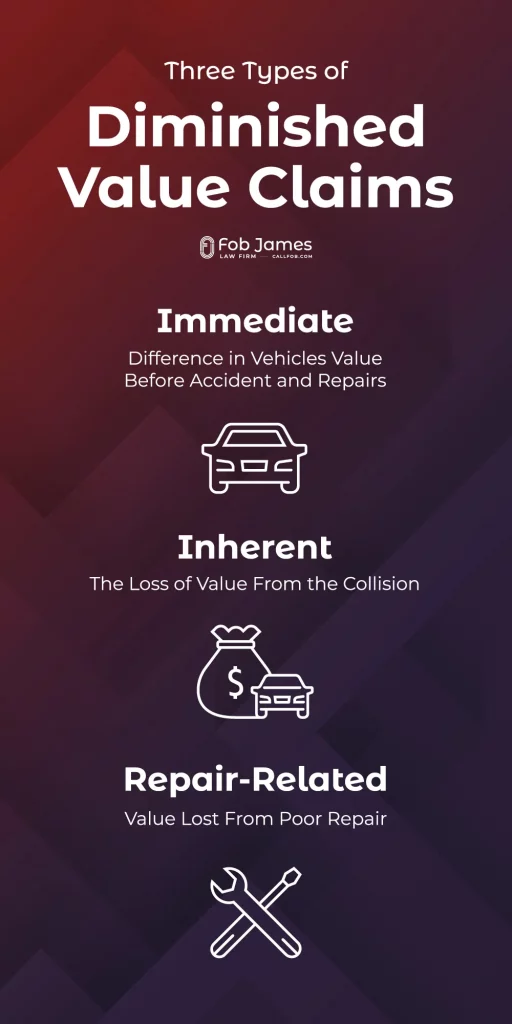
Inherent Diminished Value
This is by far the most common and widely recognized form of diminished value. Inherent diminished value refers to the loss of market value that an asset sustains even after it has been expertly repaired to its pre-loss physical condition. The loss isn’t due to poor repairs, but simply because the item now has an accident history. A potential buyer, when presented with two identical cars—one with an accident history and one without—will almost invariably choose the latter or demand a lower price for the former. This is because:
- Disclosure Requirements: In many jurisdictions, sellers are legally obligated to disclose significant accident history, which immediately impacts market perception.
- Perceived Risk: Buyers may worry about hidden damage, future repair issues, or a shorter lifespan, even if the repairs were flawless.
- Resale Difficulty: An accident history makes the asset harder to sell quickly and at its top market price.
For example, a luxury car that cost $80,000 new and was worth $60,000 before an accident might still be worth only $50,000 after $15,000 worth of perfect repairs, due to inherent diminished value. The $10,000 difference is the inherent diminished value.
Repair-Related Diminished Value
Also known as “poor repair diminished value” or “consequential diminished value,” this type arises when the repairs themselves are substandard, incomplete, or utilize inferior parts. Unlike inherent diminished value, here the asset does not return to its pre-loss physical condition. Evidence of poor repairs might include:
- Mismatched paint colors or textures.
- Misaligned body panels or doors.
- Visible signs of repair (e.g., sanding marks, overspray).
- Functional issues that persist after repair.
- Use of aftermarket or salvage parts when OEM parts were specified or expected.
In such cases, the asset’s value is diminished not just by its accident history, but also by its visibly or functionally compromised state post-repair. Claiming this type of diminished value often involves demonstrating the inadequacy of the repairs, typically through independent inspections and reports.
Stigma Diminished Value
While often overlapping with inherent diminished value, stigma diminished value emphasizes the psychological or reputational impact of an event on an asset’s market value. This is particularly relevant for unique or high-value items, where the mere association with a negative event, even if completely remedied, can deter buyers. For instance, a historic building that experienced a fire, even if meticulously restored, might carry a “stigma” that affects its perceived value. For vehicles, it’s essentially the same principle as inherent diminished value, focusing on the market’s aversion to a “damaged” vehicle.
The Financial Impact and Why It Matters
The concept of diminished value isn’t merely an abstract legal theory; it represents a tangible financial loss that can significantly affect an individual’s or business’s balance sheet. Ignoring it means accepting a lower net worth for your asset than you are rightfully entitled to.
Real-World Scenarios and Depreciation
Consider a common scenario: you own a late-model car with a clean title. It gets into an accident, sustaining significant damage, but is fully repaired. When you later decide to sell or trade it in, you’ll inevitably face questions about its accident history. Carfax, Autocheck, and similar services now provide detailed vehicle history reports that will flag any reported accidents. This transparency, while beneficial for buyers, directly impacts your sale price.
- Selling Private Party: Buyers will use the accident history to negotiate a lower price, often citing the risk and the presence of comparable undamaged vehicles.
- Trade-in Value: Dealerships will offer significantly less for a vehicle with an accident history, often using it as a justification for a steep discount, as they too will face challenges reselling it.
- Equity Loss: If you’re still financing the vehicle, the diminished value means your equity in the car is lower than it would have been, potentially leading to an “upside-down” loan situation faster.
This loss isn’t abstract; it’s a direct hit to your financial assets, undermining the investment you made in the vehicle.
Who is Liable? The At-Fault Party’s Insurer
Crucially, diminished value claims are typically made against the at-fault driver’s insurance company. Your own collision insurance policy usually covers the cost of repairs (minus your deductible) but does not typically cover the diminished value of your own vehicle. This is because your policy is designed to restore your vehicle to its pre-loss physical condition, not its pre-loss market value if an accident history is present.
Therefore, pursuing a diminished value claim is about seeking compensation from the party responsible for causing the accident and, by extension, the financial loss to your asset. If the accident was your fault, or if there was no other at-fault party (e.g., hitting an animal, a natural disaster), recovering diminished value for your own vehicle through a third-party claim is usually not an option.
Beyond Vehicles: Other Assets
While vehicles are the most common subject of diminished value claims due to their standardized pricing and readily available history reports, other assets can also suffer this financial depreciation. Real estate, especially high-value properties that have experienced significant damage (e.g., fire, flood, structural issues) even after full restoration, might face diminished value. Unique personal property, such as art or collectibles, could also experience a similar loss if damaged and repaired. However, proving and quantifying diminished value for these non-standard assets can be significantly more complex and challenging.
The Process of Filing a Diminished Value Claim
Filing a diminished value claim requires diligence, documentation, and often, persistence. It’s a financial negotiation, and insurance companies are naturally motivated to minimize payouts.

Initial Steps After an Accident
The foundation of any successful claim begins immediately after the incident:
- Document Everything: Take photos and videos of the accident scene, damage to all vehicles involved, and any injuries.
- Police Report: Ensure a police report is filed and obtain a copy. This is critical for establishing fault.
- Notify Your Insurer: Inform your insurance company, but remember that the diminished value claim will be directed at the at-fault party’s insurer.
- Seek Medical Attention: If injured, prioritize your health.
- Get Repair Estimates: Obtain detailed repair estimates from reputable body shops. Ideally, get multiple estimates to ensure comprehensive and fair pricing.
Gathering Evidence: The Heart of Your Claim
This is where the financial quantification of your loss comes into play. You need to demonstrate the actual market value difference:
- Repair Documentation: Keep all repair estimates, final repair bills, and a list of all parts used. Ensure the repairs are completed before you claim diminished value, as the claim is for the post-repair loss.
- Pre-Loss Valuation: Gather evidence of your vehicle’s value just before the accident. This can include purchase receipts, appraisal reports, and comparable sales data (e.g., Kelley Blue Book, NADA Guides, Edmunds for private party sales in your region).
- Post-Repair Valuation (with accident history): This is the most crucial and often challenging part.
- Independent Diminished Value Appraisal: This is highly recommended. Professional appraisers specialize in calculating diminished value by analyzing market data, repair quality, vehicle specifics, and accident severity. They provide a detailed report that insurance companies often respect more than personal estimates.
- Dealer Quotes: Get written quotes from several dealerships indicating what they would offer for your vehicle with its accident history, compared to what they would offer if it had a clean history.
- Comparable Sales Data: Research recent sales of similar vehicles with accident histories versus those with clean histories. This helps establish a market discount.
Calculating Diminished Value
There are various methodologies, but the goal is always to quantify the difference between the pre-accident fair market value and the post-repair fair market value. One common, though often criticized, method used by some insurance companies is the “17c formula” (also known as the “rule of 17c”), which originated from a Georgia court case. This formula is often considered outdated and generally underestimates true diminished value. A professional appraisal uses a more holistic approach, considering:
- Severity of Damage: More severe damage generally leads to higher diminished value, even if perfectly repaired.
- Vehicle Age and Mileage: Newer, lower-mileage vehicles typically suffer greater diminished value proportionally.
- Vehicle Make and Model: Luxury or high-end vehicles often experience a more significant diminished value hit than economy cars.
- Quality of Repairs: While inherent diminished value assumes perfect repairs, the perception of repair quality still plays a role.
- Market Conditions: Supply and demand for your specific vehicle type.
Negotiating with the Insurance Company
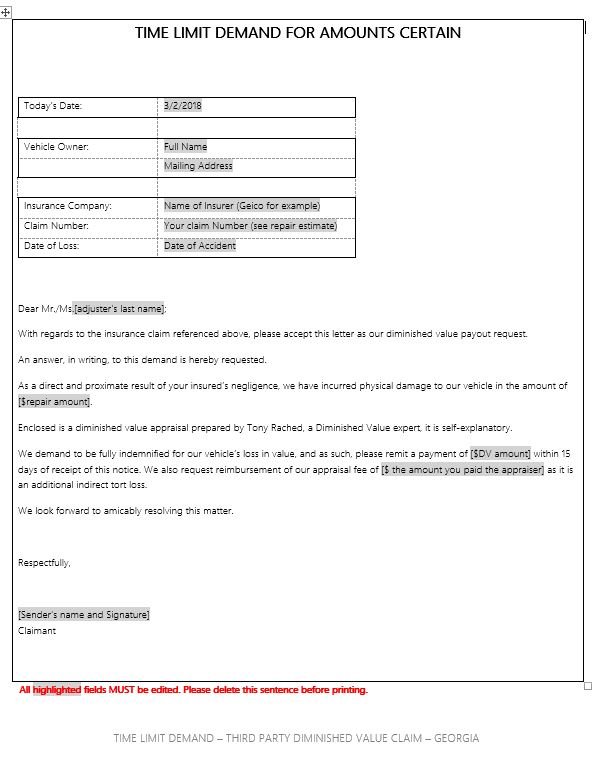
Once you have your evidence, present a formal demand letter to the at-fault party’s insurance company. Be prepared for:
- Initial Denial or Lowball Offer: Insurance adjusters are trained to minimize payouts. They may deny the claim entirely, argue that their repairs fully restored the value, or offer a very small sum.
- Justify Your Claim: Clearly articulate how you arrived at your diminished value figure, referencing your appraisal and supporting documents.
- Persistence: Don’t give up after the first refusal. Follow up, provide additional evidence if necessary, and reiterate your position.
- Escalate if Necessary: If negotiations fail, you may consider options like arbitration, mediation, or, as a last resort, filing a lawsuit.
When to Seek Professional Help
Navigating a diminished value claim can be complex. Consider professional assistance if:
- The Claim Value is High: For expensive vehicles or significant damage, the potential recovery justifies the cost of experts.
- The Insurance Company is Unresponsive or Unreasonable: An attorney specializing in personal injury or property damage can effectively negotiate and litigate on your behalf.
- You Lack Time or Expertise: Hiring an independent appraiser or attorney frees you from the burden of the process and leverages their specialized knowledge.
Challenges and Considerations
While the right to claim diminished value is generally recognized, the path to obtaining fair compensation is not always smooth.
State Laws and Regulations
The laws governing diminished value vary significantly from state to state. Some states have clearer precedents or statutes that make it easier for claimants, while others are less defined or more challenging. For example, some states may allow a first-party diminished value claim (against your own insurer if you have certain coverage), though this is rare. Always research the specific laws in your jurisdiction or consult with a local attorney.
Statute of Limitations
Like all legal claims, diminished value claims are subject to a statute of limitations, which is the time limit within which you must file your lawsuit or formal claim. This period varies by state (typically 2-6 years for property damage) and begins from the date of the accident. Missing this deadline will permanently bar you from recovering any compensation.
Proving Your Case: The Burden of Proof
The burden of proof lies entirely with the claimant. You must convincingly demonstrate that your asset has suffered a measurable loss in market value due to the accident, even after repairs. This requires solid evidence, which is why a professional appraisal is often invaluable. Without strong evidence, insurance companies have little incentive to pay out.
Cost vs. Benefit Analysis
Before embarking on a diminished value claim, especially one that might involve legal fees or appraisal costs, perform a cost-benefit analysis.
- Is the potential diminished value recovery substantial enough to warrant the effort and expense? For minor accidents or older, less valuable vehicles, the diminished value might be minimal, making the pursuit financially unviable.
- What are the appraisal costs? Professional appraisals can range from a few hundred to over a thousand dollars.
- What are potential legal fees? If you hire an attorney, they might work on a contingency basis (taking a percentage of the settlement) or charge hourly.
A general rule of thumb: if the estimated diminished value is less than $1,500-$2,000, pursuing it might be more trouble than it’s worth unless you’re confident in your ability to negotiate without external costs.
Conclusion
A diminished value claim represents a crucial financial mechanism for individuals and businesses to recover the genuine loss in market value an asset sustains after being damaged and repaired. It highlights the often-overlooked financial reality that even perfect repairs cannot erase an accident history in the eyes of the market. Understanding the types of diminished value, the financial implications, and the diligent process required to file a claim empowers you to protect your assets and ensure you receive fair compensation. In a world where transparency about asset history is increasingly common, being informed about diminished value is no longer a niche concern but a vital aspect of sound financial management.
aViewFromTheCave is a participant in the Amazon Services LLC Associates Program, an affiliate advertising program designed to provide a means for sites to earn advertising fees by advertising and linking to Amazon.com. Amazon, the Amazon logo, AmazonSupply, and the AmazonSupply logo are trademarks of Amazon.com, Inc. or its affiliates. As an Amazon Associate we earn affiliate commissions from qualifying purchases.