
In the complex and ever-evolving world of finance, few instruments are as intriguing, powerful, and at times, misunderstood as derivatives. Far from being a niche concept, derivatives are integral to global financial markets, influencing everything from the price of oil to the interest rates on mortgages. At their core, derivatives are financial contracts whose value is “derived” from an underlying asset, benchmark, or index. These assets can range from commodities like gold and crude oil, to financial instruments such as stocks, bonds, interest rates, exchange rates, or even market indices like the S&P 500. Understanding derivatives is crucial for anyone involved in investing, risk management, or simply navigating the intricacies of modern financial systems. They offer sophisticated tools for hedging against risk, speculating on future market movements, and enhancing portfolio returns, but they also come with inherent complexities and significant risks that demand careful consideration and expertise.

Understanding the Core Concept of Derivatives
To truly grasp the essence of derivatives, one must first understand their fundamental nature: they are not direct ownership stakes in an asset, but rather agreements to buy or sell an asset, or to exchange cash flows, at a predetermined future date or under specific conditions. This “derived” value is what gives them their name and their unique position in financial markets.
Definition and Underlying Assets
A financial derivative is essentially a contract between two or more parties that derives its price from fluctuations in an underlying asset. This underlying asset can be virtually anything with a measurable market value. Common examples include:
-
Equities: Shares of public companies.
-
Fixed Income: Bonds, interest rates, and other debt instruments.
-
Commodities: Raw materials like oil, natural gas, gold, silver, agricultural products.
-
Currencies: Exchange rates between different national currencies.
-
Indices: Market benchmarks like the Dow Jones Industrial Average or FTSE 100.
-
Credit: The creditworthiness of a borrower, as seen in credit default swaps.
The value of the derivative contract will fluctuate in direct relation to the price movements of this underlying asset. For instance, if you have a derivative contract based on the price of crude oil, the value of your derivative will go up if oil prices rise and down if they fall.
Key Characteristics of Derivatives
Several characteristics define derivatives and differentiate them from direct asset ownership:
-
Leverage: Derivatives often involve significant leverage, meaning a small movement in the underlying asset’s price can lead to a much larger percentage gain or loss in the derivative’s value. This amplification of returns (and losses) is a primary reason for their appeal and their danger.
-
Contingent Nature: Many derivatives are contingent contracts, meaning their payoff depends on specific conditions being met. Options, for example, only provide a payoff if the underlying asset’s price moves beyond a certain level by a specific date.
-
Expiry Date: Most derivatives have a limited lifespan, expiring on a specified date. At expiry, the contract is either settled (cash or physical delivery) or becomes worthless.
-
Standardization vs. Customization: Derivatives can be highly standardized and traded on exchanges (like futures and some options), or they can be highly customized, privately negotiated contracts (like most forwards and swaps).
The Role of Leverage
Leverage is a double-edged sword inherent in derivative trading. When you buy shares, you typically pay the full price. With derivatives, you often only need to put down a small percentage of the contract’s total value, known as margin. This allows investors to control a large amount of an underlying asset with a relatively small capital outlay. For example, if you control $100,000 worth of oil futures with a $5,000 margin, a 1% rise in oil price ($1,000) represents a 20% return on your invested capital. Conversely, a 1% drop would mean a 20% loss. This magnification of both profits and losses makes derivatives attractive for those seeking high returns but also necessitates a deep understanding of risk management.
Primary Types of Financial Derivatives
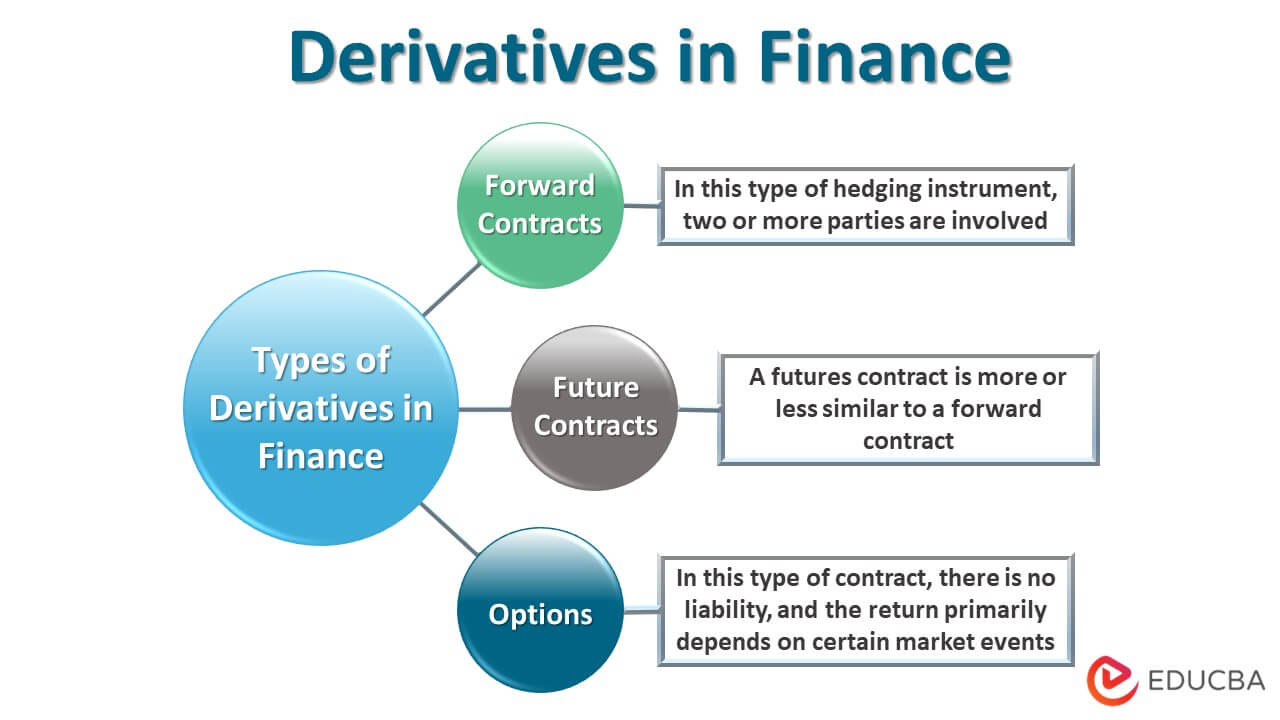
While the universe of derivatives is vast and continually expanding, most can be categorized into four main types: forwards, futures, options, and swaps. Each serves distinct purposes and possesses unique structural characteristics.
Forwards and Futures Contracts
-
Forwards: A forward contract is a customized agreement between two parties to buy or sell an asset at a specified price on a future date. They are typically traded over-the-counter (OTC), meaning they are privately negotiated and not traded on a public exchange. This customization is a key advantage, allowing parties to tailor the contract precisely to their needs (e.g., specific quantity, quality, delivery location). However, their OTC nature also introduces counterparty risk – the risk that one party might default on their obligation.
-
Futures: Futures contracts are standardized forward contracts that are traded on organized exchanges (e.g., CME, ICE). This standardization dictates contract size, quality, and delivery dates, making them highly liquid. To mitigate counterparty risk, futures exchanges employ clearinghouses, which act as intermediaries guaranteeing both sides of the trade. They also require daily marking-to-market and margin calls, where profits and losses are settled daily, ensuring participants maintain sufficient funds to cover potential losses. Futures are widely used by producers and consumers to hedge against price volatility and by speculators looking to profit from price movements.
Options (Calls and Puts)
An option contract gives the buyer the right, but not the obligation, to buy or sell an underlying asset at a specified price (the strike price) on or before a specified date (the expiration date). The seller of the option is obligated to fulfill the contract if the buyer chooses to exercise their right. Options come in two basic forms:
-
Call Options: Give the holder the right to buy the underlying asset at the strike price. Buyers of call options typically expect the underlying asset’s price to rise above the strike price.
-
Put Options: Give the holder the right to sell the underlying asset at the strike price. Buyers of put options typically expect the underlying asset’s price to fall below the strike price.
The buyer pays a premium to the seller for this right. Options can be used for hedging (e.g., buying a put option to protect against a stock price drop) or speculation (e.g., buying a call option hoping for a significant price increase). Their defined risk (for the buyer, limited to the premium paid) makes them attractive for certain strategies.
Swaps (Interest Rate, Currency, Credit Default)
Swaps are agreements between two parties to exchange sequences of cash flows over a period of time. Unlike forwards and futures, which typically involve a single future exchange, swaps involve multiple exchanges.
-
Interest Rate Swaps: The most common type, where two parties agree to exchange interest payments. For example, one party might pay a fixed interest rate on a notional principal amount, while the other pays a floating interest rate on the same notional principal. This allows companies to manage their exposure to interest rate fluctuations.
-
Currency Swaps: Involve the exchange of principal and/or interest payments in different currencies. These are used by multinational corporations to hedge against currency risk or to obtain financing in a foreign currency at a more favorable rate.
-
Credit Default Swaps (CDS): A type of insurance contract where the buyer makes regular payments to the seller in exchange for a payoff if a specified credit event (e.g., default or bankruptcy) occurs to a reference entity (e.g., a company’s bond). CDS were famously at the center of the 2008 financial crisis.
Why Use Derivatives? Applications and Strategies
Derivatives are not merely speculative tools; they serve critical functions in modern financial markets, enabling a wide range of sophisticated financial strategies for various market participants, from multinational corporations to individual investors.
Hedging Against Risk
One of the primary and most legitimate uses of derivatives is risk management, specifically hedging. Hedging involves taking an offsetting position in a derivative to mitigate the risk of adverse price movements in an underlying asset or portfolio.
-
For businesses: An airline might use fuel futures to lock in a price for jet fuel, protecting itself from sudden spikes in oil prices. A farmer might sell wheat futures to guarantee a price for their harvest, insulating them from price drops before their crops are ready for market.
-
For investors: An investor holding a stock portfolio might buy put options on an index or specific stocks to protect against a market downturn, limiting their potential losses. A company expecting to receive payment in a foreign currency might use a currency forward contract to lock in an exchange rate, avoiding losses if the foreign currency depreciates.
Speculation and Profit Opportunities
While hedging minimizes risk, speculation aims to profit from anticipated price movements. Traders and investors use derivatives to take leveraged positions, betting on the future direction of an underlying asset.
-
If a speculator believes a stock price will rise, they might buy call options or futures contracts on that stock. If their prediction is correct, the leveraged nature of derivatives can lead to significant profits.
-
Conversely, if they expect a price decline, they might buy put options or sell futures contracts (go short).
However, speculation with derivatives carries substantial risk. The same leverage that can magnify gains can also lead to amplified losses, potentially exceeding the initial investment in some cases (e.g., selling uncovered call options).
Arbitrage Strategies
Arbitrage involves exploiting temporary price discrepancies between identical or similar assets in different markets to make a risk-free profit. Derivatives are often key components in arbitrage strategies.
-
For example, if a stock trades at different prices on two different exchanges, or if the price of a derivative contract (like a futures contract) deviates significantly from the theoretical value based on its underlying asset, arbitrageurs can simultaneously buy the undervalued asset and sell the overvalued one.
-
This activity helps ensure market efficiency by quickly bringing prices back into alignment, though opportunities are typically fleeting and require sophisticated trading systems and rapid execution.
Market Efficiency and Price Discovery
Derivatives contribute significantly to market efficiency and price discovery.
-
Price Discovery: Futures markets, in particular, provide a public, centralized mechanism for participants to express their views on future prices. The current price of a future contract often reflects the market’s collective expectation of the underlying asset’s future spot price. This information is invaluable for producers, consumers, and policymakers.
-
Increased Liquidity: The availability of derivatives can increase liquidity in the underlying asset market. For instance, if it’s easier to trade an option on a stock than the stock itself, it might still indirectly facilitate price formation and trading interest in the underlying.
Risks and Complexities Associated with Derivatives
Despite their utility, derivatives are highly complex financial instruments that carry significant risks. Their very nature, especially leverage, can amplify both profits and losses, making them unsuitable for all investors.
Leverage Amplifies Losses
As discussed, leverage is a core feature of derivatives. While it can enhance returns, it equally amplifies losses. A small adverse movement in the underlying asset’s price can wipe out a substantial portion, or even all, of an investor’s initial capital. In some cases, particularly with certain types of options or futures, losses can exceed the initial investment, leading to margin calls and significant financial distress. This inherent volatility demands a sophisticated understanding of risk management and a clear strategy.
Counterparty Risk
Counterparty risk is the risk that the other party to a financial contract will fail to fulfill their obligations. This risk is particularly prevalent in over-the-counter (OTC) derivatives, such as forward contracts and most swaps, where there is no central clearinghouse to guarantee the trades. If a counterparty defaults, the non-defaulting party can suffer significant losses, even if the underlying market movements were favorable. Exchange-traded derivatives (like futures and options) largely mitigate this risk through the clearinghouse mechanism, which interposes itself between buyers and sellers, guaranteeing performance.
Valuation Challenges and Illiquidity
Valuing derivatives can be exceptionally complex, especially for customized or exotic contracts. Factors like volatility, time to expiration, interest rates, and the specific characteristics of the underlying asset all play a role. Incorrect valuation models can lead to mispricing, opening doors for arbitrage but also posing risks for those who rely on faulty models. Furthermore, some highly customized OTC derivatives can be illiquid, meaning there isn’t a readily available market to buy or sell them. This illiquidity can make it difficult for investors to exit positions quickly or at a fair price, potentially trapping them in unfavorable contracts.
Regulatory Scrutiny and Systemic Risk
The interconnectedness and complexity of derivative markets, particularly OTC derivatives, have long been a concern for financial regulators. The 2008 global financial crisis highlighted how opaque and unregulated derivative markets (especially credit default swaps) could contribute to systemic risk – the risk of a collapse of an entire financial system or market. Regulators worldwide have since implemented reforms (e.g., Dodd-Frank Act in the US, EMIR in Europe) aimed at increasing transparency, mandating central clearing for certain derivatives, and imposing stricter capital requirements on financial institutions involved in derivative trading. Despite these efforts, the sheer volume and intricacy of the derivative market continue to pose challenges for oversight.
The Evolving Landscape of Derivative Markets
The derivative market is not static; it continually evolves, driven by technological advancements, changing regulatory environments, and the dynamic needs of global finance.
Over-the-Counter (OTC) vs. Exchange-Traded Derivatives (ETD)
Historically, much of the derivatives market was OTC, offering immense flexibility but also opacity and higher counterparty risk. Post-2008, there has been a significant push to shift more standardized OTC derivatives into central clearing and exchange trading.
-
Exchange-Traded Derivatives (ETD): Futures and many options are traded on organized exchanges. They are standardized, liquid, and carry reduced counterparty risk due to clearinghouses.
-
Over-the-Counter (OTC) Derivatives: Forwards and most swaps remain largely OTC. While reforms have increased transparency and required central clearing for a growing number of OTC instruments, the bespoke nature of many OTC contracts means they continue to be negotiated directly between parties. The balance between the flexibility of OTC and the safety of ETD remains a key theme in market evolution.
Technological Advancements and Algorithmic Trading
Technology has profoundly reshaped derivative markets. High-frequency trading (HFT) and algorithmic trading strategies, driven by powerful computers and sophisticated algorithms, dominate much of the trading volume. These technologies enable:
-
Faster Execution: Trades are executed in microseconds, exploiting tiny price discrepancies.
-
Complex Strategies: Algorithms can implement intricate strategies involving multiple derivative instruments simultaneously.
-
Market Making: Automated systems provide liquidity by continuously quoting buy and sell prices.
The rise of fintech and distributed ledger technology (blockchain) also promises new frontiers for derivatives, potentially enhancing transparency, reducing settlement times, and lowering costs, particularly for OTC markets.

Regulatory Frameworks and Reforms (e.g., Dodd-Frank, EMIR)
In response to the financial crisis, regulators around the globe enacted significant reforms targeting derivative markets.
-
Dodd-Frank Wall Street Reform and Consumer Protection Act (US): Mandated central clearing and exchange trading for many OTC derivatives, increased reporting requirements, and brought swap dealers under federal oversight.
-
European Market Infrastructure Regulation (EMIR – EU): Similarly focused on increasing safety and efficiency in the OTC derivative market by requiring central clearing, reporting obligations, and risk mitigation techniques for non-centrally cleared OTC derivatives.
These reforms aim to reduce systemic risk, increase market transparency, and ensure that financial institutions have adequate capital to support their derivative activities. However, navigating these complex regulatory landscapes continues to be a major challenge for market participants.
In conclusion, derivatives are powerful and versatile financial instruments that play an indispensable role in global finance. They allow market participants to manage risks, speculate on future price movements, and achieve various financial objectives with remarkable precision and leverage. From hedging against commodity price volatility for corporations to providing sophisticated investment opportunities for institutions and individuals, their applications are vast. However, their complexity, inherent leverage, and the potential for substantial losses demand a thorough understanding, meticulous risk management, and often, a high degree of expertise. As markets continue to evolve and technology reshapes trading, the landscape of derivatives will undoubtedly remain at the forefront of financial innovation and regulatory focus.
aViewFromTheCave is a participant in the Amazon Services LLC Associates Program, an affiliate advertising program designed to provide a means for sites to earn advertising fees by advertising and linking to Amazon.com. Amazon, the Amazon logo, AmazonSupply, and the AmazonSupply logo are trademarks of Amazon.com, Inc. or its affiliates. As an Amazon Associate we earn affiliate commissions from qualifying purchases.