
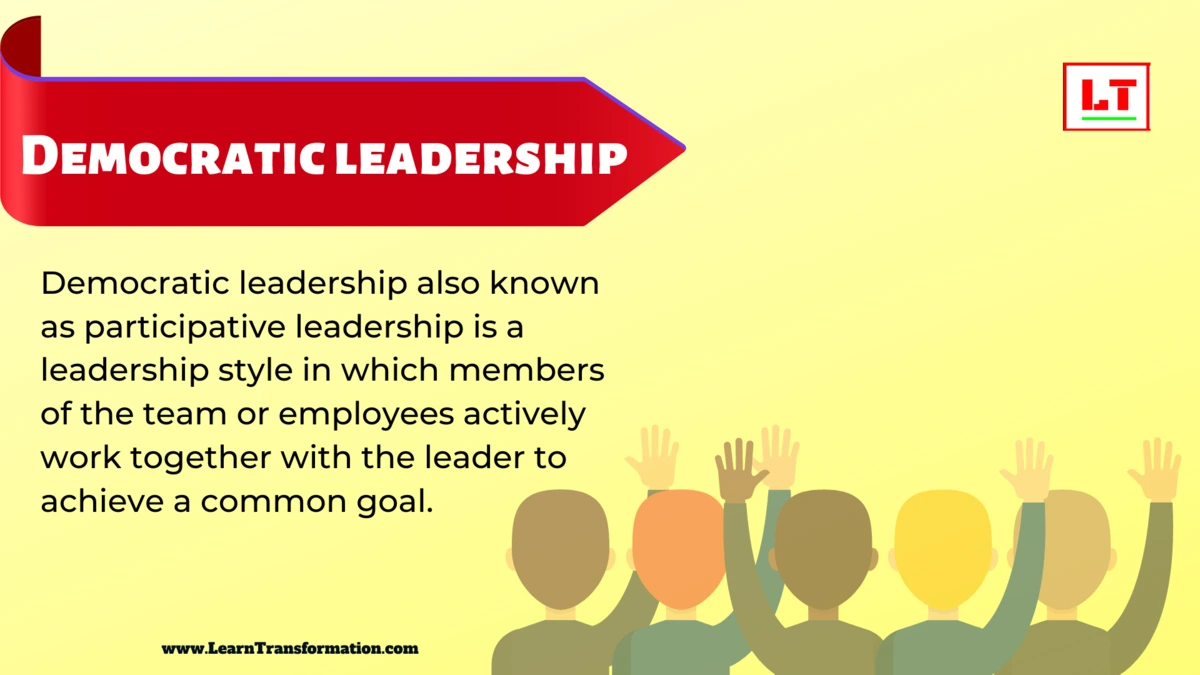
In the modern corporate landscape, the traditional command-and-control hierarchy is rapidly losing its efficacy. As organizations become flatter and more reliant on specialized, cross-functional teams, the demand for leadership that fosters collaboration and inclusivity has surged. Democratic leadership—also known as participative leadership—stands at the forefront of this shift. It is a management style characterized by the inclusion of team members in the decision-making process, prioritizing consensus and collective intelligence over top-down directives.
Understanding democratic leadership requires moving beyond the misconception that it implies a “vote on everything” approach. Instead, it is a strategic framework where a leader maintains the final decision-making authority while actively soliciting, processing, and integrating the perspectives of those they lead. By valuing individual input, democratic leaders cultivate a culture of accountability, innovation, and psychological safety, which are critical drivers of long-term brand equity and organizational health.
The Core Principles of Democratic Leadership
At the heart of the democratic leadership style lies the belief that the best solutions often emerge from the collective rather than the singular mind. For business leaders and brand strategists, this is not merely a moral choice but a tactical one.
Decentralized Decision-Making
The fundamental tenet of this style is the distribution of power. A democratic leader acts as a facilitator rather than a dictator. By bringing team members into the boardroom—or the brainstorming session—the leader acknowledges that frontline employees often possess the most nuanced understanding of customer pain points and operational bottlenecks. When a team feels that their expertise is valued, they are more likely to commit to the organization’s strategic goals.
Cultivating Open Communication
In a democratic environment, communication is multidirectional. It flows from the top down, the bottom up, and laterally across departments. This transparency is essential for building a robust brand culture. When leaders share context—explaining not just the “what” but the “why” of a business strategy—employees gain the clarity needed to make autonomous decisions that align with the brand’s mission. This fosters a sense of ownership, which is a powerful psychological lever for engagement.
The Role of Consensus and Dissent
Democratic leadership thrives on healthy debate. It does not seek to eliminate disagreement; rather, it seeks to harness it. A skilled leader in this space facilitates a process where conflicting ideas are treated as data points. By encouraging constructive friction, the leader can pressure-test strategic directions, identifying risks that might have been ignored in a more insular, authoritarian environment. The leader remains the ultimate arbiter, but their final call is significantly more informed due to the synthesis of diverse viewpoints.
Benefits of Democratic Leadership for Brand Strategy
From a brand management perspective, the internal culture of a company acts as the primary engine for its external reputation. How a team operates internally inevitably reflects in the brand’s service delivery, marketing voice, and overall product quality.
Enhancing Innovation and Agility
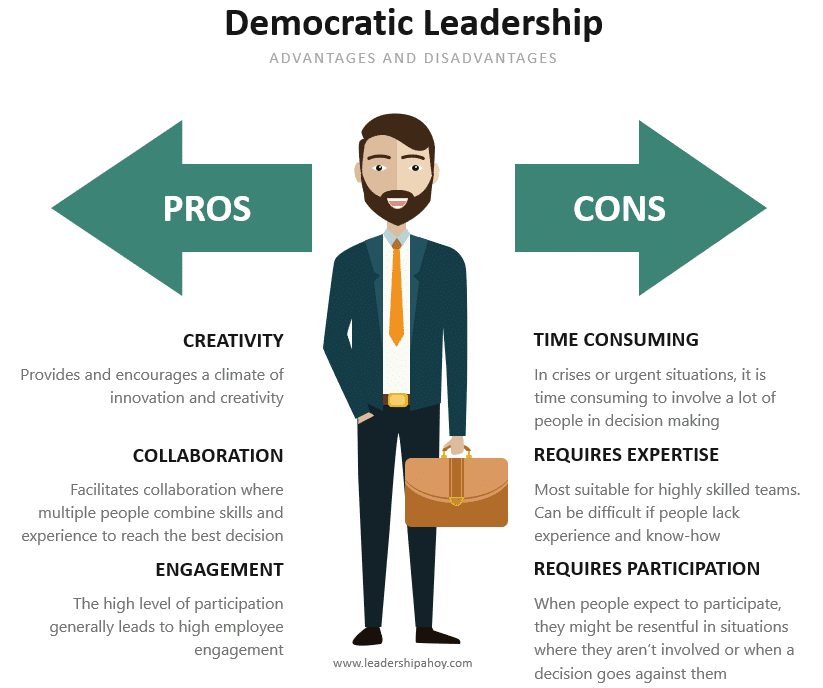
Brands that rely on a single visionary leader often face the “blind spot” trap. A leader, no matter how talented, cannot see every market trend or understand every demographic shift. Democratic leadership acts as a hedge against this. By tapping into the diverse backgrounds of a workforce, brands can pivot more effectively. When everyone is encouraged to propose ideas, innovation becomes an organizational habit rather than a sporadic event. This agility is the lifeblood of competitive advantage in a crowded marketplace.
Improving Employee Retention and Brand Advocacy
Talented professionals today gravitate toward roles where they feel heard and respected. A participative environment is a major differentiator in the war for talent. When employees participate in the strategy-building process, their personal investment in the brand’s success sky-rocket. This turns employees into brand advocates—people who genuinely believe in the mission because they helped shape it. This internal buy-in is visible to customers, translating into more authentic marketing and better customer experiences.
Streamlining Strategic Buy-in
One of the greatest challenges in implementing a new brand strategy or a pivot in corporate identity is the “buy-in” phase. Change often meets resistance, especially when it is imposed without explanation. By contrast, when a team has contributed to the creation of a new strategy, the resistance to implementation vanishes. The team does not need to be convinced of the strategy’s merits because they were there at the inception. They understand the rationale, the compromises made, and the goals set, leading to a much smoother rollout of any corporate initiative.
Challenges and Tactical Considerations
While the benefits are significant, democratic leadership is not a panacea. It requires a specific skill set and a high level of emotional intelligence to execute effectively. If handled poorly, it can devolve into indecision or a loss of organizational focus.
The Risk of Analysis Paralysis
The most common criticism of participative leadership is that it is time-consuming. Seeking input and building consensus can slow down the decision-making process. In industries that require rapid, high-stakes shifts, this can be a liability. To mitigate this, successful leaders adopt a tiered approach to decision-making. They categorize decisions: some are collaborative, requiring deep consensus, while others—such as immediate crisis management—require decisive, unilateral action. Knowing when to stop the deliberation and make the call is the hallmark of an effective democratic leader.
Managing Toxic Consensus
A major pitfall occurs when the leader accidentally creates an environment where only “popular” opinions are voiced. This is the danger of groupthink. A democratic leader must be vigilant about creating a space where unpopular or unconventional ideas can be shared without fear of social or professional penalty. This requires the leader to consciously invite input from quiet team members and to validate challenging questions. If the team is merely telling the leader what they want to hear, the democratic process has failed.
The Necessity of Emotional Intelligence
To lead democratically, a manager must be an expert listener. This involves active listening, paraphrasing, and synthesizing. Leaders must be able to keep ego out of the equation. If a leader enters a meeting with a pre-determined outcome, the participative process becomes performative. True democratic leadership requires the humility to be proven wrong and the capacity to change one’s mind based on the evidence presented by the team.
Implementing Democratic Leadership in Corporate Environments
For companies looking to shift toward a more democratic model, the transition must be intentional. It is not something that happens by simply holding more meetings; it is about building a structural framework for participation.
Establishing Clear Parameters
Democratic leadership works best when the boundaries of the discussion are clear. A leader should define the scope of the decision at the outset: “We need to decide on our social media strategy for the next quarter. We have a set budget, and our main objective is increasing engagement with our current Gen Z audience. Within these constraints, what are your ideas?” By defining the sandbox, the leader prevents the discussion from becoming aimless.
Building Feedback Loops
Structured feedback is essential for maintaining a democratic culture. This can take the form of regular retrospectives, anonymous surveys, or “office hours” where the leadership team holds open forums. The key is that these loops must lead to visible action. If employees share feedback and nothing changes, the democratic facade will collapse, leading to cynicism and disengagement.

Training for Collaborative Excellence
Participative leadership requires a high level of soft skills from everyone involved. It is not just the leader who needs training; the entire team needs to learn how to debate respectfully, how to synthesize ideas, and how to support the final decision—even if it wasn’t their personal preference. This fosters a professional maturity that strengthens the brand’s internal fabric.
Ultimately, the democratic leadership style is an investment in human capital. It is a commitment to the idea that an organization’s most valuable assets—the intelligence, creativity, and drive of its people—are best utilized when they are actively integrated into the strategic direction of the brand. In an era where authenticity and collaboration are the benchmarks of a successful business, democratic leadership provides the roadmap for long-term viability and growth. It turns the organization into a collective entity, capable of out-thinking and out-evolving its competition through the sheer power of unified, informed action.
aViewFromTheCave is a participant in the Amazon Services LLC Associates Program, an affiliate advertising program designed to provide a means for sites to earn advertising fees by advertising and linking to Amazon.com. Amazon, the Amazon logo, AmazonSupply, and the AmazonSupply logo are trademarks of Amazon.com, Inc. or its affiliates. As an Amazon Associate we earn affiliate commissions from qualifying purchases.