
For decades, the heavy, humming box on the corner of every office desk and the massive cabinet in the center of every living room shared a common heart: the Cathode Ray Tube (CRT). Before the era of ultra-thin OLED panels and 4K liquid crystal displays, the CRT was the undisputed king of visual technology. While today’s generation may view these monitors as bulky relics of a bygone era, the technology behind them was a marvel of 20th-century engineering that laid the groundwork for the modern digital age. Understanding what a CRT monitor is requires a journey into the physics of vacuum tubes, the history of telecommunications, and a look at why this “obsolete” technology is currently seeing a massive resurgence among tech enthusiasts and professional gamers.
The Mechanics of Light: How CRT Technology Works
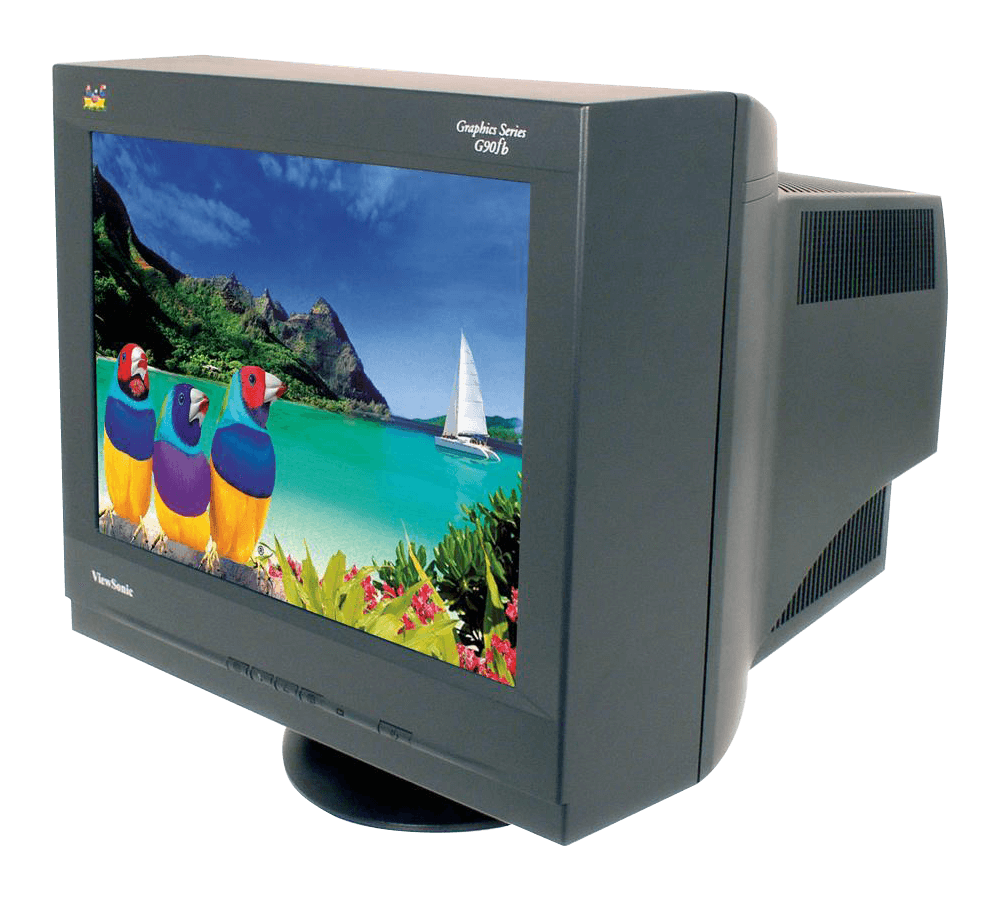
At its core, a CRT monitor is a specialized vacuum tube that contains one or more electron guns and a phosphorescent screen used to view images. Unlike modern flat panels that use a grid of pixels that are either “on” or “off,” a CRT is an analog device that draws an image by firing beams of electrons at a screen.
The Electron Gun and the Vacuum Tube
The process begins at the back of the monitor in the “neck” of the tube. Here, a component called a cathode is heated by an electrical current. This heat causes the cathode to release a stream of electrons. In a vacuum—which is necessary so the electrons don’t collide with air molecules—these electrons are accelerated toward the front of the monitor. In a color CRT, there are actually three separate electron guns, one for each of the primary additive colors: red, green, and blue.
Phosphors and Shadow Masks
The inside of the front glass screen is coated with a layer of phosphors—substances that emit light when struck by radiation. In a color monitor, these phosphors are arranged in dots or stripes. To ensure that the red electron gun only hits red phosphors, a “shadow mask” or “aperture grille” (a thin metal sheet with holes or slots) is placed just behind the screen. This precision allows the monitor to mix colors with incredible accuracy, creating the full spectrum of light we see on the display.
Refresh Rates and Scanning Patterns
CRTs do not display an entire image all at once. Instead, the electron beam “scans” the screen from top to bottom, left to right, in a series of horizontal lines known as a raster pattern. Magnetic deflection coils (the “yoke”) around the neck of the tube use magnetic fields to steer the beam with incredible speed. The “refresh rate”—measured in Hertz (Hz)—dictates how many times per second the beam redraws the entire screen. Because the phosphors glow for a brief moment after being hit, our eyes perceive a continuous, flicker-free image due to the phenomenon of persistence of vision.
The Evolution and Dominance of CRTs in the 20th Century
From the mid-1940s until the early 2000s, CRT technology was the standard for almost all electronic visual displays. Its journey from a laboratory curiosity to a household staple defines the timeline of modern consumer electronics.
From Radar Screens to Living Room TVs
The roots of the CRT go back to the late 19th century, but it wasn’t until the post-WWII era that the technology became commercially viable for the masses. Initially utilized for oscilloscopes and radar equipment during the war, the technology was adapted for the first television sets. These early monitors were monochrome (black and white) and featured rounded glass because a vacuum tube must be structurally reinforced to withstand the immense atmospheric pressure pushing in on it.
The PC Revolution and High-Resolution Monitors
As personal computing took off in the 1980s and 90s, the demand for higher resolution and better color accuracy pushed CRT technology to its limits. Brands like Sony, with their famous “Trinitron” line, introduced the aperture grille, which allowed for brighter, sharper images compared to traditional shadow masks. Professional-grade CRT monitors, such as the Sony BVM (Broadcast Video Monitor), became the gold standard for film editing and graphic design because they offered color reproduction and black levels that early LCDs could not hope to match.
Comparing CRT to Modern Display Technologies
When the industry shifted toward Liquid Crystal Displays (LCD) and Light Emitting Diodes (LED) in the mid-2000s, the primary drivers were weight, size, and power consumption. However, in terms of raw performance metrics, the transition was not a straightforward upgrade.
Response Time and Motion Clarity
One of the most significant advantages of CRT monitors is their near-instantaneous response time. Because the image is created by a beam of electrons traveling at a fraction of the speed of light hitting phosphors, there is virtually no delay. In contrast, LCDs require liquid crystals to physically rotate to block or allow light, which creates “ghosting” or motion blur. For fast-moving content, a CRT remains the gold standard for motion clarity, as it does not suffer from the “sample-and-hold” blur inherent in modern flat panels.
Color Depth and Contrast Ratios
CRTs are famous for their “true blacks.” When the electron beam is not hitting a specific part of the screen, that area remains completely dark. While modern OLED screens have finally matched this capability, standard LED-backlit LCDs often struggle with “backlight bleed,” where the black areas of a screen look dark gray. Furthermore, CRTs handle color gradients with an analog smoothness that prevents the “color banding” often seen on lower-end digital displays.
Portability and Energy Efficiency
The downfall of the CRT was its physical footprint. A 20-inch CRT monitor could weigh upwards of 50 pounds and take up most of a desk’s depth. They also consumed significant amounts of electricity and generated heat. As the world moved toward laptops, mobile devices, and sleek office setups, the bulky, power-hungry CRT was destined to be replaced by the more efficient, albeit initially lower-quality, LCD.
The Modern Resurgence: Why Retro Gamers and Enthusiasts Still Use CRTs
In a world of 8K resolution and 240Hz gaming monitors, there is a thriving secondary market for vintage CRT monitors. This isn’t just nostalgia; it is a pursuit of a specific type of visual fidelity that modern tech cannot replicate.
Zero Input Lag and Competitive Play
In the world of competitive gaming—specifically titles like Super Smash Bros. Melee or older Street Fighter games—every millisecond counts. “Input lag” refers to the delay between pressing a button and seeing the action on the screen. Because CRTs process an analog signal directly without the need for digital processing or scaling, they have essentially zero input lag. For professional players, this “instant feel” is the difference between winning and losing.
Scaling and Native Resolution Versatility
Modern monitors have a “native resolution” (e.g., 1920×1080). If you try to run a lower resolution on a 4K screen, the image often looks blurry or “pixelated” because the monitor has to stretch the image to fit the pixel grid. CRTs do not have a fixed grid of pixels. They are “multi-sync,” meaning they can display various resolutions natively by simply changing the scan rate of the electron beam. This makes retro games from the NES, SNES, or PlayStation eras look exactly as the artists intended—vibrant, sharp, and textured.
The Aesthetic of Analog Artifacts
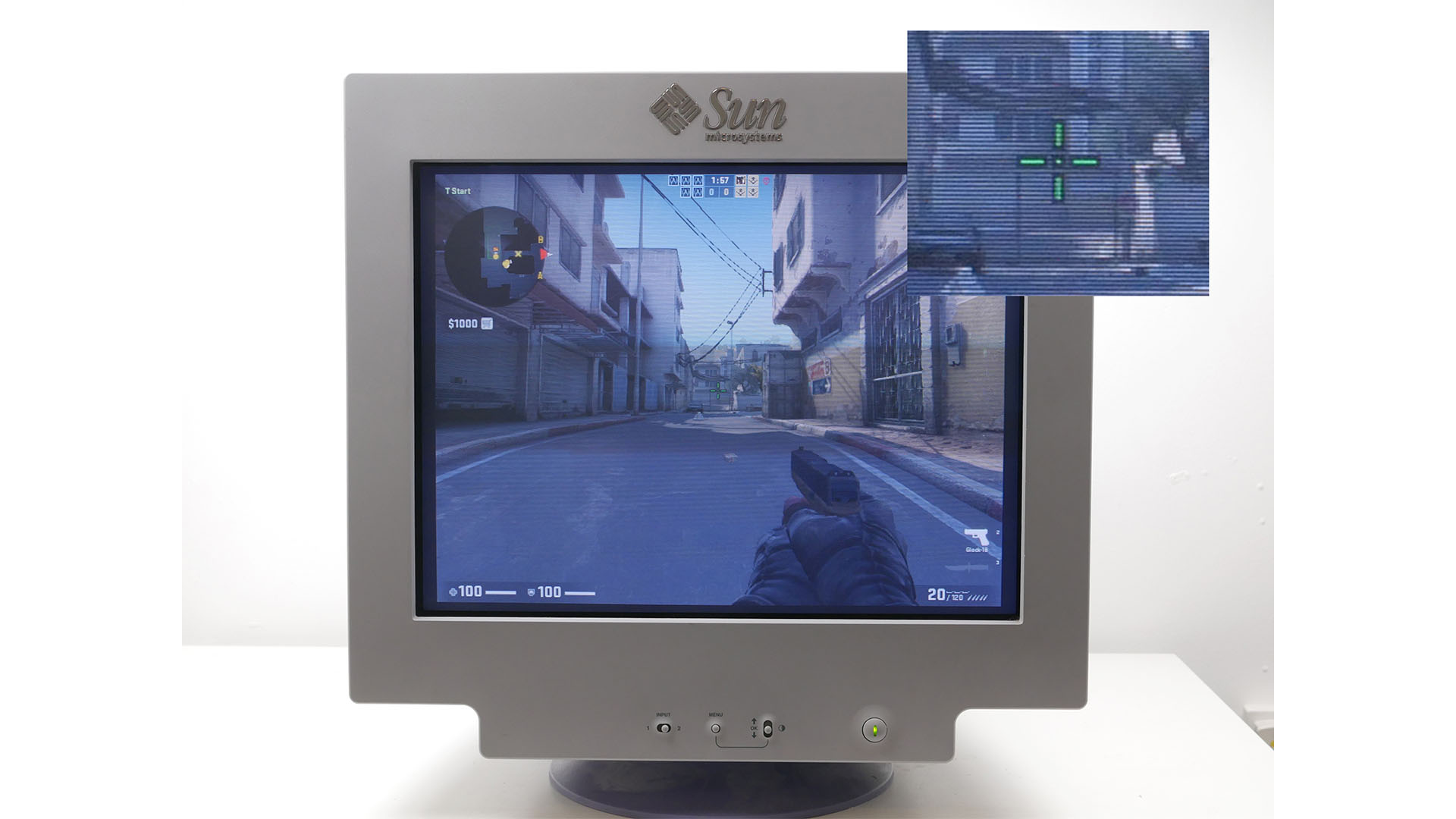
There is a unique visual texture to a CRT, often referred to as “scanlines.” These are the thin gaps between the lines drawn by the electron gun. For many digital artists and gamers, these scanlines provide a natural anti-aliasing effect, smoothing out jagged edges and giving the image a “warm” look. This has become so popular that modern game developers often include “CRT filters” in their software to mimic the look of an old-school tube.
The Environmental Impact and Proper Disposal of CRT Monitors
As we look at the legacy of the CRT, we must also address the environmental challenges they pose. These monitors were built to last, but when they finally reach the end of their life, they cannot simply be thrown in the trash.
Hazardous Materials: Lead and Mercury
A typical CRT monitor contains several pounds of lead in the glass to shield the user from the X-rays generated by the electron gun. They also contain phosphors, cadmium, and other heavy metals. If a CRT is smashed in a landfill, these toxic materials can leach into the groundwater, posing a significant environmental hazard.
Recycling Initiatives and E-Waste Challenges
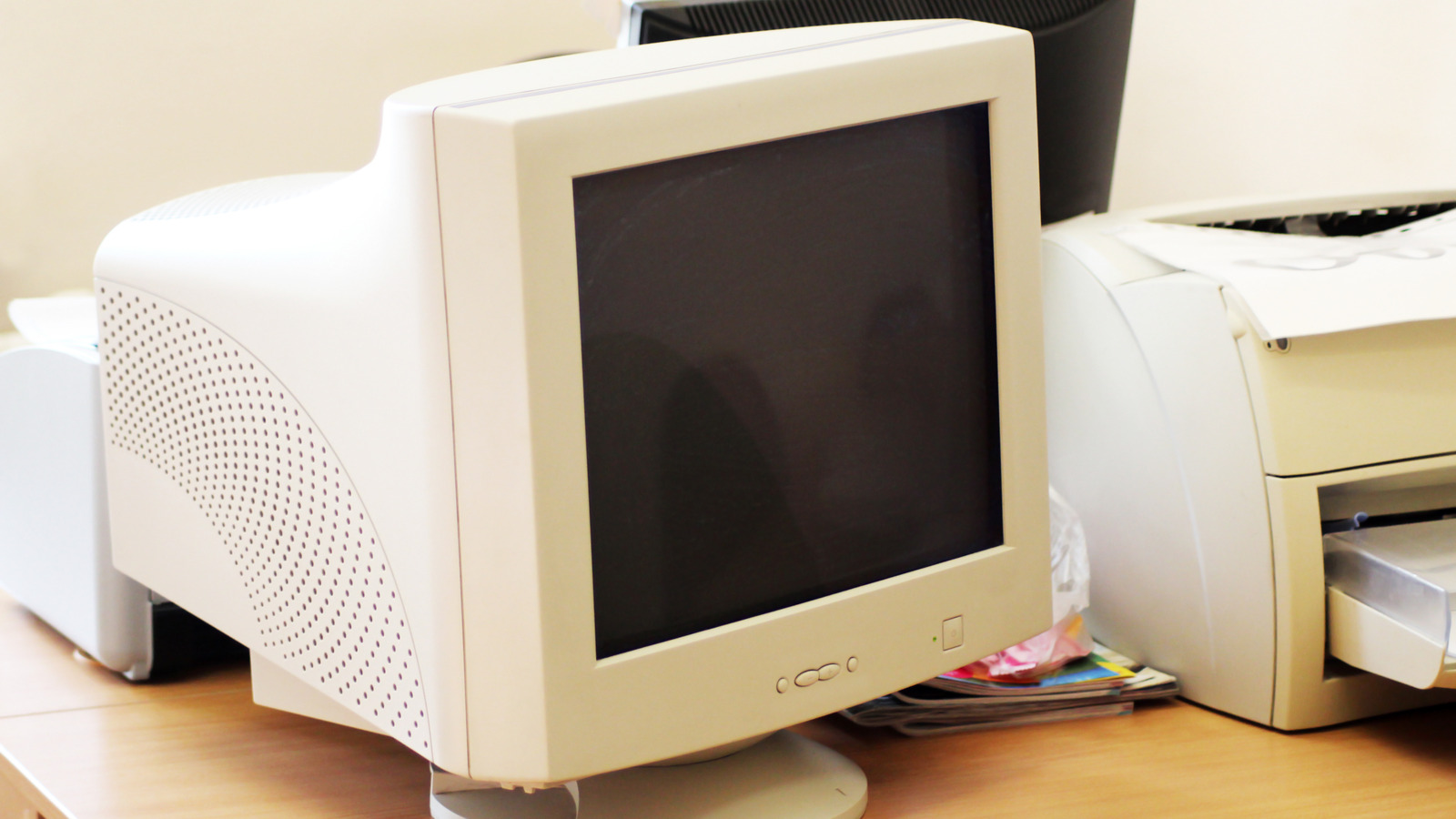
Today, recycling CRTs is a specialized process. The leaded glass must be separated from the non-leaded glass and the electronic components. Many municipalities offer specific “e-waste” collection days to ensure these devices are handled safely. For tech enthusiasts, the best way to “recycle” a CRT is to keep it in use—donating working units to retro gaming communities or specialized collectors who value the technology.
In conclusion, the CRT monitor is much more than a heavy relic of the past. It was the bridge between the analog and digital worlds, a piece of technology that defined how we consumed media for over half a century. While the world has moved on to the convenience of flat panels, the CRT remains a masterclass in physics and engineering, continuing to offer a level of performance in motion clarity and input latency that modern technology is only just beginning to rediscover. Whether you are a retro gamer seeking the perfect “scanline” or a tech historian, the CRT stands as a testament to an era when “cutting edge” meant a vacuum tube and a beam of electrons.
aViewFromTheCave is a participant in the Amazon Services LLC Associates Program, an affiliate advertising program designed to provide a means for sites to earn advertising fees by advertising and linking to Amazon.com. Amazon, the Amazon logo, AmazonSupply, and the AmazonSupply logo are trademarks of Amazon.com, Inc. or its affiliates. As an Amazon Associate we earn affiliate commissions from qualifying purchases.