
In the rapidly evolving landscape of modern technology, terms that were once confined to the halls of mathematics and theoretical physics are increasingly finding their way into the mainstream of software engineering and artificial intelligence. One such term is “covariant.” While it may sound like a complex jargon term reserved for high-level data scientists, understanding what a covariant is—and why it matters—is essential for anyone navigating the current trends in software architecture and robotic automation.
At its core, covariance describes a specific type of relationship where two or more variables or systems change in harmony. In the world of technology, this concept manifests in two primary arenas: the structural integrity of programming languages (Type Theory) and the cutting-edge development of universal AI brains for robotics. This article explores the dual nature of covariance, illustrating how it serves as a foundation for both the code we write and the machines we build.
The Mathematical and Programming Foundations of Covariance
To understand covariance in a tech context, one must first look at how software handles data types. As systems become more complex, the need for “type safety”—ensuring that a program doesn’t crash because it confused a string of text for a number—becomes paramount.
Defining Covariance in Type Theory
In computer science, covariance refers to the ability of a complex type (like a list or a function) to maintain the ordering of its underlying types. For example, if we have a hierarchy where a “Laptop” is a subtype of “Device,” a system is considered covariant if a “List of Laptops” can be treated as a “List of Devices.”
This might seem intuitive, but in the early days of software development, this was a significant hurdle. If a program expected a generic device but received a specific laptop, it might not know how to handle the extra specifications. Covariance allows for a flexible yet rigorous framework where software can evolve without breaking the underlying logic. It enables developers to write more generic, reusable code, which is the cornerstone of modern software efficiency.
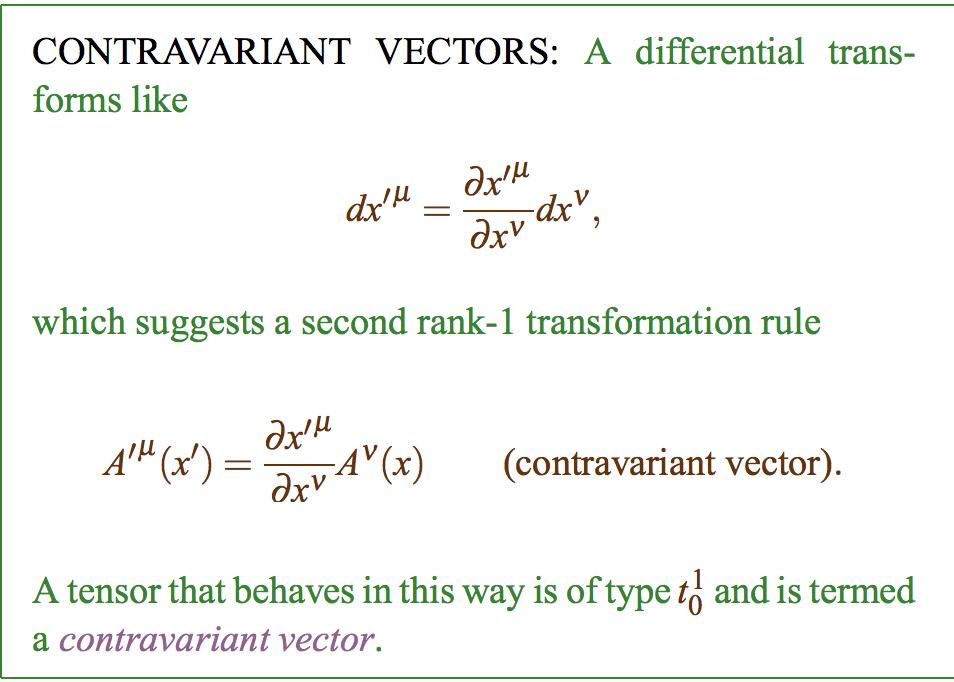
Covariance vs. Contravariance
To truly grasp covariance, one must also acknowledge its counterpart: contravariance. While covariance allows types to move “up” the hierarchy (from specific to general), contravariance allows them to move “down.”
Understanding the balance between these two is critical for digital security and software reliability. When a developer builds an API (Application Programming Interface), they must decide whether the data flowing through it should be covariant or contravariant. Mistaking one for the other can lead to “runtime errors,” where a program works fine in testing but crashes when it encounters real-world data. In the context of digital security, robust type systems that utilize covariance prevent unauthorized data injections by ensuring that only compatible data types can interact with sensitive system kernels.
Covariance in Modern Software Development
As we move toward more sophisticated software trends, such as functional programming and cloud-native applications, the practical application of covariance has become a standard requirement for high-level engineers.
Generics and Functional Programming
Modern languages like Swift, Kotlin, and Scala rely heavily on the concept of generics. Generics allow developers to write a single function that works across different data types. Covariance is the engine that makes these generics “smart.”
In functional programming, which is increasingly favored for its ability to handle massive parallel processing in AI tools, covariance ensures that data transformations remain predictable. When we map a function over a collection of data, we rely on covariance to ensure that the output remains within the expected architectural bounds. This predictability is why high-scale apps—from social media platforms to fintech tools—can handle millions of concurrent users without collapsing under the weight of type mismatches.
Practical Benefits for Digital Security and Stability
The implementation of covariant type systems is a silent guardian of digital security. Many software vulnerabilities arise from “buffer overflows” or “type confusion attacks,” where a malicious actor feeds a program data that it isn’t prepared to handle.
By enforcing strict covariant rules, modern compilers can catch these errors before the software is even launched. This “compile-time safety” means that the logic of the code is mathematically proven to be sound. For businesses, this translates to fewer patches, lower maintenance costs, and a more secure environment for user data. As AI tools begin to generate code automatically, the importance of these underlying mathematical structures only grows, providing a framework that prevents AI-generated “hallucinations” from becoming functional security flaws.
The Rise of Covariant AI: Transforming Robotics
Beyond the realm of pure code, the word “Covariant” has become synonymous with a revolution in physical automation. Specifically, the tech company Covariant, founded by pioneers in the field of deep learning, has taken this mathematical principle and applied it to the “brains” of robots.
From Logic to Motion: The Robotics Foundation Model
In the past, industrial robots were programmed with “hard-coded” logic. A robot in a car factory could move a door from point A to point B, but if the door was slightly tilted or the lighting changed, the robot would fail. It lacked the ability to adapt.
The modern “Covariant” approach changes this by introducing the “Robotics Foundation Model.” Much like Large Language Models (LLMs) like GPT-4 understand the patterns of human language, a covariant AI model understands the patterns of physical space and object manipulation. It is “covariant” because its understanding of the world changes in harmony with the environment it encounters. If the robot sees a new object it has never touched before, it can generalize its previous knowledge to handle the new task successfully.
The Covariant Brain and Warehouse Automation
The most immediate application of this tech trend is in global logistics and e-commerce. Modern warehouses handle millions of unique items (SKUs), ranging from soft apparel to heavy hardware. Traditional robotics could never handle such variety.
The “Covariant Brain”—a universal AI platform—enables robots to see, pick, and pack items with human-like dexterity. This is achieved through a combination of 3D vision and reinforcement learning. By analyzing millions of trials and errors in a simulated environment, the AI learns a covariant relationship between visual input and mechanical output. This trend is reshaping the global supply chain, allowing for 24/7 operations that are more resilient to labor shortages and spikes in consumer demand.
The Strategic Importance of Covariant Systems in Tech Trends
As we look toward the future, the integration of covariant principles—both in software logic and robotic hardware—will be a defining feature of the “Fourth Industrial Revolution.”
Scalability in the Age of Automation
For tech leaders and software architects, the lesson of covariance is one of scalability. A system that is rigid cannot scale; a system that is too loose will break. Covariance provides the “just right” middle ground.
In software, this means building frameworks that can grow and integrate with third-party AI tools without requiring a total rewrite of the codebase. In robotics, it means deploying machines that don’t need to be “re-trained” for every new task. This level of adaptability is what separates the tech giants of tomorrow from the legacy companies of yesterday. As we move toward “General Purpose AI,” the ability for systems to maintain their logical integrity across diverse environments will be the primary benchmark of success.
The Intersection of Software Design and Hardware Intelligence
We are currently witnessing a convergence where software principles are directly dictating hardware capabilities. The concept of “software-defined hardware” relies on the covariant relationship between the digital twin (the simulation) and the physical machine.
When a software engineer designs a covariant interface, they are ensuring that the digital instructions can be seamlessly translated into physical actions. This intersection is where the most exciting innovations in gadgets and AI tools are happening. From autonomous drones that can navigate forest fires to surgical robots that assist in complex procedures, the underlying “covariant” logic ensures that as the complexity of the task increases, the reliability of the system remains constant.
Conclusion: Why Covariance is the Silent Engine of Tech
The question “What is a covariant?” may begin with a dive into abstract mathematics, but it ends with a profound understanding of how the modern world functions. Whether it is the type-safe code that protects our digital banking apps or the AI-powered robots that fulfill our online orders, covariance is the silent engine driving these advancements.
In software, covariance allows for the flexibility and reuse of code that powers the massive apps we use daily. In artificial intelligence, it represents the shift from rigid, pre-programmed machines to fluid, adaptable “brains” capable of mastering the physical world. For developers, tech enthusiasts, and business leaders, embracing the principles of covariance means building systems that are not just functional, but are resilient, scalable, and ready for the future of autonomous technology.
As AI continues to blur the lines between the digital and physical realms, the “covariant” relationship—the harmony between change and consistency—will remain the most critical concept in the tech industry’s arsenal. Understanding it is no longer optional; it is the key to unlocking the next generation of digital and physical innovation.
aViewFromTheCave is a participant in the Amazon Services LLC Associates Program, an affiliate advertising program designed to provide a means for sites to earn advertising fees by advertising and linking to Amazon.com. Amazon, the Amazon logo, AmazonSupply, and the AmazonSupply logo are trademarks of Amazon.com, Inc. or its affiliates. As an Amazon Associate we earn affiliate commissions from qualifying purchases.