
Understanding family lineage is often more than just a hobby; for many, it is a pursuit of legacy and identity. However, when the branches of a family tree begin to sprawl across multiple generations, the nomenclature used to describe relationships can become confusing. The term “cousin removed” is perhaps the most common source of frustration for amateur genealogists and families alike. To decode these connections, one must look at them not as a matter of sentiment, but as a structured financial and legal mapping of ancestry—a system that plays a significant role in estate planning, inheritance law, and the preservation of family wealth.

The Mathematical Logic of Kinship
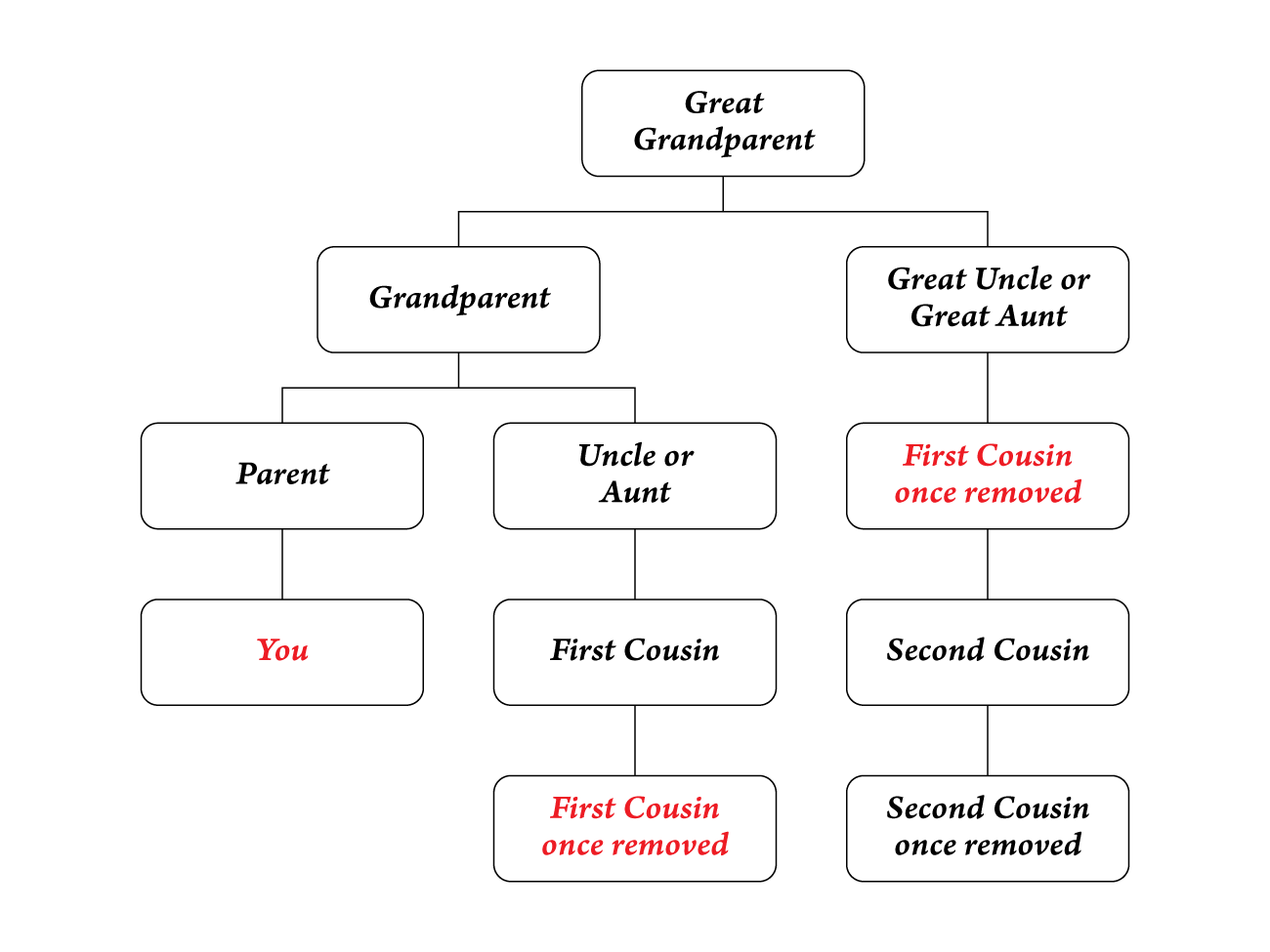
At its core, the designation of a cousin is determined by the distance of the shared common ancestor. Your first cousins are those with whom you share a set of grandparents. Your second cousins share a set of great-grandparents. The term “removed” is a technical indicator of a generational gap. It tells you that the two individuals are not in the same generation of the family hierarchy.
Defining the Generational Gap
When two people share a common ancestor but belong to different generations, the term “removed” is applied. If you are on the same generational level as your cousin—meaning you are both the same number of steps away from your common ancestor—you are simply “cousins” (first, second, third, etc.). Once you move up or down the family tree, you enter the territory of “removed.”
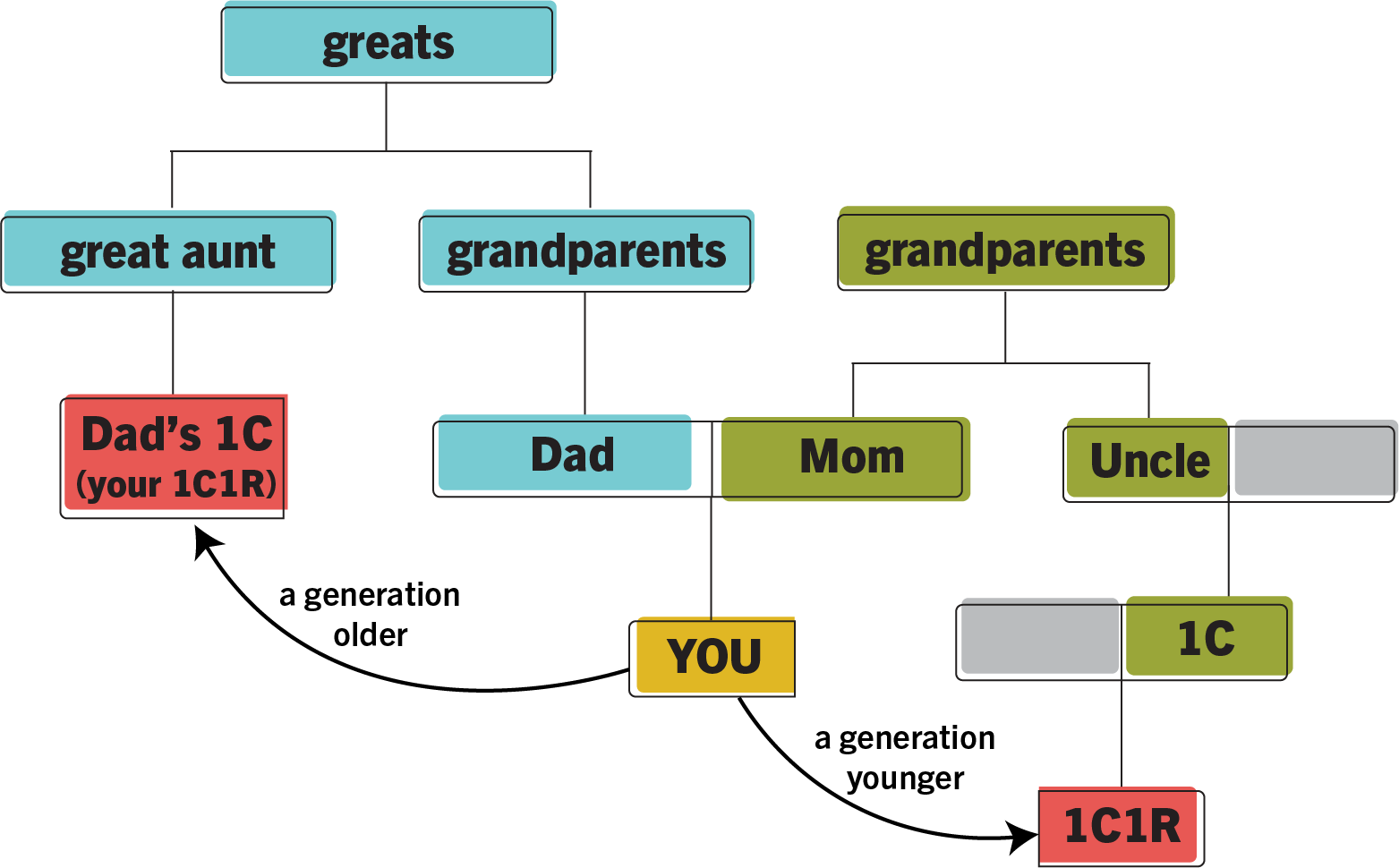
For instance, your first cousin’s child is not your second cousin. Because that child belongs to a different generation than you, they are your “first cousin, once removed.” The “once” signifies the one-generation difference. If you were to look at the grandchild of your first cousin, that individual would be your “first cousin, twice removed.” This mathematical precision is essential for anyone drafting a will, establishing a trust, or managing family assets, as it defines the precise legal proximity of heirs.
The Symmetry of Relationships
One of the most frequently misunderstood aspects of these labels is their directionality. Many assume that if you are a “first cousin, once removed” to someone, they must be something different to you. In reality, the relationship is entirely symmetrical. Whether you are looking up the family tree toward an older generation or down the tree toward a younger one, the technical designation remains identical. This consistency allows for clear communication when navigating legal documents or discussing familial rights regarding property or shared business interests.
Inheritance and Legal Implications
In the context of personal finance and estate planning, these definitions are far from academic. When a family member passes away without a will—a state known as intestate succession—the law relies strictly on these kinship labels to determine who is entitled to inherit assets. Understanding where someone falls on the family tree can prevent costly legal disputes and ensure that the distribution of wealth aligns with the intended legacy.
Intestate Succession and Heirship
In many jurisdictions, inheritance laws are hierarchical. If an individual dies without a spouse or direct descendants (children), the law moves outward to parents, then siblings, then nieces and nephews, and eventually to cousins. When the court is forced to identify “next of kin,” they will use the specific “cousin removed” terminology to verify proximity.
If you are drafting your own estate plan, relying on vague terms like “all my cousins” can lead to significant ambiguity. Does this include first cousins, once removed? Does it exclude second cousins? By using precise terminology in your financial documents, you remove the guesswork for executors and beneficiaries. Misunderstanding the distance between family members can lead to “heir hunting,” where probate courts spend significant portions of an estate’s value to locate distant, yet legally entitled, relatives.
Trusts, Foundations, and Multi-Generational Wealth
For families managing significant wealth, the distinction between cousin categories is critical for tax planning and the structure of family trusts. Many trusts are designed to benefit specific “lines” of a family. A trust might be set up to provide for the “descendants of the grantor’s siblings.”
If a grantor establishes a trust that names “first cousins” as beneficiaries, legal trouble often arises if the definition of the beneficiaries is not explicitly clarified in the trust instrument. Does the grantor intend for the “once removed” descendants to be included? If the document is silent, the trust may be locked in litigation. Financial advisors often recommend that clients define their beneficiaries by specific name or by a clearly defined relationship grade to ensure that wealth transfer is efficient and tax-advantaged.
Managing Family Business and Corporate Ownership
Family-owned businesses frequently rely on bloodlines for succession planning. When a founder retires or passes away, the distribution of voting shares often follows the family tree. The concept of “cousin removed” becomes a metric for determining who has a seat at the table in corporate governance.
Governance and Stakeholder Dynamics
In a multi-generational family business, the “cousin class” often refers to the generation currently active in the enterprise. As the family grows, the distance between family members increases, which can dilute the sense of shared mission.
By understanding the exact relationship—for example, recognizing that a younger relative is a “second cousin, once removed”—business leaders can better manage expectations regarding dividends, board representation, and management roles. It is not uncommon for family businesses to create “family constitutions” that specify that only direct descendants or cousins within a certain degree of removal are eligible for executive positions. Without a firm grasp of these designations, these policies become unenforceable and lead to internal strife, which is a major contributor to the failure of family businesses by the third generation.
The Role of Genealogy in Financial Record-Keeping
In the modern digital age, family offices and estate lawyers increasingly use genealogy software to map out potential heirs and stakeholders. This software tracks these “removed” relationships automatically, ensuring that when an asset needs to be transferred or a tax filing needs to be submitted, the data is accurate.
If you are involved in a family investment club or a holding company, maintaining a clear map of these relationships is a fiduciary duty. It prevents the commingling of interests and ensures that distributions are calculated correctly according to the ownership stakes assigned to different branches of the family tree.
Navigating the Complexity of Modern Families
The traditional definition of “cousin removed” assumes a standard, linear progression of generations. However, modern family structures—including those involving large age gaps between siblings, adoptions, or blended families—often complicate these labels.
Accounting for Age Gaps and Modern Lineages
It is possible for a “first cousin, once removed” to be older than you. If your parent is the youngest of six children and your cousin’s parent is the oldest, you might be closer in age to your first cousin’s child than you are to your first cousin. While this can feel counterintuitive, the financial and legal rules remain the same.
When conducting a financial audit or drafting a will, it is vital to ignore the “age” of the individual and focus exclusively on the “number of steps” back to the common ancestor. Financial decisions should be based on the structural lineage, not the chronological age of the relatives involved.
Final Thoughts on Relationship Clarity
Precision in language is the bedrock of clear financial and legal planning. Whether you are navigating the complexities of probate, setting up a generational trust, or managing the governance of a family business, the term “cousin removed” is a tool for accuracy. It strips away the emotional ambiguity of family ties and provides a clear, objective map of ancestry. By mastering these definitions, you ensure that your assets, your legacy, and your family’s financial future are protected against the confusion that so often plagues long-term, multi-generational planning. Take the time to map your tree correctly; in the world of finance and law, clarity is the greatest inheritance you can provide.
aViewFromTheCave is a participant in the Amazon Services LLC Associates Program, an affiliate advertising program designed to provide a means for sites to earn advertising fees by advertising and linking to Amazon.com. Amazon, the Amazon logo, AmazonSupply, and the AmazonSupply logo are trademarks of Amazon.com, Inc. or its affiliates. As an Amazon Associate we earn affiliate commissions from qualifying purchases.