
In the rapidly evolving landscape of medical technology and material science, the term “cortical bone” has migrated from the pages of anatomy textbooks into the research laboratories of Silicon Valley and the high-tech manufacturing hubs of the world. To a biologist, the cortical bone is the dense, outer shell of the human skeleton that provides structural integrity and protects the internal marrow. To a technologist, however, cortical bone represents the ultimate benchmark in structural engineering—a masterpiece of nature that we are currently attempting to decode, replicate, and enhance through software, artificial intelligence, and additive manufacturing.

As we move deeper into the era of the “Digital Twin” and personalized medicine, understanding the mechanics of cortical bone is essential for the next generation of tech-driven healthcare solutions. From the algorithms used to simulate stress-testing to the 3D printers producing bio-identical implants, cortical bone is the blueprint for the future of structural tech.
The Architecture of Strength: Translating Biological Cortical Bone into Material Science
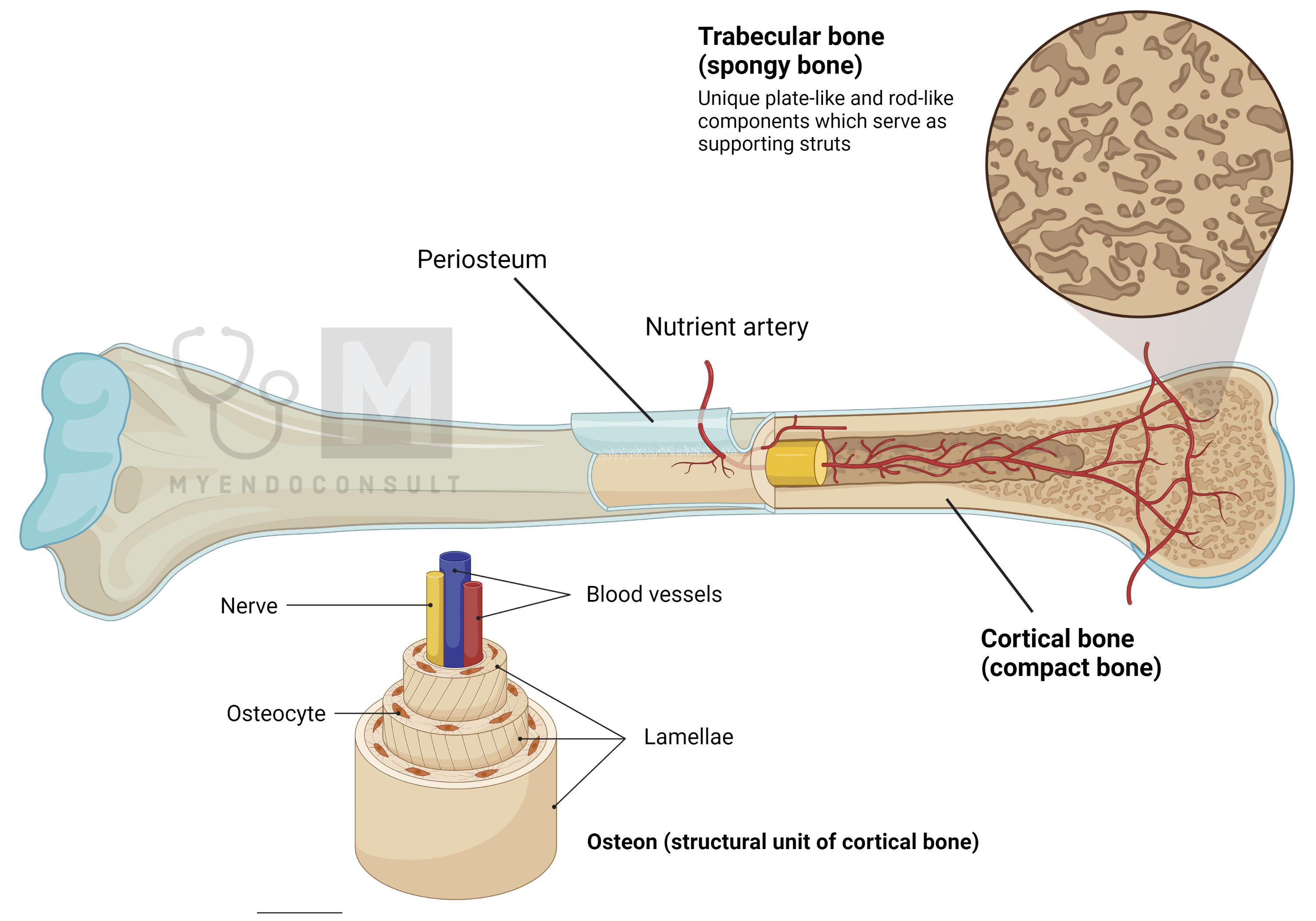
The first step in understanding cortical bone from a technological perspective is recognizing it as a highly sophisticated composite material. Unlike the spongy trabecular bone found at the ends of joints, cortical bone is nearly solid, characterized by a low porosity of about 5% to 10%. In the world of Computer-Aided Design (CAD), this density presents a fascinating challenge for engineers trying to balance weight with load-bearing capacity.
Understanding the Density: From Nature to CAD
In software engineering and mechanical modeling, replicating the “Osteon”—the fundamental functional unit of cortical bone—requires immense computational power. Each osteon consists of concentric layers of compact bone tissue surrounding a central canal. Modern CAD software, such as Autodesk’s Netfabb or Dassault Systèmes’ SolidWorks, now incorporates bio-mimicry modules that allow designers to create lattice structures mirroring these natural formations. By translating the biological density of cortical bone into digital voxels, engineers can create parts for aerospace and robotics that are both lighter and stronger than solid titanium.
The Role of Generative Design in Replicating Bone Porosity
Generative design is a technology trend that uses AI algorithms to explore thousands of design iterations based on specific constraints. When we ask, “What is a cortical bone?” in a tech context, we are often looking at the output of these algorithms. By inputting the stress requirements of a human femur into generative design software, the AI often produces a structure that looks remarkably like cortical bone. This convergence of nature and algorithm proves that our most advanced software is finally catching up to the efficiency of biological evolution. This technology is currently being used to optimize the chassis of electric vehicles and the frames of high-end drones, utilizing the “cortical shell” principle to maximize durability.
3D Printing and Additive Manufacturing: Synthesis of Synthetic Cortical Layers
The transition from a digital model to a physical object is where cortical bone technology truly shines. Conventional manufacturing—like milling or casting—cannot replicate the intricate Micro-architecture of a bone’s surface. This is where Additive Manufacturing (AM), or 3D printing, enters the fray.
High-Resolution Bioprinting Techniques
The tech industry has developed specific printing modalities, such as Stereolithography (SLA) and Selective Laser Sintering (SLS), to mimic the toughness of cortical bone. In the medical tech sector, “Bioprinting” uses specialized nozzles to deposit layers of hydroxyapatite and bio-polymers. The goal is to print a “scaffold” that has the exact mechanical properties of a patient’s own cortical bone. This is not just a medical procedure; it is a triumph of precision hardware and fluid dynamics software working in tandem to recreate a living material.
Material Innovation: Bio-Ceramics and Carbon Fiber Composites
Beyond medical use, the concept of cortical bone is influencing the gadget industry. The outer casing of modern smartphones and wearable tech requires a “cortical” approach—a thin, extremely dense outer layer that protects sensitive internal components (the “marrow”). Technology firms are experimenting with bio-ceramics and long-strand carbon fiber composites that mimic the fracture toughness of cortical bone. These materials use the same staggered-layer approach found in human bones to prevent cracks from propagating, leading to “shatter-proof” screens and ultra-resilient device housings.

AI and Machine Learning in Orthopedic Simulation
If the physical bone is the hardware, then the biological processes governing it are the software. AI is now being used to analyze cortical bone health and predict structural failure long before it occurs in the physical world.
Predictive Modeling for Bone Density and Stress Distribution
AI-driven diagnostic tools are currently revolutionizing how we view cortical thickness. Traditional X-rays provide a 2D image, but machine learning algorithms can now perform “texture analysis” on digital scans to determine the microscopic quality of the cortical shell. By using Convolutional Neural Networks (CNNs), software can identify patterns of micro-fractures that are invisible to the human eye. This predictive maintenance—a concept borrowed from industrial IoT (Internet of Things)—allows doctors and technologists to “patch” bone health through targeted digital therapies and robotic interventions.
Custom Implant Fabrication via AI-Driven Imaging
The “one size fits all” era of medical implants is ending. Today, a patient’s CT scan is fed into a cloud-based AI platform that automatically generates a 3D model of their specific cortical geometry. The software identifies the exact thickness and curvature of the bone, ensuring that the resulting 3D-printed titanium plate or joint replacement integrates seamlessly. This is a perfect example of a “closed-loop” tech system: Data Acquisition (Scanning) -> Data Processing (AI Modeling) -> Manufacturing (3D Printing).
The Intersection of Digital Security and Bio-Data
As we begin to integrate technology directly with our cortical structures—through smart implants and neural interfaces—we encounter a new frontier: Digital Security. If a “smart” orthopedic implant is monitoring the health of your cortical bone, that data is being transmitted to the cloud.
Protecting the Digital Twin: Cyber Security for Personalized Medicine
The concept of a “Digital Twin” involves creating a virtual replica of a physical asset. In this case, the asset is the user’s skeleton. Because cortical bone density can be used as a biometric identifier (similar to a fingerprint), the security of this data is paramount. Tech companies are now implementing blockchain-based encryption to secure “osteological data.” Ensuring that a hacker cannot access the structural specifications of a person’s biological or synthetic cortical bone is becoming a critical sub-sector of digital security and medical privacy.
Future Outlook: The “Smart Bone” and IoT Integration
Looking forward, the technology niche is moving toward the “Smart Bone.” Research is currently underway into piezoelectric sensors that can be embedded into the cortical layer of an implant. These sensors would generate power from the user’s own movement, sending real-time data to a smartphone app regarding activity levels, bone healing, and mechanical stress. This represents the ultimate convergence of biology and the Internet of Things (IoT), where the cortical bone becomes a node in a global network of health data.
Conclusion: The Silicon and the Skeleton
What is a cortical bone? It is no longer just a biological component; it is a masterclass in structural efficiency that is driving the next wave of technological innovation. From the generative design algorithms that mimic its density to the 3D printers that replicate its toughness, cortical bone is at the center of a tech revolution.
As we continue to blur the lines between software and biology, the lessons we learn from the cortical bone will inform how we build our cities, how we protect our data, and how we enhance our own bodies. The future is one where our gadgets are as resilient as our skeletons, and our skeletons are as “smart” as our gadgets. In the intersection of material science, AI, and additive manufacturing, the cortical bone remains the ultimate standard of high-tech design.
aViewFromTheCave is a participant in the Amazon Services LLC Associates Program, an affiliate advertising program designed to provide a means for sites to earn advertising fees by advertising and linking to Amazon.com. Amazon, the Amazon logo, AmazonSupply, and the AmazonSupply logo are trademarks of Amazon.com, Inc. or its affiliates. As an Amazon Associate we earn affiliate commissions from qualifying purchases.