
In the landscape of modern technology, the term “controlled system” serves as the foundational pillar for everything from the thermostat in a smart home to the complex guidance systems of autonomous spacecraft. At its core, a controlled system is a configuration of physical components or software modules designed to regulate its own behavior or the behavior of another system to achieve a desired outcome. As we transition deeper into the era of Industry 4.0 and Artificial Intelligence, understanding the mechanics, logic, and evolution of these systems is no longer just the domain of electrical engineers; it is essential knowledge for anyone navigating the tech-driven global economy.
The Anatomy of a Controlled System: Understanding the Core Components
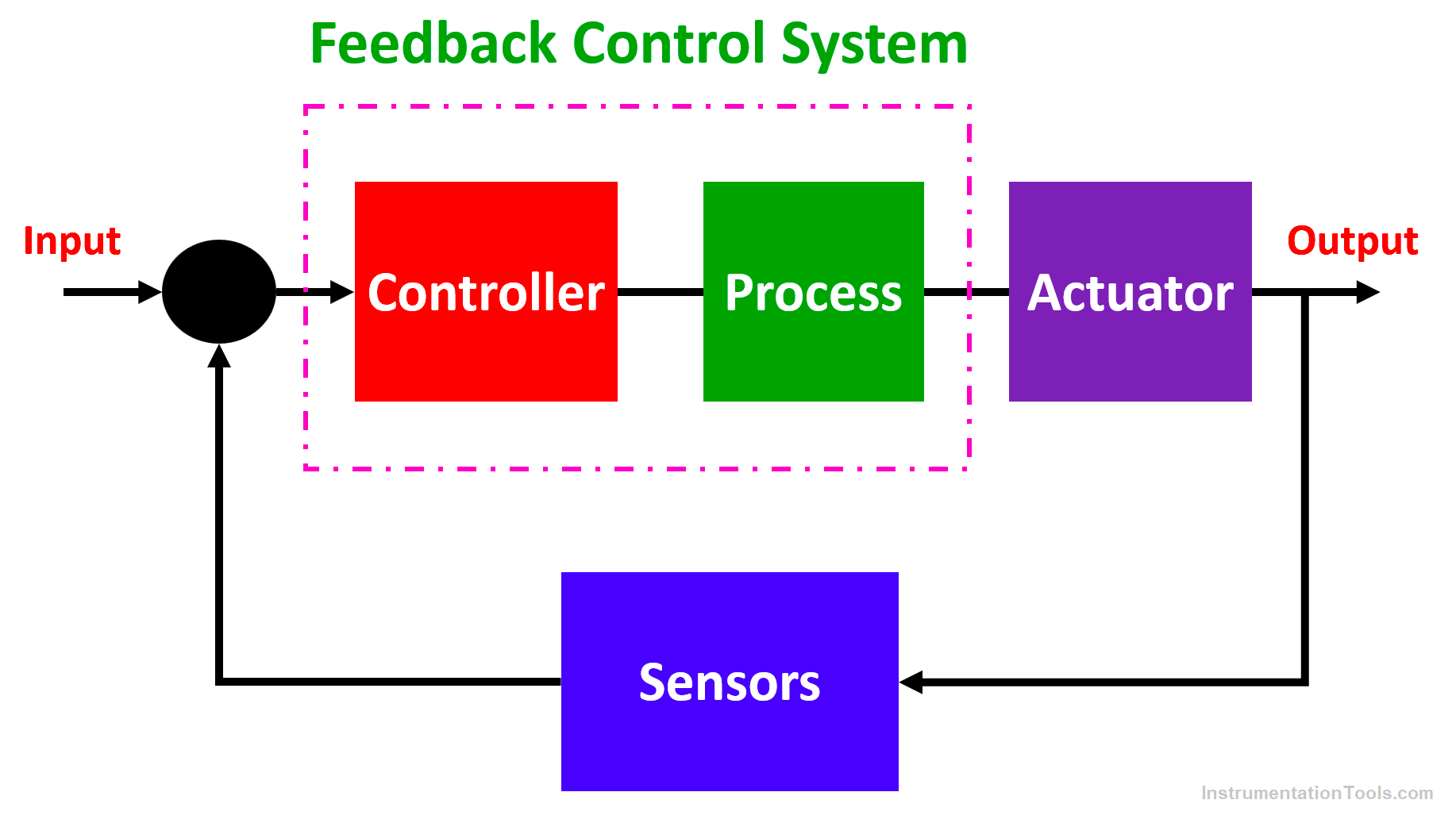
To understand how a controlled system functions, one must look past the external casing of a gadget or the user interface of an app and examine the underlying architecture. Every sophisticated controlled system, regardless of its application, relies on a specific set of interconnected components that work in a continuous cycle.
The Plant: The Process to be Regulated
In control theory, the “Plant” is the system, engine, or process that is being managed. For a self-driving car, the plant is the vehicle’s mechanical assembly—the engine, steering, and braking systems. In a software environment, the plant might be a cloud server’s resource allocation process. The goal of the controlled system is to influence the plant’s variables to reach a “setpoint”—the desired state.
Sensors: The Eyes and Ears of the System
Sensors are the input devices that gather data from the environment or the plant itself. In a tech context, this could range from physical hardware like LiDAR and accelerometers to digital “observers” that monitor data traffic or CPU temperatures. Without accurate sensors, the controlled system is “blind,” unable to determine if its current state matches the desired setpoint.
The Controller: The Logic Engine
The controller is the “brain” of the operation. It receives data from the sensors, compares it against the setpoint, and calculates the necessary adjustment. In modern tech, this is often a microcontroller or a sophisticated software algorithm. The complexity of the controller determines the system’s intelligence; while a basic controller might only use “if-then” logic, an advanced controller utilizes PID (Proportional-Integral-Derivative) logic or machine learning models to predict future deviations.
Actuators: Executing the Command
Actuators are the components responsible for taking action based on the controller’s instructions. They translate digital commands into physical or operational changes. In robotics, an actuator is a motor that moves an arm; in a cybersecurity controlled system, an actuator might be a firewall rule that automatically blocks a suspicious IP address.
Open-Loop vs. Closed-Loop: The Evolution of Feedback Logic
The sophistication of a controlled system is primarily defined by how it handles information. Technology generally categorizes these systems into two distinct types: Open-Loop and Closed-Loop.
Open-Loop Systems: Simplicity and Predictability
An open-loop system is one where the control action is independent of the output. It follows a pre-set command regardless of the result. A classic example is a traditional microwave oven; you set it for two minutes, and it runs for two minutes. It does not “sense” if the food is actually hot; it simply executes the command. While these systems are cost-effective and simple to design, they are highly susceptible to external disturbances and lack the “intelligence” required for complex technological environments.
Closed-Loop Systems: The Power of Feedback
The hallmark of advanced technology is the closed-loop system, also known as a feedback control system. In this model, the output is constantly monitored and fed back into the controller to adjust the input. If a Tesla is set to 65 mph (the setpoint) and begins to climb a hill, the sensors detect a drop in speed. The feedback loop informs the controller, which instructs the actuators (the motor) to increase power. This continuous loop allows for precision, reliability, and the ability to adapt to unpredictable environments—the very definition of “smart” technology.
Stability and Transient Response
In closed-loop systems, tech developers focus heavily on stability and transient response. Stability ensures that the system doesn’t over-correct and spiral out of control (oscillate). Transient response refers to how quickly the system reaches its setpoint. In high-stakes tech, such as drone stabilization or high-frequency trading algorithms, the margin for error in these feedback loops is measured in milliseconds.
The Integration of AI and IoT: Intelligent Controlled Systems

The traditional definition of a controlled system is being redefined by the convergence of the Internet of Things (IoT) and Artificial Intelligence (AI). We are moving away from rigid, programmed logic toward dynamic, “learning” systems.
From Reactive to Predictive Control
Traditional controlled systems are reactive; they wait for a deviation to occur before fixing it. However, with the integration of AI, we are seeing the rise of Predictive Control. By analyzing historical data and using machine learning, these systems can anticipate changes before they happen. For instance, a smart power grid can predict a surge in demand based on weather patterns and adjust energy distribution before the load actually hits the system.
Distributed Control and the Edge
In the past, controlled systems were often centralized. Today, the rise of “Edge Computing” allows for distributed control. Instead of every sensor sending data back to a central cloud server, the “control” happens at the device level. This is crucial for technologies like autonomous robots in warehouses, where the latency of sending data to a distant server could result in a collision. By processing the control loop at the “edge,” the system achieves near-instantaneous response times.
Cyber-Physical Systems (CPS)
The ultimate expression of modern controlled systems is the Cyber-Physical System. This involves a seamless integration of computation, networking, and physical processes. In a CPS, the software is not just an add-on; it is deeply embedded in the physical dynamics of the system. Examples include smart prosthetic limbs that respond to neural signals or large-scale industrial “Digital Twins” where a virtual controlled system mirrors a physical factory in real-time to optimize performance.
Practical Applications: Where Controlled Systems Drive Innovation
To appreciate the impact of controlled systems, one must look at the specific tech sectors they have revolutionized.
Autonomous Transportation
The most visible application of controlled systems today is in autonomous vehicles and drones. These systems must manage hundreds of variables simultaneously—speed, trajectory, obstacle avoidance, and battery health. The controlled system here is a multi-layered hierarchy: low-level loops handle motor torque, while high-level loops handle path planning and navigation.
Data Center Management
Tech giants like Google and Amazon rely on massive controlled systems to manage their data centers. These systems monitor server loads and cooling requirements. By using AI-driven controlled systems, Google famously reduced the energy required for cooling its data centers by 40%, demonstrating how sophisticated control logic can lead to massive gains in operational efficiency and sustainability.
Software Orchestration (Kubernetes)
In the world of software development, “control planes” are used to manage containerized applications. Kubernetes is, at its heart, a controlled system for software. It monitors the “state” of applications (how many instances are running) and compares it to the “desired state” defined by the developer. If a container crashes, the Kubernetes controlled system automatically restarts it to maintain the desired setpoint.
Security, Resilience, and the Future of Control
As we cede more autonomy to controlled systems, the stakes for security and resilience become exponentially higher.
Cybersecurity for Industrial Control Systems (ICS)
When a controlled system manages a power plant or a water treatment facility, it becomes a target for cyber warfare. Protecting the “integrity” of the feedback loop is paramount. If a hacker can feed “false data” to the sensors, they can trick the controller into making catastrophic adjustments. This has led to the development of “secure-by-design” control architectures that use encryption and anomaly detection to verify the signals within the loop.
The Human-in-the-Loop Element
As tech advances, a major point of discussion is the “Human-in-the-Loop” (HITL) model. This involves designing controlled systems that can function autonomously but provide clear intervention points for human operators. Finding the balance between machine precision and human judgment is the next frontier for controlled systems in fields like robotic surgery and automated air traffic control.

Conclusion: The Invisible Infrastructure
The “controlled system” is the invisible infrastructure of the modern digital age. It is the bridge between the physical world and digital logic, turning raw data into purposeful action. As we move toward a future defined by robotics, smart cities, and ubiquitous AI, the evolution of these systems will dictate the reliability, safety, and efficiency of our technological world. Whether it is stabilizing a satellite or balancing the load on a global network, the controlled system remains the essential mechanism that keeps our world in motion.
aViewFromTheCave is a participant in the Amazon Services LLC Associates Program, an affiliate advertising program designed to provide a means for sites to earn advertising fees by advertising and linking to Amazon.com. Amazon, the Amazon logo, AmazonSupply, and the AmazonSupply logo are trademarks of Amazon.com, Inc. or its affiliates. As an Amazon Associate we earn affiliate commissions from qualifying purchases.