
In the intricate tapestry of modern technology, control systems are the silent orchestrators, the invisible hands that guide, regulate, and optimize countless processes. From the mundane to the profoundly complex, control systems are fundamental to the operation of everything from your home thermostat to sophisticated industrial robots, advanced aircraft, and the very infrastructure that underpins our digital lives. At its core, a control system is a mechanism designed to manage, command, direct, or regulate the behavior of other devices or systems. It’s about achieving a desired outcome by influencing an input to produce a specific output, often in a dynamic and responsive manner.
The pervasive nature of control systems often goes unnoticed, yet their absence would render much of our technological world dysfunctional. Think about the simple act of driving a car. Your steering wheel, accelerator, and brakes are all part of a complex control system that takes your input (desired direction, speed) and translates it into actions that the vehicle performs. Modern vehicles, however, are replete with even more sophisticated control systems, managing everything from engine performance and fuel efficiency to stability control and adaptive cruise control. This inherent complexity, coupled with their critical role in ensuring safety, efficiency, and desired performance, makes understanding control systems essential for anyone seeking a deeper grasp of technology.
The Ubiquitous Presence of Control Systems in Technology
The realm of technology is saturated with control systems, each tailored to specific applications and operating principles. Their fundamental purpose is to take a system, observe its current state, and apply corrective actions to steer it towards a desired state. This is achieved through a continuous feedback loop, a cornerstone of many advanced control systems. Without this feedback mechanism, a system would operate blindly, unable to adapt to changing conditions or external disturbances. The accuracy, responsiveness, and robustness of these systems are paramount, directly impacting the reliability and effectiveness of the technologies they govern.
The Essential Components of a Control System
To truly understand “what is a control system,” we must delve into its constituent parts. While the specific implementations can vary dramatically, a control system generally comprises several key elements that work in concert to achieve its objectives. These components form the architectural blueprint upon which all control logic is built, enabling the system to interact with its environment and exert its influence.
Input and Output Signals
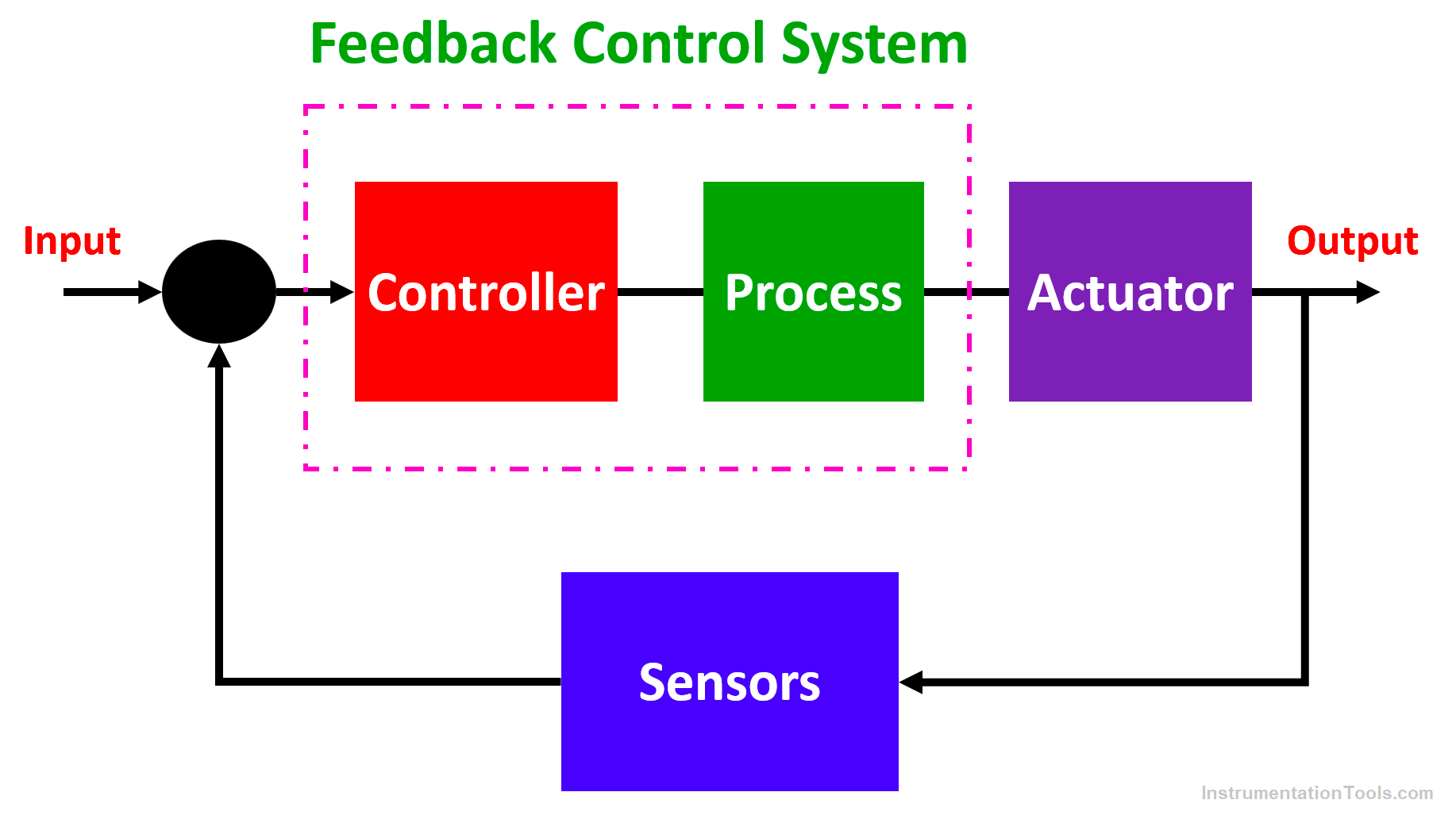
At the most basic level, a control system deals with signals. The input signal represents the desired state or the command being sent to the system. This could be a temperature setting on a thermostat, a desired speed for an industrial motor, or a target trajectory for a robot arm. The output signal, on the other hand, is the actual measured state of the system being controlled. For the thermostat, this would be the current room temperature. For the motor, it would be its rotational speed. The control system’s primary function is to ensure that the output signal converges to or closely tracks the input signal.
Sensors and Actuators
The bridge between the system being controlled and the control logic itself is often formed by sensors and actuators. Sensors are the “eyes” and “ears” of the control system, responsible for measuring the physical properties of the system and converting them into electrical signals that the control logic can understand. For example, a thermometer is a sensor that measures temperature, a speed encoder measures the rotation of a motor, and a GPS receiver measures location.
Conversely, actuators are the “muscles” of the control system. They receive commands from the control logic and translate them into physical actions that influence the system. A heater element in a thermostat is an actuator that increases temperature, a variable frequency drive controls the speed of an electric motor, and a hydraulic cylinder can move a robot arm. The performance of the sensors and actuators directly dictates the precision and speed with which the control system can operate.
The Controller
The controller is the “brain” of the control system. It receives the input signal (the desired state) and the output signal (the actual measured state) from the sensors. Based on this information and its programmed logic, the controller calculates the necessary adjustments to be made and sends commands to the actuators. The complexity of the controller can range from simple on-off switches in rudimentary systems to sophisticated microprocessors and algorithms in advanced applications. This is where the core intelligence of the control system resides, making decisions to minimize errors and maintain stability.
Types of Control Systems: A Spectrum of Sophistication
The world of control systems is not monolithic; it encompasses a diverse range of architectures and methodologies, each suited to different challenges and performance requirements. Understanding these distinctions provides crucial insight into the evolution and application of control technologies.
Open-Loop vs. Closed-Loop Control
The fundamental distinction in control system design lies between open-loop and closed-loop systems.

In an open-loop control system, the control action is independent of the output. The system operates based on a predetermined input, and there is no mechanism to monitor or adjust for deviations. A classic example is a simple toaster. You set the timer, and it heats for that duration, regardless of how toasted the bread actually is. If the bread is thinner or thicker, or if the ambient temperature varies, the output (toast level) will differ from what was intended. Open-loop systems are generally simpler and less expensive to implement but are also less accurate and susceptible to disturbances.
In contrast, closed-loop control systems, also known as feedback control systems, are designed to continuously monitor the output and use this information to adjust the control action. This feedback mechanism allows the system to correct for errors and disturbances, ensuring that the output remains close to the desired setpoint. The home thermostat is a prime example of a closed-loop system. It measures the room temperature (output) and compares it to the desired temperature (input). If the room is too cold, it turns on the heater (actuator); if it’s too hot, it turns it off. This constant feedback loop ensures a more stable and accurate temperature. The vast majority of sophisticated technological applications rely on closed-loop control due to its superior performance and adaptability.
Linear vs. Nonlinear Control
The behavior of control systems can also be categorized by the nature of their mathematical models. Linear control systems are characterized by relationships that can be described by linear equations. This means that the principle of superposition holds, and the response of the system is directly proportional to the input. Linear systems are generally easier to analyze and design using well-established mathematical tools.
Nonlinear control systems, on the other hand, exhibit behaviors that cannot be described by linear equations. These systems are far more prevalent in real-world applications, as many physical phenomena are inherently nonlinear (e.g., friction, saturation, complex chemical reactions). Designing controllers for nonlinear systems is significantly more challenging, often requiring advanced techniques such as fuzzy logic, neural networks, or adaptive control.
Digital vs. Analog Control
The nature of the signals processed by the controller further differentiates control systems. Analog control systems operate on continuous-time signals, where voltage or current levels vary smoothly over time. These systems were historically implemented using analog electronic components.
Digital control systems process discrete-time signals, which are sampled at specific intervals. These systems rely on digital computers, microcontrollers, or digital signal processors (DSPs) to implement the control algorithms. The rise of digital technology has led to the widespread adoption of digital control systems due to their flexibility, programmability, immunity to noise, and ability to implement complex algorithms. Most modern sophisticated control systems are digital.
Applications and the Future of Control Systems
The impact of control systems on technology is profound and ever-expanding. They are not merely components; they are the enablers of progress across virtually every technological domain.
Automation and Robotics
In the field of automation and robotics, control systems are absolutely fundamental. From the robotic arms on an assembly line meticulously placing components with micron-level precision to autonomous vehicles navigating complex environments, control systems dictate every movement, decision, and interaction. Advanced robotics relies heavily on sophisticated control algorithms to achieve dexterity, adaptability, and human-like interaction. The ability to control multiple degrees of freedom, manage dynamic environments, and ensure safety are all direct outcomes of advanced control system design.
Aerospace and Automotive Industries
The aerospace and automotive industries are heavily reliant on control systems for safety, efficiency, and performance. Aircraft autopilots, fly-by-wire systems that electronically control flight surfaces, and engine management systems are all critical control applications. In automotive engineering, control systems manage engine performance, braking (ABS, traction control), steering, and increasingly, autonomous driving features. The precision and reliability required in these sectors are met by highly advanced and rigorously tested control systems.
Industrial Processes and Smart Grids
In industrial processes, control systems are the backbone of manufacturing. They regulate temperature, pressure, flow rates, and other critical parameters in chemical plants, power generation facilities, and manufacturing lines, ensuring product quality, process efficiency, and operational safety. The concept of smart grids in the energy sector also leverages advanced control systems to manage the flow of electricity from diverse sources, balance supply and demand in real-time, and optimize energy distribution, leading to greater efficiency and reliability.

The Frontier: AI and Machine Learning in Control
The future of control systems is intrinsically linked to the advancements in artificial intelligence (AI) and machine learning (ML). Traditional control systems often rely on pre-programmed models of the system being controlled. However, AI and ML offer the potential to create adaptive and intelligent control systems that can learn and evolve over time.
Machine learning algorithms can be used to identify complex patterns in data, predict future behavior, and optimize control strategies in real-time, even in systems with unpredictable dynamics. For instance, reinforcement learning, a subfield of ML, is being employed to train agents to control complex systems by learning through trial and error, mimicking how humans learn. This opens up possibilities for control systems that can self-optimize, adapt to unforeseen circumstances, and operate with unprecedented levels of autonomy and intelligence. The integration of AI into control systems promises to unlock new levels of performance, efficiency, and capability across a vast array of technological applications, pushing the boundaries of what is currently possible.
aViewFromTheCave is a participant in the Amazon Services LLC Associates Program, an affiliate advertising program designed to provide a means for sites to earn advertising fees by advertising and linking to Amazon.com. Amazon, the Amazon logo, AmazonSupply, and the AmazonSupply logo are trademarks of Amazon.com, Inc. or its affiliates. As an Amazon Associate we earn affiliate commissions from qualifying purchases.