
In the evolving landscape of computational logic and software architecture, the concept of a “contradiction equation”—or more formally, a contradictory statement or unsatisfiable equation—serves as a cornerstone for understanding algorithmic limits and digital security. Within the realm of technology and software development, these equations are not mere mathematical curiosities; they are foundational elements that dictate how programs validate inputs, ensure data integrity, and resolve conflicts within complex systems. By exploring the nature of contradiction within code, developers can better grasp how compilers, debuggers, and security protocols handle the impossible.
The Logic of Unsatisfiability in Software
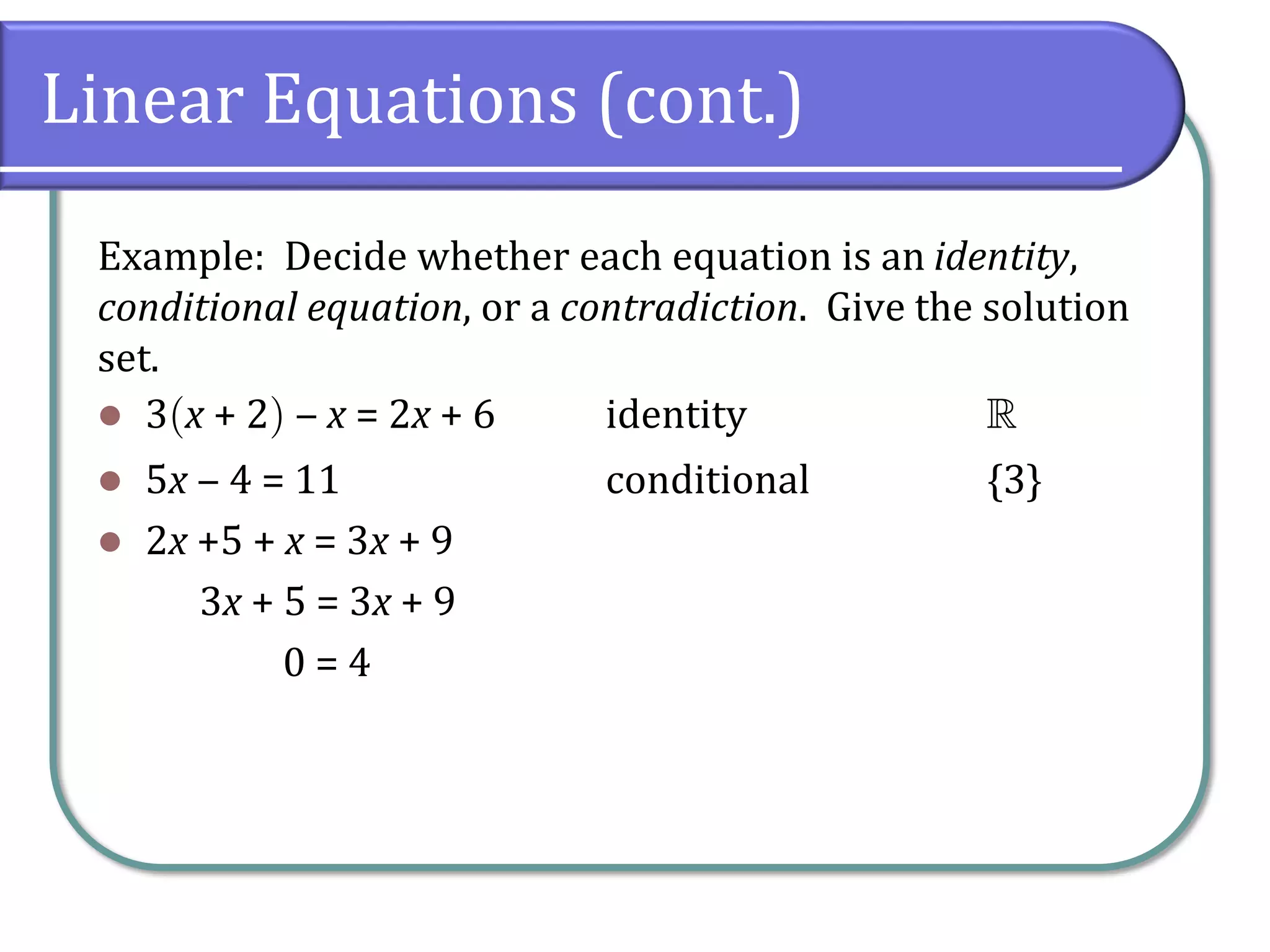
At its core, a contradiction equation represents a mathematical or logical expression where no combination of variables can result in a “True” state. In software engineering, this is synonymous with an unsatisfiable condition. When a piece of software encounters such an equation, it essentially hits a wall where the rules of logic prevent a successful execution path.
Boolean Algebra and Logical Gates
Most digital systems are built upon Boolean algebra. A contradiction in this context is any expression that evaluates to “False” regardless of the input. For example, if a program requires an input variable to be both “Greater than 10” and “Less than 5” simultaneously, it creates a contradiction. Modern compilers are designed to recognize these patterns during the static analysis phase. When the compiler identifies a code path that is mathematically impossible to traverse, it often optimizes the code by pruning that path entirely, a process known as “dead code elimination.”
The Role of Satisfiability Solvers (SAT)
In high-level computing, developers utilize SAT solvers—advanced algorithms designed to determine if a logical expression can ever be satisfied. These tools are critical in formal verification, where engineers must prove that a piece of software is secure or bug-free. A contradiction equation is the target of these solvers; by proving that a set of system states leads to a contradiction, developers can guarantee that certain “bad” states—such as a security breach or a system crash—are mathematically impossible.
Contradictions in Algorithmic Security and Input Validation
In digital security, the concept of a contradiction is often repurposed as a defensive mechanism. Security engineers intentionally build “contradiction traps” into systems to detect malicious actors or unauthorized automated scripts.
Identifying Malicious Probing
When a vulnerability scanner probes an application, it sends a wide array of inputs to see how the system responds. A robust application architecture often incorporates logical checks that act as contradiction triggers. If a user submits an input that violates the fundamental constraints of the system (e.g., trying to access a privileged administrative function while simultaneously providing credentials that definitively map to a restricted guest account), the system registers this as an immediate logical contradiction. Because this state is impossible in legitimate use, the application can trigger a security alert, effectively identifying the probe as hostile.
Sanitization and Type Safety
Strongly typed programming languages like Rust, Haskell, or C++ utilize strict type constraints that effectively prevent contradiction equations from ever reaching the runtime environment. By enforcing strict data types, the language ensures that a variable cannot hold conflicting information. If a developer attempts to pass an incompatible type, the compiler issues a contradiction error. This proactive approach prevents the most common source of system failures: logic errors that occur when a system is asked to process inherently conflicting instructions.
The Paradox of Computation: When Equations Fail

While contradictions in code are often corrected, there are theoretical instances where the existence of a contradiction equation reveals the limitations of the computational system itself. This touches upon the famous Halting Problem, which suggests that there are logical statements about programs that cannot be decided.
The Halting Problem and Logical Limits
Alan Turing famously demonstrated that it is impossible for an algorithm to determine, for any arbitrary program and input, whether that program will eventually finish running or continue forever. This is a form of logical contradiction. If we were to build a machine that could “solve” this, we could construct a self-referential contradiction that would make the machine’s output logically impossible. In essence, the existence of these “undecidable” equations serves as a boundary marker for what technology can and cannot compute.
Debugging and the Resolution of Conflicting Requirements
In large-scale software systems, particularly those utilizing microservices, different modules may operate under conflicting logical assumptions. One service might require that a transaction be completed within 50 milliseconds, while another service in the dependency chain requires a multi-step encryption process that takes 100 milliseconds. These conflicting requirements form a “system-level contradiction.”
Architects manage these contradictions by implementing asynchronous messaging queues and circuit breakers. Rather than allowing the system to crash or enter an undefined state, these patterns allow the software to handle the conflict gracefully, often by queuing the request, timing out, or returning a standardized error message. The “equation” of the system is effectively balanced through orchestration rather than direct logical resolution.
Future Trends: Contradiction Handling in AI and Machine Learning
As we move toward more autonomous systems, the role of contradictions is shifting. Artificial Intelligence models, specifically Large Language Models (LLMs) and neural networks, often struggle with internal contradictions in their training data or prompt instructions.
Resolving Multi-Modal Conflicts
Modern AI agents frequently ingest multi-modal data—text, images, and sensor readings—that may contain conflicting signals. A visual recognition system might see a “Stop” sign, while the GPS data suggests the vehicle is in a location where the sign is invalid. This is a real-world contradiction equation. The development of Bayesian inference engines and probabilistic logic allows AI to navigate these conflicts by assigning “weights” to different inputs rather than attempting to achieve a binary “True/False” result.
The Shift Toward Probabilistic Logic
Instead of relying on rigid Boolean logic where an equation is either satisfied or contradictory, next-generation software is increasingly adopting fuzzy logic. In these systems, a contradiction is not a binary failure but a degree of uncertainty. This allows software to be more resilient, enabling it to make “best guess” decisions when faced with incomplete or contradictory information. As developers, moving away from the rigid binary of classic contradiction equations toward probabilistic modeling is likely the key to building the next generation of highly capable, context-aware AI agents.

Final Perspectives on Computational Integrity
The “contradiction equation” is ultimately a measurement tool. Whether it is being used by a compiler to optimize code, by a security engineer to defend a database, or by a researcher to define the limits of computable reality, it represents the vital intersection of human logic and machine execution.
For developers, the goal is not always to eliminate the possibility of a contradiction—sometimes, identifying one is the best way to catch a bug or a breach. Instead, the focus should be on building systems that possess the “logical intelligence” to recognize when an instruction set violates the foundational constraints of the environment. By mastering the handling of these contradictory states, we ensure that our digital architectures remain robust, secure, and ready for the increasing complexities of the modern tech landscape. Understanding these boundaries is what separates basic script-writing from sophisticated, high-performance software engineering.
aViewFromTheCave is a participant in the Amazon Services LLC Associates Program, an affiliate advertising program designed to provide a means for sites to earn advertising fees by advertising and linking to Amazon.com. Amazon, the Amazon logo, AmazonSupply, and the AmazonSupply logo are trademarks of Amazon.com, Inc. or its affiliates. As an Amazon Associate we earn affiliate commissions from qualifying purchases.