
In the landscape of personal and business finance, legal expenses often represent one of the most significant and unpredictable variables. For an individual or a small business owner, the prospect of pursuing justice or defending a right can be overshadowed by the daunting reality of hourly legal rates that can reach hundreds or even thousands of dollars. This financial barrier is where the concept of a contingency lawyer becomes a vital tool in modern financial strategy.
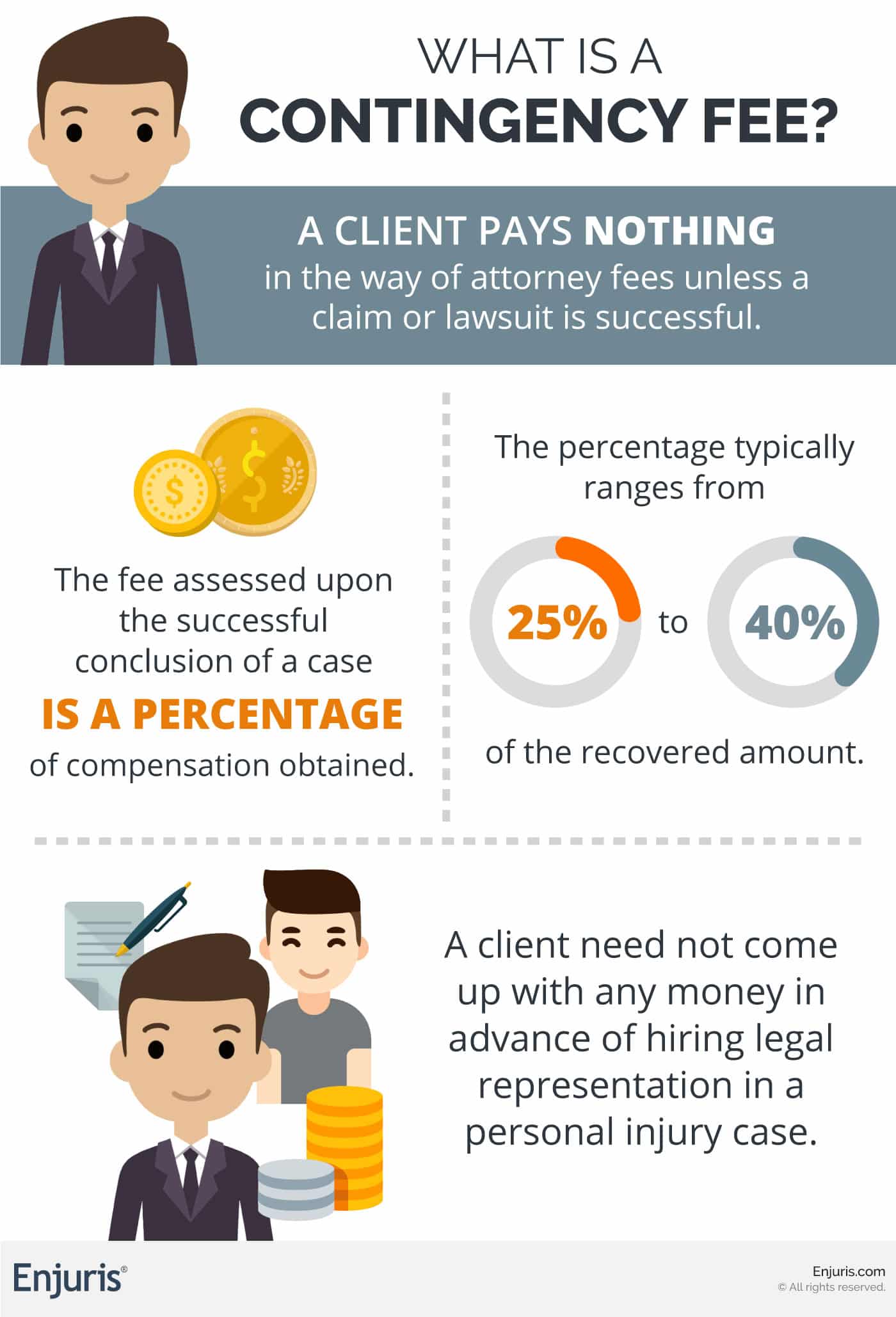
A contingency lawyer operates on a “no win, no fee” basis, essentially becoming a financial partner in your legal pursuit. Rather than requiring an upfront retainer or billing for every minute spent on a phone call, these attorneys invest their time and resources into a case in exchange for a percentage of the final settlement or court award. This model transforms a legal claim from a potential liability into a structured financial asset.

The Mechanics of Contingency Fee Arrangements
To understand the role of a contingency lawyer, one must first understand the financial mechanics that govern these agreements. Unlike traditional billing models, the contingency model is rooted in performance-based compensation.
The “No Win, No Fee” Model
At its core, a contingency fee agreement is a risk-sharing mechanism. The attorney agrees to provide legal services without immediate payment, with the understanding that they will only be compensated if they successfully recover money for the client. From a personal finance perspective, this is a form of risk mitigation. If the case is unsuccessful, the client typically does not owe the attorney for their time, though they may still be responsible for certain administrative costs depending on the specific contract.
Standard Percentage Structures in Business and Personal Claims
The industry standard for contingency fees usually ranges between 33.3% (one-third) and 40% of the gross recovery. However, this is not a fixed number and can fluctuate based on the complexity of the case and the stage at which it is resolved. For instance, a contract might stipulate a 33% fee if the case settles before filing a lawsuit, increasing to 40% if it goes to trial. This sliding scale reflects the increased labor and financial risk the law firm assumes as the litigation progresses.
Why Lawyers Take the Risk
Lawyers who work on contingency act as financial underwriters. They perform a rigorous “audit” of a potential case before accepting it. Because their income depends entirely on a successful outcome, they must assess the probability of winning and the likely “return on investment” (ROI) for the hours they will dedicate to the matter. In this sense, a contingency lawyer is not just a legal advocate but a venture capitalist of sorts, investing “sweat equity” into high-potential legal claims.
Calculating the Real Cost: Beyond the Percentage
While the headline figure of a 33% or 40% fee is what most clients focus on, a deeper dive into the financial details reveals that the “cost” of a contingency lawyer involves more than just the attorney’s fee. Understanding the distinction between fees and costs is essential for sound financial planning.
Litigation Costs vs. Attorney Fees
It is a common misconception that “contingency” covers every penny of a lawsuit. “Attorney fees” refers specifically to the payment for the lawyer’s expertise and time. “Litigation costs,” however, include filing fees, the cost of serving papers, hiring expert witnesses, court reporter fees for depositions, and the retrieval of medical records or financial audits.
In many contingency agreements, the law firm “advances” these costs. This means the firm pays for these expenses out of pocket as the case moves forward. If the case is won, these costs are reimbursed to the firm from the client’s share of the settlement, in addition to the percentage fee.
The Impact on Your Final Settlement
The timing of when costs are deducted—either before or after the attorney’s percentage is calculated—can significantly impact the net amount a client receives.
- Net Settlement: If the 33% fee is taken after costs are deducted, the client keeps more money.
- Gross Settlement: If the 33% fee is taken from the total amount before costs are deducted, the lawyer’s take is higher, and the client’s net recovery is lower.
From a financial management standpoint, always clarify whether the fee is calculated on the “gross” or “net” recovery.

Net Recovery: A Financial Case Study
Consider a settlement of $100,000 with $10,000 in litigation costs. Under a 33% gross settlement agreement, the lawyer takes $33,333.33 plus the $10,000 for costs, leaving the client with $56,666.67. Understanding these numbers upfront is critical to evaluating whether the potential recovery justifies the emotional and temporal investment in a legal battle.
Financial Advantages of Hiring a Contingency Lawyer
The shift from hourly billing to a contingency model offers several strategic financial advantages, particularly for those who may not have the liquid capital to fund a long-term legal dispute.
Access to Justice without Upfront Capital
For many individuals, an unexpected legal crisis—such as a personal injury or a contract breach—coincides with a period of financial instability. A contingency lawyer provides a pathway to legal recourse that does not require depleting a savings account or taking out high-interest loans to pay for legal representation. It democratizes the legal system by allowing the merits of a case, rather than the size of a bank account, to determine access to the courts.
Alignment of Interests: Performance-Based Compensation
One of the most significant criticisms of hourly billing is the potential for “billable hour inflation,” where there is no direct incentive for the lawyer to resolve the case quickly. In a contingency arrangement, the lawyer’s and the client’s financial interests are perfectly aligned. The faster the lawyer achieves a maximum settlement, the higher their effective hourly rate becomes. This incentivizes efficiency, strategic aggression, and a focus on high-value results.
Preserving Liquid Assets for Personal or Business Use
For a business owner, paying a $20,000 monthly legal retainer can cripple cash flow and prevent investment in growth. By using a contingency lawyer for commercial litigation (where available), a business can preserve its working capital. The legal claim essentially becomes an “off-balance-sheet” asset where the costs are carried by the law firm, allowing the business to maintain its operational liquidity.
Risk Management and Strategic Decision-Making
Choosing a contingency lawyer is, at its heart, a risk management decision. While it limits the downside (you don’t pay if you lose), it also caps the upside (you give away a portion of the winnings).
Evaluating the Probability of Success
Before entering a contingency agreement, a client must perform their own cost-benefit analysis. If a case is a “slam dunk” with a high probability of a large payout, paying a 40% fee might actually be more expensive than paying an hourly rate. Conversely, in a complex case with a 50/50 chance of success, the contingency model is a superior financial hedge, as it shifts the risk of a total loss onto the law firm.
The Role of Expert Witnesses and Investigation Costs
In high-stakes litigation, the costs of experts can reach tens of thousands of dollars. A contingency firm with deep pockets can afford to hire the best experts to maximize the case’s value. From an investment perspective, this is “leveraging” the firm’s capital to increase the total value of your asset (the lawsuit). A client paying out of pocket might be tempted to cut corners on experts to save money, which often results in a lower settlement.
When a Fixed or Hourly Rate Might Be More Profitable
Not every legal matter is suited for a contingency fee. In many jurisdictions, family law (divorce) and criminal defense are legally prohibited from being handled on a contingency basis for ethical reasons. Furthermore, in cases where the recovery is purely non-monetary—such as seeking an injunction or defending a trademark without seeking damages—a contingency model is functionally impossible. In these instances, traditional financial budgeting for legal fees remains a necessity.
Conclusion: The Contingency Lawyer as a Financial Partner
The question of “what is a contingency lawyer” is best answered by looking through the lens of financial strategy. A contingency lawyer is a professional who assumes the financial risk of litigation in exchange for a stake in the potential outcome. This model serves as a critical tool for wealth preservation and risk management, allowing individuals and businesses to pursue high-value legal claims without the burden of upfront costs.
By understanding the nuances of fee percentages, the distinction between fees and costs, and the alignment of incentives, you can make an informed decision that protects your financial health. In a world where legal disputes can be financially ruinous, the contingency model offers a strategic alternative that balances the scales of justice with the realities of the bottom line. Whether you are recovering from an accident or protecting a business interest, treating your legal claim as a financial asset—and your lawyer as a strategic partner—is the key to a successful outcome.
aViewFromTheCave is a participant in the Amazon Services LLC Associates Program, an affiliate advertising program designed to provide a means for sites to earn advertising fees by advertising and linking to Amazon.com. Amazon, the Amazon logo, AmazonSupply, and the AmazonSupply logo are trademarks of Amazon.com, Inc. or its affiliates. As an Amazon Associate we earn affiliate commissions from qualifying purchases.