
In the intricate world of law and finance, the term “consent judgment” often emerges as a critical mechanism for resolving disputes. Far from being a mere legal formality, a consent judgment is a powerful and binding agreement that carries profound financial implications for individuals, businesses, and even governments. It represents a strategic compromise, transforming a negotiated settlement into an official court order, thus granting it the full force of law without the need for a full-blown trial. For anyone navigating the complexities of debt, business disputes, or personal financial settlements, understanding what a consent judgment entails is not just beneficial—it’s essential for sound financial decision-making and risk management.
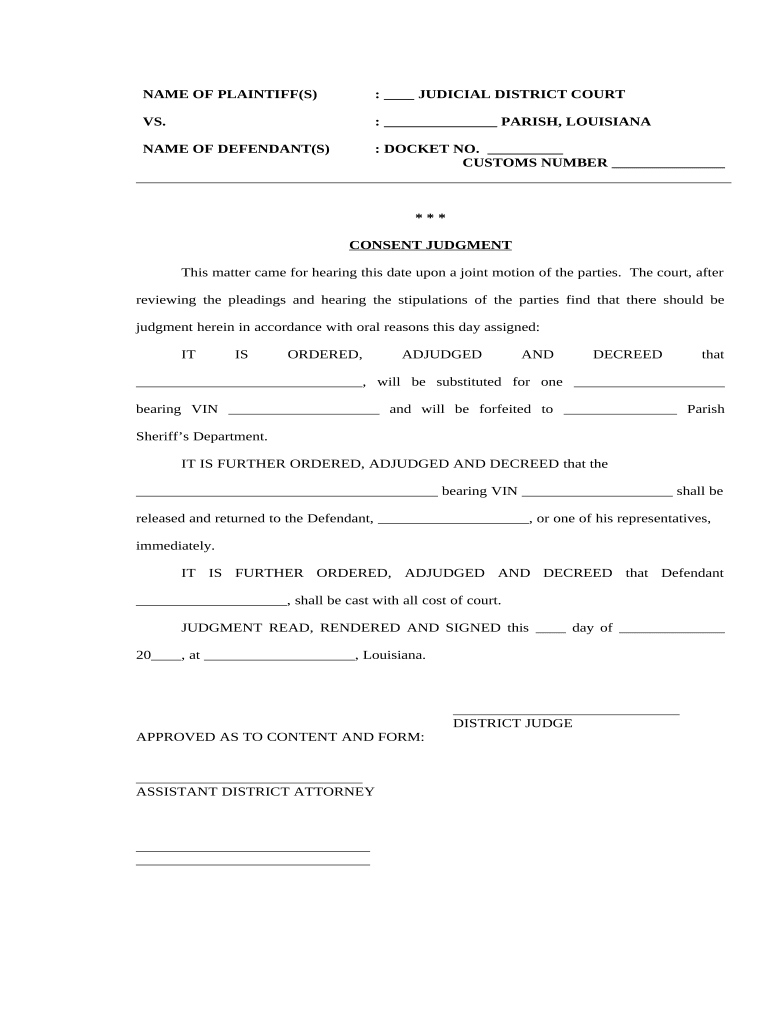
At its core, a consent judgment is a court order that embodies an agreement reached by two or more parties to a lawsuit. Instead of a judge or jury deciding the outcome after adversarial proceedings, the parties themselves agree upon the terms of their dispute’s resolution, and then present this agreement to the court for approval. Once approved, the court issues a judgment that incorporates these agreed-upon terms. This transformation from a private agreement into a public judicial decree is what gives a consent judgment its unique power and permanence, making it an indispensable tool in the financial toolkit for conflict resolution.
The Mechanics and Purpose of a Consent Judgment
A consent judgment is more than just a handshake agreement; it’s a legally consecrated resolution, meticulously crafted to serve specific purposes and adhere to particular procedures. Its utility lies in offering a path to certainty and finality in disputes that might otherwise languish in protracted litigation, consuming vast resources and generating significant uncertainty.
Defining a Consent Judgment
Fundamentally, a consent judgment is a hybrid legal creature: part contract, part court order. It originates from the voluntary agreement of the parties involved in a legal dispute, often after extensive negotiation, mediation, or settlement discussions. This agreement outlines the rights and responsibilities of each party concerning the matters in contention. What elevates it beyond a standard contract is its judicial imprimatur; once a judge reviews and signs off on the agreement, it becomes a final judgment of the court. This means that the agreed-upon terms are no longer mere promises but legally enforceable mandates.
Parties often opt for a consent judgment to bypass the inherent risks, costs, and delays associated with litigation. A trial’s outcome is always uncertain, and the process itself can be extraordinarily expensive, emotionally draining, and time-consuming. By contrast, a consent judgment offers a predictable resolution, allowing parties to control the outcome and tailor terms that might be more practical or creative than what a judge or jury could impose. It’s a strategic choice made when the benefits of certainty and controlled resolution outweigh the potential (but uncertain) gains of a trial.
Key Components and Process
The journey to a consent judgment involves several critical steps and components, each designed to ensure fairness, clarity, and enforceability. The process typically begins with the initiation of a lawsuit, followed by a period of discovery and negotiation.
- Negotiation and Agreement: The heart of a consent judgment lies in the negotiation phase, where parties, often through their legal counsel, discuss and agree upon the terms that will resolve their dispute. These terms can cover a wide range of issues, from monetary payments, asset transfers, and specific performance obligations to non-disclosure clauses and future conduct. For financial matters, this includes precise payment schedules, interest rates, security for debt, and conditions for release from liability.
- Drafting the Agreement: Once terms are agreed upon, a formal written agreement is drafted. This document is crucial, as it will form the basis of the court’s judgment. It must be clear, unambiguous, and comprehensive, leaving no room for future misinterpretation.
- Court Submission and Approval: The drafted agreement is then submitted to the court. The judge will review the proposed consent judgment to ensure it is fair, reasonable, consistent with the law, and not the product of fraud or coercion. While the court generally defers to the parties’ agreement, it retains the power to reject a settlement if it finds it to be unlawful or against public policy.
- Entry of Judgment: Upon approval, the judge signs the order, and it is formally entered into the court records as a consent judgment. At this point, the agreement transforms into a binding court order, enforceable through all legal means available to the court.
Distinguishing from Other Judgments
It is vital to differentiate a consent judgment from other forms of judicial rulings to appreciate its unique standing:
- Judgment After Trial: This occurs when a judge or jury hears all the evidence and arguments in a case and then renders a decision based on the merits. The outcome is imposed by the court, not agreed upon by the parties.
- Default Judgment: This happens when one party fails to respond to a lawsuit or comply with court orders. The court then issues a judgment in favor of the opposing party without a full trial, based on the non-responsive party’s default.
- Stipulated Judgment: While often used interchangeably with consent judgment, a stipulated judgment is technically an agreement between parties that could become a judgment if certain conditions are not met, or it might be a judgment that is held in abeyance. A consent judgment, by contrast, is immediately a final, enforceable judgment.
The distinguishing factor for a consent judgment is the explicit and voluntary “consent” of all parties involved, leading to a mutually accepted, legally binding resolution.
Financial Implications for Individuals and Businesses
The financial repercussions of a consent judgment are often substantial and far-reaching, making it a pivotal instrument in various financial contexts, from managing personal debt to resolving complex corporate disputes.
Debt Resolution and Collection
One of the most common applications of a consent judgment is in debt resolution and collection. When a debtor owes money to a creditor, and negotiations for repayment have stalled, a lawsuit might be filed. Instead of going to trial, which is costly for both sides, they might agree to a consent judgment. This judgment would typically outline:
- Repayment Schedule: A clear plan for the debtor to repay the outstanding amount, often with specific payment dates and amounts.
- Interest and Fees: Agreed-upon interest rates, late fees, or legal costs.
- Security: Sometimes, the judgment might secure the debt against an asset (e.g., a lien on property), giving the creditor recourse if the debtor defaults on the new terms.
For the debtor, this formalizes a manageable repayment plan, potentially avoiding immediate bankruptcy or asset seizure. For the creditor, it provides a legally enforceable mechanism for collecting the debt, preventing further delays and uncertainty. However, it’s crucial to understand that such a judgment, if related to a consumer debt, can negatively impact an individual’s credit score, potentially affecting future borrowing capacity.
Business Disputes and Settlements
In the corporate sphere, consent judgments are invaluable for resolving a myriad of business disputes:
- Contract Breaches: When one business alleges another has failed to uphold its contractual obligations, a consent judgment can outline compensatory damages, specific performance requirements, or future conduct to remedy the breach.
- Partnership Dissolutions: For dissolving partnerships or joint ventures, a consent judgment can detail the fair distribution of assets, settlement of liabilities, and non-compete clauses.
- Intellectual Property Infringement: While often involving injunctions, IP disputes frequently include financial penalties or ongoing royalty agreements, which can be formalized in a consent judgment.
- Regulatory Compliance: Businesses facing enforcement actions from regulatory bodies (e.g., environmental agencies, financial regulators) might enter into consent judgments that stipulate fines, corrective actions, and monitoring requirements. These judgments have profound impacts on the company’s balance sheet, cash flow, and operational expenditures.
Personal Finance Scenarios
Consent judgments also touch upon highly personal financial matters:
- Divorce Settlements: In divorce proceedings, if spouses agree on the division of marital assets and debts, alimony, and child support, their agreement can be submitted as a consent judgment. This makes the terms legally binding and enforceable, ensuring financial stability for all parties involved.
- Personal Injury Claims: When parties agree on compensation for medical expenses, lost wages, and pain and suffering, a consent judgment can formalize the settlement, providing clarity and finality to the financial aspects of the claim.
- Landlord-Tenant Disputes: Disputes involving unpaid rent, property damage, or security deposit returns can be resolved through a consent judgment, outlining repayment plans or specific actions to be taken.
Tax Implications
While not a direct function of the judgment itself, the financial settlements formalized by consent judgments can have significant tax implications that parties must consider. For example:
- Damages: Certain types of damages received (e.g., for physical injury or sickness) are often tax-exempt, while others (e.g., punitive damages, emotional distress damages not related to physical injury) may be taxable income.
- Business Income/Expenses: For businesses, a settlement payment received might be taxable income, while a payment made could be a deductible business expense, depending on the nature of the dispute.
- Interest: Any interest components included in a settlement are generally taxable income for the recipient.
It is crucial for parties entering into a financial consent judgment to consult with tax professionals to understand the full financial impact of their agreement.
Advantages and Disadvantages of Consent Judgments
Like any legal instrument, a consent judgment offers a blend of benefits and drawbacks, requiring careful consideration before opting for this route.
Benefits for Both Parties
Choosing a consent judgment offers several compelling advantages:

- Cost and Time Savings: Litigation can be incredibly expensive and time-consuming. By settling through a consent judgment, parties can avoid the substantial legal fees, court costs, and emotional toll of a trial, often reaching a resolution much faster.
- Certainty of Outcome: Unlike a trial, where the outcome is unpredictable, a consent judgment provides a definitive and agreed-upon resolution. This certainty allows individuals and businesses to plan their finances and operations without lingering legal ambiguity.
- Flexibility in Terms: Parties have the autonomy to craft creative and customized solutions that a court might not be able to impose. This includes flexible payment schedules, non-monetary obligations, or conditions tailored to specific financial circumstances.
- Enforceability: As a court order, a consent judgment is fully enforceable. This means that if one party fails to uphold their end of the bargain, the other party can seek judicial intervention to compel compliance, without needing to re-litigate the original dispute.
- Privacy (Relative): While the judgment itself becomes public record, the negotiation process and underlying sensitive financial details leading to the settlement can remain private, unlike the often public disclosures made during a trial.
Potential Drawbacks and Risks
Despite its advantages, a consent judgment is not without its pitfalls:
- Loss of Judicial Review Rights: By consenting to a judgment, parties typically waive their right to appeal the decision. This means that if new information emerges or a party later regrets the terms, challenging the judgment can be extremely difficult.
- Permanence: Once entered, a consent judgment is largely permanent. Modifying it requires compelling reasons and often mutual agreement, or a significant change in circumstances that makes the original terms impossible or inequitable.
- Potential for Unequal Bargaining Power: In situations where there is a significant power imbalance between parties (e.g., a large corporation versus an individual consumer), the weaker party might feel pressured into accepting unfavorable terms.
- Public Record: The judgment itself becomes part of the public record, which can have implications for a business’s reputation or an individual’s credit history.
The Role of Legal Counsel
Given the financial and legal gravity of a consent judgment, securing experienced legal counsel is paramount. A skilled attorney can:
- Advise on Legal Rights: Ensure the client understands their legal standing and the implications of agreeing to a judgment.
- Negotiate Favorable Terms: Advocate for terms that are financially sound and protect the client’s interests.
- Draft Precise Language: Ensure the agreement is meticulously drafted to avoid ambiguities and future disputes.
- Assess Long-Term Impact: Help the client understand the financial, credit, and reputational ramifications of the judgment.
Without proper legal representation, parties risk entering into agreements that are financially disadvantageous or legally untenable.
Enforceability and Modification
The true power of a consent judgment lies in its enforceability. Once the court has approved and entered it, the judgment is no longer merely an agreement but a direct command from the judiciary.
The Power of a Court Order
A consent judgment carries the same legal weight as any other court order, meaning it can be enforced through various judicial mechanisms if a party fails to comply. This is a critical distinction from a simple contract, where breach might only lead to a new lawsuit. With a consent judgment, enforcement remedies are more direct and potent:
- Garnishment: The court can order the garnishment of wages, bank accounts, or other income sources to satisfy a monetary judgment.
- Liens: A lien can be placed on property (real estate, vehicles) owned by the non-compliant party, preventing its sale or transfer until the judgment is satisfied.
- Asset Seizure: In some cases, the court may authorize the seizure and sale of assets to fulfill the judgment.
- Contempt of Court: Willful disobedience of a court order, including a consent judgment, can result in penalties for contempt of court, which can include fines or even imprisonment in extreme cases.
These enforcement tools provide significant leverage and assurance for the compliant party, making a consent judgment a reliable financial instrument.
Challenges to Enforcement
While robust, consent judgments are not entirely impervious to challenges. However, the grounds for challenging an entered consent judgment are generally very limited and difficult to prove. They typically include:
- Fraud or Misrepresentation: If it can be proven that the agreement was obtained through fraudulent means or deliberate misrepresentation of facts.
- Coercion or Duress: If a party was forced into the agreement under duress or undue influence.
- Lack of Jurisdiction: If the court that entered the judgment lacked proper jurisdiction over the parties or the subject matter.
- Unconscionability: In rare cases, if the terms are so egregiously unfair as to shock the conscience of the court.
These are high bars to meet, underscoring the finality and stability of consent judgments.
Modifying a Consent Judgment
Modifying an entered consent judgment is generally challenging and requires specific conditions. Because it embodies an agreement of the parties and has been judicially sanctioned, courts are reluctant to unilaterally alter its terms. Modifications typically occur under these circumstances:
- Mutual Agreement: The easiest way to modify a consent judgment is if all parties involved mutually agree to the changes. They can then submit a joint request to the court for approval of the amended judgment.
- Significant Change in Circumstances: A party might petition the court for a modification if there has been a substantial and unforeseen change in circumstances that makes compliance with the original terms impossible or extremely burdensome (e.g., a severe disability preventing a debtor from working). This is a high legal threshold.
- Clerical Errors: Minor clerical errors or ambiguities can usually be corrected through a court motion.
Absent these conditions, parties are generally bound by the original terms, emphasizing the need for meticulous negotiation and drafting upfront.
Strategic Considerations in Financial Planning
Understanding consent judgments moves beyond mere legal knowledge; it becomes a strategic asset in comprehensive financial planning and risk management for both individuals and businesses.
Proactive vs. Reactive Measures
Knowledge of consent judgments enables a more proactive approach to financial disputes:
- Risk Mitigation: Businesses can implement robust contract management and dispute resolution clauses to anticipate and prevent the need for contentious litigation that might lead to an unfavorable judgment.
- Negotiation Leverage: Knowing the costs and uncertainties of trial can give parties leverage in settlement negotiations, allowing them to push for a consent judgment that offers a more controlled and predictable financial outcome.
- Bankruptcy Planning: For individuals or businesses facing severe financial distress, understanding how judgments impact assets and liabilities is crucial for bankruptcy planning or debt restructuring.
Reactively, when a dispute is unavoidable, the option of a consent judgment provides a structured pathway to minimize financial damage and regain stability.
Impact on Future Financial Decisions
A consent judgment can cast a long shadow over future financial decisions:
- Borrowing Capacity: For individuals, a consent judgment related to debt can severely impair creditworthiness, making it difficult to secure loans, mortgages, or even rental agreements.
- Business Partnerships: For businesses, public judgments can affect credit ratings, investor confidence, and the willingness of other companies to enter into partnerships or supply agreements.
- Wealth Management: For high-net-worth individuals, judgments related to asset division or significant liabilities require careful integration into overall wealth management strategies to protect remaining assets and ensure future financial security.
Reputation and Financial Standing
While a consent judgment can prevent the public spectacle of a trial, the fact of a judgment can still impact reputation. Businesses might face scrutiny from stakeholders, and individuals might experience difficulties in their personal and professional lives. Striking the right balance between vigorously defending a position and strategically settling through a consent judgment is a critical financial and reputational decision. Sometimes, settling quickly and privately (if terms allow) is better for long-term financial health and public perception than a drawn-out, acrimonious battle.
Conclusion
A consent judgment stands as a powerful testament to the intersection of law and finance, offering a definitive resolution to disputes that might otherwise spiral into protracted and costly litigation. By transforming a voluntary agreement into an enforceable court order, it provides certainty, finality, and a structured path for fulfilling financial obligations or receiving due compensation. Whether in personal finance, debt collection, or complex business disputes, understanding the mechanics, implications, advantages, and disadvantages of a consent judgment is indispensable for sound financial planning and risk management. While offering significant benefits in terms of cost savings and control over outcomes, its permanence and enforceability underscore the critical need for meticulous negotiation and expert legal counsel. For anyone navigating the turbulent waters of financial conflict, a consent judgment can be a strategic beacon, guiding them towards a stable and predictable resolution, but it must be approached with informed caution and professional guidance.
aViewFromTheCave is a participant in the Amazon Services LLC Associates Program, an affiliate advertising program designed to provide a means for sites to earn advertising fees by advertising and linking to Amazon.com. Amazon, the Amazon logo, AmazonSupply, and the AmazonSupply logo are trademarks of Amazon.com, Inc. or its affiliates. As an Amazon Associate we earn affiliate commissions from qualifying purchases.