
In the vast landscape of scientific inquiry, few concepts are as foundational yet pervasively impactful as the “conductor.” For science, a conductor is fundamentally a material or object that permits the free flow of energy, typically electric current or heat, through it. This seemingly simple definition underpins virtually every piece of technology we interact with daily, from the smartphones in our pockets to the complex data centers powering the cloud. Understanding conductors from a scientific perspective is not merely an academic exercise; it is crucial for comprehending the very architecture of modern technology, driving innovation in electronics, computing, and digital infrastructure.

The Fundamental Role of Conductors in Electronics and Computing
At its core, all technology relies on the manipulation and transfer of energy, most commonly in the form of electricity. Without materials capable of efficiently transmitting this energy, the intricate dance of electrons that defines digital operations would be impossible. Conductors are the highways and byways through which information, in the form of electrical signals, travels within and between electronic components.
Facilitating Electron Flow: The Heart of Circuitry
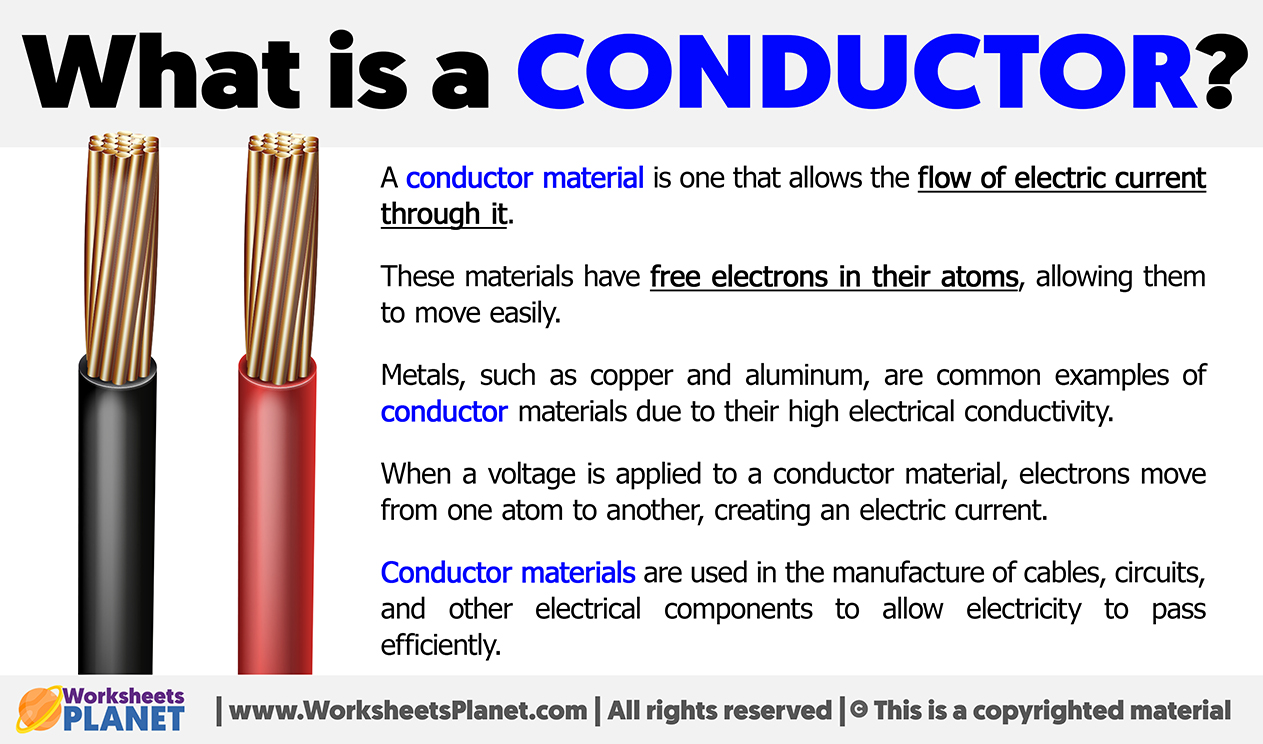
The ability of a material to conduct electricity is determined by the mobility of its electrons. In conductive materials, some electrons are not tightly bound to individual atoms. These “free electrons” can move relatively freely within the material’s atomic structure, forming an electric current when a voltage is applied. Metals like copper, silver, and gold are classic examples, possessing a “sea” of delocalized electrons that readily respond to an electric field.
In a typical electronic circuit, conductors form the pathways that connect components like resistors, capacitors, and transistors. For instance, the intricate traces on a printed circuit board (PCB) are meticulously designed conductive paths, usually made of copper, that guide electrons from one point to another, ensuring that each component receives the necessary power and signal. Without these conductive paths, components would remain isolated, and no functional device could be assembled. Every logic gate, every memory cell, and every processing unit relies on this precise and efficient electron flow orchestrated by conductors.
Key Material Properties: Why Some Conduct and Others Don’t
The scientific distinction between conductors, insulators, and semiconductors lies in their atomic structure and electron band theory. Conductors have overlapping valence and conduction bands, meaning electrons require very little energy to move into the conduction band and flow freely. Insulators, conversely, have a large energy gap between these bands, making it extremely difficult for electrons to conduct current. Semiconductors, such as silicon and germanium, fall in between, with a moderate band gap that can be manipulated through doping (adding impurities) to control their conductivity.
This controlled conductivity of semiconductors is what makes them the bedrock of modern microelectronics, allowing for the creation of transistors that can switch current on and off, forming the binary logic that computers operate on. However, even semiconductors rely on highly conductive materials (metals) for their interconnects and external wiring. The choice of conductor material is critical, considering factors such as resistivity (how much it resists current flow), thermal conductivity (how well it dissipates heat), corrosion resistance, and malleability. For instance, silver is an excellent electrical conductor but is expensive, while copper offers a superb balance of conductivity and cost, making it ubiquitous in wiring and PCBs.
Conductors in Modern Gadgets and Devices
The pervasive nature of conductors is evident in the sheer diversity of their applications across virtually every modern technological device. Their evolution and optimization have been instrumental in the relentless march towards smaller, faster, and more powerful gadgets.
From Microprocessors to Power Cables: Ubiquitous Applications
Consider a modern smartphone. Internally, a complex web of tiny copper traces and metallic interconnects on its system-on-a-chip (SoC) allows billions of transistors to communicate at lightning speed. Its display uses transparent conductive films, often indium tin oxide (ITO), to enable touch responsiveness. The charging cable, whether USB-C or Lightning, relies on high-purity copper wires to deliver power and data efficiently. Similarly, the power grid that feeds electricity to our homes and data centers uses massive aluminum and copper cables, optimized for long-distance transmission with minimal energy loss.
Beyond just electrical flow, conductors also play a crucial role in thermal management. Components like microprocessors generate significant heat, and efficient heat dissipation is vital for their longevity and performance. Materials with high thermal conductivity, often metallic heat sinks and thermal pastes, are employed to draw heat away from sensitive components and release it into the environment, preventing thermal throttling and device failure.
Miniaturization and Advanced Materials: Pushing Boundaries
The ongoing demand for smaller, more powerful devices has driven significant innovation in conductive materials and manufacturing processes. As circuit dimensions shrink to the nanometer scale, traditional copper interconnects face challenges like increased resistance due to surface scattering and electromigration (the movement of metal atoms caused by electron flow). Researchers are constantly exploring new conductive materials, such as graphene, carbon nanotubes, and topological insulators, which promise superior conductivity, reduced heat generation, and enhanced mechanical properties at atomic scales.
The development of flexible electronics, wearable technology, and implantable medical devices also hinges on advancements in flexible and stretchable conductors. Materials like silver nanowires and conductive polymers are being integrated into fabrics and pliable substrates, opening up new frontiers for integrated health monitoring, soft robotics, and human-computer interfaces that seamlessly blend with our bodies and environments.
The Impact of Conductor Science on Technology Trends
The scientific understanding and engineering of conductors directly influence major technology trends, shaping the capabilities and limitations of future innovations.
Energy Efficiency and Sustainable Tech
As the world grapples with climate change and energy conservation, the efficiency of conductors becomes paramount. Highly conductive materials reduce resistance, which in turn minimizes energy loss during power transmission and within electronic devices. This translates to cooler operation, longer battery life for portable gadgets, and a reduced carbon footprint for data centers and smart grids. Research into superconductors, materials that exhibit zero electrical resistance at very low temperatures, holds immense promise for revolutionary energy transmission systems and ultra-efficient electronics, though practical room-temperature superconductivity remains a significant scientific challenge.
Enhancing Performance and Data Transfer Speeds
The speed at which data can be processed and transferred is directly tied to the quality of the conductors used. In high-frequency applications like 5G communication, Wi-Fi, and optical fiber networks, the properties of conductors dictate signal integrity and bandwidth. Low-loss conductors are essential to prevent signal degradation over distance, enabling faster internet speeds and more reliable wireless connections. Advances in material science that reduce impedance and crosstalk in high-speed interconnects are critical for pushing the boundaries of computing performance, enabling faster processors and memory.
The Future of Connectivity: Superconductors and Beyond
The quest for novel conductive materials continues to fuel groundbreaking research. Beyond classical metals, the exploration of quantum materials, topological insulators, and two-dimensional materials like graphene offers tantalizing possibilities for next-generation electronics. These materials exhibit unique electronic properties that could lead to entirely new computing paradigms, such as spintronics (using electron spin instead of charge) or quantum computing, where efficient and precise control of quantum states relies on highly specialized conductive pathways. The scientific pursuit of “better conductors” is, therefore, a direct investment in the future of all interconnected technologies.
Digital Security and the Physical Layer: Conductor Considerations
While often discussed in terms of software and encryption, digital security also has a critical physical dimension, where the properties of conductors play an often-overlooked but vital role.
Shielding and Signal Integrity
Conductors are essential for electromagnetic shielding, a crucial aspect of securing electronic devices against interference and eavesdropping. A Faraday cage, typically made of conductive mesh or solid metal, can block electromagnetic fields, protecting sensitive electronics from external noise and preventing unwanted electromagnetic emissions that could be intercepted. In high-security environments, shielded cables and enclosures are standard practice to maintain signal integrity and prevent data leakage through electromagnetic radiation. The specific conductivity and thickness of the shielding material directly impact its effectiveness against various frequencies of electromagnetic interference.

Material Science in Secure Hardware Design
The physical design and materials used in hardware can present vulnerabilities if not carefully considered. For example, the precise layout and material properties of conductive traces on a PCB can be exploited through side-channel attacks, where adversaries analyze power consumption or electromagnetic emissions to extract cryptographic keys or other sensitive information. Therefore, secure hardware design mandates careful selection and arrangement of conductive materials, often incorporating techniques like differential signaling and power plane isolation to mitigate such risks. The scientific understanding of how different conductive materials interact with electromagnetic fields and electrical currents is thus integral to building truly robust and secure digital infrastructure. From protecting the integrity of server racks in a data center to ensuring the resilience of IoT devices against external threats, the science of conductors forms a fundamental layer of defense in the digital security landscape.
aViewFromTheCave is a participant in the Amazon Services LLC Associates Program, an affiliate advertising program designed to provide a means for sites to earn advertising fees by advertising and linking to Amazon.com. Amazon, the Amazon logo, AmazonSupply, and the AmazonSupply logo are trademarks of Amazon.com, Inc. or its affiliates. As an Amazon Associate we earn affiliate commissions from qualifying purchases.