
In today’s rapidly evolving world, the term “complex system” is appearing with increasing frequency. From the intricate workings of artificial intelligence to the dynamic landscape of global finance and the subtle art of brand building, understanding what constitutes a complex system is no longer just an academic pursuit. It’s a fundamental requirement for navigating and succeeding in the modern era. But what exactly is a complex system? It’s a question that delves into the interconnectedness of things, the emergent properties that arise from simple interactions, and the inherent unpredictability that often defines our most challenging problems and most exciting opportunities.
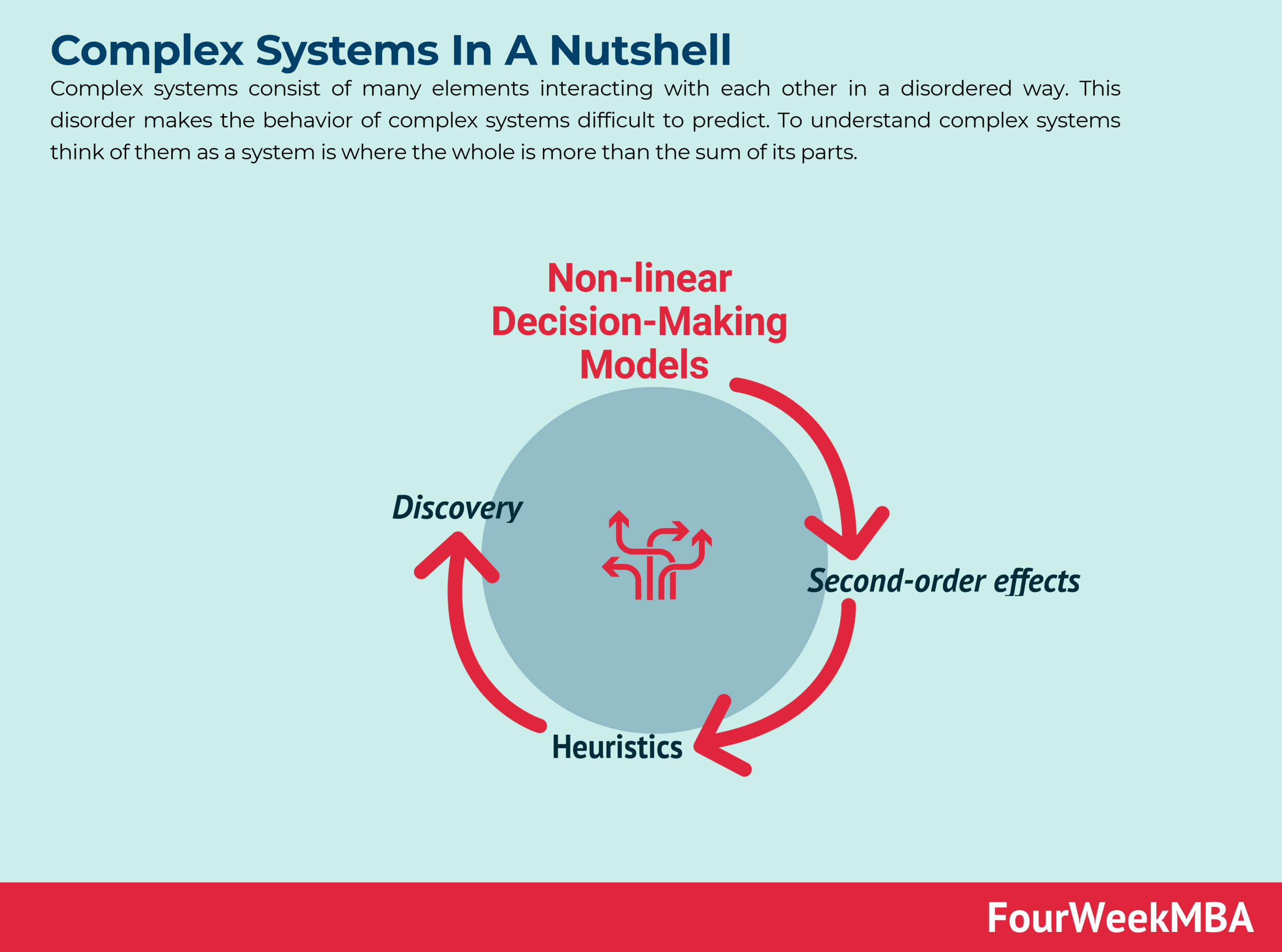
At its core, a complex system is a collection of many individual components that interact with each other in ways that are often non-linear and emergent. This means that the behavior of the system as a whole cannot be easily predicted by simply understanding the behavior of its individual parts. Instead, the system exhibits properties and behaviors that arise from these interactions, often in surprising and unexpected ways. Think of a flock of birds, an ant colony, or even the human brain. No single bird, ant, or neuron possesses the intelligence of the flock, colony, or brain. It’s the collective interaction and communication between these simple units that give rise to sophisticated, organized behavior.
The domains of Tech, Brand, and Money, as explored on this website, are all prime examples of where complex systems thrive and exert their influence. Whether you’re building a cutting-edge AI tool, crafting a compelling brand narrative, or navigating the volatile currents of the financial markets, an understanding of complexity is paramount. This article will explore the defining characteristics of complex systems, how they manifest across these key areas, and why recognizing and understanding them is crucial for innovation, strategy, and success.
The Pillars of Complexity: Interconnectedness, Emergence, and Adaptation
To truly grasp what a complex system is, we need to unpack its fundamental characteristics. These are the bedrock principles that distinguish complex systems from simpler, more predictable ones.
Interconnectedness: The Web of Relationships
Perhaps the most defining feature of a complex system is the dense web of interconnections between its components. These components aren’t isolated entities; they are constantly influencing and being influenced by one another. In the realm of Tech, this is evident in software architecture where modules depend on each other, in AI where algorithms learn from vast datasets of interconnected information, and in the internet itself, a massive network of interconnected devices and data. A single bug in one piece of software can cascade through an entire application, affecting user experience, security, and performance.
In Brand strategy, interconnectedness plays out in the relationships between a company’s products, its marketing messages, its customer service, and public perception. A negative customer review (a component) can quickly spread across social media (the network), impacting brand reputation (the emergent property) in ways that are difficult to control. Similarly, a well-executed marketing campaign can create a positive halo effect across all brand touchpoints.
For Money, interconnectedness is the very essence of financial markets. Stock prices are influenced by economic indicators, global events, investor sentiment, and the actions of other market participants. A change in interest rates (a policy decision) can ripple through the entire economy, affecting everything from mortgage rates to corporate profits. Online income streams and side hustles often rely on interconnected platforms and networks, where a change in algorithm or a shift in consumer behavior on one platform can significantly impact earnings on another.
Emergence: The Whole is Greater Than the Sum of its Parts
Emergence is the phenomenon where novel and coherent structures, patterns, and properties arise from the collective interactions of individual components, properties that are not present in the individual components themselves. This is where the magic, and often the mystery, of complex systems lies. In Tech, AI is a prime example. Individual lines of code or data points don’t possess intelligence, but when assembled and trained through complex algorithms, they can exhibit remarkable problem-solving abilities, creativity, and even what appears to be understanding. The “intelligence” of a sophisticated AI tool is an emergent property of its architecture and training data.
In Brand building, a strong corporate identity is an emergent property. It’s not just the logo or the tagline, but the culmination of consistent messaging, customer experiences, product quality, and ethical practices that create a cohesive and recognizable brand in the minds of consumers. A compelling brand narrative emerges from the sum total of these interactions, shaping perception and loyalty.
In Money, the stock market itself is a classic example of emergence. The price of a stock isn’t determined by any single investor’s desire but emerges from the collective actions of millions of buyers and sellers, their expectations, their risk appetites, and their information. Similarly, the success of a business venture often depends on the emergent synergy of its team, its market positioning, and its ability to adapt to evolving customer needs. Personal finance, too, can exhibit emergent properties; disciplined saving and investing over time can lead to emergent financial security and wealth that far exceeds the sum of individual savings.
Adaptation: Evolving in Response to Change
Complex systems are rarely static. They possess a remarkable capacity to adapt and evolve in response to their environment and internal changes. This adaptability is often a survival mechanism, allowing the system to maintain its function or even thrive in dynamic conditions. In Tech, software is constantly being updated and improved based on user feedback, emerging threats, and new technological advancements. AI models are retrained and refined to improve their performance and adapt to new data. Digital security systems must constantly adapt to new forms of cyber threats.
In Brand management, adaptation is crucial for long-term relevance. Brands that fail to evolve with changing consumer preferences, societal values, or technological shifts risk becoming obsolete. Case studies of successful brands often highlight their ability to pivot, innovate, and adapt their messaging and offerings to stay ahead of the curve. This might involve updating a corporate identity or completely reinventing a product line.
In Money, financial markets are inherently adaptive. They respond to economic shocks, policy changes, and shifts in global sentiment. Investors and businesses must constantly adapt their strategies to navigate these fluctuations. Online income opportunities and side hustles also require a degree of adaptation; what works today might not work tomorrow as platforms evolve and competition shifts. Financial tools are also designed to help individuals and businesses adapt to changing economic landscapes, offering flexibility and foresight.
Complex Systems in Action: Tech, Brand, and Money
Let’s delve deeper into how these principles of complexity manifest in the core areas of this website.
Tech: The Digital Ecosystem
The world of technology is arguably the most overt manifestation of complex systems in our modern lives.
- AI Tools and Software: The development and deployment of AI tools are textbook examples of complex systems. These tools are built from countless lines of code, vast datasets, and intricate algorithms that interact in non-linear ways. The emergent property is intelligence, creativity, or predictive power that far surpasses the sum of its individual components. Software applications, too, are complex systems where modules, libraries, and user interfaces interact. A minor change in one module can have unforeseen consequences across the entire application. Digital security is a constant arms race, a complex system of offense and defense where vulnerabilities are exploited, and new security measures are developed in an ongoing, adaptive cycle.

-
Gadgets and Connectivity: Our modern gadgets, from smartphones to smart home devices, are themselves complex systems. They integrate hardware, software, and often rely on a network of other interconnected devices and services. The user experience of a gadget is an emergent property of the seamless integration of all these components. Trends in technology, like the Internet of Things (IoT), further amplify this complexity, creating vast networks of interacting devices that generate enormous amounts of data.
-
Tutorials and Reviews as Navigators: The very act of creating and consuming tutorials and reviews speaks to the complexity of technology. Tutorials attempt to break down complex systems into digestible steps, acknowledging that understanding the individual parts is necessary, but the overall operation often requires guidance. Reviews, on the other hand, often highlight emergent properties – the intuitive nature of an interface, the unexpected utility of a feature, or the frustrating glitches that arise from unforeseen interactions.
Brand: The Fabric of Perception
Building and maintaining a brand is a masterclass in managing a complex system of human perception and interaction.
-
Brand Strategy and Corporate Identity: A brand’s identity is not a static artifact but a dynamic entity that emerges from consistent and purposeful interactions. The strategy defines the desired emergent properties – trust, desirability, authority. Corporate identity, encompassing visual elements, tone of voice, and company values, must be harmoniously integrated across all touchpoints to create a coherent and robust brand presence.
-
Marketing and Case Studies: Marketing campaigns are carefully orchestrated interventions designed to influence the complex system of consumer perception. Success often hinges on understanding how different messages will interact with existing brand associations, competitor activities, and individual consumer needs. Case studies reveal the emergent outcomes of brand strategies, showcasing how a well-executed approach can lead to increased market share, customer loyalty, and positive reputation, often in ways that were not explicitly planned but arose from the synergistic application of various tactics.
-
Reputation Management: Brand reputation is a highly emergent property, influenced by every interaction a company has with its stakeholders. Social media, customer service experiences, product quality, and even employee behavior all contribute to this intricate web. Managing reputation means actively participating in and guiding this complex system, responding to feedback, and proactively shaping perceptions. A single negative incident, amplified through interconnected digital channels, can have a disproportionately large impact on a brand’s overall reputation.
Money: The Dynamic Currents of Value
The world of finance is one of the most palpable examples of a complex system, characterized by constant flux and interdependencies.
-
Personal Finance and Investing: Our personal financial lives are complex systems. Income streams, expenses, savings, investments, and debts all interact. The emergent property is financial well-being, security, or instability. Investing, in particular, is about navigating a highly complex market system where myriad factors influence asset prices. Understanding individual investment vehicles is important, but grasping the interconnectedness of the market is crucial for success.
-
Online Income and Side Hustles: The digital economy has spawned new forms of complex income generation. Online courses, affiliate marketing, e-commerce, and freelance work often rely on a delicate balance of platform algorithms, audience engagement, and market demand. A shift in how a platform operates or a change in consumer trends can significantly alter the viability of an online income stream. These are adaptive systems that require constant learning and adjustment.
-
Business Finance and Financial Tools: For businesses, financial management is a critical complex system. Managing cash flow, debt, equity, and profitability involves understanding the interplay of internal operations and external market forces. Financial tools are designed to help businesses and individuals model, analyze, and manage these complex systems, providing insights into the potential emergent outcomes of different financial decisions. The global economy itself is perhaps the ultimate complex system, with its intricate network of trade, finance, and geopolitical influences.
Navigating the Complexity: Strategies for Success
Understanding that you are operating within a complex system is the first step. The next is to develop strategies that acknowledge and leverage this complexity.
Embrace Iteration and Experimentation
In complex systems, definitive, one-size-fits-all solutions are rare. Instead, success often comes from an iterative approach. This means trying, observing, learning, and adjusting. In Tech, this is evident in agile development methodologies. In Brand, it’s about testing marketing messages and refining brand positioning. In Money, it’s about regularly reviewing and rebalancing investment portfolios. Experimentation, within controlled environments, allows us to understand the emergent properties of our actions.
Focus on Principles, Not Just Tactics
While specific tactics are important, a deep understanding of the underlying principles of complexity is more valuable in the long run. For example, in Brand, focusing on building genuine customer relationships (a principle) will yield more sustainable results than chasing fleeting marketing trends (tactics). In Tech, understanding the principles of good software architecture will lead to more robust and adaptable systems than simply patching individual bugs. In Money, understanding principles of diversification and risk management is more critical than trying to time the market.
Foster Adaptability and Resilience
Given the inherent unpredictability of complex systems, building in adaptability and resilience is paramount. This means having contingency plans, being open to change, and cultivating a mindset that embraces uncertainty. For a Tech company, this might involve investing in cybersecurity to withstand unforeseen threats. For a Brand, it could mean having crisis communication protocols in place. For individuals managing their Money, it means building an emergency fund and maintaining flexible financial plans.
Recognize the Power of Feedback Loops
Complex systems are characterized by feedback loops, where the output of a process influences its input. Understanding these loops – whether positive (amplifying a trend) or negative (dampening it) – is crucial for effective intervention. In Tech, user feedback is a critical negative feedback loop that drives product improvement. In Brand, customer reviews can create powerful positive feedback loops for popular products or negative ones for those that fail to meet expectations. In Money, investor sentiment can create feedback loops that drive market volatility. Learning to identify and influence these loops is a key skill.
Conclusion: Mastering the Art of Interconnectedness
The concept of a complex system is not a theoretical construct confined to academic papers. It is the very fabric of our modern world, woven through the technologies we use, the brands we interact with, and the financial systems that shape our lives. By understanding that these domains are not collections of isolated elements but dynamic, interconnected networks with emergent properties and a capacity for adaptation, we can approach them with a more informed, strategic, and ultimately, more successful mindset. Whether you are a technologist pushing the boundaries of AI, a marketer shaping brand perception, or an individual navigating personal finance, recognizing and embracing complexity is the key to innovation, resilience, and lasting achievement in the interconnected age.
aViewFromTheCave is a participant in the Amazon Services LLC Associates Program, an affiliate advertising program designed to provide a means for sites to earn advertising fees by advertising and linking to Amazon.com. Amazon, the Amazon logo, AmazonSupply, and the AmazonSupply logo are trademarks of Amazon.com, Inc. or its affiliates. As an Amazon Associate we earn affiliate commissions from qualifying purchases.